
5 Frame Materials for Custom Sunglasses Orders
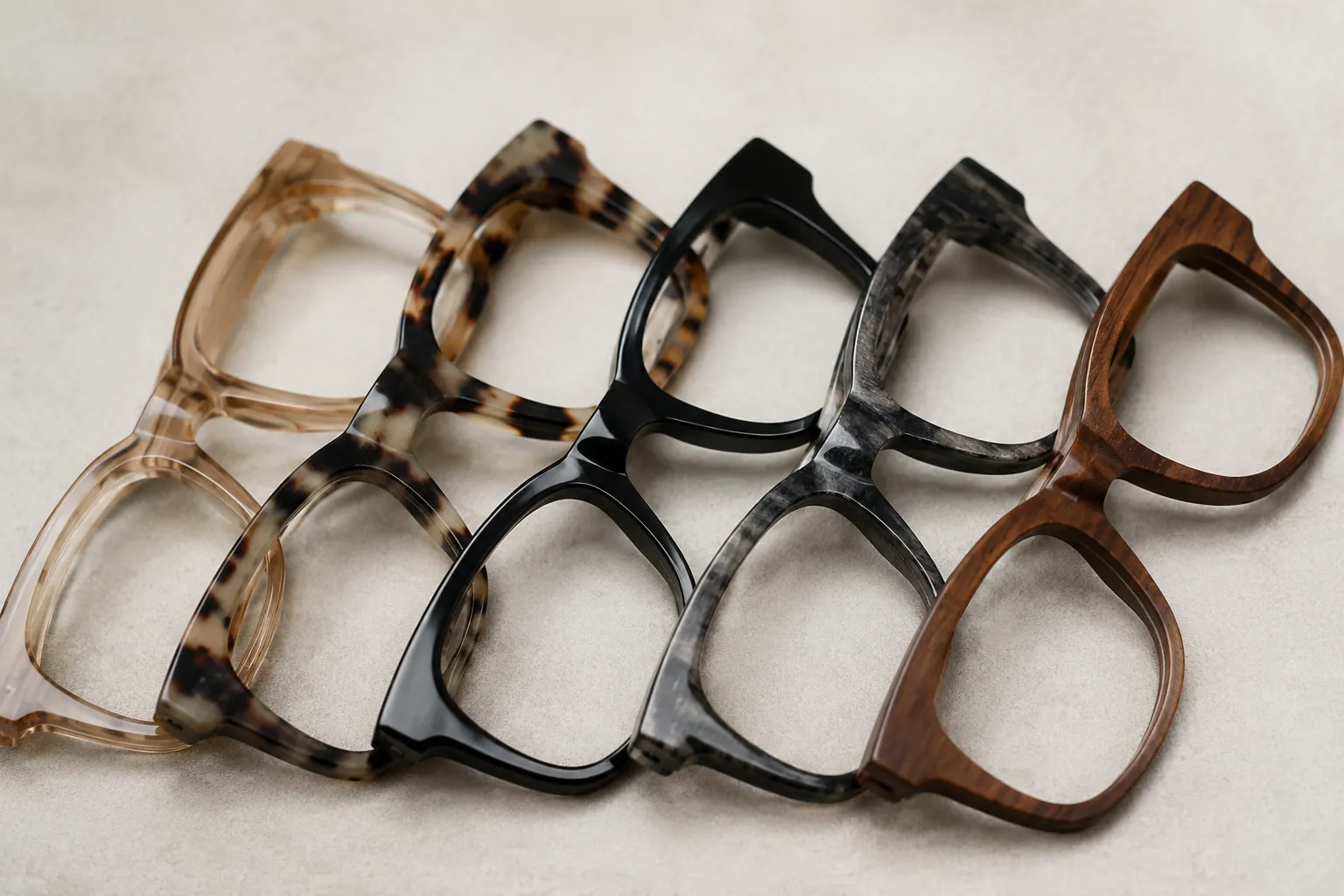
If you buy custom sunglasses in volume, frame material is not a styling detail. It affects unit cost, tooling complexity, breakage risk, lead time, and the chance of returns after launch. This comparison is for brands, importers, distributors, and retailers that need to choose a material based on order size, margin, and channel requirements. The goal is simple: match the frame material to the product plan before you approve tooling and samples.
Start With the Buying Problem, Not the Material
Most sourcing mistakes start with a mood board. That is the wrong place. First define what the product has to survive: shelf display, daily wear, promotional use, outdoor sports, fashion drops, or private label basics. Then choose the material.
Material choice changes the manufacturing route. That affects lead time and finish consistency. Injection-molded materials usually support faster repeat production once the mold is approved. Acetate and metal usually need more finishing and assembly, so late changes cost more.
For volume buyers, three checks matter most:
- MOQ. Ask for the minimum order by design, color, and lens combination. Do not assume one MOQ covers every configuration.
- Pricing. Ask for a volume ladder, and separate frame cost from lens, decoration, and packaging.
- Compliance. Confirm the standards for your market before you approve a material or finish.
That is the real decision frame. Not "which material is best," but which one carries the least risk for your order size and channel.
Acetate: Premium Feel, Higher Labor
Acetate is the material buyers choose for a richer hand feel and deeper color. It machines well. It polishes well. It also holds pattern better than many injected plastics.
That makes it a strong fit for premium-looking sunglasses without moving into metal. It is common in fashion collections, optical-adjacent sunwear, and higher-margin private label lines. The tradeoff is direct: acetate takes more labor than injected materials, so it usually costs more and leaves less room for late changes.
From a manufacturing standpoint, acetate works with CNC milling and hand finishing. Good control, but not much forgiveness. Small tolerance drift can show up in temple fit, hinge alignment, or uneven lens seating. Buyers should request sample approval on front width, temple length, bridge fit, and lens retention before bulk production.
Acetate is a good fit when:
- You need a premium retail look without using metal.
- Your order can support a higher cost than basic promotional eyewear.
- You want strong color depth or pattern variation.
- You can wait for proper sampling and do not plan frequent spec changes.
Returns are usually tied to fit and finishing, not the material alone. If the program goes into stores, spend time on fit verification before approval. Do not rush that step.
TR90: The Practical All-Rounder
TR90 is the practical answer for buyers who want light weight, flexibility, and controlled cost. It is not the most premium-feeling material. It is comfortable to wear and usually holds up well in daily use.
For custom orders, TR90 works best when the brief is stable unit price, broad color options, decent consumer comfort, and low breakage complaints. It fits pharmacy sunglasses, gift channels, ecommerce, travel retail, and private label basics. In many programs, it is easier to build a workable margin with TR90 than with acetate or metal.
TR90 is usually processed through injection molding. That supports speed and repeatability once the tooling is stable. It also pairs well with pad printing or laser engraving for logos. For buyers moving above small test quantities, that repeatability matters more than the material name on the spec sheet.
The downside is feel. TR90 can look and feel more utilitarian than acetate or metal. If your customer expects a heavier frame, TR90 may read as too light. That can weaken perceived value. It is not the right answer for every retail position.
Choose TR90 when the order needs a balance of cost, comfort, and lower complaint risk. Skip it when your selling point is material richness or a fashion-led tactile impression.
PC: Lowest Entry Cost, Tightest QC Demand
PC, or polycarbonate, is often used when the buyer wants a low entry price and good impact resistance. It is a sensible option for promotional sunglasses, giveaway programs, and some budget retail lines. It can also work for kids' or casual outdoor use, depending on the full product spec.
There is a catch. PC is unforgiving when the design is sloppy. If the frame shape, wall thickness, and hinge assembly are not controlled, the product can feel cheap very quickly. That does not mean PC is a weak material. It means production discipline has to be tighter than many buyers expect at the bottom price tier.
PC is best used when you need a simple commercial answer and want to keep the order straightforward. It is less attractive for a premium-looking custom line because buyers often notice differences in rigidity and surface feel. In the field, PC products are judged on perceived value as much as technical performance.
The practical sourcing rule is simple: if your retail position depends on looking good for the money, ask for tighter finish standards and careful sample approval. A low-cost material with poor QC is not a low-cost program.
Nylon: Built for Sports and Active Use
Nylon makes sense when the frame has to flex, take abuse, and keep its shape under repeated wear. It is a strong fit for sports sunglasses, active lifestyle collections, and products where the buyer cares about impact performance and light weight more than a luxury feel.
Nylon usually sits between basic promotional plastics and metal in buyer perception. It is more technical than fashion-oriented. That is fine. It is often exactly what you want in cycling, running, fishing, or travel programs. The frame can be comfortable, secure, and harder to damage in everyday use.
From a manufacturing standpoint, nylon rewards process control. Injection parameters, mold condition, and post-mold finishing all matter. If the walls are too thin or the fit is loose, the frame will not perform as intended. Buyers should pay attention to temple spring, hinge stability, and lens retention, especially for active-use products that are likely to be bent, dropped, or repeatedly packed.
Nylon is not usually the material for a fashion-first collection. It is the material for a use case. That distinction matters. If your buyer wants a technical product with lower breakage risk and reasonable weight, nylon is a serious option. If they want a premium shelf impression, look elsewhere.
Metal: Highest Perceived Value, Hardest to Control
Metal frames are the most demanding option in this group, but they can also be the easiest to position as premium if the construction is clean. They carry a different visual language: thinner lines, sharper detailing, and a more obvious material distinction on shelf.
For custom sunglasses orders, metal is used when the product needs a refined look, a lighter visual profile, or a more adult fashion position. It works well in private label retail and branded collections where style cues matter more than brute durability. Metal can also support logo plates and fine decoration if the design is built for it.
The risk is real. Metal adds assembly complexity. You have more points where fit, plating, weld quality, or finish can go wrong. A low-quality metal frame that tarnishes, bends badly, or arrives with alignment issues will trigger returns faster than a basic plastic frame. That is why QC discipline matters more here than in many low-price programs.
Metal also affects cost structure. Tooling and assembly are less forgiving, and the production line has to be stable before you scale. Do not assume that a metal frame is automatically a higher-margin product. If the return rate climbs, the margin disappears.
Use metal when the channel can support a premium look and your QC standard is strict enough to manage alignment and finish.
Material Comparison by Order Size and Risk
The right frame material changes with order size. A 50-pair test order should not be judged the same way as a 5,000-pair launch. At low MOQ, you are mainly buying a sample of market response. At volume, you are buying process stability.
| Material | Best Order Size | Typical Cost Position | Lead-Time Pressure | Return Risk Profile |
|---|---|---|---|---|
| Acetate | 300-5000+ pairs | Mid to high | Moderate, due to finishing | Moderate, usually fit or finish related |
| TR90 | 300-5000+ pairs | Mid | Low to moderate | Low to moderate, comfort-driven |
| PC | 50-3000 pairs | Low | Low | Moderate to high if finish is weak |
| Nylon | 300-5000+ pairs | Mid | Moderate | Low to moderate for active-use programs |
| Metal | 300-5000+ pairs | Mid to high | Higher, due to assembly and QC | Moderate to high if alignment or finish is off |
That table points to a simple rule. If you are testing the market, PC and TR90 are usually easier to launch. If you are building a premium retail line, acetate or metal often wins on shelf. If the brief is sports or active use, nylon is usually the better technical fit.
Do not judge cost from the first sample quote alone. The final number depends on material, tooling, lens specification, decoration, and packaging. Ask for quotes that separate those items so you can compare like for like.
How Compliance and QC Should Shape the Spec
Material choice does not replace compliance. It sits inside it. The frame still has to support the test route required for your market. Real programs usually need a mix of product testing, supplier controls, and documentation.
For eyewear buyers, the practical point is simple: the frame material and finish must be stable enough for the required test route. If you change materials after approval, you may change stiffness, weight, fit, or surface behavior. That can affect consistency and may require revalidation.
Before bulk approval, ask for these checks:
- Front width and temple length confirmation against the approved sample.
- Hinge opening and closing check across a small batch, not just one pair.
- Lens seating confirmation after tinting and assembly.
- Logo decoration inspection for laser engraving, pad printing, or metal logo plate placement.
- Surface finish review under normal light, not only at the sample table.
QC is where low-return programs are made. If the factory is not checking dimensional consistency, material choice will not save you. It will only change the shape of the problem.
When you request compliance proof, keep the list to what the supplier can actually document. For sunglasses and related eyewear programs, relevant items may include CE EN ISO 12312-1, ANSI Z80.3, AS/NZS 1067, REACH, FDA registration where applicable, ISO 9001, and BSCI. Ask for current documentation, not a claim on a website or sales sheet.
Buyer Decision Guide: Which Material Fits Which Channel
Use this as a working shortcut.
Choose acetate if the line needs a premium retail feel and you can support a more careful finishing process.
Choose TR90 if you want comfort, repeatability, and a sensible middle ground for volume programs.
Choose PC if the target is budget entry, promotional use, or a simple launch with tight cost control.
Choose nylon if the product is for sport or active wear and durability under movement matters.
Choose metal if the design needs a sharper premium look and your QC discipline is strong enough to manage alignment and finish.
For overseas buyers, the best sourcing process is usually boring. Start with a small order if you need to test a shape. Move to a larger quantity when the channel response is clear. Scale only after the fit, material, and decoration are locked. That is how you keep returns down and avoid paying twice for the same development work.
If you are working with a supplier, ask for the sample to be built in the exact material, exact lens tint, and exact decoration route you plan to mass-produce. Do not approve one material and switch later unless you want to reopen fit and finish risk.
Have a custom sunglasses project in mind?
Send us your styles, target market and quantities and we will return a detailed quote with MOQ, lead time and a sample plan.
Get a QuoteWhy source this from Wenzhou with LumiShades
Wenzhou in Zhejiang Province is widely regarded as China’s eyewear manufacturing capital, producing a large share of the world’s sunglasses. That concentration matters to buyers: a deep local supply chain for acetate sheet, hinges, lens blanks, plating and packaging means shorter component lead times, easier color and material matching, and a workforce with decades of eyewear-specific skill. LumiShades has manufactured in this ecosystem since 2009, and our vertical integration — in-house injection molding, acetate cutting, CNC milling, lens tinting, decoration and quality control — means no part of your order is quietly subcontracted to a workshop you cannot audit.
For international buyers, that vertical control translates into accountability. When a single factory owns every step, defects are traced and fixed at source rather than bounced between vendors, and your specifications survive intact from first sample to bulk. We back this with 15+ years of experience, shipments to 60+ countries, more than 5 million pairs produced per year and a 98.5% on-time delivery rate. Our certifications — CE EN ISO 12312-1, FDA registration, ANSI Z80.3, AS/NZS 1067, REACH, ISO 9001 and BSCI audit — mean the compliance documentation your market requires already exists. Explore our manufacturing capabilities and quality control process to see how this works in practice.
Frequently asked questions
Which frame material is best for the lowest return risk? There is no universal winner, because return risk depends on the channel and the expected use. For general wear, TR90 is often the safest balance of comfort and durability. For active-use products, nylon is usually the better fit. The key is to match the material to the use case and approve fit before bulk order.
What is the best material for premium private label sunglasses? Acetate is usually the strongest choice when the goal is premium feel and richer color presentation. Metal is also a strong option if the design is clean and QC is disciplined. The better choice depends on whether you want a thicker, fashion-led look or a thinner, more refined profile.
Can I start with a 50-pair order and still choose any material? You can test most materials in small quantities, but the material should match the purpose of the test. For market testing, PC or TR90 is usually the most practical. For premium positioning, acetate or metal can work, but the cost of learning is higher and the sample must be approved carefully.
How should compliance affect material choice? Choose the material only after confirming the standards and documentation your market needs. For sunglasses programs, relevant items may include CE EN ISO 12312-1, ANSI Z80.3, AS/NZS 1067, REACH, FDA registration where applicable, ISO 9001, and BSCI. If the material or finish changes after approval, the product may need to be checked again.
How fast can samples and bulk orders move? Lead time depends on the exact design, material, and decoration method. Ask the supplier for a written timeline for your specific spec rather than relying on a generic promise. The fastest way to lose time is to change lens tint, logo method, or frame material after sample approval.
At what order size does pricing get better? Pricing usually improves as quantity rises, but the breakpoints are supplier-specific. Ask for a volume quote at the quantities you actually plan to buy, and compare the full landed cost, not just the frame price. Separate the costs for frame, lens, decoration, packaging, and shipping so the quote is usable.
Ready to start?
Explore our shield & oversized sunglasses or request a quote — our sales team replies within 12 hours.
Request a Quote