
TAC vs PC Polarized Lenses: Cost, Durability, Return Risk
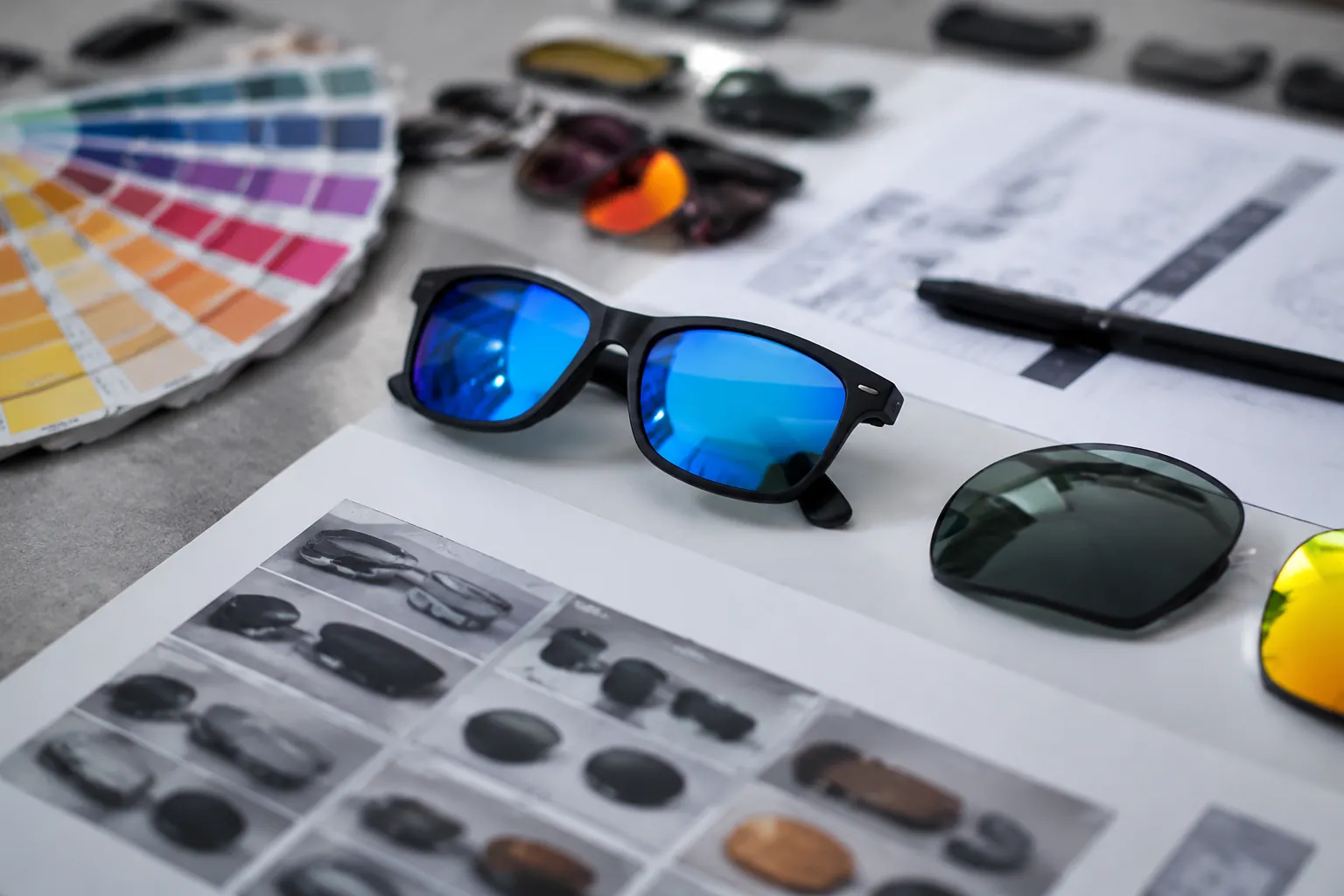
This guide is for brand owners, importers, distributors, and retail buyers comparing polarized lens options for volume orders. The key sourcing question is not which lens looks cheaper on a quotation. It is which lens fits the use case, frame design, target market, and likely return profile. If you are developing custom sunglasses, this gives you a practical way to choose between TAC and PC based on production risk, compliance, and channel fit.
Start with failure cost, not lens price
Many buyers start with the lens upcharge. That makes sense. It is also incomplete.
A lower lens cost at PO stage does not always lead to a lower total cost after assembly loss, freight damage, retail handling, customer complaints, and replacement claims. In wholesale sunglasses, the better comparison is unit cost plus expected failure risk.
So assess lens material in context. A lower-cost lens may still be the right call if the product is fashion-led, lightly used, and sold through a channel with low abuse and low return rates. A higher-cost lens may be the smarter commercial choice if the product will be worn in active conditions, mounted in a high-stress frame, or sold through channels where breakage and easy returns are expensive.
TAC often fits entry-to-mid price polarized programs where appearance, weight, and everyday visual comfort matter most. PC often fits applications where higher impact resistance and better tolerance of frame stress matter more. Neither is automatically better.
The rule is simple. Pick the lens that matches the real use case, frame geometry, quality target, and after-sales risk for that sales channel, not the one that only trims the quote.
Head-to-head: cost, durability, optics, and complaint risk
| Factor | TAC Polarized Lens | PC Polarized Lens | Buyer Impact |
|---|---|---|---|
| Typical position in quote | Often quoted as a cost-efficient polarized option for fashion and lifestyle programs | Often quoted at a higher cost because polycarbonate lens production and coating control can be more demanding | Relevant for price-sensitive retail, promotional, and private-label orders |
| Impact resistance | Generally lower than polycarbonate | Generally higher than TAC and commonly selected where impact resistance matters more | PC is often the safer choice for sport, youth, driving, and active outdoor use |
| Optical clarity | Can be very good when lamination quality and polarization alignment are controlled well | Can also perform well, but visual quality depends heavily on molding, coating, and stress control | Optical complaints are usually process-related, not material-label issues alone |
| Scratch behavior | Depends on surface treatment and handling; performance varies by coating quality | Polycarbonate is impact-tough but needs an effective hard coat because the surface is relatively soft | Scratch risk should be reviewed as a coating and QC issue, not only a base-material issue |
| Frame stress tolerance | Usually less forgiving in aggressive wrap or tight groove assemblies | Usually more tolerant in curved sport frames and higher-stress mounting conditions | Frame geometry can be a deciding factor even when the lens price difference is small |
| Best commercial fit | Fashion, lifestyle, resort, gift, and many private-label retail programs | Sport, driving, marine, youth, and other higher-abuse distribution channels | Choose according to likely use and complaint pattern, not habit alone |
Keep the lens comparison inside the full bill of materials. In many programs, frame material, hinge spec, decoration method, packaging, and finishing standards affect total cost as much as the lens choice. Sometimes more.
That is why experienced buyers compare TAC and PC against the full product spec. The real questions are straightforward: Is the lens right for the use case? Does the frame design add stress? Is the likely complaint profile about breakage, scratch resistance, or visual quality?
What TAC is, and where it works best
TAC usually refers to a laminated polarized lens structure with multiple bonded layers and a polarizing film inside. It is widely used in sunglasses because it can offer polarized function, light weight, and styling flexibility at a commercially attractive cost.
Its main strength is efficiency. TAC is common in fashion and private-label programs where buyers want a polarized claim at a competitive price point. It also works well across standard sunglass looks such as smoke, brown, green, gradient, and mirror finishes when lamination and surface treatment are controlled well.
Its limits are just as important. TAC is usually not the first choice for products likely to be dropped often, twisted in wrapped frames, or handled roughly in transport and daily use. It can also create risk if the buyer approves on appearance alone without checking lamination quality, edge finishing, and coating consistency.
- Good fit for fashion sunglasses, resort retail, boutiques, gift shops, and many promotional programs.
- Commercially strong when the target retail offer depends on style, color, and comfortable everyday wear.
- Less suitable for kids lines, heavy outdoor use, deep-wrap sports shapes, and rougher distribution conditions.
- Requires stable lamination, clean edge finishing, and consistent polarization alignment across the production batch.
When comparing TAC offers from different factories, ask what is actually being supplied: lens thickness, polarization type, hard-coat spec, appearance standard, and inspection method. The label polarized TAC lens does not confirm equal performance across suppliers.
What PC does better, and why buyers pay more
Polycarbonate polarized lenses start with a tougher base material. That matters in real use.
PC is widely chosen where higher impact resistance is important, including many sport, driving, marine, youth, and active-use categories. If the product is likely to be dropped, flexed, or worn in motion, PC usually gives a larger safety margin.
The trade-off is surface management. Polycarbonate is tough in impact terms, but the surface needs a competent hard-coat system to resist scratching in normal handling. Buyers sometimes treat PC as the durable option in every respect. That is too broad. Impact durability and scratch durability are different questions, and they should be checked separately during sampling and approval.
PC also tends to work better in demanding frame geometry. Wrapped sport frames, tensioned full-rim assemblies, and tighter lens grooves can add mounting stress. Polycarbonate generally tolerates those conditions better than TAC, which can reduce both assembly risk and in-use breakage risk.
For buyers, the business case is strongest when the brief involves active wear, tougher handling, or a frame shape that adds stress to the lens. In those cases, the higher lens cost may be justified.
The buyer checklist: channel, geometry, coating, and packaging
Before approving TAC or PC, map the product to how it will actually be sold and used. Many sourcing mistakes happen because the sample looks fine on the table but does not match real retail handling, e-commerce returns, transport, or consumer use. A solid approval process should cover the risk areas behind most lens complaints: abuse level, frame stress, coating performance, and packaging protection.
- Check the sales channel. Boutique fashion, event merchandise, chain retail, and online marketplaces create different handling and return patterns. Easy-return channels expose durability issues faster.
- Check the end user. Adult occasional users are usually gentler than teens, kids, drivers, boaters, and active outdoor customers.
- Check frame geometry. Wrapped fronts, higher base curves, and tighter groove fits often push the decision toward PC.
- Check coating expectations. If the product will face frequent try-on handling, request details on hard-coat performance and appearance inspection, not just the base lens material.
- Check packaging protection. Inner packing, carton strength, and shipment method affect landed lens condition.
- Check complaint history. If past claims were mainly breakage, review whether PC is more suitable. If they were distortion or appearance issues, review lens quality, coatings, and approval standards first.
Define acceptance standards on the PO and sample approval sheet, including lens material, lens color reference, polarization requirement, logo position, packaging method, and visual-quality standard. Clear criteria cut avoidable disputes once bulk production starts.
How factory process changes the result
Lens material alone does not decide performance. Process does.
The final result depends on how the lens is produced, coated, edged, mounted, and inspected, and on how it interacts with the frame design and decoration steps.
For TAC, focus on lamination stability, edge finishing quality, and alignment of the polarizing film. Problems in these areas can lead to visual distortion, uneven appearance, or edge weakness after assembly. For PC, the main risks are molding consistency, hard-coat quality, and stress during lens insertion. If the frame groove is too tight or the lens is forced into a wrapped shape without control, complaint risk can still rise even with the tougher base material.
Decoration choices add more variables. Mirrored coatings, laser marking, and pad-printed lens logos all affect risk. A sample used for approval should reflect the full intended production route, not a simplified mock-up, especially if the final program includes coatings, logos, or special finishes near the lens area.
Buyers should ask the factory for specific checkpoints, not generic quality claims:
- Appearance inspection under strong light to check scratches, pits, coating marks, and visible wave distortion.
- Polarization direction consistency so left and right lenses match correctly.
- Assembly fit check after mounting to identify lens stress, frame warpage, or edge pressure.
- Adhesion and rub checks where logos, mirrors, or decorative elements sit near the lens area.
- Agreed final QC sampling standard before mass production, especially for private-label retail programs.
Short version: do not approve on shape and color alone. Approve the material, the process route, and the final assembled sample.
Compliance and testing: necessary, but not enough
For export orders, handle compliance precisely. Commonly referenced standards and registrations in eyewear include CE EN ISO 12312-1, ANSI Z80.3, AS/NZS 1067, REACH, FDA registration, ISO 9001, and BSCI. Confirm which ones actually apply to the target market, product category, and transaction instead of asking for every document by default.
Three practical points matter. First, passing a standard does not mean TAC and PC behave the same in real handling. Second, documents do not replace production QC. Third, if you change lens tint, filter category, mirror finish, frame geometry, or lens construction after sample approval, review whether testing, labeling, or technical documentation also needs updating.
Lock the compliance path early. If the order is for polarized sunglasses selling into the EU, US, or Australia/New Zealand, connect the lens spec, labeling, and market requirement before final approval of packaging and production release. That helps prevent relabeling, retesting, and shipment delays later.
For MOQ and price-break decisions, a simple framework works well:
- At lower trial quantities, choose the lens that best fits the sales channel and use case rather than over-optimizing a small unit difference.
- At mid-volume orders, compare TAC and PC on full landed cost together with likely complaint risk.
- At larger repeat-oriented orders, request side-by-side approved samples and lock exact lens construction, coating, logo method, and packaging before deposit.
- If the product is fashion-first and margin-sensitive, TAC is often the first option to quote and sample.
- If the product is use-case driven and breakage risk is a major concern, quote PC from the start.
Bottom line: TAC often suits lower-to-mid price polarized programs focused on style, light weight, and everyday wear. PC often suits higher-abuse applications where impact resistance and frame-stress tolerance matter more. The better choice is the one that matches your product brief, sales channel, and quality standard.
Have a custom sunglasses project in mind?
Send us your styles, target market and quantities and we will return a detailed quote with MOQ, lead time and a sample plan.
Get a QuoteWhy source this from Wenzhou with LumiShades
Wenzhou in Zhejiang Province is widely regarded as China’s eyewear manufacturing capital, producing a large share of the world’s sunglasses. That concentration matters to buyers: a deep local supply chain for acetate sheet, hinges, lens blanks, plating and packaging means shorter component lead times, easier color and material matching, and a workforce with decades of eyewear-specific skill. LumiShades has manufactured in this ecosystem since 2009, and our vertical integration — in-house injection molding, acetate cutting, CNC milling, lens tinting, decoration and quality control — means no part of your order is quietly subcontracted to a workshop you cannot audit.
For international buyers, that vertical control translates into accountability. When a single factory owns every step, defects are traced and fixed at source rather than bounced between vendors, and your specifications survive intact from first sample to bulk. We back this with 15+ years of experience, shipments to 60+ countries, more than 5 million pairs produced per year and a 98.5% on-time delivery rate. Our certifications — CE EN ISO 12312-1, FDA registration, ANSI Z80.3, AS/NZS 1067, REACH, ISO 9001 and BSCI audit — mean the compliance documentation your market requires already exists. Explore our manufacturing capabilities and quality control process to see how this works in practice.
Frequently asked questions
Is TAC always the cheaper polarized lens option? TAC is often quoted as the more cost-efficient polarized option, but not in every case. Ask your supplier to quote the finished sunglasses in both TAC and PC using the same frame, coating level, logo method, and packaging. Then compare not only unit price but also the use case, frame stress, and likely complaint profile before deciding.
Which lens is better for sport sunglasses or kids programs? PC is usually the safer starting point because polycarbonate generally offers higher impact resistance and better tolerance in wrapped or higher-stress frame constructions. For sport or kids styles, ask for a complete production sample with the final frame curve, final coating, and final lens mounting method, then review both visual quality and assembly stress before approving bulk production.
Can TAC polarized lenses still meet export compliance requirements? Yes. TAC can be used in compliant finished sunglasses if the exact finished product aligns with the relevant market requirements. The buyer action is simple: confirm the target market first, then request documentation and testing only for the applicable standards, such as CE EN ISO 12312-1, ANSI Z80.3, AS/NZS 1067, REACH, or FDA registration where relevant to the transaction.
What exactly should I approve before mass production starts? Approve a full production sample, not a partial sample. The approval set should include the final frame, final lens material, tint, polarization, hard coat or mirror finish, logo method, packaging, and labeling. Put the acceptance standard in writing on the PO or approval sheet, including visual inspection criteria, color reference, and any special requirements for coatings or logos near the lens area.
At what order size should I ask for side-by-side TAC and PC samples? Ask for both when the style is new, the frame has wrapped or high-stress geometry, the target user is active or youth-oriented, or the reorder potential is high enough that a wrong choice would be costly. In practice, side-by-side sampling is most useful before you lock a repeat program or any order where durability complaints would materially affect margin, retailer confidence, or marketplace ratings.
Ready to start?
Explore our aviator sunglasses or request a quote — our sales team replies within 12 hours.
Request a Quote