
TAC vs PC vs Nylon Polarized Lenses: Buyer Guide
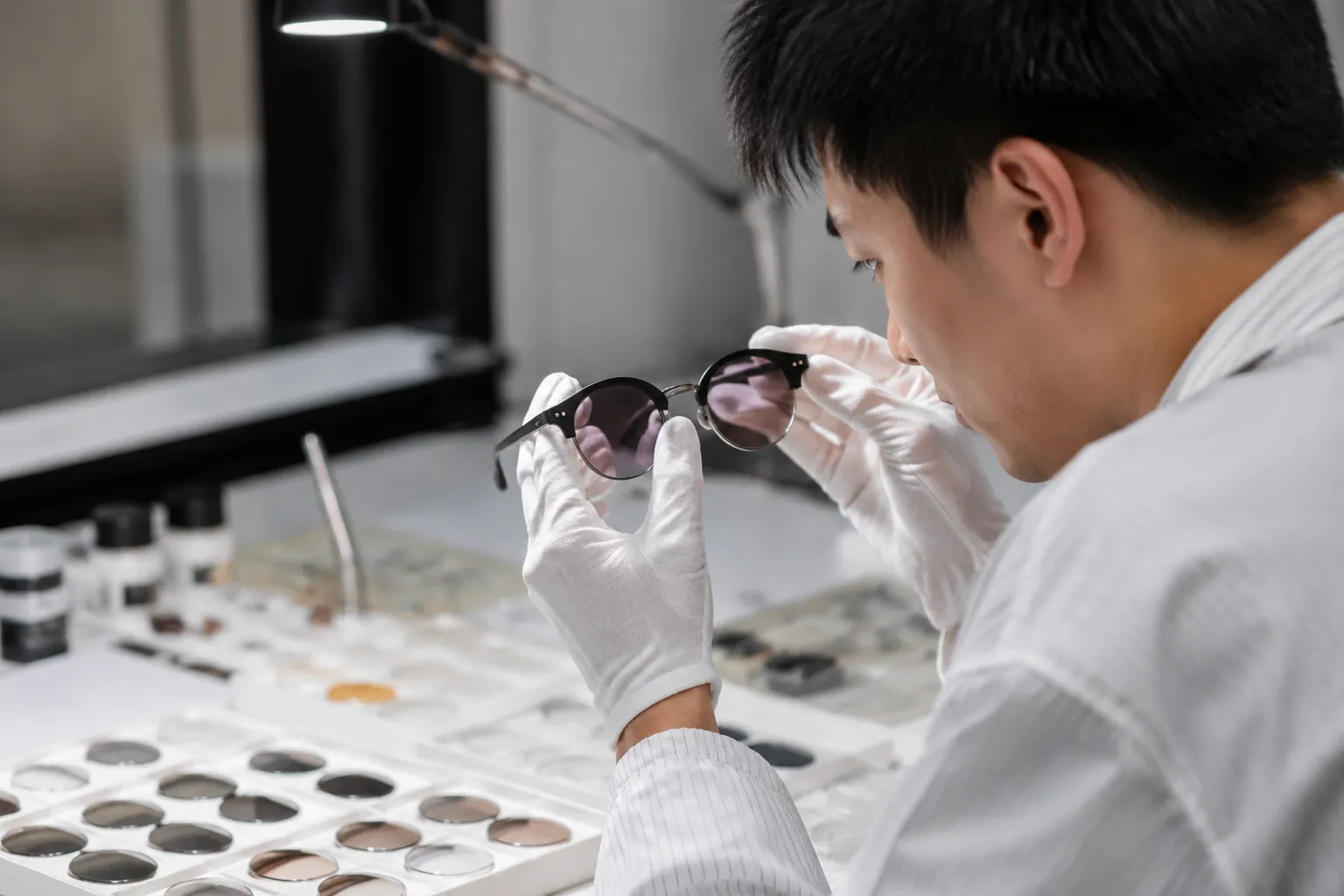
This guide is for brand owners, importers, distributors, and retail buyers choosing polarized lenses for private label sunglasses. Lens material affects cost, optics, durability, manufacturability, and channel fit. Choose badly and margin drops, returns rise, or production gets messy. This comparison looks at TAC, polycarbonate (PC), and nylon polarized lenses through a sourcing lens: optics, durability, assembly tolerances, MOQ, lead time, coatings, and compliance checks. Where results depend on factory control, that is stated plainly.
Start with channel, target FOB, and abuse level
Buyers often start in the wrong place. They start with material names instead of the end market. Someone hears that nylon is premium or that PC is tough, then tries to apply that rule to every program. That is how bad specs get written.
Start with three filters: channel, target FOB, and expected abuse level. A fashion chain at a sharp retail price usually needs controlled lens cost, stable appearance, and repeatable bulk output in flatter or moderately curved frames. A sport specialty account may care more about visual stability in wrap shapes, lower weight, and durability in active use. A kids or outdoor value program may put toughness and lower breakage risk ahead of premium optics.
- TAC polarized: common in fashion, lifestyle, promotional, gift, and mid-market retail programs where price pressure is real and frame curves are usually moderate.
- PC polarized: common in entry sport, kids, outdoor, and higher-abuse channels where toughness and impact resistance matter most.
- Nylon polarized: common in sport specialty, premium outdoor, cycling, fishing, and technical sunglass programs where low weight and strong performance in wrapped shapes justify higher cost.
Do not ask which material is universally best. Ask which one fits the retail position, frame build, compliance needs, claim risk, and margin model of the specific program.
What TAC, PC, and nylon polarized lenses are
These are not just three price tiers. They are different lens constructions and materials. They behave differently in forming, coating, edging, and assembly.
TAC usually refers to a laminated polarized lens build around a polarizing film. Depending on the supplier, the structure may include TAC layers, adhesive layers, the polarizing core, and protective outer surfaces, followed by hard coating and any tint or mirror treatment. Because it is laminated, process control matters at the perimeter and during forming. Weak heat control, rough edging, or unstable lamination can create edge defects or visual problems.
PC, or polycarbonate, is a thermoplastic lens material widely used where low weight and impact resistance matter. Polarized PC lenses are built to incorporate the polarizing function into the finished lens structure. PC is common in sport wraps, youth product, and outdoor styles. Optical quality and scratch performance depend heavily on mold quality, hard-coat quality, curve control, and process discipline. No shortcuts here.
Nylon is a performance-oriented polymer lens material used in many active and technical eyewear programs. It is valued for low weight and for handling demanding wrapped shapes. In a well-controlled build, it can deliver strong visual performance in curved lenses and active-use frames. It usually costs more than TAC or PC and often needs tighter control of color, coatings, and geometry during development.
Frame construction matters too. A base 4 or base 6 fashion front does not place the same demands on the lens as a higher-wrap sport frame. Buyers should assess lens material together with base curve, groove design, bevel geometry, and final assembly method.
Side-by-side comparison: cost, optics, durability, and fit
Most buyers need a plain comparison before they brief a supplier. The table below summarizes common sourcing logic for private label programs.
| Lens option | Typical relative cost | Optical performance | Impact resistance | Typical base curve fit | Best channel fit | Main caution |
|---|---|---|---|---|---|---|
| TAC polarized | Lowest in many programs | Can be good for general-use sunglasses when lamination, coating, and forming are controlled well | Moderate | Often easier in base 4 to base 6 | Fashion retail, lifestyle, promo, private label chains | Edge quality, lamination stability, and bevel handling need close QC |
| PC polarized | Low to mid | Can be acceptable to good, depending on mold quality, hard coat, and curve control | High | Common in base 6 to base 8 sport shapes | Entry sport, kids, outdoor, mass retail | Scratch visibility and optical stress can become issues if coating or shaping is weak |
| Nylon polarized | Highest | Can perform very well in wrapped and performance-driven designs when processing is controlled tightly | High for active-use applications | Strong fit for base 6 to base 8 and technical wraps | Sport specialty, premium outdoor, technical lines | Higher piece cost and tighter process-control requirements |
Production fit matters as much as raw material choice. Lens size tolerance, bevel shape, groove compatibility, and curve matching all affect assembly yield and long-term fit. A lens that is slightly out of tolerance can create insertion stress, loose seating, cosmetic damage during mounting, or movement after temperature change.
For quoting, TAC often gives the most room for lower retail targets. PC makes sense when toughness and lower breakage matter more than premium optics. Nylon makes sense when the brand position, frame geometry, and sales channel can carry a higher unit cost. Compare total program economics, not lens cost alone.
How to judge optical quality and process control
Polarization alone does not make a lens safe to buy. Buyers need to check how the supplier controls distortion, polarization alignment, coating quality, cosmetic yield, and curve consistency in the exact build being ordered.
- Distortion control: check for wave, stress marks, haze, and uneven viewing quality across the usable field of view. This matters most in shields, larger eye sizes, and wrapped sport fronts.
- Polarization alignment: confirm the polarizing axis is consistent from left lens to right lens and from pair to pair. Poor alignment creates visible imbalance and wearer discomfort.
- Surface and coating quality: review hard coat, mirror coat, tint uniformity, and any backside treatment under conditions that match the selling environment.
- Edging precision: inspect edge finish, bevel accuracy, and mounting behavior. Poor edging can cause chipping, whitening, stress marks, or fit issues after insertion.
Ask for pre-production samples in the exact lens build intended for bulk approval: same base curve, same tint, same mirror color, same coating stack, and same frame fit. Anything else is a weak proxy. For fashion programs, inspect color consistency under daylight and store lighting. For sport programs, check visual stability while moving the frame through different viewing angles and during wear simulation if possible.
Process integration reduces risk. A supplier that coordinates lens finishing, edging, frame production, and final QC is usually better positioned to catch tolerance conflicts before shipment than one relying on disconnected outside processes. Verify that capability. Do not assume it.
Common failure modes after shipment
Most field claims come from a small set of repeat problems. Review likely failure modes before approving a lens construction.
- TAC: edge delamination, perimeter haze, or visual defects linked to lamination stress, heat exposure, or rough edging.
- PC: visible scratching in retail handling if the hard coat is weak, plus optical stress or distortion in poorly controlled wrapped shapes.
- Nylon: fewer obvious abuse-related complaints in active-use positioning when the build is done well, but development mistakes cost more because the material and process are more expensive.
- All three: lens-to-frame mismatch can cause stress marks, pop-out risk, difficult assembly, or later cracking if curve, bevel, and groove are not matched correctly.
Decoration choices can add handling risk too. Pad printing, hot foil, laser logos, metal logo plates, and paint-fill details all add process steps and approval variables. On aggressive price-point programs, extra decorative complexity can raise reject risk without adding enough sell-through value. On premium builds, decoration may be justified, but buyers should still define acceptance standards for placement, adhesion, consistency, and abrasion resistance.
The sourcing lesson is simple: assess the complete build, not the lens in isolation. Finished products usually fail at the interface between lens, frame, coating, decoration, and assembly tolerance.
Compliance, MOQ, and lead-time checks
Compliance has to be verified on the finished sunglass sold into the destination market. A premium material is not automatically compliant. A lower-cost material is not automatically non-compliant either. Testing and paperwork must match the actual build being purchased.
Depending on the market, buyers may need to review CE EN ISO 12312-1, ANSI Z80.3, AS/NZS 1067, REACH, and FDA registration where applicable. Supplier management systems such as ISO 9001 and BSCI can help indicate capability, but they do not replace product-level compliance review.
Before approving bulk, confirm at least the following:
- Visible light transmission category matches the intended use and destination market requirements.
- The polarized lens construction still meets applicable optical and safety requirements after tinting, coating, and shaping.
- Material declarations support required chemical-compliance review where applicable.
- Test reports and declarations correspond to the actual frame, lens material, lens color, and decoration setup being purchased.
MOQ and lead time are program-specific commercial terms, not fixed technical facts. They vary with tooling status, lens color, coating complexity, order size, and factory load. Standard colors and established constructions are usually easier to sample and repeat than custom mirrors, unusual curves, or new-tooling developments. Ask the supplier to separate sample timing, pilot-order timing, and repeat-order timing in writing.
For planning, request a breakdown that shows whether timing depends on frame tooling, lens-color approval, coating approval, logo development, packaging approval, or compliance testing. That is more useful than one headline lead-time promise.
A practical spec framework for private label buyers
The best supplier brief starts with the commercial target, then defines the lens build in enough detail to avoid vague re-quotes and soft assumptions.
- Define the sell channel: fashion retail, outdoor, sport specialty, kids, promo, or general wholesale.
- Set the target FOB band: establish the commercial ceiling before discussing upgraded coatings, mirror effects, or premium packaging.
- Select lens material: TAC for cost-sensitive programs, PC where toughness is the priority, nylon where performance positioning and wrapped geometry justify the cost.
- Specify lens details: base curve, lens color, mirror finish, visible light transmission category, polarization requirement, hard coat, and any backside treatment.
- Match frame construction: injected, acetate, metal, or CNC-based fronts influence curve choice, groove design, and mounting tolerance.
- Confirm decoration method: pad print, screen print, hot foil, laser, metal logo plate, or molded branding affect both cost and handling risk.
- Approve the exact pre-production sample: same lens build, same logo method, same packaging, and same accessories intended for bulk.
- Verify compliance documents: ensure reports and declarations reflect the approved construction rather than a similar archived style.
Two rules are worth stating plainly. First, do not over-spec a price-sensitive channel with features the shelf position cannot support. Second, do not force a low-cost lens build into a demanding frame geometry without reviewing assembly risk and likely claims. The best lens is the one that fits the market, passes compliance, and repeats cleanly at reorder volume.
Have a custom sunglasses project in mind?
Send us your styles, target market and quantities and we will return a detailed quote with MOQ, lead time and a sample plan.
Get a QuoteWhy source this from Wenzhou with LumiShades
Wenzhou in Zhejiang Province is widely regarded as China’s eyewear manufacturing capital, producing a large share of the world’s sunglasses. That concentration matters to buyers: a deep local supply chain for acetate sheet, hinges, lens blanks, plating and packaging means shorter component lead times, easier color and material matching, and a workforce with decades of eyewear-specific skill. LumiShades has manufactured in this ecosystem since 2009, and our vertical integration — in-house injection molding, acetate cutting, CNC milling, lens tinting, decoration and quality control — means no part of your order is quietly subcontracted to a workshop you cannot audit.
For international buyers, that vertical control translates into accountability. When a single factory owns every step, defects are traced and fixed at source rather than bounced between vendors, and your specifications survive intact from first sample to bulk. We back this with 15+ years of experience, shipments to 60+ countries, more than 5 million pairs produced per year and a 98.5% on-time delivery rate. Our certifications — CE EN ISO 12312-1, FDA registration, ANSI Z80.3, AS/NZS 1067, REACH, ISO 9001 and BSCI audit — mean the compliance documentation your market requires already exists. Explore our manufacturing capabilities and quality control process to see how this works in practice.
Frequently asked questions
Is TAC polarized always the cheapest option? Often, but not always. TAC polarized lenses are commonly the lowest-cost option in private label fashion and lifestyle programs, especially in flatter or moderately curved frames. Final pricing still depends on lens size, tint, mirror finish, coating stack, yield, and order volume. Ask the supplier to quote the same frame with the same lens color, coating, and packaging across TAC, PC, and nylon so you can compare real program cost rather than a headline material price.
When should I pay extra for nylon polarized lenses? Pay more for nylon when the product is aimed at technical sport, fishing, cycling, premium outdoor, or other channels where wrapped geometry, low weight, and higher visual-performance expectations support the added cost. Before approving the upgrade, ask the supplier to show the exact frame in the exact curve with nylon samples, confirm the compliance path for that build, and explain how the higher lens cost affects MOQ, sample timing, and reorder pricing.
Is polycarbonate better than TAC for kids and sport styles? Often yes, especially when toughness and impact resistance matter more than premium optical positioning. That is why PC is common in youth, entry sport, and outdoor programs. But do not approve PC on reputation alone. Review hard-coat performance, inspect scratch visibility on production-like samples, and confirm that optical quality stays acceptable in the target base curve.
Can the same frame be quoted with TAC, PC, and nylon lenses? Sometimes, but not every frame performs equally well with all three. Flatter fashion frames are often easier to run with TAC, while higher-wrap frames or tighter groove designs may be better suited to PC or nylon. Ask the supplier to confirm interchangeability based on base curve, bevel geometry, lens thickness, groove design, and assembly stress, and request separate samples if the lens material changes.
What documents should I ask for before bulk approval? Ask for the documents required for your market and for the exact approved build. Depending on destination, that may include CE EN ISO 12312-1, ANSI Z80.3, AS/NZS 1067, REACH, and FDA registration where applicable. You can also request ISO 9001 and BSCI status if supplier capability review is part of your process. Most importantly, verify that the test reports or declarations match your exact frame, lens material, lens color, coating, and decoration setup rather than a similar prior style.
Ready to start?
Explore our round sunglasses or request a quote — our sales team replies within 12 hours.
Request a Quote