
Sunglasses Tooling Terms to Negotiate Before Mold Fees
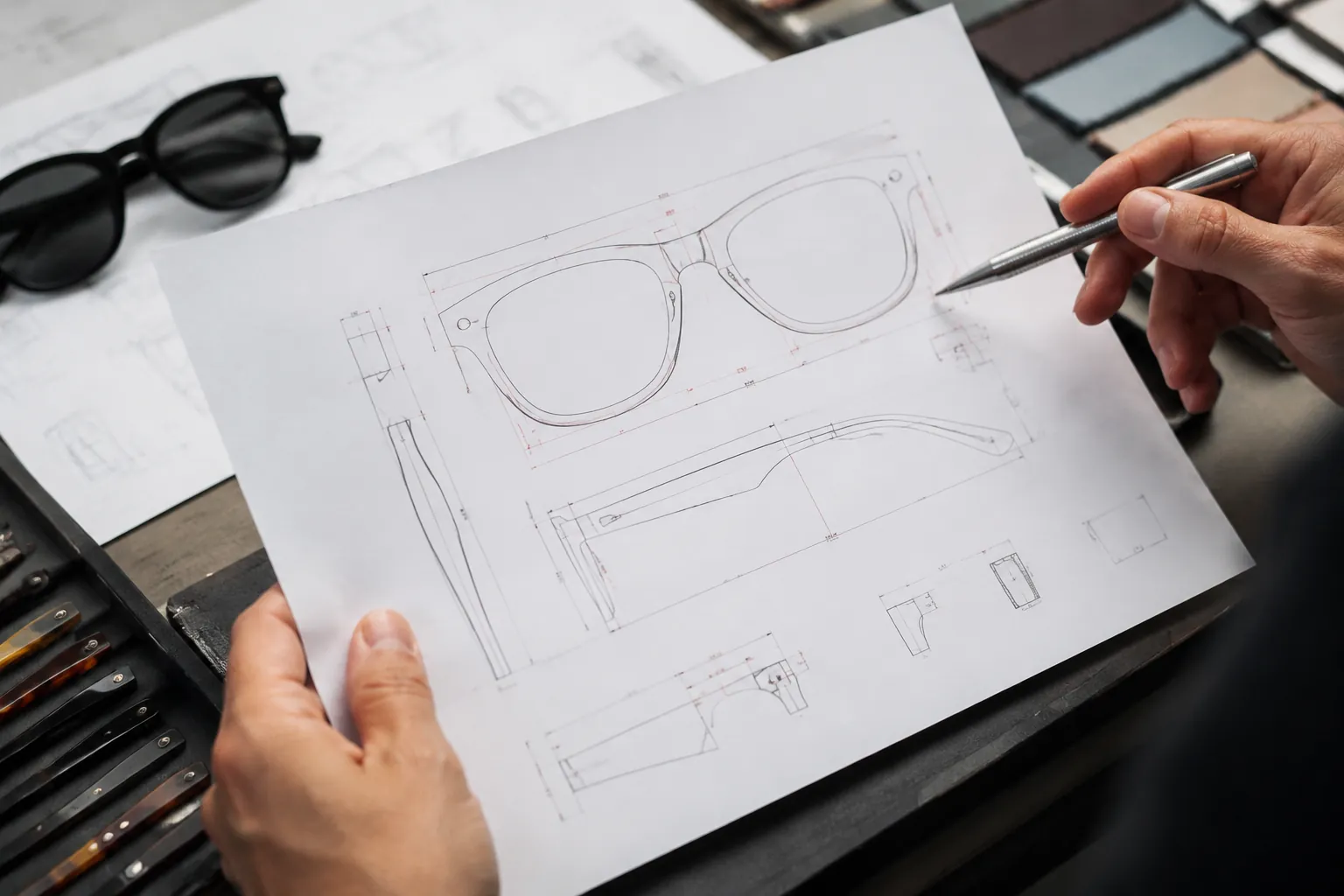
This guide is for brands, importers, distributors, and retailers paying for custom sunglasses tooling or modifying factory-owned frame designs. The aim is simple: know what the mold fee covers, what the factory may still use, how samples will be approved, and which written terms reduce the chance of your frame showing up in another buyer's catalog. Do not pay on a vague promise. Define ownership, exclusivity, tolerances, maintenance, storage, digital-file access, and transfer rights before the deposit leaves your account.
Start with what the mold fee actually buys
A mold fee does not automatically mean ownership. In eyewear sourcing, buyers often use mold, tooling, die, fixture, CAD file, CAM file, and design right as if they mean the same thing. They do not.
A factory may charge for 3D engineering, CNC programming, steel mold blocks, EDM work, hand polishing, texture, fitting jigs, lens templates, logo dies, trial shots, and sampling labor. Unless the agreement says otherwise, the invoice may only buy production access for your orders.
For injection-molded sunglasses, tooling may include a front frame mold, left and right temple molds, nose-pad or insert tooling, logo inserts, and fixtures for hinge fitting, lens cutting, and assembly checks. A simple one-color PC or TR90 style may need fewer parts. A wrap frame, co-injected detail, metal decoration insert, soft nose pad, or complex temple shape usually needs more validation and more correction time.
Acetate frames are different. They usually rely on CAD drawings, CNC cutting programs, lamination references, bending forms, temple wire tools, drilling jigs, rivet or plaque dies, and polishing fixtures rather than one large injection mold. If you fund acetate development, protection should cover files, fixtures, and custom hardware. Not just a physical mold.
Ask which steps are done in-house and which are outsourced: mold making, injection, acetate cutting, CNC milling, lens tinting, printing, decoration, assembly, and QC. Tooling control is tied to production control. The party controlling mold corrections, trial shots, lens fitting, and inspection records directly affects launch timing and product consistency.
Compare the main tooling routes before choosing one
Most buyers have three commercial routes: use an existing factory model, modify an existing model, or build a fully custom frame. The right route depends on the sales channel, forecast, launch date, and level of design protection needed. A short promotional run does not need the same tooling strategy as a signature retail line.
| Tooling route | Typical use case | MOQ and cost logic | Lead-time impact | Negotiation focus |
|---|---|---|---|---|
| Existing factory design | Fast replenishment, market test, event merchandise, lower-risk private label | Lowest development cost; MOQ depends on supplier policy, available material, decoration, lens spec, and packaging | Fastest; standard samples may be quick if materials and parts are available | Logo rights, colorways, lens spec, packaging, and short-term channel or customer restrictions |
| Modified factory design | Changed temple, logo plate, hinge, bridge detail, lens shape, colorway, or decoration package | Useful when the forecast supports part-specific tooling, logo dies, inserts, or fixture changes | Moderate; new or modified parts usually require trials and approval samples | Define which modified parts are exclusive and which base model remains factory-owned |
| Fully custom injection mold | Signature frame shape, long-term collection, protected distributor program | Best when repeat demand can absorb the tooling cost over the product life, not only the first order | Longest; drawing approval, mold build, T0/T1/T2 trials, corrections, and pre-production sample approval | Ownership, third-party use ban, maintenance, storage, transfer rights, digital files, and inactive mold rules |
| Custom acetate development | Premium fashion frame, unique lamination, custom plaque, temple wire, or rivet detail | Tooling value may sit in files, jigs, cutting programs, bending forms, and hardware dies rather than steel injection molds | Moderate to long; sheet behavior, bending, polishing, and hardware fitting need validation | CAD/CAM file access, fixture ownership, color references, hardware exclusivity, and approved physical samples |
A paid mold rarely makes sense for a small market test unless the buyer is deliberately funding a pilot before a larger launch. Ask for price tiers at realistic quantities such as 300, 1,000, and 5,000 pairs. Do not assume those tiers apply to every frame. Unit price depends on material, lens category, decoration, hinge type, packaging, inspection requirements, and order mix.
Calculate tooling amortization across the expected product life, including reorders. The first purchase order is only part of the math.
Put ownership, access, and use limits in plain language
A strong tooling clause should be boringly specific. It should not depend on chat messages, friendly emails, or the phrase "private mold." If you are paying for custom tooling, the agreement should say who owns each asset after full payment, who may use it, where it is stored, who maintains it, and what happens if orders stop.
- Tooling identification: list each item by name and part number: front frame mold, left temple mold, right temple mold, nose pad insert, logo plate die, lens cutting template, fixture, CNC program, CAD file, CAM file, packaging die, or inspection gauge.
- Ownership trigger: state whether ownership transfers after full mold payment, after first bulk shipment, after all invoices are paid, or never. If payment only buys production access, say so.
- Third-party use restriction: state whether the factory may produce for other customers using the same tool, modified tool, shared base model, or similar appearance.
- Storage location: identify the factory site or tooling room. If production or storage moves to another site, require written notice.
- Maintenance: define what is included in unit pricing, such as cleaning, anti-rust oiling, minor polishing, screw-hole maintenance, and inspection before reorder.
- Transfer right: state whether the buyer may remove the tool after open invoices are paid, and who pays packing, inspection, export handling, domestic transport, and international freight.
- Inactive period: define consequences after 12, 18, or 24 months without orders: storage fee, maintenance charge, loss of exclusivity, release to non-exclusive use, or disposal after written notice.
Vague words create disputes. "Exclusive design" should specify exact parts, territory, channel, time period, and order commitment. "Buyer-owned mold" should specify whether digital files, lens templates, fixtures, and gauges are included. If sales, QC, and production teams cannot identify the restriction on a work order or bill of materials, the factory cannot manage it reliably.
Use narrower protection for modified factory designs
Many buyers do not need a full custom mold. They want an existing square acetate frame with a thicker temple, a different hinge, a new logo plaque, an adjusted lens shape, or a new color and packaging program. That can be a smart route. It is also where many disputes start.
If the factory already owns the base design, you usually cannot claim the whole frame unless the factory agrees in writing to assign or restrict those rights. Do not assume.
A better approach is part-specific protection. For example, the factory may continue selling its existing model number, but may not sell frames using the buyer-funded temple shape, logo plate, temple wire pattern, special color combination, printed lens artwork, or branded packaging to another customer. This is easier to manage because production teams can check part codes, artwork files, Pantone references or physical color standards, lens tint codes, and BOM details.
For acetate, define the exact protected assets: CAD drawing, CNC cutting file, lamination color reference, sheet supplier and color code where applicable, bending form, temple core pattern, plaque die, rivet detail, and polishing standard. Acetate sheet batches can vary in pattern distribution, density, and finishing behavior. Two frames may look similar without using the same fixture. Protect the files and custom components you funded.
For injection frames, state whether protection covers the full front, temple pair, hinge area, nose pad geometry, lens groove, decorative insert, or only a removable logo part. If the base front remains factory-owned but your temples are exclusive, write that distinction. It avoids the common argument where one side thinks the whole style is exclusive and the other side thinks only the logo plate is restricted.
Tie exclusivity to territory, channel, duration, and volume
Factories resist unlimited exclusivity with no order commitment because it blocks other sales. Buyers resist paying mold fees if the same frame can be offered to direct competitors. The workable middle ground is a specific exclusivity term tied to covered parts, territory, channel, duration, and minimum purchase volume.
A regional optical-retail brand may only need protection in named countries through optical stores. A promotional distributor may need temporary protection for one corporate campaign or event program. A fashion brand may want broader online protection, but that usually requires a stronger forecast and a clear order commitment.
A useful exclusivity clause answers five questions: what is covered, where it is covered, which channels are restricted, how long it lasts, and what quantity keeps it active. For example, a buyer might receive 24 months of exclusivity for a specific front-and-temple combination in the EU optical channel, provided annual purchases reach an agreed quantity.
If the buyer misses that quantity, exclusivity might narrow to specific countries, convert to colorway exclusivity, or end after written notice. Keep the number credible. If the first commercial order is a small pilot, global all-channel exclusivity with no annual quantity is usually not realistic.
If exclusivity matters, build a staged plan: pilot order, first market order, then annual protection at quantities both sides can support. Also state whether factory-caused shipment delays count against the buyer's annual volume commitment. They should not.
Define sample stages, tolerances, and material behavior
A first mold trial is not a finished product. For injection frames, T0 or T1 samples may show sink marks around thick temples, uneven shrinkage, tight hinge fit, lens groove distortion, visible weld lines, color variation, or a front curve that does not hold the lens correctly. Expect corrections. Define the process before the mold is built.
A practical flow is: approve 2D or 3D drawings, confirm material and color, build tooling, run T0 shots, measure key dimensions, correct the tool, run T1 samples, test lens fit and hinge function, approve pre-production samples, then release bulk. Existing-tool samples are usually faster than new mold development, but timing still depends on material availability, design complexity, factory capacity, decoration, lens tinting, and packaging.
New mold development needs time for steel cutting, EDM, polishing, trial injection, cooling adjustments, and correction rounds. A single estimated ship date is not enough. Put the stages and approval duties in the purchase agreement.
Do not write "perfect sample" into the contract. Write measurable standards. Useful checkpoints include frame width, bridge width, temple length, front curve, lens groove depth, hinge alignment, temple opening angle, screw retention, burrs, visible sink marks, coating adhesion, logo position, lens transmittance category, and package labeling.
For many sunglass programs, practical cosmetic and assembly tolerances may include logo placement within an agreed millimeter range, temple length within an agreed millimeter range, and color matched to an approved physical sample rather than only a screen image. The supplier should confirm tolerances because achievable limits depend on material, mold design, frame geometry, and decoration method.
Material behavior matters. PC is tough and cost-efficient, but poor processing can cause stress marks or cosmetic defects. TR90 is flexible and light, but shrinkage and color consistency need control. Acetate has a premium hand feel and polish, but sheet variation, bending memory, and longer finishing labor affect consistency. Metal decoration, rubberized coatings, lens printing, hot stamping, pad printing, laser marking, and embedded logo plates each carry different adhesion and durability risks. Specify the decoration method, test expectation, and approved reference sample before mass production.
Negotiate maintenance, storage, transfer, and digital files
Molds and fixtures are physical assets. They wear, rust, get scratched, and sometimes need re-polishing or insert replacement. If a mold sits unused in a humid workshop for months, the next run may need cleaning, anti-rust treatment, polishing, or trial shots before it produces acceptable frames. Do not leave this discussion until the reorder is urgent.
For buyer-owned molds, normal maintenance during active production is often treated as part of the unit price. Write that down. Major repair caused by design change, abnormal wear, corrosion after long inactivity, accidental damage, or buyer-requested modification may be charged separately.
If exclusivity depends on order volume, define whether storage is free while the buyer remains active and what fee applies if the buyer misses the annual order commitment.
Mold transfer is more sensitive than many buyers expect. Moving a tool may require payment of open invoices, disassembly, cleaning, anti-rust oiling, protective packing, export paperwork, domestic transport, and receiving-factory inspection. A mold designed around one injection machine, runner layout, cooling setup, resin grade, and process window may not run well elsewhere without adaptation. A transferred mold is not automatically production-ready.
Blunt rule: if transfer rights matter, negotiate them before the mold is built. After a dispute, every inspection fee, packing cost, open balance, and missing file becomes leverage.
Also negotiate digital assets. CAD files, CAM programs, lens drawings, BOMs, Pantone references or physical color standards, decoration artwork, packaging artwork, measurement reports, and approved sample photos may be more useful than the metal tool if you need future redevelopment. If the factory will not release editable files, ask at minimum for final drawings, measurement records, lens templates, artwork files, and approved specifications needed for continuity.
Use a deposit checklist before committing funds
Before paying a mold fee, combine the commercial and technical terms in one written agreement or purchase package. It does not need to be long. It must be specific enough that a new procurement manager can understand the deal months later without searching chat history.
- Confirm whether the design is factory-owned, modified factory-owned, or fully custom buyer-funded.
- List every paid mold, insert, fixture, cutting program, logo die, decoration plate, packaging die, inspection gauge, and digital file by name.
- State ownership, production access, and third-party use restrictions after full payment or another agreed trigger.
- Define exclusivity by covered part, model number, colorway, territory, channel, duration, and minimum annual order quantity.
- Set development stages: drawing approval, T0/T1 samples, correction rounds, pre-production sample, and bulk release.
- Attach technical specifications: material, lens category, hinge type, screw standard, frame measurements, logo method, color reference, packaging, barcode, warning text, and labeling.
- Confirm decoration method: pad printing, hot stamping, laser marking, metal plaque, embossed logo, lens printing, coating, or other finish.
- Confirm market and compliance targets early, such as CE EN ISO 12312-1, ANSI Z80.3, AS/NZS 1067, REACH, FDA registration where applicable, ISO 9001 supplier quality-system status where claimed, and BSCI audit status where required by the buyer.
- Define maintenance, storage, inactive mold handling, inspection before reorder, and transfer rights.
- Clarify unit price tiers at realistic order quantities so tooling amortization is visible.
- Agree what happens if the frame cannot meet the approved specification after reasonable correction rounds, including whether the buyer receives a refund, credit, redesign option, or documented technical explanation.
The best tooling negotiation is not aggressive. It is precise. If a sunglasses frame is important enough for a mold fee, it is important enough for written ownership, use, exclusivity, tolerance, maintenance, storage, and file-access terms. Clear rules protect the buyer and give the factory a usable production brief.
Have a custom sunglasses project in mind?
Send us your styles, target market and quantities and we will return a detailed quote with MOQ, lead time and a sample plan.
Get a QuoteWhy source this from Wenzhou with LumiShades
Wenzhou in Zhejiang Province is widely regarded as China’s eyewear manufacturing capital, producing a large share of the world’s sunglasses. That concentration matters to buyers: a deep local supply chain for acetate sheet, hinges, lens blanks, plating and packaging means shorter component lead times, easier color and material matching, and a workforce with decades of eyewear-specific skill. LumiShades has manufactured in this ecosystem since 2009, and our vertical integration — in-house injection molding, acetate cutting, CNC milling, lens tinting, decoration and quality control — means no part of your order is quietly subcontracted to a workshop you cannot audit.
For international buyers, that vertical control translates into accountability. When a single factory owns every step, defects are traced and fixed at source rather than bounced between vendors, and your specifications survive intact from first sample to bulk. We back this with 15+ years of experience, shipments to 60+ countries, more than 5 million pairs produced per year and a 98.5% on-time delivery rate. Our certifications — CE EN ISO 12312-1, FDA registration, ANSI Z80.3, AS/NZS 1067, REACH, ISO 9001 and BSCI audit — mean the compliance documentation your market requires already exists. Explore our manufacturing capabilities and quality control process to see how this works in practice.
Frequently asked questions
If I pay the sunglasses mold fee, do I automatically own the mold? No. Payment alone does not prove ownership. Before paying, require a tooling list and a written ownership clause. The clause should state whether ownership transfers after full payment, after the first bulk shipment, after all invoices are paid, or never. It should also list the covered assets: front mold, temple molds, inserts, fixtures, logo dies, lens templates, CAD files, CAM files, and inspection gauges where applicable.
Can I get exclusivity on a factory's existing frame design? Sometimes, but it must be limited and written clearly. If the factory already owns the base model, you may be able to negotiate exclusivity for your modified temple, logo plate, colorway, lens artwork, packaging, customer account, territory, or sales channel. Do not assume the entire frame is exclusive unless the agreement says the base model is also restricted. Add model numbers, part codes, territories, duration, and minimum purchase commitments.
What MOQ makes a custom sunglasses mold practical? There is no universal MOQ. Tooling economics depend on mold cost, frame complexity, target unit price, and expected reorders. Ask the supplier for unit prices at several quantities, then divide the mold fee across the total expected lifecycle volume. A mold fee spread over one small pilot order may make the landed cost too high. The same fee spread over repeat orders may be reasonable.
How long does new sunglasses tooling take? Exact timing must be confirmed by the supplier for the specific frame. Existing-tool samples are usually faster if materials and parts are available. New tooling takes longer because the process includes drawing approval, mold or fixture build, T0/T1 trials, measurement, correction, lens fitting, decoration approval, and pre-production sample approval. Put the stages and approval responsibilities in the purchase agreement instead of relying on one estimated ship date.
What should happen if first mold samples are not acceptable? The agreement should allow reasonable correction rounds after T0 or T1 samples and should define who pays for corrections. Separate normal development corrections from buyer-requested design changes. Use measurable issues such as lens fit, hinge function, front curve, burrs, sink marks, symmetry, logo position, color match, and coating adhesion. Also state what happens if the frame still cannot meet the approved specification after the agreed correction rounds.
Can I move my buyer-owned mold to another factory later? Only if transfer rights are written into the agreement. The transfer clause should cover open invoice payment, mold ownership confirmation, inspection, cleaning, anti-rust packing, crating, export or domestic handling, freight, and release of related drawings or setup information. A transferred mold may still need adjustment at the receiving factory because machines, materials, cooling, and process settings may differ.
Which compliance items should be considered during tooling and sampling? Confirm the destination market before tooling and sampling because compliance can affect lens category, visible light transmittance, UV claims, impact requirements, markings, labeling, restricted substances, and documentation. Common references include CE EN ISO 12312-1, ANSI Z80.3, AS/NZS 1067, REACH, and FDA registration where applicable. If the supplier claims ISO 9001 certification or BSCI audit status, request current documents and verify scope, validity date, and company name.
Ready to start?
Explore our rimless sunglasses or request a quote — our sales team replies within 12 hours.
Request a Quote