
OEM vs ODM Sunglasses: Which Cuts First-Order Risk?
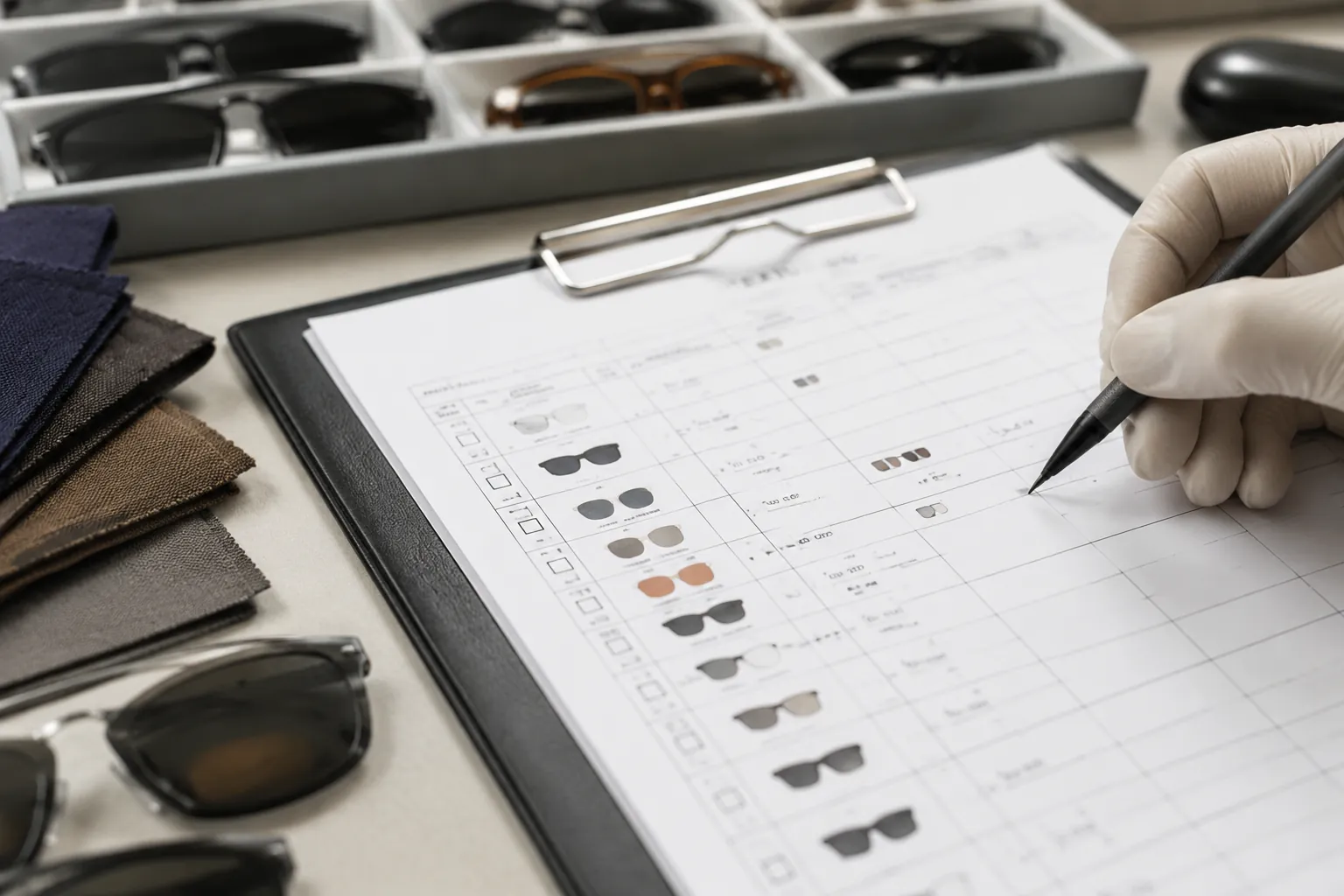
This guide is for brand owners, importers, distributors, and retailers placing a first custom sunglasses order. The goal is simple: reduce risk on the first buy. Not chase maximum design freedom. You need the sourcing model that gives you the best shot at hitting target cost, launch timing, compliance requirements, and reorder potential without tying up too much cash in an unproven style. For most first orders, the real choice is not creativity versus convenience. It is whether your market truly needs a new frame structure, or whether branding, color, lens tint, and packaging can create enough distinction on a proven platform.
Start with the question that matters: what will the customer notice?
Many buyers start with, "Should we do OEM or ODM?" Ask a better question first: "Which product differences will the customer actually see, feel, and pay for?" That answer tells you whether extra development risk is justified.
ODM starts from an existing factory frame or a proven platform. The mold or tooling already exists. Hinge placement has already been tested in production. The factory usually knows how that model behaves in lens fitting, temple alignment, and final assembly. That removes several common first-order failure points.
OEM starts from a new design, sketch, CAD file, tech pack, or reference sample. It gives you more control over front shape, temple geometry, dimensions, base curve, material thickness, and hardware details. It also adds more variables. Engineering translation. Prototype revisions. First-run process tuning.
For a first order, many buyers do not need a new frame architecture. They need a product that looks on-brand, fits the target market, meets compliance requirements, and can be reordered without quality drift. In many cases, that points to ODM with controlled customization.
OEM makes sense when the frame itself is part of the brand story. That could mean a signature silhouette, a fit profile stock platforms cannot deliver, a custom temple build, or a distinct acetate construction that cannot be achieved by modifying an existing model. If your differentiation is mostly lens tint, frame color, logo treatment, finish, and packaging, ODM usually carries less first-order risk.
Practical rule: if you cannot clearly explain why the frame must be structurally different, review ODM options first.
OEM and ODM compared on first-order risk
The table below shows the trade-offs most first-time buyers face when ordering custom sunglasses in volume.
| Factor | ODM | OEM |
|---|---|---|
| Starting point | Existing factory frame or tested platform | New frame built from your drawing, tech pack, CAD, or reference sample |
| Sampling timeline | Usually shorter because the base frame already exists; timing depends on logo, color, lens, and packaging changes | Usually longer because the factory must develop and revise a new frame before approval |
| Bulk lead time | Usually more predictable once the sample is approved because the production process is already established | Usually less predictable on the first run because tooling, fit correction, and production tuning may still be in progress |
| MOQ exposure | Often lower because the factory is not building a new platform from zero | Often higher if unique molds, custom metal parts, or dedicated components are required |
| Development cost | Usually limited to samples, decoration setup, and packaging changes | May include tooling, repeated prototypes, fit correction, and custom hardware costs |
| Unit price behavior | Usually more predictable because process yield is already known on the base style | Can be less predictable on the first run if reject rate, labor time, or material usage changes during development |
| Technical risk | Lower because the factory already knows the mold behavior, assembly sequence, and basic quality controls | Higher because hinge alignment, warpage, polishing consistency, and lens retention still need to be validated |
| Best use case | Market testing, seasonal launches, retailer private label, and faster-turn programs | Signature styles, differentiated fit concepts, or longer-life products where structural uniqueness matters |
This matters most on a first order because cash often leaves before demand is proven. If an ODM program allows a smaller opening quantity, you can test multiple colorways or finish options with less inventory exposure. If an OEM frame needs new tooling or custom components, your financial risk rises before you have reliable sell-through data.
How cost really moves: MOQ, tooling, yield, and price breaks
First-order buyers often focus too much on quoted unit price. The real risk sits in total landed exposure: sample rounds, tooling if required, MOQ, packaging complexity, defect handling, and unsold inventory if the style misses.
With ODM, early cost is usually driven by decoration and customization rather than structure. Common changes include custom lens color, temple print, laser engraving, metal logo application, branded pouch, barcode labeling, and retail carton changes. Because the frame platform already exists, you avoid most structural development cost and reduce the odds of paying for repeated frame revisions.
With OEM, the first run often absorbs costs that do not show up clearly in the opening quote:
- Prototype rounds increase if fit, temple tension, surface finish, or alignment miss the target.
- New molds or custom hardware may require upfront spend before production starts.
- Yield loss can be higher on first production while the factory stabilizes cutting, polishing, decoration placement, or assembly.
- Unique parts can push the practical MOQ higher than the headline frame quantity suggests.
An ODM order can carry a higher per-unit price than a large future reorder, but it usually limits inventory exposure and gives you market feedback faster. An OEM quote may look competitive once spread across a large quantity, yet become expensive on the first run after prototype revisions, tooling, and reject risk are added back in.
When comparing quotes, ask each supplier for the same cost structure: sample charges, tooling charges, packaging charges, MOQ by color, MOQ by logo method, spare parts policy, and whether compliance testing is included, excluded, or quoted separately. That is how you see the real cost difference.
Lead time is shaped by approval loops, not just factory capacity
Buyers often ask for one number: "What is the lead time?" That is too simple. Ask instead: "How many approval loops are built into this order, and how stable is the process behind them?"
On a stable ODM program, sampling is usually faster because the main technical variables are already known. The factory has production history on the frame. The lens shape is already defined. The hinge location is not being developed from zero. Decoration and packaging still need approval, but the frame itself is usually the least uncertain part.
OEM adds time in three predictable places:
- Engineering translation. A concept must become production dimensions, material specification, lens groove geometry, hinge selection, and tolerance targets.
- Prototype correction. The first sample may reveal front warpage, lens retention that is too tight or too loose, polishing inconsistency, bridge fit problems, or temple alignment issues.
- Pilot run tuning. Decoration registration, acetate finishing consistency, molding behavior, and lens color repeatability often need adjustment before mass production is stable.
These corrections are normal on a new frame. Small dimensional changes can affect comfort, assembly consistency, and visual symmetry. A frame can look fine in photos and still create problems in fit, lens seating, or hinge action.
Short version: ODM and OEM can both move quickly at the quotation stage, but OEM usually carries more decision loops before the order is truly ready for production. That is why first OEM orders slip more often when the brief is incomplete or approvals move slowly.
The failure modes that hurt first orders most
Many sourcing articles stay too general. These are the problems that most often turn a promising first order into a costly one.
- Shape approved, fit ignored. A frame can look good in CAD or a photo and still fit badly. Bridge contact, temple spread, front curvature, and lens base all affect comfort and appearance.
- Material chosen for look, not behavior. Injection-molded plastic and acetate do not behave the same way in production. Acetate can offer more visual depth and finishing options, but it also needs tighter control in cutting, CNC shaping, polishing, and hand finishing.
- Decoration overpromised. Fine pad printing can shift on curved surfaces. Metal logo application needs accurate recess sizing and stable bonding. Laser engraving can look different depending on substrate and finish.
- Lens color approved from one sample only. Fashion tints should be approved against a retained visual standard. Small shade differences become obvious when products are displayed side by side.
- Compliance left to the end. If the target market requires CE EN ISO 12312-1, ANSI Z80.3, or AS/NZS 1067, lens category, labeling, and material choices should be aligned before final sample approval.
ODM reduces these risks because the structure, assembly sequence, and production controls are already familiar to the factory. OEM does not automatically create problems. It simply creates more chances for problems if the tech pack, tolerance priorities, or approval process are weak.
Material, decoration, and compliance details that should drive the model
Material choice is not just a styling decision. It affects consistency, yield, and the amount of process control your order will need.
Injection-molded frames are common in cost-sensitive, repeatable volume programs. Once tooling and processing are stable, output is usually consistent. The trade-off is that structural changes matter more because front geometry, wall thickness, and hinge area are tied closely to tooling.
Acetate offers a more premium feel and stronger visual depth, especially for translucent, laminated, or patterned styles. It also adds more steps: sheet cutting, CNC shaping, beveling, polishing, hinge fitting, and manual finishing. That can be good for brand presentation. It also creates more variables on a first run if the frame is complex.
Decoration method matters too:
- Pad printing: cost-effective for logos and inside-temple branding, but registration can shift on curved or textured surfaces.
- Laser engraving: durable and clean for subtle branding, though contrast depends on material and finish.
- Metal logo plate: premium in appearance, but requires precise fitting, stable adhesive control, and consistent placement.
- Hot foil or screen print on packaging: useful for brand impact without adding technical risk to the frame itself.
Compliance should be discussed before sampling, not after production. Common checkpoints for sunglasses can include CE EN ISO 12312-1, ANSI Z80.3, AS/NZS 1067, REACH, and FDA registration where relevant to the product and market. Supplier management credentials such as ISO 9001 and BSCI are also worth reviewing because they help you assess quality management and social compliance, even though they are not product-performance standards for sunglasses.
The key point is simple: compliance is tied to lens category, visible light transmittance, labeling, materials, and the finished product configuration. If you change lens specification, frame-lens fit, or structural details on an OEM project, do not assume prior testing on another model still applies.
Practical rule: confirm destination market, product labeling, lens category, and restricted-substance expectations before final sample sign-off and before bulk production starts.
How to vet a supplier and choose the safer path
The OEM-versus-ODM decision also depends on supplier capability. A weak supplier can make a simple ODM order difficult. A strong supplier can manage a disciplined OEM project with fewer surprises.
Before placing a first order, ask practical questions and request documents you can verify:
- Ask for product test documentation. Request recent reports relevant to CE EN ISO 12312-1, ANSI Z80.3, or AS/NZS 1067 if the supplier claims experience in those markets.
- Check management systems. Ask whether the factory holds ISO 9001 and whether it has a current BSCI audit if social compliance matters to your customers or retail channels.
- Confirm the production scope. Ask which processes are in-house and which are subcontracted, especially molding, acetate processing, lens production, decoration, and final assembly.
- Review sample control. Ask how approved samples are retained and how color, logo position, and packaging details are checked before shipment.
- Clarify corrective-action handling. Ask what happens if bulk production differs from the approved sample, including rework policy, replacement policy, and inspection steps.
This vetting matters because OEM requires stronger engineering and process control than ODM. If a supplier cannot explain its sample control, test process, or quality checkpoints clearly, treat that as a warning sign.
If you are still unsure which route lowers your first-order risk, use this framework:
- Define the sales objective. A retailer private-label test and a long-term signature model should not carry the same risk profile.
- Set the launch tolerance. If you have a fixed selling season or retailer deadline, process stability usually matters more than maximum design freedom.
- Identify real differentiation. If most of your value is in branding, curation, lens tint, and packaging, ODM is often enough. If the frame architecture itself is the product story, OEM may be justified.
- Check inventory comfort. If you are not comfortable holding unsold stock on an unproven style, keep the first order lean and avoid stacking too many custom variables at once.
- Audit the tech pack honestly. Weak drawings, vague comments, and changing references are manageable in ODM but risky in OEM.
- Review supplier capability. A supplier with clear quality controls, verified test experience, and documented production processes is better positioned to handle custom work.
Simple rule: choose ODM for speed, lower cash exposure, and cleaner market testing; choose OEM only when the frame itself must be recognizably yours, not just branded yours.
For many first-time buyers, the lowest-risk structure is a proven ODM frame with controlled custom points: limited frame colors, one or two lens options, inside-temple branding or a small metal logo detail, plus custom pouch and carton labeling. That creates visible brand identity without forcing a new frame-development path.
If you do choose OEM, keep the first brief disciplined: one frame, limited color count, standard hardware where possible, and no stacking of multiple experimental variables on the same run. Good sourcing starts with repeatability. For many buyers, that starting point is closer to ODM than they expect.
Have a custom sunglasses project in mind?
Send us your styles, target market and quantities and we will return a detailed quote with MOQ, lead time and a sample plan.
Get a QuoteWhy source this from Wenzhou with LumiShades
Wenzhou in Zhejiang Province is widely regarded as China’s eyewear manufacturing capital, producing a large share of the world’s sunglasses. That concentration matters to buyers: a deep local supply chain for acetate sheet, hinges, lens blanks, plating and packaging means shorter component lead times, easier color and material matching, and a workforce with decades of eyewear-specific skill. LumiShades has manufactured in this ecosystem since 2009, and our vertical integration — in-house injection molding, acetate cutting, CNC milling, lens tinting, decoration and quality control — means no part of your order is quietly subcontracted to a workshop you cannot audit.
For international buyers, that vertical control translates into accountability. When a single factory owns every step, defects are traced and fixed at source rather than bounced between vendors, and your specifications survive intact from first sample to bulk. We back this with 15+ years of experience, shipments to 60+ countries, more than 5 million pairs produced per year and a 98.5% on-time delivery rate. Our certifications — CE EN ISO 12312-1, FDA registration, ANSI Z80.3, AS/NZS 1067, REACH, ISO 9001 and BSCI audit — mean the compliance documentation your market requires already exists. Explore our manufacturing capabilities and quality control process to see how this works in practice.
Frequently asked questions
Is ODM too generic for a brand that wants to look different? Not necessarily. ODM can still create clear differentiation through colorways, lens tints, surface finish, logo application, and branded packaging. To make ODM work, ask the supplier which parts of the style are customizable without changing the base structure, request physical or photo references of those options, and approve a retained sample that defines the final color, logo position, and packaging details.
When should I choose OEM for sunglasses? Choose OEM when the frame shape, construction, dimensions, or fit are essential to your brand and cannot be achieved by modifying an existing platform. Before moving forward, make sure you have a clear tech pack or CAD file, a realistic launch window, budget for prototype revisions and possible tooling, and a supplier that can explain how it will manage engineering, sampling, testing, and bulk quality control.
Can I start with low MOQ and still get useful pricing? Yes, but treat a low-MOQ order as a market test rather than your long-term cost benchmark. Ask the supplier for a tiered quote by quantity, color count, and logo method so you can compare the true cost of testing versus scaling. Also confirm whether packaging, testing, and sample charges change at different quantity levels, because those items can materially affect the first order.
What compliance documents should I discuss before ordering? Start by confirming the destination market and sales channel, then ask which product requirements apply to your sunglasses. For many programs, the relevant discussion includes CE EN ISO 12312-1, ANSI Z80.3, AS/NZS 1067, REACH, and FDA registration where applicable. Ask the supplier whether it already has test reports for similar products, whether new testing will be needed for your final configuration, and what labeling and lens-category information must appear on the product or packaging.
How many sample rounds are normal on an OEM order? More than one sample round is common on a first OEM project because the first prototype often exposes issues in fit, alignment, lens retention, finish, or logo placement. Build time and budget for at least one revision loop, and ask the supplier in advance what it will revise between rounds, how changes will be documented, and whether the approved sample will be retained as the production reference.
Ready to start?
Explore our round sunglasses or request a quote — our sales team replies within 12 hours.
Request a Quote