
How to Vet a 5M-Pair Sunglasses Factory
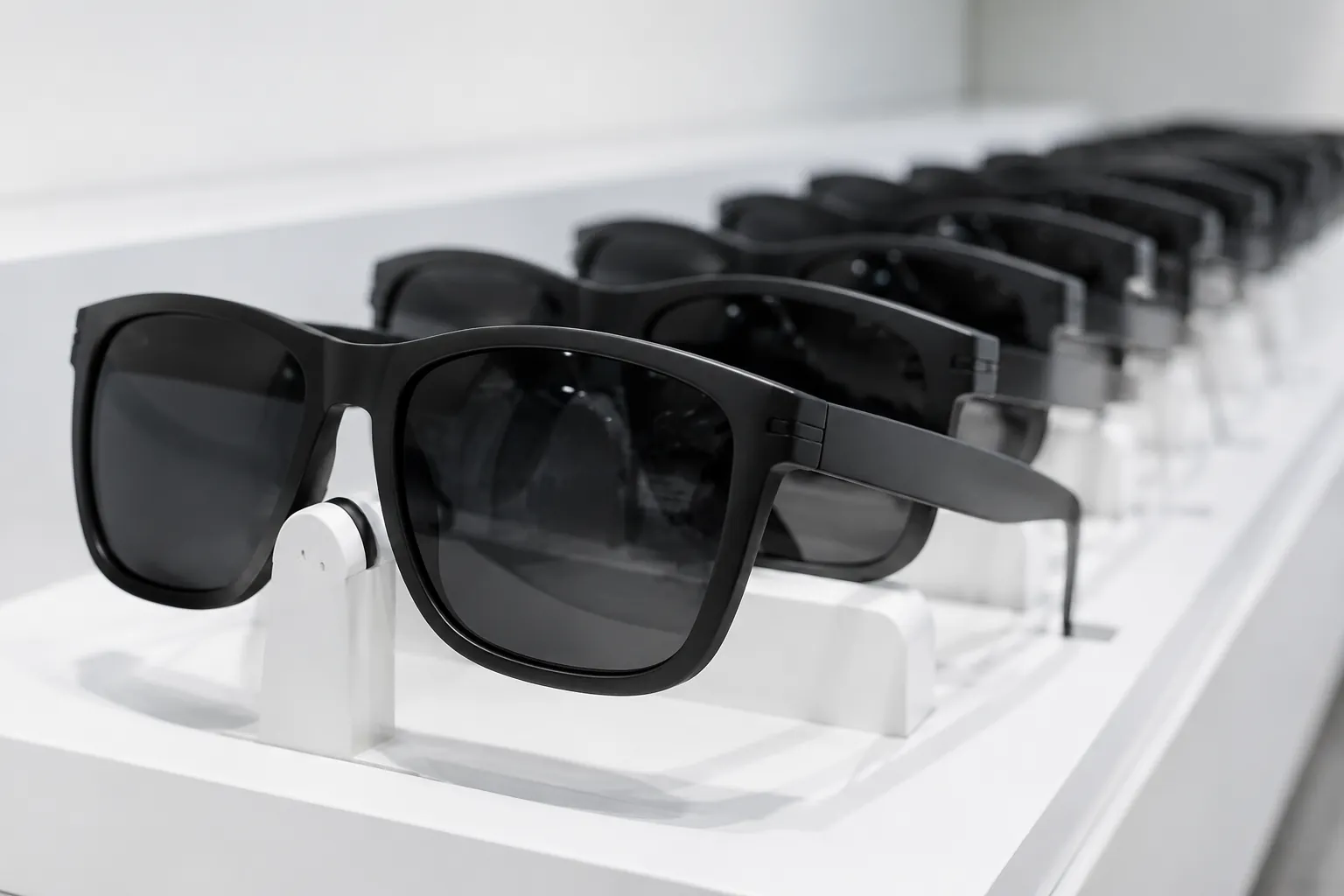
This guide is for brand owners, importers, distributors, and retailers sourcing custom sunglasses at real volume. Do not be impressed by a factory that claims output in the millions. Verify whether that capacity is usable for your product type, materials, compliance needs, and delivery window. A solid audit goes past brochures and generic certificates. It checks process depth, bottlenecks, quality controls, document discipline, and how the supplier performs when a sample order turns into repeat production.
Start With the Capacity Claim, Then Break It Down
A supplier that says it can produce 5 million pairs a year is giving you a headline, not a planning tool. That number matters only after it is broken into operating detail: which product families the factory runs, how many lines or machines are assigned to sunglasses, which steps stay in-house, which are outsourced, and how production is scheduled in peak periods.
Ask the factory to explain capacity by process and by material family, such as injection-molded frames, acetate frames, or mixed-material styles with metal trim or logo plates. Those categories do not use the same labor, machine time, or finishing time. A basic injected frame with a standard lens is not the same job as an acetate style that needs milling, polishing, fitting, decoration, and tighter cosmetic control.
You are trying to separate installed capacity from usable capacity. Installed capacity is the theoretical output of the equipment on the floor. Usable capacity is what the factory can actually ship on time after maintenance, rejects, changeovers, labor limits, material delays, and overlapping orders are factored in.
- Ask for recent monthly shipment volume, not just annual output.
- Ask which product types make up most of that volume: injection, acetate, or mixed construction.
- Ask how many production lines or machines are used for sunglasses and whether they are shared with optical frames or other products.
- Ask which steps are completed in-house and which are outsourced, especially lens tinting, decoration, and packaging.
- Ask how the factory defines on-time shipment and whether it can show shipment records against agreed ex-factory dates.
If the conversation never gets past a broad annual number, treat the claim as unproven. A factory that understands its own output should be able to say where capacity is open, where it is tight, and which order mix it can support without missing dates.
Verify Production Depth by Following One Style End to End
The fastest way to assess a sunglasses factory is simple: pick one style and follow it through the plant. A credible supplier should be able to show where the frame starts, where lenses are prepared, where decoration is applied, where quality checks happen, where rework is handled, and where finished goods are packed and released.
For an injection style, the flow usually includes mold setup, molding, cooling, trimming, hardware installation where needed, lens preparation, lens fitting, decoration, adjustment, cleaning, inspection, and packing. For acetate, the route is longer. It often includes sheet cutting, CNC machining, beveling, tumbling or barrel polishing, hand polishing, hinge routing, temple fitting, adjustment, and final inspection. Acetate can carry more perceived value and stronger color depth. It also brings more manual work and more dimensional change during finishing.
Ask where dimensional variation is most likely to show up and how the factory controls it after finishing. In sunglasses production, material removal during polishing, hinge-routing accuracy, lens groove consistency, and temple alignment all affect whether bulk output still matches the approved sample. If the factory cannot explain where variation occurs and how it is checked, process control is probably weak.
Watch the steps that are often hidden or partly subcontracted. Lens tinting should be controlled against an approved standard. Pad printing should have defined curing and adhesion checks. Metal logo plates should have a controlled attachment method and clear cosmetic inspection criteria. These are common failure points. They are often where bulk quality drifts away from the showroom sample.
Check Bottlenecks, Because Output Breaks at the Slowest Step
Late shipments usually come from one constrained process, not total factory overload. In sunglasses manufacturing, common pressure points include acetate polishing, lens tinting, decoration, hinge fitting, and final inspection. A big annual capacity claim tells you nothing about whether those slower steps are managed well.
A strong supplier should be able to name its usual bottlenecks and explain how orders are scheduled around them. That may include grouping similar lens colors, separating simple and complex SKUs, assigning experienced operators to finishing-heavy programs, or controlling when decoration work is released so queues do not build. The point is not to hear that everything is possible. The point is to hear an actual scheduling method.
| Checkpoint | What You Ask | Strong Answer | Warning Sign |
|---|---|---|---|
| Injection molding | How many machines run sunglasses frames, and how is output planned by style family? | Explains machine allocation, mold-change planning, and differences between simple and complex frame programs | Only repeats annual capacity with no process-level explanation |
| Acetate finishing | How is polishing and fitting capacity managed during peak season? | Describes operator allocation, process sequence, and longer handling time for thick or laminated acetate | States that acetate lead time is the same as injection without explanation |
| Lens processing | How are different lens colors or finishes scheduled and checked? | Explains batch control, approved standard retention, and recheck points before assembly | Says color variation is not an issue without describing any control method |
| Decoration | What are the main reject causes in pad print or logo plate application? | Mentions alignment, curing, surface preparation, adhesion, and cosmetic handling risk | Cannot identify common defect types or where rework occurs |
| Final QC | How is finished-goods inspection organized before shipment? | Shows defined checks for fit, lens defects, print position, labeling, assortment, and carton accuracy | Describes QC only as a quick carton check at the end |
If the factory can explain how work moves through these slower stations, the capacity claim starts to mean something. If it cannot, assume the real risk sits in the hidden constraints, not in the sales pitch.
Use Compliance as a Production-Control Test
Compliance matters. Certificates alone do not qualify a supplier. The real question is whether the exact frame, lens, coating, print, adhesive, and labeling setup you plan to buy is controlled to the rules of the destination market.
References often requested in sunglasses sourcing include CE EN ISO 12312-1 for many EU programs, ANSI Z80.3 for the US market, AS/NZS 1067 for Australia and New Zealand, REACH for material restrictions, FDA registration where required for US market participation, ISO 9001 as a quality-system indicator, and BSCI where buyers need social compliance review. Useful documents, yes. Proof that every SKU is compliant, no.
Ask for recent test reports that match the product category and construction closest to your order. A basic injected frame with a standard smoke lens is not equivalent to an acetate style with mirrored lenses, metal trim, soft-touch coating, or extra decoration. Coatings, inks, adhesives, and logo components are common risk points because they are often sourced separately and can change if the bill of materials is not tightly controlled.
- Confirm the destination market before sampling so the correct lens standard and labeling requirements are applied from the start.
- Ask for test reports tied to similar lens type, frame material, and decoration method.
- Match the approved sample bill of materials to the bulk bill of materials before production release.
- Ask how the factory records material lots, production lots, and shipment records for traceability.
A disciplined factory ties compliance documents to the actual product configuration and production lot. A weak supplier shows a generic report and assumes it covers everything. It does not.
Build the First Order to Expose Real Operating Behavior
You do not need a large first purchase order to assess a large factory. You need an order structure that reveals repeatability, document accuracy, communication discipline, and lead-time control. For most private-label sunglasses programs, that means fewer SKUs and cleaner specifications.
If a supplier offers low MOQ options, use them carefully. Very small runs can help with market testing, but they may not show how the factory performs under normal bulk conditions. For qualification, a controlled pilot order is often more useful than a cluster of micro-runs because it forces the supplier to manage material allocation, production sequencing, inspection, and packing as a real order.
| Order Stage | Typical Qty per Design | Typical Price Logic | What You Learn |
|---|---|---|---|
| Sample run | 1-5 pairs | Highest cost per pair because setup and manual handling are concentrated into very small quantity | Appearance, fit, lens color, logo placement, and communication accuracy |
| Pilot bulk | 50-300 pairs | Setup cost is spread across more units, but efficiency is still limited | Repeatability, packing accuracy, document control, and basic lead-time discipline |
| Validation repeat | 300-1000 pairs | Unit cost may improve if material purchasing and line efficiency become more stable | Consistency across batches, rework rate, and whether the first result can be repeated |
| Scale order | 1000-5000+ pairs | Pricing is usually strongest when materials, packaging, and process stay stable | Forecast reliability, line loading performance, and sustained quality control |
Keep the first PO simple on purpose. Limit the number of colorways. Keep packaging straightforward. Do not stack several decoration methods into the same first shipment. The goal is to expose how the factory operates, not to test every customization option at once.
Audit Cost and Lead-Time Drivers Before You Negotiate
Unit price means little until you know what is driving it. In custom sunglasses, cost usually moves with frame material, lens specification, decoration method, hardware, packaging complexity, tooling status, and expected yield loss. Injection is often the more scalable route for high-volume fashion programs. Acetate usually costs more to process because machining, polishing, and fitting involve more labor and more handling. Added components such as custom logo plates, special coatings, or premium packaging can raise both cost and production risk.
Lead time should also be broken into stages instead of treated as one sales number. A supplier may quote sample timing and bulk timing, but the useful question is how that timing is built. The schedule normally includes:
- Artwork confirmation and pre-production sample approval
- PO release and deposit confirmation where applicable
- Material allocation for frame, lens, hardware, and packaging
- Production scheduling and line loading
- In-process QC and final inspection
- Packing, carton marking, and shipment handoff
Ask which stages are controlled internally and which depend on outside suppliers. Standard injected black frames may be easier to schedule than custom acetate colors, mirrored lenses, or custom hardware. Decoration can also stretch lead time if the factory depends on outside suppliers for plates, coatings, or packaging inserts. Negotiate with those risk points in mind, not just the unit price in front of you.
Define QC Standards Before Bulk Leaves the Factory
Final inspection should not begin after cartons are closed. Strong sunglasses factories check incoming materials, monitor key steps during production, inspect after decoration, verify lens fitting, and then perform finished-goods inspection before packing is complete. That order matters. Defects are cheaper to correct early.
Ask to see the inspection checklist and the defect categories. A useful checklist should cover both appearance and function: scratches, sink marks, flow marks, print position, logo adhesion, lens cleanliness, temple alignment, hinge action, screw tightness, left-right symmetry, labeling, and assortment accuracy. For acetate, add polish consistency, edge finish, and hinge-routing accuracy. For injection, pay close attention to trimming quality, flash, warpage, and lens groove condition.
Push the supplier to define measurable acceptance points wherever possible. "Match sample" is not enough by itself. Confirm how logo position will be checked, how lens color will be compared with the approved standard, what level of cosmetic variation is acceptable, and how outer-carton assortment will be verified. If you use a third-party inspection company, the factory, your team, and the inspector should all work from the same written criteria.
A supplier that manages quality well should already have internal defect categories, inspection records, and a way to trace recurring problems back to a production step or material lot.
For the first bulk order, ask for written inspection data. Even a simple defect summary by type and quantity will tell you a lot. Either the supplier is controlling the process, or it is sorting defects at the end.
Scale Only After the Factory Repeats the Result
A factory that is truly set up for large annual volume does not need you to prove commitment with an aggressive opening order. It needs to prove that it can repeat your approved standard under normal production conditions.
The safest approach is staged. Start with a controlled pilot order that is close to real launch conditions. Then place a repeat order on the same frame with only one variable changed, such as a second colorway or a different logo application. The repeat order often tells you more than the first one because it shows whether the supplier can hold quality while moving faster and managing more than one production condition at the same time.
Useful positive signs include clear process visibility, credible compliance documentation, stable communication, documented inspection records, and a realistic explanation of what is in-house versus outsourced. None of those signals should outweigh your own order history. The strongest proof is still a clean sequence of approved sample, controlled bulk production, acceptable defect level, accurate cartons, and repeat deliveries that match the agreed standard and date.
Serious buyers do not scale because a supplier claims huge capacity. They scale after the factory proves repeatability, document control, and reliable execution on actual purchase orders.
Have a custom sunglasses project in mind?
Send us your styles, target market and quantities and we will return a detailed quote with MOQ, lead time and a sample plan.
Get a QuoteWhy source this from Wenzhou with LumiShades
Wenzhou in Zhejiang Province is widely regarded as China’s eyewear manufacturing capital, producing a large share of the world’s sunglasses. That concentration matters to buyers: a deep local supply chain for acetate sheet, hinges, lens blanks, plating and packaging means shorter component lead times, easier color and material matching, and a workforce with decades of eyewear-specific skill. LumiShades has manufactured in this ecosystem since 2009, and our vertical integration — in-house injection molding, acetate cutting, CNC milling, lens tinting, decoration and quality control — means no part of your order is quietly subcontracted to a workshop you cannot audit.
For international buyers, that vertical control translates into accountability. When a single factory owns every step, defects are traced and fixed at source rather than bounced between vendors, and your specifications survive intact from first sample to bulk. We back this with 15+ years of experience, shipments to 60+ countries, more than 5 million pairs produced per year and a 98.5% on-time delivery rate. Our certifications — CE EN ISO 12312-1, FDA registration, ANSI Z80.3, AS/NZS 1067, REACH, ISO 9001 and BSCI audit — mean the compliance documentation your market requires already exists. Explore our manufacturing capabilities and quality control process to see how this works in practice.
Frequently asked questions
What is the best first order size to test a factory without taking too much inventory risk? A practical qualification order is usually one or two SKUs in a quantity large enough to force normal production handling, inspection, and packing. For many buyers, that means a pilot bulk run rather than only samples or very small mixed SKUs. Before placing the order, define exactly what you want to learn: repeatability, packaging accuracy, defect rate, or lead-time discipline. Then keep variables limited so the result is easy to judge. If inventory risk is a concern, reduce the number of designs before you reduce the usefulness of the test.
How do I tell if a quoted bulk lead time is real? Ask the factory to break the lead time into approval, material allocation, production scheduling, in-process QC, final inspection, and packing. Then ask which steps depend on outside suppliers and which are controlled in-house. A credible supplier should also be able to explain what usually delays orders of your product type, such as custom acetate color, special lens finish, or custom packaging. To verify the answer, request a recent production timeline for a similar order or compare the promised schedule against the factory's performance on your sample and pilot order.
Why does in-house lens tinting or decoration matter? Because outsourced steps add handoff risk. When tinting or decoration is subcontracted, the order is more exposed to queue delays, color inconsistency, handling damage, and weaker schedule recovery if something has to be redone. In-house control does not guarantee quality, but it usually gives the factory better visibility into timing, rework, and inspection. When a process is outsourced, ask who performs it, how samples are approved, how lots are tracked, and how rework timing is handled if the result does not match the standard.
Are certifications enough to qualify a supplier? No. Certifications and audit documents are supporting evidence, not the decision itself. You still need to confirm that the exact product you are buying matches the applicable market requirement and the tested configuration. In practice, that means checking the lens standard, labeling, frame material, coatings, decoration, and bill of materials used for bulk production. Also verify document validity dates, report scope, and whether the named factory is the actual production site.
Should I test many designs at low MOQ, or fewer designs at higher volume? For supplier qualification, fewer designs with cleaner specifications usually give you better information. Too many low-volume designs can hide process problems because every SKU behaves like an extended sample run. A smaller number of designs lets you see whether the factory can hold consistency across a real production batch, pack correctly, and follow documentation without confusion. If you want to compare multiple styles commercially, separate market testing from factory qualification so you can judge each objective properly.
Ready to start?
Explore our round sunglasses or request a quote — our sales team replies within 12 hours.
Request a Quote