
Standardize Sunglasses Specs Before You Add SKUs
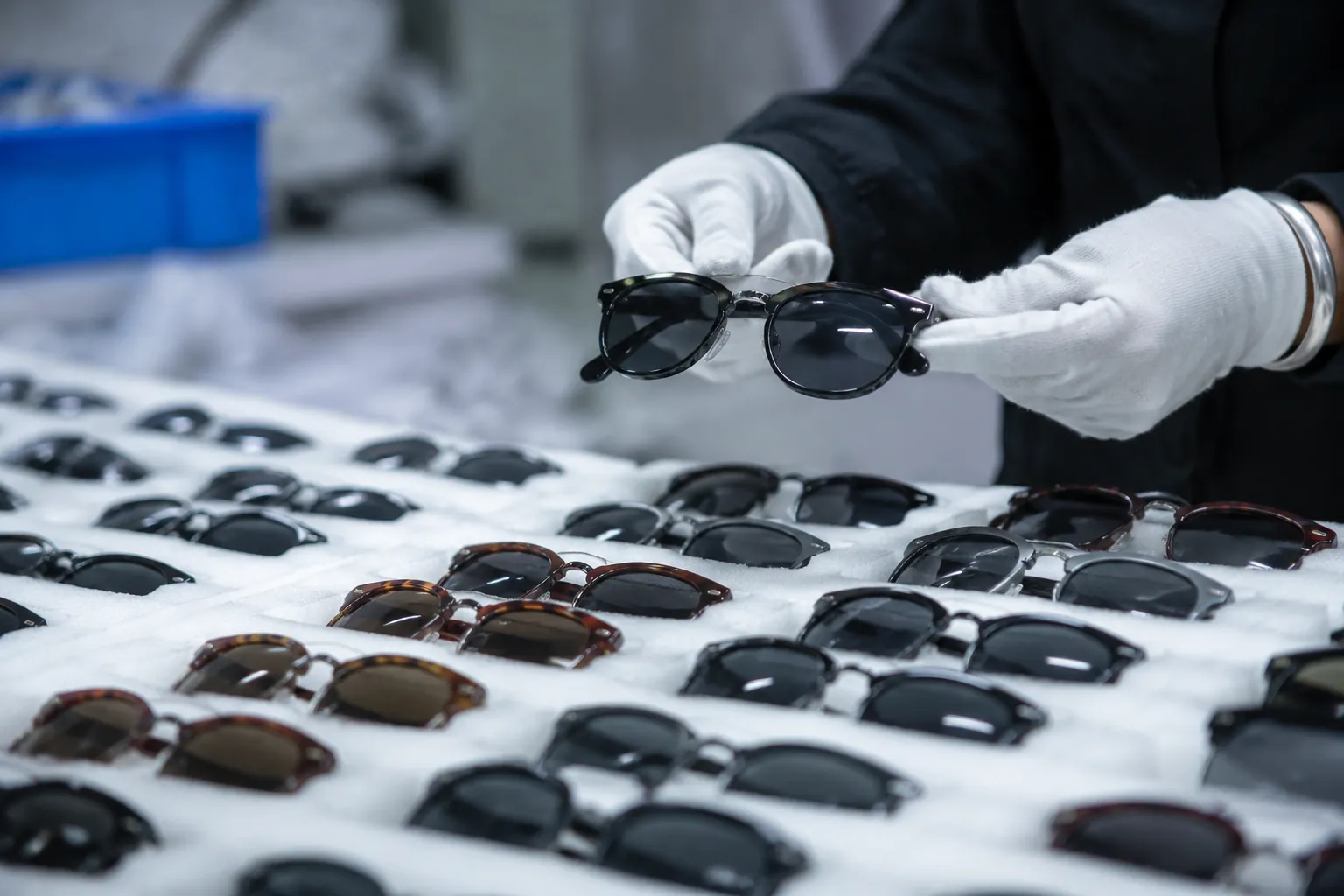
This guide is for buyers moving from a few trial sunglasses into a wider line. Once several SKUs are active, most failures stop being about the hero shape. They show up in shared parts, packaging variation, inconsistent approvals, and unclear compliance targets. Fix those controls early. Repeat orders get easier to manage, inspection disputes drop, and cost comparisons become cleaner across different order sizes. If you are sourcing from a supplier with integrated capabilities, lock this structure down before line growth turns every reorder into a fresh development project.
Start With A Program Spec, Not SKU-By-SKU Guesswork
Many buyers still approve sunglasses one SKU at a time with a tech pack, a reference image, and a sample comment sheet. That works for a very small line. It breaks down fast once the range grows, because the supplier is no longer making isolated products. It is running a program with shared hardware, repeated packing steps, and recurring QC decisions.
The fix is simple: create a program spec. This is one master control document that states what stays fixed across the collection unless a written deviation is approved. Document the non-negotiables once. Let only the intended design variables change by SKU.
Your master spec should define four things clearly: shared components, measurable tolerances, packaging format, and approval logic. Frame front shape can change. Lens tint can change within the category and compliance limits you approved. Finish can change from gloss to matte. But hinge type, screw size, logo placement zones, barcode format, carton labeling, and inspection method should not drift every time a new style is added.
That matters because each uncontrolled variable creates cost and risk later. A second hinge type means different spare parts and another assembly standard. A different polybag size can change carton utilization. A new logo method adds setup, sampling, and another durability check. And a vague pass-fail standard creates arguments at final inspection because the buyer, factory, and third-party QC team are all reading the same issue differently.
If your supplier has multiple in-house processes, use that advantage properly. A factory can hold the same hinge standard, decoration method, and master-carton rules across several style families. If you treat every new style as a new system, you lose that leverage.
Choose Shared Components First
The fastest way to simplify a sunglasses line is to cut part variation. Commercial teams usually focus on silhouette because that is what sells. Operations teams should focus on component commonality because that is what makes the line stable to source, inspect, and reorder.
- Hinges: Limit the collection to one or two hinge constructions that fit your material platforms. For example, one hinge standard may cover injected styles, while another covers thicker acetate styles.
- Screws: Standardize one screw diameter and thread pattern wherever the hinge construction allows it. This reduces incoming QC complexity and makes after-sales repair support easier.
- Lenses: Keep lens thickness and edge profile consistent within a frame family so fitting, replacement, and inspection stay repeatable.
- Nose construction: Decide whether the range will use molded saddle bridges, integrated fixed pads, or adjustable pad arms by product family. Mixing all three across low-volume SKUs adds tooling, fitting, and inspection variation with little return.
- Decoration methods: Restrict logo application to a small set, such as pad print, laser engraving, or metal logo insert. Every extra method needs its own artwork controls, process setup, and durability checks.
Over-customization is a common sourcing mistake in low-volume development. Buyers spend time and money changing hidden hardware the end customer will never notice. Keep the custom expression on visible elements such as shape, color, lens tint, and logo finish. Keep the underlying architecture shared where you can.
Material behavior should guide the final choice. Injected frames can often support a standardized hinge and screw platform well because the tool controls part geometry. Acetate usually needs more finishing and adjustment. That makes hardware standardization even more useful, because it removes one source of variation while the material itself still needs tighter manual control.
Set Tolerances QC Can Actually Measure
Many buyer specs still say good finish, logo centered, or lenses fit well. Those are not standards. They are opinions. If you want consistent output across multiple styles and repeat orders, define measurable limits and separate cosmetic criteria from functional criteria.
| Control Point | Suggested Standard | Why It Matters |
|---|---|---|
| Logo position | Define a measured placement tolerance from approved artwork and reference points on the frame | Prevents visible branding drift across lots and between left/right temples |
| Frame front width | Define tolerance to the sealed sample or approved drawing by material family | Protects fit consistency while reflecting the actual manufacturing process used |
| Temple length difference | Set a maximum left/right difference that your QC team can measure with a simple gauge or caliper | Reduces visible asymmetry and folding imbalance |
| Lens fit in rim or groove | No visible gap, no rattle, no stress whitening, and no edge damage beyond the cosmetic limit you define | Avoids cracking risk, reject leakage, and customer returns |
| Hinge action | Smooth opening with even resistance; no binding, no free swing, and left/right feel matched on manual check | Controls one of the most obvious out-of-box quality signals |
| Print durability | Pass the rub or adhesion test method agreed in the approved specification | Reduces immediate decoration wear claims in retail handling |
Not every dimension needs the same level of control. Functional points such as lens seating, hinge alignment, and temple balance should be tightly defined because failure there can cause returns or safety concerns. Cosmetic points such as minor polish variation can be looser if they do not affect appearance at normal viewing distance or product function.
Use sealed samples under a defined light source for color approval. This is critical for translucent acetate, spray-coated finishes, and category-sensitive lens tints. A written color name is not repeatable. A sealed physical sample under agreed inspection lighting is.
Put the tolerance table into the purchase pack, have the supplier sign back to it, and use the same document for inline and final inspection. Reorders should not reopen the same debate unless the approved standard has changed.
Build Packaging Rules Once And Reuse Them
Packaging drift adds cost quietly. One SKU gets a microfiber pouch. Another gets pouch plus polybag. A third has the barcode on the temple sticker instead of the polybag. Then mixed shipments arrive with inconsistent receiving logic and more repacking risk.
Set the packaging stack at collection level and allow exceptions only when a retail customer or market rule requires them. Standardize the unit pack, barcode format, inner pack, master-carton rules where practical, shipping marks, and document placement.
- Define the unit pack: sunglasses, pouch or case, cleaning cloth, polybag, leaflet, and barcode placement.
- Define the barcode format: EAN, UPC, or internal SKU code, plus label size and exact location.
- Define the inner pack count if used, such as a fixed number of pairs per inner box.
- Define master carton quantity and maximum carton weight according to your warehouse and shipping requirements.
- Define shipping marks: PO, style code, color code, quantity, country of origin, and carton sequence.
Small differences matter. A pouch thickness change can reduce units per carton. A label moved from the polybag to the pouch can slow receiving or scanning. If one SKU needs a leaflet and the others do not, the slowest pack process can hold the whole order.
Packaging approvals also block shipments more often than buyers expect. The sunglasses may be finished, but the order still waits because one accessory, one insert, or one barcode location is unresolved. Shared packaging rules reduce that risk and make mixed-SKU shipments easier to audit.
Use Approval Gates That Match Real Failure Points
Too many eyewear programs rely on one pre-production sample approval and assume bulk will follow. That is weak control. Sunglasses fail in stages. Artwork can be correct while hinge action is wrong. Construction can be correct while logo durability is poor. Finished goods can be acceptable while barcode placement or carton marks are not.
A stronger approval flow breaks those risks into separate gates:
- Artwork approval: logo file version, dimensions, placement zone, print color, engraving depth if applicable, plating color, and surface finish.
- Material approval: frame material family, lens material, color chip or physical swatch, texture level, and any claim language tied to the product.
- Engineering sample: confirms lens seating, hinge structure, temple alignment, base curve, and how the decoration method performs on the actual substrate.
- Sealed pre-production sample: final reference for mass production, QC, and reorder comparison.
- Packing approval: barcode scan test, insert count, label placement, shipping marks, and master-carton photo sign-off.
Keep one sealed sample in your office and one at the factory. For new platforms, do not approve from photos alone. Photos miss stress whitening, subtle color shift, print edge quality, and the feel of hinge movement. For repeat orders with unchanged tooling, material, and packaging, a reorder sign-off against the sealed sample may be enough.
Your approval logic should answer two direct questions: what exactly is the supplier authorized to mass-produce against, and what exact standard will you inspect against at shipment? If those answers are unclear, the program is not ready to scale.
Standardize Compliance By Market, Then Map It To SKUs
Compliance confusion usually starts once a collection sells into more than one market. One customer asks for CE and documentation aligned with EN ISO 12312-1. Another asks about ANSI Z80.3. Another needs AS/NZS 1067 requirements covered. Then chemical questions come in under REACH, and some US buyers may also ask whether the factory holds FDA registration for relevant products. Without a market map, the buyer and factory end up collecting paperwork SKU by SKU and too late.
Set a compliance matrix at collection level. Group SKUs by intended market, lens category, and labeling requirement. Then assign the needed test reports, declarations, markings, and records by family instead of starting over for each style.
| Market Or Requirement | Typical Document Or Standard | What To Lock Down Early |
|---|---|---|
| EU fashion sunglasses | CE and documentation aligned with EN ISO 12312-1 | Lens category, product labeling, warning statements, and traceability information |
| US market inquiries | ANSI Z80.3 references and any requested FDA registration information | Claim language, importer records, and packaging statements |
| Australia / New Zealand | AS/NZS 1067 related requirements | Lens performance target, category marking, and retail label consistency |
| Chemical compliance | REACH or customer chemical-declaration requests | Material declarations, coating inputs, and metal-component status |
Also standardize warnings and product markings. If part of the line uses one lens category and another part uses a different category, document that before sales samples go out. Reprinting cartons or relabeling pouches after production is expensive and slow. Compliance should be built into the SKU structure, not added after orders arrive.
Factory-level credentials such as ISO 9001 or BSCI can help with supplier qualification, but they do not replace product-specific compliance. Keep those topics separate in your documentation so nobody treats a factory audit certificate as proof that a sunglass style itself is compliant.
Tie Cost Breaks To Shared Specs, Not Just Unit Price
Buyers often request quotations style by style and compare only unit price. That misses the economics of a multi-SKU program. Better cost performance usually comes from shared hardware, lens platforms, and packaging, so more units move through the same material flow and setup logic.
| Program Choice | Typical Effect On Cost | Typical Effect On Lead Time |
|---|---|---|
| Shared hinge and screw across multiple SKUs | Reduces hardware variation, spare-part stocking, and setup changes | Fewer engineering checks and smoother assembly planning |
| One pouch and one carton spec across the collection | Lowers packaging changeover, relabeling, and repacking risk | Helps mixed SKUs move on one packing schedule |
| Limited logo methods across all styles | Less sampling waste and clearer durability standards | Faster approvals and fewer appearance disputes |
| Shared lens platform by frame family | Improves material planning and fitting consistency | Reduces pre-bulk corrections and remake risk |
Low MOQ development can be useful for market testing, but it often hides setup cost inside each style because volume is spread across too many small process variations. Larger orders usually get easier to price and manage when the hidden specs are already standardized. If they are not, the expected scale benefit gets diluted by extra changeovers, more approvals, and more packaging variation.
For example, moving from several pouch specs to one, from multiple hinge types to fewer approved standards, and from many decoration methods to a tighter set can improve planning, consistency, and reorder reliability. Over the life of the program, that usually matters more than negotiating a small reduction on one isolated SKU. Standardize the hidden architecture first. Then use shape and color to create visible range.
Build A Reorder System That Survives Staff Changes
The last step is discipline. Staff changes, internal naming shifts, and lost email history can damage a sunglasses program faster than many buyers expect. If a multi-SKU line can only be understood by the person who launched it, the program is fragile.
Create one reorder sheet for every SKU, but build each sheet from the same fixed fields: style code, color code, hinge type, screw specification, frame material, lens material, lens category, decoration method, unit pack, carton pack, target market, approved sample date, and revision number. Include one controlled field for deviations from the master standard. Most SKUs should have few or none.
Then link that reorder sheet back to the master program spec, the sealed sample archive, and the compliance matrix. The next buyer placing a repeat order months later should not need to reconstruct the line from old emails, sample photos, or warehouse notes.
This structure keeps engineering, sourcing, packaging, and QC aligned to the same control points. It also reduces booking-stage surprises, shipment holds over minor details, and repeat arguments about what was approved on the last order.
Short version: standardize what the customer does not notice first. Shared hardware, measurable tolerances, fixed packaging, market-specific compliance mapping, and a disciplined reorder record are what make scale manageable.
Have a custom sunglasses project in mind?
Send us your styles, target market and quantities and we will return a detailed quote with MOQ, lead time and a sample plan.
Get a QuoteWhy source this from Wenzhou with LumiShades
Wenzhou in Zhejiang Province is widely regarded as China’s eyewear manufacturing capital, producing a large share of the world’s sunglasses. That concentration matters to buyers: a deep local supply chain for acetate sheet, hinges, lens blanks, plating and packaging means shorter component lead times, easier color and material matching, and a workforce with decades of eyewear-specific skill. LumiShades has manufactured in this ecosystem since 2009, and our vertical integration — in-house injection molding, acetate cutting, CNC milling, lens tinting, decoration and quality control — means no part of your order is quietly subcontracted to a workshop you cannot audit.
For international buyers, that vertical control translates into accountability. When a single factory owns every step, defects are traced and fixed at source rather than bounced between vendors, and your specifications survive intact from first sample to bulk. We back this with 15+ years of experience, shipments to 60+ countries, more than 5 million pairs produced per year and a 98.5% on-time delivery rate. Our certifications — CE EN ISO 12312-1, FDA registration, ANSI Z80.3, AS/NZS 1067, REACH, ISO 9001 and BSCI audit — mean the compliance documentation your market requires already exists. Explore our manufacturing capabilities and quality control process to see how this works in practice.
Frequently asked questions
What should stay common across different sunglass styles in one collection? Start by fixing the items that create sourcing and QC complexity: hinge construction, screw specification, lens material and thickness by frame family, decoration methods, unit packaging, carton labeling, and approval criteria. Where possible, standardize nose construction and lens edge profile within each product family as well. Let shape, color, and lens tint vary only inside the limits already defined by your approved materials and market compliance plan. A practical first step is a one-page collection standard that lists what is fixed, what may vary, and who can approve an exception.
Is MOQ 50 pairs per design too low for a serious program? It can work for testing a new shape, colorway, or sales channel, but it is not a strong operating model if every SKU has different hardware, packaging, and labeling. At low volume, setup cost, sampling effort, and packaging variation can outweigh the benefit of adding more designs. If you need low MOQs, protect the program by keeping components and packaging shared across styles. Ask suppliers to quote both the test MOQ and the next commercial break so you can see where standardization starts improving cost and lead-time stability.
How many approved samples do I need before bulk production? For a new style platform, approve at least four checkpoints: artwork, engineering sample, sealed pre-production sample, and final packing format. If the decoration method is high risk or the packaging includes retailer-specific inserts or labels, treat those as separate approvals with their own sign-off record. For repeat orders with no tooling, material, artwork, or packaging change, confirmation against the sealed sample may be enough. The key is that each approval identifies exactly what was reviewed, who approved it, and which revision the factory is authorized to produce.
How do I control color drift on repeat orders? Use a sealed physical sample as the master reference and inspect against it under an agreed light source. Record the exact internal color name, the material family, the finish, and the date the sealed sample was approved. This matters most for translucent acetate, coated finishes, and tinted lenses, where appearance can shift with process variation. Do not rely on digital photos or informal color names alone. In the reorder pack, state that production color must match the sealed sample and require QC photos taken under the same lighting setup used for approval.
Which compliance documents should I ask for first? Start with a market-by-SKU matrix. For each SKU, list the destination market, lens category, labeling requirement, and any chemical declaration the customer requires. Then request only the documents that match that product and market: CE documentation aligned with EN ISO 12312-1 for relevant EU sales, ANSI Z80.3 references for US discussions, AS/NZS 1067-related documentation for Australia and New Zealand, and REACH-related declarations where chemical compliance is required. If a buyer asks about FDA registration, confirm whether that request applies to the product category and ask the factory for the exact registration record rather than a general statement. Keep factory credentials such as ISO 9001 or BSCI separate from product compliance so the paperwork stays clear.
Ready to start?
Explore our square sunglasses or request a quote — our sales team replies within 12 hours.
Request a Quote