
How to Source Promotional Sunglasses That Don't Look Cheap
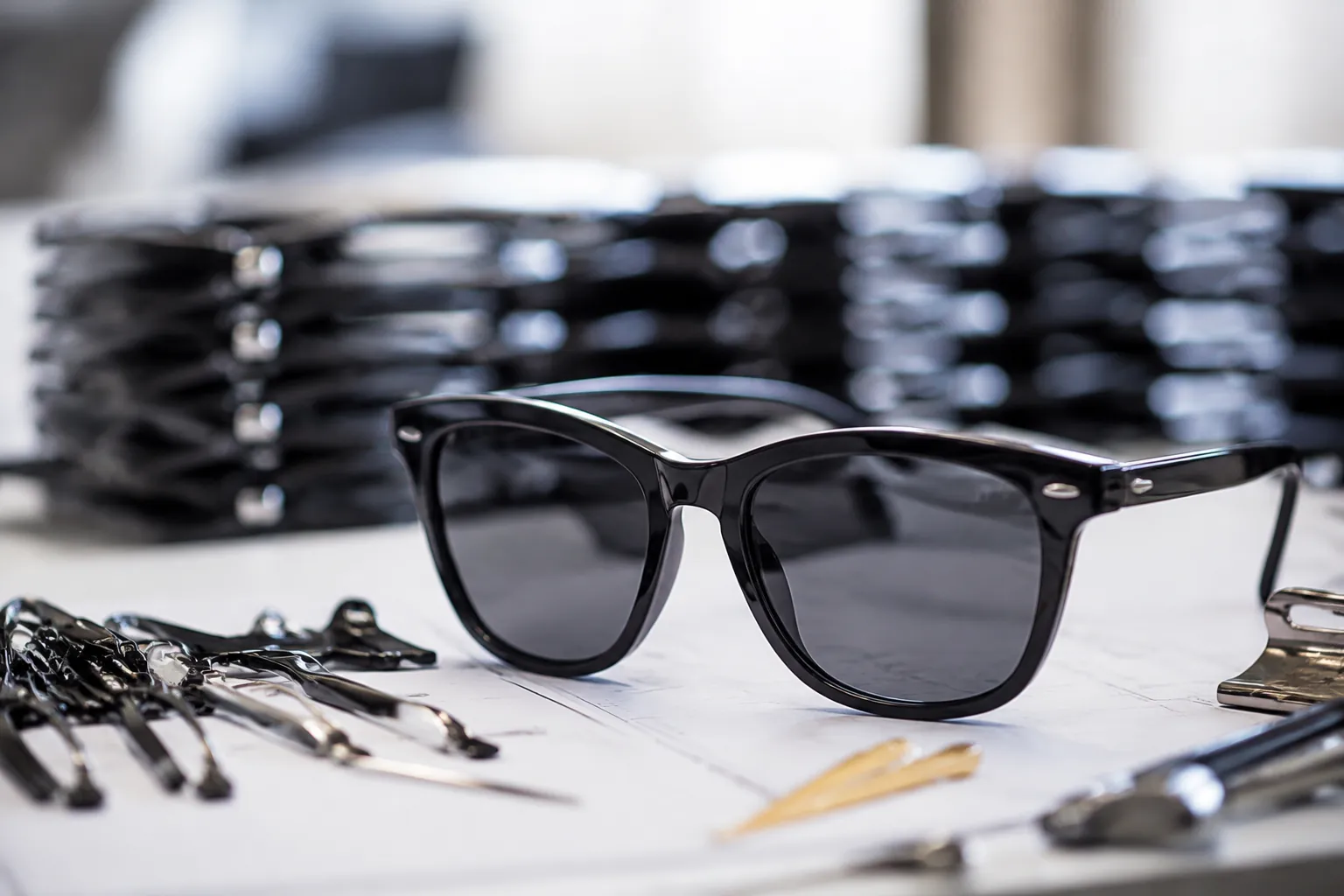
This guide is for buyers sourcing custom sunglasses for events, campaigns, retail promotions, sponsor activations, and large giveaways. The goal is not the lowest unit price. It is cost control without flimsy frames, distorted lenses, weak hinges, sloppy logos, or a timeline that collapses during approvals. Promotional sunglasses are judged fast. People notice frame feel, lens clarity, logo placement, color consistency, and whether the product feels disposable the moment they pick it up. If you want them to look credible, define the specification more tightly than the price point suggests.
Start With The Actual Job
Promotional sunglasses usually go wrong before production starts. The brief is too loose. Directions like "keep it cheap," "make the logo big," or "match the brand color" leave too much open to interpretation. If price is the only hard target, the supplier will often strip cost out of frame substance, decoration, or packaging details that shape first impression.
A practical promo brief should rank priorities in this order:
- Target landed cost per pair, not just FOB price.
- Required in-hands date, including freight, customs, and receiving buffer.
- Branding method and required logo visibility.
- Minimum acceptable quality for frame feel, hinge function, lens appearance, and packaging.
That order matters. Each decision narrows the next one. A very low landed-cost target usually means injected plastic frames, standard tinted lenses, simple decoration, and basic packaging. At lower quantities, setup charges for printing, artwork prep, and QC are spread across fewer units, so the real cost per pair climbs. At higher quantities, those fixed costs are diluted more efficiently.
A low MOQ only tells you the factory will accept the order. It does not mean the economics are good at that volume. Ask for pricing at several breaks, such as 300, 1000, and 5000 pairs. Then compare decoration, packaging, and freight on a landed basis.
Define the job first. Free outdoor distribution has one priority set. Retail gift sets have another. If the sunglasses will sit next to paid merchandise, expect tighter color control, cleaner assembly, stronger decoration, and better presentation.
Where Cheap-Looking Orders Break Down
Most bad promotional sunglasses are not ruined by one major defect. They lose value through a stack of small compromises. Together, they make the product look disposable.
- Frame walls are too thin: reducing front or temple thickness can make the frame feel hollow, flex unevenly, and show sink marks near thicker transition areas.
- Low-grade plastic is paired with pale colors: light frame colors reveal flow lines, gate marks, and molding inconsistency more easily than black or dense opaque colors.
- Lenses are too thin or poorly finished: low-cost lenses may photograph well enough but still show distortion, rough edges, or handling damage during packing.
- Decoration is chosen only on price: a cheap print on a curved or textured temple often looks worse than a smaller, cleaner logo placed on a flatter section.
- No tolerances are defined: if the buyer never asks about logo position tolerance, hinge alignment, or lens fit, variation usually shows up only after goods are packed.
Promotional sunglasses do not need premium retail engineering. They do need process control. A low-cost pair can still look acceptable if the front is symmetrical, both temples open smoothly, the tint is even, the logo sits straight, and the lenses arrive without visible scuffing.
Ask blunt questions early. What is the normal logo position tolerance in millimeters? How are scratches controlled between lens tinting, assembly, and bagging? What counts as a major defect at final inspection? Buyers who ask at quotation or sampling stage usually get clearer answers and tighter production discipline because the inspection standard is visible from the start.
If molding, decoration, and QC are handled in-house, ask how those controls are documented and how rejected parts are isolated. If part of the work is subcontracted, ask who owns final inspection and who signs off on decoration and packaging accuracy before shipment release.
Pick Construction That Fits The Budget
Buyers often spend too much time on shape and not enough on construction. That is a mistake. Construction decides whether the sunglasses survive handling, packing, transport, and mass distribution without feeling cheap.
| Option | Typical Use | Cost Position | What Buyers Gain | Main Trade-Off |
|---|---|---|---|---|
| Injected plastic frame with standard tinted lenses | Mass giveaways, larger runs | Lowest | Fast production, broad color choice, strong price control | Can feel light or hollow if wall thickness is pushed too low |
| Injected plastic frame with upgraded decoration | Brand activations, sponsor events | Low to mid | Better logo presence through pad print, laser marking, or metal logo plate | Decoration performance depends heavily on surface flatness, curvature, and material response |
| Acetate frame with tinted lenses | Retail promotions, premium gift packs | Higher | Heavier hand feel, richer color depth, stronger perceived value | Higher material and labor cost, slower processing, less suitable for aggressive giveaway budgets |
| CNC-milled acetate detail or mixed construction | Short premium campaigns | Highest | Sharper detailing, more differentiation, more retail-like presentation | Longer production path and weaker cost efficiency for high-volume giveaways |
For most promotional orders, injected plastic is still the practical choice. The issue is not whether injected plastic is acceptable. It usually is. The issue is whether the spec strips too much substance out of it. Ask for basic construction details: front thickness, temple thickness, lens thickness, hinge type, and whether the hinge is riveted, screwed, or inserted. A frame can look fine in a rendering and still feel weak in hand.
Reserve acetate for smaller premium campaigns, influencer kits, gift-with-purchase programs, or retail-adjacent projects where weight, finish, and color depth carry part of the value. If acetate is proposed, confirm whether the frame is full acetate or only acetate-look, and whether CNC milling is actually part of the process rather than just sales language.
Branding Methods: Visibility Versus Risk
Many buyers ask for the biggest possible logo and then pick the cheapest decoration method. That is where problems become obvious. The right method depends on logo size, line thickness, color count, temple curvature, surface texture, and expected handling during packing and use.
Pad printing is usually the most economical option for outside-temple branding. It is often the right default for promotional orders. It works best on a smooth surface with a stable contact area. Very fine lines, metallic effects, or logos stretched across a strongly curved temple raise the risk of uneven ink coverage or registration drift. Confirm the usable print area in millimeters before approving artwork. A supplier may quote temple printing, but the truly stable print zone is often much smaller than the full temple length.
Laser engraving is durable and clean when the material gives good contrast. Its limit is impact. On some plastics it creates a subtle mark rather than a bold one. That may suit a restrained brand, but it often underperforms for sponsor-driven giveaways. Metal logo plates can raise perceived value, but they add a component and another alignment checkpoint during assembly.
Before approving artwork, ask the supplier for:
- Maximum print area in millimeters for the selected temple.
- Expected print position tolerance, stated in millimeters.
- Recommended minimum line thickness for legibility.
- Whether outside temple, inside temple, or lens placement is most stable in production.
Lens logos can work for fashion or retail programs, but for giveaways they add handling risk and may affect usability if placed too close to the line of sight. Outside-temple branding usually gives the best balance of visibility, production speed, and defect control.
Compliance And QC Are Mandatory
A low-cost promotional order is still eyewear. Treat it that way. Do not handle it like a generic novelty item with no regulatory or labeling consequences. The exact requirement depends on the destination market, product claim, and sales channel, so compliance needs to be defined before bulk production begins.
Common references buyers may request or review include CE EN ISO 12312-1, ANSI Z80.3, AS/NZS 1067, REACH, FDA registration, ISO 9001, and BSCI. These do not mean the same thing. Product standards such as CE EN ISO 12312-1, ANSI Z80.3, and AS/NZS 1067 relate to sunglasses performance and market expectations. REACH covers restricted substances. FDA registration may appear in US sourcing workflows, but it is not a substitute for product-performance review, labeling review, or market-specific legal assessment. ISO 9001 and BSCI relate to management systems or social compliance, not proof that the sunglasses themselves meet optical requirements.
So ask a tighter question. Not "Are you certified?" Ask which standards apply in the destination market, what documents support them, and what claims will appear on the product, packaging, or sales materials. Unsupported UV, category, or market-access claims create avoidable risk.
QC planning should be just as specific. Ask what AQL level will be used at final inspection, how lens appearance defects are graded, and whether logo rub testing, hinge function checks, and carton verification are included. Even for promo goods, set hard non-negotiables: no visibly scratched lenses, no left-right frame imbalance, no loose hinges, no major print skew, and no incorrect carton markings.
Also align early on lens category, UV claim, labeling text, country-of-origin marking where required, and packaging marks. If packaging is approved first and compliance text changes later, you can lose days reworking labels, stickers, cartons, or inserts.
Cost And Lead Time Buyers Can Use
Promotional orders often fail on timing, not price. Sample lead time and bulk lead time should be treated as separate stages. A fast sample does not mean immediate production capacity is available.
| Stage | Typical Timing | What Happens | Common Delay Point |
|---|---|---|---|
| Brief and quotation | 1 to 3 days | Frame selection, decoration method, quantity, packaging scope, target market review | Missing logo files, unclear Pantone references, undefined packaging details |
| Sample development | 7 to 10 days | Material confirmation, logo trial, color review, basic fit and visual check | Artwork changes after sampling starts, multiple frame switches |
| Bulk production | 25 to 35 days | Frame molding or prep, lens tinting, decoration, assembly, QC, packing | Late sample approval, delayed deposit, packaging changes during production |
| Final inspection and shipment release | 2 to 5 days | AQL inspection, carton count, shipping marks, export handoff | Packing mismatch, missing labels, last-minute carton revision |
Those timelines only work if the buyer freezes artwork, frame color, compliance text, and packaging details early. Every extra logo revision, color change, or insert-card update pushes the schedule back. Ask whether the quoted bulk lead time starts from deposit receipt, sample approval, packaging approval, or all three.
The cost logic is simple. A low MOQ can be useful for testing a concept, but setup cost per unit stays high at small volumes. At mid volumes, decoration and packaging still weigh heavily on price. At larger volumes, cost efficiency usually improves if the design and packing stay simple. If budget is tight, simplify packaging or reduce decoration complexity before stripping too much structure out of the frame itself. A weaker frame saves money in the wrong place.
Use A Real Spec Sheet And QC Checklist
Strong buyers do not send only a logo and a target price. They send a compact spec sheet that reduces interpretation gaps and limits sample revisions. That saves time and cuts avoidable defects in bulk.
Your promotional sunglasses spec sheet should include:
- Frame reference image or comparable style code.
- Material request: injected plastic or acetate.
- Frame color with Pantone reference if required.
- Lens color, gradient or solid tint, and finish.
- Logo artwork file, size, placement, and decoration method.
- Packaging method: polybag, pouch, box, and carton pack count.
- Destination market and required compliance references.
- Required ship window, event date, and inspection timing.
Add tolerance questions directly into the brief. Ask what variation is considered normal for logo position, color tone, lens fit, and assembly alignment. On a giveaway order, some minor cosmetic variation may be commercially acceptable. Visible left-right imbalance, scratched lenses, loose hinges, uneven temple closing, or obvious logo drift are not.
A useful QC checklist for promotional orders includes front symmetry, hinge opening smoothness, lens cleanliness, print straightness, color consistency, and packaging accuracy. It should also state what gets checked at sample stage, during production, and at final inspection. If the supplier uses internal QC plus a third-party final inspection, define which standard controls if there is a disagreement.
The Lowest-Risk Plan For Event Deadlines
If the sunglasses must arrive for a fixed event, plan backward from the in-hands date. Include freight, customs clearance, warehouse receiving, and a real buffer. Do not build a live campaign around the supplier's shortest-case timeline.
A lower-risk buying process is usually straightforward:
- Select one frame platform rather than comparing several in parallel once sampling starts.
- Use one stable logo method unless there is a clear reason to upgrade.
- Approve a pre-production sample using final artwork, not placeholder files.
- Freeze packaging details before bulk begins.
- Schedule inspection against the confirmed ex-factory date, not an optimistic assumption.
For serious promotional buyers, the best result is rarely the absolute cheapest pair. It is the pair that looks clean in photos, feels acceptable in hand, carries the logo clearly, survives bulk packing, and arrives on time. That target is narrower than many teams expect.
When comparing suppliers, ask for evidence you can verify: applicable test documents, a clear production timeline, decoration limits, inspection criteria, and written confirmation of what is included in the quotation. A disciplined brief and a documented approval path usually protect the outcome better than one more small unit-price reduction.
Have a custom sunglasses project in mind?
Send us your styles, target market and quantities and we will return a detailed quote with MOQ, lead time and a sample plan.
Get a QuoteWhy source this from Wenzhou with LumiShades
Wenzhou in Zhejiang Province is widely regarded as China’s eyewear manufacturing capital, producing a large share of the world’s sunglasses. That concentration matters to buyers: a deep local supply chain for acetate sheet, hinges, lens blanks, plating and packaging means shorter component lead times, easier color and material matching, and a workforce with decades of eyewear-specific skill. LumiShades has manufactured in this ecosystem since 2009, and our vertical integration — in-house injection molding, acetate cutting, CNC milling, lens tinting, decoration and quality control — means no part of your order is quietly subcontracted to a workshop you cannot audit.
For international buyers, that vertical control translates into accountability. When a single factory owns every step, defects are traced and fixed at source rather than bounced between vendors, and your specifications survive intact from first sample to bulk. We back this with 15+ years of experience, shipments to 60+ countries, more than 5 million pairs produced per year and a 98.5% on-time delivery rate. Our certifications — CE EN ISO 12312-1, FDA registration, ANSI Z80.3, AS/NZS 1067, REACH, ISO 9001 and BSCI audit — mean the compliance documentation your market requires already exists. Explore our manufacturing capabilities and quality control process to see how this works in practice.
Frequently asked questions
What quantity usually gives the best value for promotional sunglasses? The best value usually appears at the quantity break where setup costs are spread efficiently without forcing unnecessary complexity into the order. In practice, ask for quotations at several tiers such as 300, 1000, and 5000 pairs, then compare full landed cost rather than unit price alone. Check whether the quote includes decoration, packaging, carton labeling, and inspection. If two tiers land close on cost per pair, the higher volume often gives better value, but only if the inventory will actually be used.
Is injected plastic good enough for giveaways, or should I use acetate? Injected plastic is usually the right choice for large giveaway programs because it offers the best mix of cost control, production speed, and color flexibility. The key question is not material category alone. It is whether the frame has enough substance to avoid feeling flimsy. Ask for confirmation of front thickness, temple thickness, lens thickness, and hinge construction before approving samples. Use acetate when the sunglasses need stronger perceived value, heavier hand feel, or better color depth for a premium promotion, gift set, or retail-adjacent program.
Which logo method is safest for a low-cost promo order? Pad printing is usually the safest low-cost option for outside-temple branding when the surface is smooth and the artwork is not too fine. Before approval, ask for the usable print area in millimeters, expected position tolerance, recommended minimum line thickness, and the rub-resistance check method. If the logo depends on metallic effects, very fine detail, or unusually high durability, review laser engraving or a metal logo plate, but confirm the trade-off in cost, contrast, and alignment risk.
How early should I place an order for an event? Use the supplier's sample and bulk timelines only as a factory baseline. Then add time for artwork approval, packaging approval, inspection booking, freight transit, customs clearance, warehouse receiving, and a buffer for revisions. A practical approach is to count backward from the in-hands date, fix the required ship date, and confirm whether sample approval and bulk production can realistically fit before that point. For event-driven orders, do not rely on the shortest quoted lead time. Ask what milestone actually starts the production clock and what happens if artwork or packaging changes after approval.
What compliance documents should I ask for on promotional sunglasses? Ask for documents that match the destination market and the claims you plan to make. For sunglasses, that may include CE EN ISO 12312-1, ANSI Z80.3, or AS/NZS 1067 where relevant. For chemical compliance, REACH may matter. FDA registration can appear in buyer workflows, but it does not replace product-performance or labeling review. ISO 9001 and BSCI can support supplier evaluation, but they are not product test reports. In practical terms, ask the supplier to identify which standards apply, provide the supporting documents available, and confirm that the same claims will appear consistently on the product, packaging, and sales materials.
Ready to start?
Explore our cat-eye sunglasses or request a quote — our sales team replies within 12 hours.
Request a Quote