
Source Family Sunglasses Without Costly Fit Errors
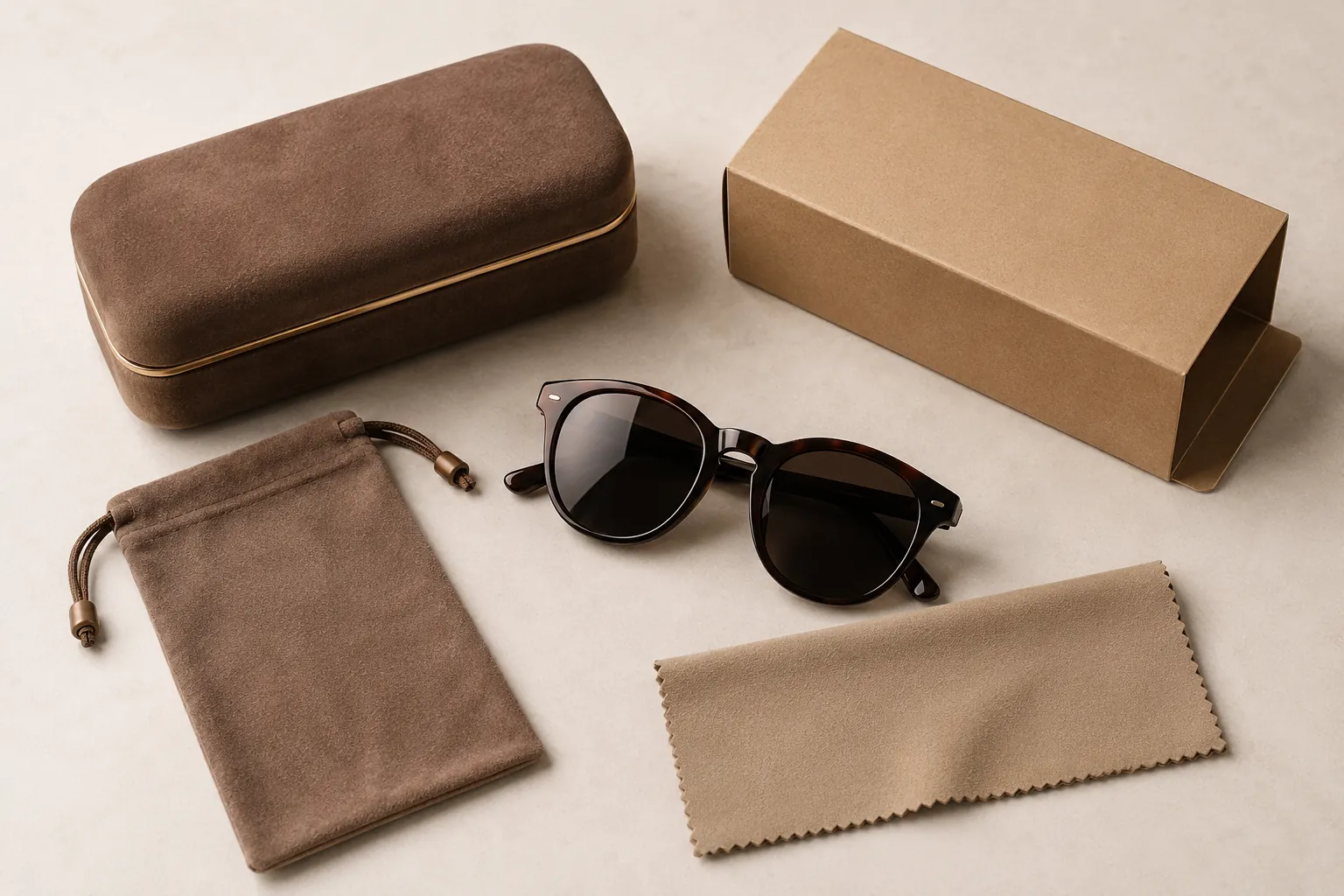
This guide is for brand owners, importers, distributors, and retail buyers building coordinated sunglasses lines for adults and children. The goal is simple: keep one brand story across age groups without creating fit complaints, compliance failures, or packing mistakes. Most family programs go off track early. The spec is too loose. Buyers apply one size logic across all ages, approve samples without written tolerances, miss market-specific compliance requirements, or launch too many SKU variants at once. The safer approach is clear from day one: define separate size bands, measurement tolerances, material rules, compliance checkpoints, and packaging controls before sampling starts.
Start With a Program Matrix, Not One Shared Frame
A common sourcing mistake is to treat adult and kids sunglasses as one frame scaled down proportionally. That may preserve the look in artwork. It often fails in wear.
Bridge contact, temple pressure, lens coverage, and finished weight do not shrink in a neat straight line. A frame that looks right on paper can sit wrong on the face.
Build a program matrix before you request the first prototype. In most commercial programs, split the line into at least three groups: adults, kids 8-12, and kids 3-7. If one kids size is meant to cover ages 3 through 12, it usually fits only part of that range well.
For each group, define the core dimensions first: eye size, bridge, temple length, front width, and base curve or wrap. Then define which visual elements must stay consistent across the line. Usually that means frame outline, key colors, logo position, lens tint family, and packaging architecture.
- Adult base frame: prioritize intended lens coverage, visual definition, and the merchandising effect required for the core style.
- Kids 8-12 version: reduce overall scale, control finished weight, and ease side pressure for longer wear.
- Kids 3-7 version: shorten temples further, keep contact points conservative, simplify decoration, and avoid details that are more likely to loosen during rough handling.
Keep the design language aligned. Do not assume the same structural proportions will work across every age band. A disciplined family program treats each size group as a related product, not a mathematical reduction of one frame.
Use Size Bands and Tolerances Based on Real Wear
Age labels help at retail, but they are weak technical specs on their own. Buy by size band, not by age label alone.
Children of the same age can differ a lot in face width, bridge shape, and ear position. The approval file needs measurable dimensions and clear tolerance limits.
| Segment | Typical Eye Size | Bridge | Temple Length | Common Fit Priorities |
|---|---|---|---|---|
| Adults | 50-56 mm | 18-22 mm | 140-145 mm | Coverage, shape definition, wider face range |
| Kids 8-12 | 46-49 mm | 15-18 mm | 125-135 mm | Lighter feel, lower hinge stress, softer side pressure |
| Kids 3-7 | 40-45 mm | 14-17 mm | 115-125 mm | Low weight, conservative fit, fewer hard details |
Ask for dimensional drawings before samples ship. Then ask the supplier to measure finished samples after assembly, not just quote CAD targets. Tolerances should be agreed in writing before approval. Many buyers set commercial tolerances by dimension and by decoration position, then repeat those numbers in the tech pack and purchase order.
Material choice affects dimensional consistency too. Injection frames are usually more repeatable across units. Acetate can vary more after cutting, polishing, and hand assembly. In both cases, confirm measurements on finished product after lens fitting because front shape can shift during assembly. If the adult style has a thick front or heavier visual build, the kids version often needs less thickness or a lighter material to avoid a nose-heavy fit.
Choose Materials by Wear, Price, and Weight
Adults and children do not stress eyewear in the same way. Adult buyers often notice style, lens appearance, and finish first. Kids expose weak hinges, easy scratches, fading prints, and poor frame recovery through dropping, bag abrasion, and constant opening and closing.
For many family programs, injection-molded frames are the practical starting point. They usually give tighter cost control, more repeatable color output, and lower entry volume than full acetate. Acetate gives stronger visual depth and a more premium look, but it also adds material cost, polishing labor, and often more weight. On smaller kids sizes, that weight can directly affect comfort.
| Material Route | Typical Use Case | Cost Behavior | Risk to Watch |
|---|---|---|---|
| Injection front + injection temples | Mass retail family sets | Usually the most cost-efficient structure | Decoration wear on high-contact areas |
| Acetate adult + injection kids | Premium adult look with practical kids line | Balances cost by age group | Color matching between materials |
| Acetate across all sizes | Higher retail positioning | Higher material and labor cost | Kids weight, polish consistency, higher scrap risk |
Choose decoration by expected wear, not by appearance alone. Pad printing is common and cost-efficient, but it may wear faster on temple areas that rub against hair, hats, or cases. Laser marking can be more stable if the substrate allows it. Hot foil needs adhesion checks on the actual material and finish. Metal logo plates can add value, but on younger kids styles they need a hard look for fixation security and long-term durability.
Keep the material plan simple in the first launch. If adult and kids versions use different material routes, document how color, gloss, and logo appearance will be matched so the line still reads as one family on shelf.
Build Compliance Into the Spec Before Sampling
Compliance belongs in the brief from the first RFQ. Not later. This matters most in children's lines, where material, lens, labeling, and documentation choices can affect both product design and packaging.
Align each SKU with its destination market. Common sunglass standards and supplier qualification documents include CE EN ISO 12312-1, ANSI Z80.3, AS/NZS 1067, REACH, FDA registration where required by buyer process, plus supplier-management documents such as ISO 9001 and BSCI.
The key sourcing questions are practical. Which market will each SKU enter? What lens category and tint spec does that market require? What warnings, product markings, and inserts are needed? Which frame materials, coatings, inks, and trims must meet the buyer's chemical compliance rules?
- Confirm the destination market for each SKU before sampling starts.
- Define lens category, UV requirement, tint appearance, and labeling requirements in writing.
- Match frame materials, coatings, and decoration materials to those requirements.
- Approve artwork, warnings, inserts, and carton marks as part of the product file, not as a late-stage side task.
If one family program ships to the EU, the U.S., and Australia, do not assume one generic insert or one generic product marking will work everywhere. Put market-specific requirements into the BOM, packaging file, and inspection checklist early so the supplier can build the right document and packaging flow from the start.
Control MOQ, Cost, and Lead Time by Cutting Variant Chaos
Family sunglasses programs get expensive fast when too many combinations appear too early. One adult frame, two kids sizes, several colors, several lens tints, and several pack versions quickly turn into a messy SKU grid.
That complexity affects material planning, lens scheduling, decoration setup, packaging separation, and final inspection. Samples often move faster when the design is clear and artwork is complete. Bulk timing depends on approved samples, confirmed packaging, and the supplier's production schedule. Change logo placement, lens color, material callout, or packaging after approval, and lead time often stretches because new checks have to be added.
| Decision | Cost Effect | Lead-Time Effect | Best Use |
|---|---|---|---|
| One lens tint across all sizes | Lower | Shorter | Best for launch programs |
| Different lens tint by age group | Higher | Adds coordination and approval time | Use only for a clear merchandising reason |
| Same pack structure, different size labels | Lower | Shorter | Strong balance of control and flexibility |
| Separate pack format by age group | Higher | Longer | Reserve for channel-specific requirements |
For a first run, keep the structure tight: a limited color count, one lens family, one packaging system, and separate specs for adult and kids sizes. MOQ, unit cost, and planning efficiency vary by supplier and by construction, so confirm MOQ by material route, color count, and packaging format rather than assuming one standard number fits every version.
Approve Samples With Handling Checks and Written Limits
Weak sample approval causes a large share of avoidable claims in family programs. Buyers approve the look and branding, then move ahead without checking finished dimensions, hinge feel, alignment, decoration durability, or pack separation logic.
Use a layered approval process. First review aesthetics. Next verify dimensions against the approved drawing. Then run handling checks that reflect real use for the target age band.
- Fit check: measure finished dimensions against the approved specification and trial the frame on the intended wearer group where possible.
- Open-close cycle check: review hinge resistance, screw security, and temple alignment after repeated movement.
- Drop and scuff check: inspect whether lenses, coatings, and decorations show unacceptable damage under controlled handling checks.
- Symmetry check: confirm front alignment, temple angle, end-piece balance, and left-right logo consistency.
- Packaging check: confirm adult and kids units are clearly separated and cannot be mixed easily during packing and receiving.
Write acceptance limits into the order file. That usually includes dimensional tolerances, decoration position tolerances, visual standards for tint and finish, alignment expectations, and explicit packaging accuracy requirements. If those limits are not written down, final inspection becomes subjective. Repeatability drops.
Treat Packaging and Cartons as a Control Point
Many eyewear shipments fail commercially even when the product is acceptable. The problem is often packaging confusion: adult and kids units packed into the wrong assortment, wrong warning inserts, duplicate barcode logic across age groups, or carton labels that do not clearly identify size group and destination market.
For family programs, keep one master visual system but add clear identifiers for adults, kids 8-12, and kids 3-7. Build that separation through SKU coding, barcode ranges, size labels on unit packs, color suffixes, and carton marks that stay readable during receiving.
A practical carton checklist should cover inner-pack quantity, assortment ratio, barcode placement, country-specific inserts, carton dimensions, gross and net weight limits, and mark format. If the same packaging shell is used across all sizes, the risk of pick-and-pack confusion rises. Reduce that risk with strict label logic and a pre-shipment photo set showing the unit pack, inner pack, outer carton, assortment layout, and final carton label.
Blunt rule: if warehouse staff can confuse adult and kids units during a quick receiving check, the packaging system is not clear enough.
This matters even more when one purchase order contains multiple size groups within the same style family. In that case, treat the packaging file as part of product approval, not as something to finish after production ends.
Use a Buyer Workflow That Keeps the Program Tight
The cleanest family-style sunglass programs follow a controlled sourcing sequence. Start by defining which design cues must match across the line and which dimensions must change by wearer group. Split the line into adults, kids 8-12, and kids 3-7 where needed, then assign target dimensions, material rules, and decoration limits for each version.
Next, choose materials that fit the likely abuse level and retail position. Injection is often the commercial base for kids. Acetate can be added where the adult line needs a more premium appearance. Lock compliance targets before sampling so the supplier can align lens category, decoration method, and labeling requirements from the start. Review samples with drawings, measurements, fitting checks, and handling checks, not appearance alone.
Before bulk production, reduce the variant count. Control colors, lens tints, logo executions, and packaging versions while the SKU structure is still manageable. Approve pre-production samples together with inserts, barcodes, assortment rules, and carton marks. Then inspect bulk output against written tolerances for dimensions, finish, logo placement, and pack-out accuracy.
A family program becomes more predictable when the buyer's specification is precise, market requirements are defined early, and approval standards are written into the production file. That discipline reduces resampling, repacking, and avoidable post-shipment claims.
Have a custom sunglasses project in mind?
Send us your styles, target market and quantities and we will return a detailed quote with MOQ, lead time and a sample plan.
Get a QuoteWhy source this from Wenzhou with LumiShades
Wenzhou in Zhejiang Province is widely regarded as China’s eyewear manufacturing capital, producing a large share of the world’s sunglasses. That concentration matters to buyers: a deep local supply chain for acetate sheet, hinges, lens blanks, plating and packaging means shorter component lead times, easier color and material matching, and a workforce with decades of eyewear-specific skill. LumiShades has manufactured in this ecosystem since 2009, and our vertical integration — in-house injection molding, acetate cutting, CNC milling, lens tinting, decoration and quality control — means no part of your order is quietly subcontracted to a workshop you cannot audit.
For international buyers, that vertical control translates into accountability. When a single factory owns every step, defects are traced and fixed at source rather than bounced between vendors, and your specifications survive intact from first sample to bulk. We back this with 15+ years of experience, shipments to 60+ countries, more than 5 million pairs produced per year and a 98.5% on-time delivery rate. Our certifications — CE EN ISO 12312-1, FDA registration, ANSI Z80.3, AS/NZS 1067, REACH, ISO 9001 and BSCI audit — mean the compliance documentation your market requires already exists. Explore our manufacturing capabilities and quality control process to see how this works in practice.
Frequently asked questions
Can I use one exact frame shape for adults and kids by scaling it down proportionally? Usually not. A scaled-down adult frame can change bridge contact, temple pressure, lens coverage, and weight balance in ways that do not suit children. A better approach is to keep the design language consistent while creating separate technical specs for adults, kids 8-12, and kids 3-7. Ask the supplier for separate drawings and finished measurements for each size band, then review those samples on the intended wearer group before approval.
What is the safest MOQ strategy for a first family-style launch? Start with fewer variables instead of chasing the lowest quoted MOQ. Ask the supplier to quote MOQ by frame material, color count, lens option, and packaging format for each size group. For a first launch, keep one lens family, a limited color range, and one packaging structure with clear size labels. That makes real cost comparison easier, speeds sample approval, and reduces packing errors when adult and kids versions ship together.
Which compliance documents should I discuss first with the supplier? Start with destination-market requirements by SKU. Confirm whether the program must meet CE EN ISO 12312-1, ANSI Z80.3, AS/NZS 1067, and REACH, and ask what product markings, warning texts, and packaging inserts are needed for each market. If your sourcing process requires it, also confirm FDA registration status where relevant and request current ISO 9001 and BSCI records during supplier qualification. Put all approved compliance requirements into the product file before sampling starts.
How long should I allow for samples and bulk production? Lead time depends on construction, packaging complexity, artwork readiness, and whether materials or decorations are already approved. Ask the supplier to break timing into clear stages: sample development, sample revision if needed, pre-production sample approval, bulk production, and final packing. Also ask which changes restart timing, such as new lens colors, revised logo placement, or packaging artwork updates. A stage-by-stage plan is more reliable than one generic total lead-time estimate.
Is acetate a good choice for kids sunglasses? It can be, but test it against weight, durability, and price target. Ask for a finished sample with the actual lens and hardware so you can assess total weight, fit balance, polish consistency, and edge quality. Compare it directly with an injection version of the same concept if possible. If the acetate sample feels heavy or front-loaded on smaller sizes, keep acetate for the adult line and use a lighter material route for kids.
Ready to start?
Explore our shield & oversized sunglasses or request a quote — our sales team replies within 12 hours.
Request a Quote