
Sourcing Adult and Kids Sunglasses from One Factory
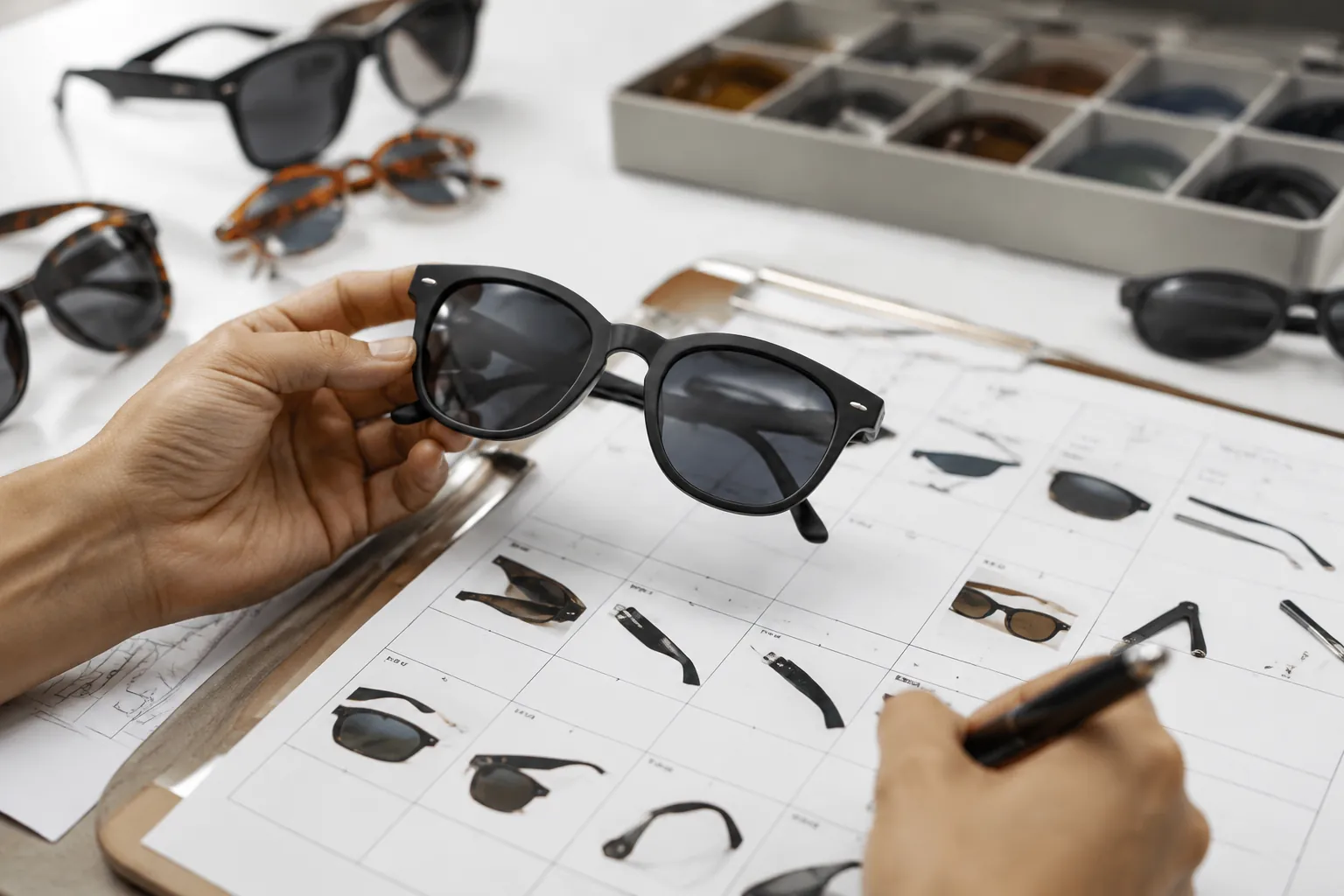
This guide is for brands, importers, distributors, and retailers that want one factory to produce adult and kids sunglasses without avoidable fit, compliance, or margin problems. The upside is clear: one design family, fewer suppliers, simpler purchasing, and easier repeat orders. But adult and kids sunglasses are not the same product. Treat them as scaled copies and you invite fit complaints, failed testing, packaging errors, and late redesigns.
Start With the Program Brief, Not the Sketch
A family eyewear program should start with the commercial brief, not the drawing. Define how the line will be sold: as a parent-child set, a seasonal retail assortment, a resort program, a private-label range, or a promotional item. That sales context affects frame count, packaging, price targets, color planning, and how much variation the program can support across adult and kids SKUs.
One common mistake is asking for "matching adult and kids sunglasses" without saying what matching means. It may mean the same front shape, a shared temple detail, a coordinated lens tint, the same logo location, or only a common color story. If you do not spell that out, the factory will guess. Guessing leads to extra sample rounds, tooling revisions, and artwork or packaging changes later.
Before tooling or sample approval, lock three layers:
- Shared brand language: front silhouette, logo placement, color direction, and finish level.
- Fit split: adult geometry for the intended adult size range, and kids geometry with its own front width, temple length, bridge shape, and wearing comfort targets.
- Compliance split: adult and kids styles may look related, but each SKU still needs review for the destination market, intended user, and product claims.
State the target sell-in price, sales channel, packaging type, and reorder pattern as well. A low-cost promotional frame and a fashion retail frame may share a silhouette. They should not be developed the same way. The more specific the brief, the easier it is for the factory to quote accurately and choose the right material, decoration method, and production route.
Build the Size Matrix Before You Quote
Adult and kids sunglasses need different fit targets, and those targets should be written into a size matrix before final quotation and sampling. Adults usually allow a broader fit window. Kids frames need a smaller front, shorter temples, lower weight, and more controlled wearing pressure. A child-sized frame that is simply a reduced adult drawing can still sit badly. Bridge shape, temple angle, and balance do not scale evenly.
Use a development matrix that defines key dimensions, fit intent, and which points are critical to production control. Exact manufacturing tolerances vary by material, tooling method, and construction. Do not assume generic tolerances at the purchase stage. Ask the factory which dimensions are critical for lens fit, hinge alignment, and wearing comfort, and request the control standard for those points in writing.
| Program item | Adult target | Kids target | Typical production control |
|---|---|---|---|
| Front width | Based on intended adult size range | Narrower and proportionate to child head size | Confirm tooling width and lens-fit control points on approved drawings and samples |
| Temple length | Set for the target adult fit | Shorter length with stable ear balance | Check cut or mold specification and verify comfort on physical samples |
| Bridge fit | Suitable for intended adult wearer profile | More controlled bridge contact and position | Review on physical wear samples, not drawings alone |
| Weight | Comfortable for routine wear | As light as practical for stability and comfort | Review material, hardware count, lens thickness, and decoration weight |
Material choice affects fit and wear. Acetate can give richer color and a premium finish, but it may add weight if the frame profile is too heavy. Injected materials used in sunglasses programs are often lighter and more flexible, which may suit kids products better. Metal can work well in adult ranges, but for kids styles it needs tighter control of balance, comfort, and hardware design. The goal is not to force one material across the whole family line. It is to keep the visual identity consistent while choosing structures that fit the user and price point.
In many coordinated programs, the best route is to keep the same design language and change only fit-critical dimensions: front width, temple length, bridge form, and wearing pressure. That keeps the family connected without pretending the two products should be identical.
Standardize Decoration and Keep It Proportionate
Decoration is one of the easiest places to keep adult and kids lines aligned without adding unnecessary complexity. If both ranges share the same logo logic, artwork files, and visual hierarchy, the program is easier to control in sampling and easier to repeat in production.
Choose one primary decoration method and one backup method early. Depending on material and design, that may mean pad printing, laser marking, or a metal logo application. Each method has limits. Pad printing depends on surface shape and print registration. Laser marking depends on material response and visual contrast. Metal logo parts can look premium, but they add cost and require edge and attachment checks.
Useful production details to specify early:
- Logo size should be visually proportionate on kids frames rather than copied directly from the adult artwork.
- Placement should be measured from fixed reference points on the frame drawing or approved sample.
- Metal decorative parts should be reviewed for finish quality and edge safety.
- Color matching should be checked under a defined light source and approved against a reference.
- Any matte, gloss, or rubberized finish should be reviewed for appearance stability after normal handling.
Keep decoration zones as standardized as possible. For example, the kids frame may use a shorter temple print area than the adult frame, but the artwork system should still look like the same brand family. Smaller frames leave less room for correction, so sample approval should include physical review of placement, legibility, and consistency across both sizes.
Decoration is not just cosmetic. On sunglasses, poor print location, rough hardware finishing, or inconsistent color can reduce perceived quality and increase rejection risk during QC or retail review.
Match Materials and MOQ Strategy to the Price Ladder
You do not need identical materials across every SKU in a family program. Adult fashion styles may justify acetate, layered color effects, or more detailed finishing. Kids styles often benefit from lighter constructions, simpler hardware, and lower breakage risk. The best assortment strategy keeps the brand story aligned while allowing the bill of materials to change where it improves fit, durability, or margin.
Material decisions should follow the intended retail position. Entry-price programs usually benefit from simpler construction, fewer components, and efficient assembly. More premium adult SKUs may support higher finishing cost or more complex decoration. The mistake is adding adult-level complexity to kids products when the commercial need is comfort, durability, and controlled cost.
MOQ and pricing logic should also be discussed before development moves too far. Some factories can support low trial quantities for initial validation, while better unit pricing usually appears at higher volume tiers. Rather than assuming a standard MOQ, ask the factory for four things in writing: sample quantity rules, minimums per color and per SKU, carton packing basis, and price breaks by volume.
Here is a simple sourcing logic that keeps the program under control:
- Prototype one adult frame and one kids frame using the same design language.
- Confirm what can be shared: lens color direction, branding method, packaging structure, and color references.
- Separate only what must change: size, temple length, bridge form, and any fit-driven hardware choice.
- Request tiered pricing so you can compare trial order economics with reorder economics.
The cheapest sample route does not always produce the lowest landed cost. If a better first sample reduces later rework, fit issues, or packaging mistakes, it can lower total cost over the life of the program. In eyewear, correction after approval is expensive because it can affect lens fit, alignment, decoration, and packing at the same time.
Plan Compliance by Market, Age Positioning, and SKU
Compliance is one of the most important control points in a coordinated adult-and-kids program. One factory can produce both categories, but the buyer still needs to match each SKU to the destination market and the claims made on the product. Relevant standards and systems may include CE EN ISO 12312-1, ANSI Z80.3, AS/NZS 1067, REACH controls for restricted substances, FDA registration, ISO 9001, and BSCI. Those references are not interchangeable, and they do not automatically apply to every product variation.
For sunglasses sold in a given market, confirm which standard or legal route applies to the exact product being ordered. Optical performance, labeling, and documentation requirements depend on where the goods will be sold and how they are presented. If the factory provides test reports or compliance statements, check that they refer to the correct SKU, construction, lens category, and market destination.
Use this practical split:
- Adult sunglasses: confirm destination-market requirements, lens performance claims, UV labeling, and product marking before bulk production.
- Kids sunglasses: review intended age positioning, product description, packaging language, decorative parts, and any additional market controls that may apply to products marketed to children.
- Shared materials: verify restricted-substance compliance for frames, inks, coatings, adhesives, and metal parts where REACH or similar requirements apply.
A common mistake is assuming that a factory-level certificate or registration covers all final products. It does not. ISO 9001 refers to quality management systems, not product compliance. BSCI is a social compliance audit framework, not a product safety standard. FDA registration is not the same as confirming product compliance in every category. Product-level suitability must still be verified SKU by SKU.
Assign responsibilities in writing. The factory may provide test support or technical documents, but the importer or brand usually remains responsible for confirming that the final product, packaging, and claims fit the target market. Before production starts, define who approves labeling, who signs off on claims, and which documents must be on file for each SKU.
Use Samples to Catch Fit, Finish, and Claim Errors Early
Sampling is the fastest way to expose problems before bulk production. Treat it as a review stage, not a visual formality. If the first feedback is vague, the program slows down and revision risk rises.
Evaluate adult and kids samples on actual wearers whenever possible. A frame that looks balanced on a drawing or flat table can still fail in use because of bridge position, temple pressure, cheek contact, or overall weight distribution. Kids products are especially sensitive because small dimensional changes can affect comfort quickly.
What to check immediately:
- Front width, bridge feel, and temple pressure on real wearers.
- Opening and closing feel at the hinge and any sign of instability or misalignment.
- Lens appearance and consistency between adult and kids versions.
- Logo position, artwork clarity, and finish quality after handling.
- Packaging fit for singles, bundles, or paired family sets.
Review both sizes side by side under the same lighting. Compare shape, color tone, branding, finish, and overall family resemblance. If the kids frame feels too heavy, if the adult and kids lens appearance does not match, or if the print scale looks off, record the issue with measurements and photos and send one clear set of comments back to the factory.
Sample approval should also check claims and documentation. If packaging says the styles are coordinated, if the lens category is stated, or if market-specific labeling is required, those details should be reviewed before bulk approval rather than fixed after production.
Manage Lead Time, Approval Control, and Order Phasing
Coordinated adult and kids programs often fail because the calendar is not managed as one program. Buyers approve the adult frame, keep adjusting the kids frame, and then discover the launch is split. A better approach is one development path with clear approval checkpoints and, if needed, separate shipment windows after the specs are frozen.
Lead times vary by factory, construction, decoration method, and packaging complexity. Instead of relying on assumed timelines, request a written schedule covering sample development, revision cycles, production after approval, packaging preparation, and shipment readiness. The schedule should also state what resets the clock, such as a lens change, artwork revision, or carton redesign.
| Stage | Typical timing | Buyer action | Risk if delayed |
|---|---|---|---|
| Sample development | Factory-specific; confirm in writing | Approve dimensions, decoration, lens appearance, and packaging direction | Bulk start moves later and seasonal launch risk increases |
| Bulk production | Factory-specific; confirm after final approval | Lock order split, packaging, documents, and shipping target | Missed delivery window or avoidable production changes |
| Low-volume test order | Depends on factory MOQ | Validate fit, retail response, and packaging before scale-up | Higher inventory risk if the concept is unproven |
| Volume reorder | Depends on pricing tier and material plan | Freeze repeat SKUs and forecast by channel | Higher unit cost and more avoidable changes |
If launch dates differ, split shipments rather than reopening product development. Post-approval changes create compound risk because artwork, tint, labeling, and packing are all linked. Good order phasing also protects cash flow: a controlled first order validates the concept, and the reorder can then move into better pricing tiers with fewer unknowns.
Set the Factory Up for Clean Repeat Orders
The first order proves the product. The repeat order proves the sourcing model. A good one-factory program should get easier on reorder because approved references, artwork, and packing details are already controlled. If those records are incomplete, the second order can drift even when the first order worked.
Before approving bulk production, make sure the factory and buyer are aligned on a version-controlled handover pack. At minimum, it should include:
- Final approved samples for both adult and kids SKUs.
- Dimension sheets and any fit-critical notes.
- Confirmed lens specification and required market labeling details.
- Approved decoration files with measured placement references.
- Packaging specification for singles, bundles, and any coordinated set format.
- Forecast assumptions for reorder quantity, colors, and timing.
Buyer rule: standardize the visual language and separate only the fit-critical details. That is the most reliable way to keep the program manageable, compliant, and repeatable.
Ask the factory to retain the exact approved references used for production: sample photos, color standards, print files, packing instructions, and any market-specific compliance notes. That record set reduces the chance that a later reorder is interpreted differently by a new merchandiser, buyer, or production coordinator. Family programs become more profitable when repeat orders are predictable and do not require redevelopment.
Have a custom sunglasses project in mind?
Send us your styles, target market and quantities and we will return a detailed quote with MOQ, lead time and a sample plan.
Get a QuoteWhy source this from Wenzhou with LumiShades
Wenzhou in Zhejiang Province is widely regarded as China’s eyewear manufacturing capital, producing a large share of the world’s sunglasses. That concentration matters to buyers: a deep local supply chain for acetate sheet, hinges, lens blanks, plating and packaging means shorter component lead times, easier color and material matching, and a workforce with decades of eyewear-specific skill. LumiShades has manufactured in this ecosystem since 2009, and our vertical integration — in-house injection molding, acetate cutting, CNC milling, lens tinting, decoration and quality control — means no part of your order is quietly subcontracted to a workshop you cannot audit.
For international buyers, that vertical control translates into accountability. When a single factory owns every step, defects are traced and fixed at source rather than bounced between vendors, and your specifications survive intact from first sample to bulk. We back this with 15+ years of experience, shipments to 60+ countries, more than 5 million pairs produced per year and a 98.5% on-time delivery rate. Our certifications — CE EN ISO 12312-1, FDA registration, ANSI Z80.3, AS/NZS 1067, REACH, ISO 9001 and BSCI audit — mean the compliance documentation your market requires already exists. Explore our manufacturing capabilities and quality control process to see how this works in practice.
Frequently asked questions
Can one factory make both adult and kids sunglasses without changing the brand look? Yes, if you separate visual identity from fit engineering. Keep the same design language, such as shape family, branding approach, finish, and color direction, but build separate specs for adult and kids fit. Ask the factory for two dimension sheets and two physical samples, then review them side by side for family resemblance and wearer comfort.
What is the minimum order if I want to test a family program? There is no universal MOQ. Minimums vary by factory, material, decoration method, color count, and packaging format. Ask for the MOQ per SKU, per color, and per packaging type in writing. For a first test, many buyers launch one adult style and one kids style in a limited color range, then scale only after fit, compliance documents, and retail response are confirmed.
How should I split compliance between adult and kids SKUs? Treat each SKU as its own compliance review. Confirm the destination market, the applicable product standard or legal route, the lens claims, the labeling, and the packaging language separately for the adult and kids versions. If the factory provides test reports, check that the report matches the exact SKU, lens configuration, and market you plan to sell into. Do not rely on a factory certificate list alone.
What lead time should I plan for a new coordinated program? Plan from the factory's written timeline, not from a generic estimate. Request a schedule that covers sampling, revisions, final approval, bulk production, packaging preparation, and shipment readiness. Also ask what events restart or extend lead time, such as artwork changes, lens revisions, or carton updates. For seasonal programs, build in review time for fit checks and compliance document approval before production starts.
Where do savings usually come from in a two-SKU family program? Savings usually come from standardization: shared design language, shared artwork systems, shared packaging components, coordinated color planning, and fewer supplier handoffs. The biggest cost leakage usually comes from late changes, duplicated sample rounds, and trying to force the kids product to use adult construction where it does not fit or wear well.
What should I ask the factory for before placing a first order? Ask for six core items: 1) dimension sheets for adult and kids versions, 2) material and construction details, 3) decoration method and artwork placement references, 4) lens specification and any related labeling points, 5) the compliance route and documents needed for each destination market, and 6) a written sample-to-bulk timeline. Also ask which dimensions and finish points are treated as critical in QC so you know where production risk is highest.
Ready to start?
Explore our rimless sunglasses or request a quote — our sales team replies within 12 hours.
Request a Quote