
OEM vs ODM Sunglasses: Which Gets to Market Faster?
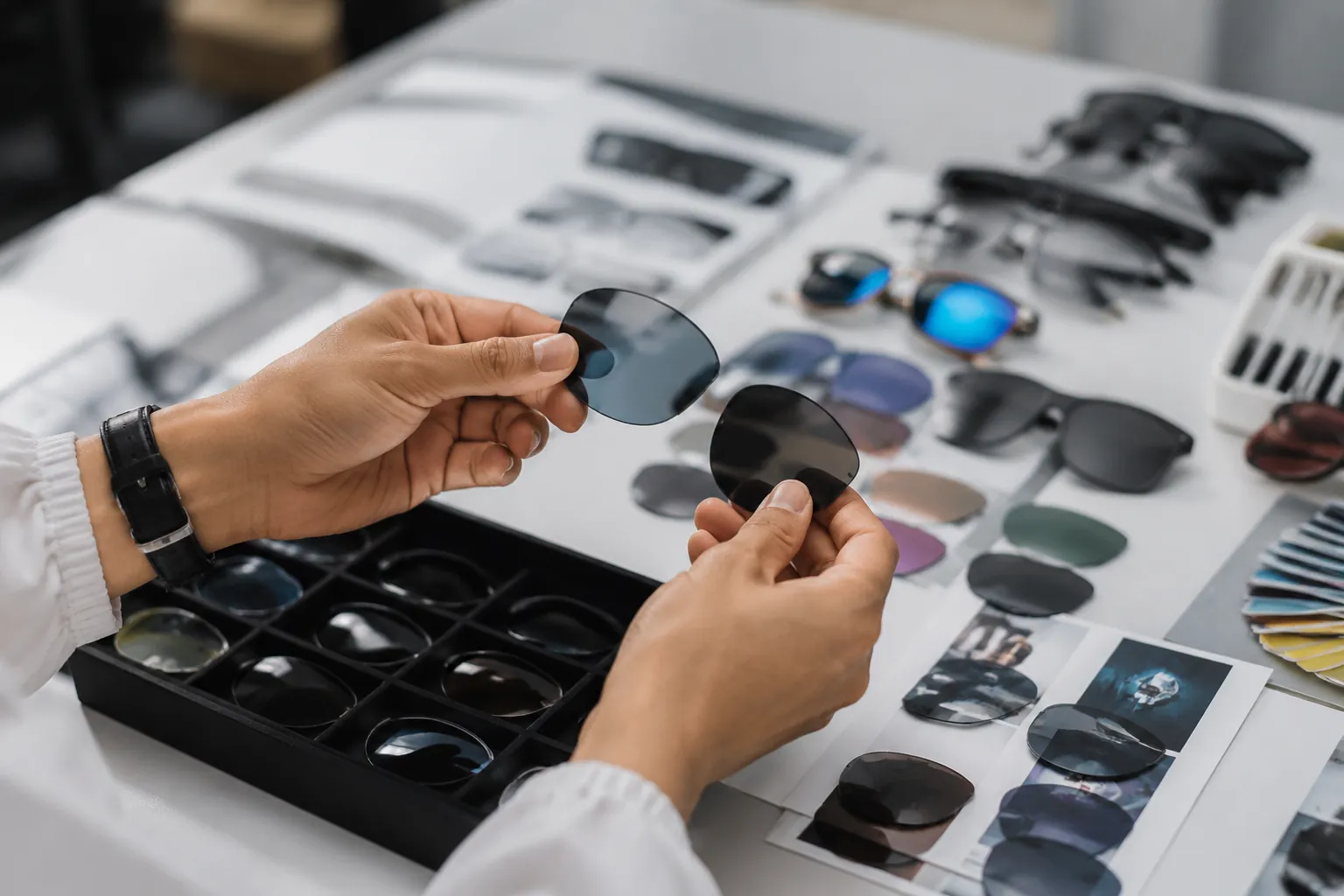
Choosing between OEM and ODM sunglasses is not mainly a branding call. It is a decision about speed, budget, control, and compliance risk. If you need a unique frame shape or a proprietary fit, OEM gives you more control. It also adds engineering work, sample rounds, tooling decisions, and more chances for delay. If you need a private-label product on a shorter schedule, ODM is usually the faster and lower-risk route because the frame platform already exists. Customization is often limited to color, lenses, branding, finish, and packaging. This guide compares both models from a factory point of view: where time is lost, when tooling starts, how MOQ logic changes, how compliance affects development, and why reorder speed is usually different. The goal is simple: help brand owners, importers, distributors, and retail buyers choose the sourcing model that fits the product instead of paying for full custom development when they do not need it.
Start with the real choice: uniqueness or speed?
Buyers often compare OEM vs ODM sunglasses as if both routes solve the same problem. They do not.
OEM usually means the factory develops a model from your input: a sketch, CAD file, technical drawing, sample, or some mix of them. Depending on construction, that can mean new molds, modified molds, custom acetate machining programs, custom metal parts, revised hinges, and several rounds of fit and appearance review before bulk production is approved.
ODM means you start from a frame the factory already makes or has already developed. Customization is usually limited to existing geometry: frame color, lens tint, coating, logo placement, finish, and packaging. The structure is already engineered. That cuts time and usually lowers technical risk.
Most buying decisions come down to four pressures:
- Launch speed: Do you need a sellable product in market fast?
- Brand differentiation: Does the frame shape itself matter, or can branding, colorway, and packaging do enough?
- Upfront budget: Can you absorb tooling, extra samples, and possible retesting?
- Reorder predictability: Do you need future orders to move with minimal engineering review?
If the product is seasonal, promotional, trend-led, or still being tested, ODM is often the practical choice. If the frame shape is central to the product strategy and you expect repeat runs, OEM may justify the extra work. A common sourcing mistake is choosing OEM when the business only needed private-label customization.
OEM vs ODM on lead time, tooling, MOQ, and cost
| Factor | OEM custom model | ODM factory style |
|---|---|---|
| Starting point | Your drawing, tech pack, CAD, or physical reference sample | Existing frame from the factory's developed range |
| Tooling need | May require new mold work, mold modification, custom acetate machining, or custom hardware tooling | Usually no new frame tooling; customization is often limited to decoration, color, lenses, and packaging |
| Sample timing | Usually longer because engineering review and prototype correction are often required | Usually shorter because the frame structure is already established |
| Bulk lead time | Can extend if fit correction, component changes, or retesting is required | Usually more predictable once the customized sample is approved |
| MOQ logic | Practical commitment is often higher because development cost must be recovered | Often lower because there is no need to amortize a new frame development program |
| Price path | Total project cost is often higher at low volume because tooling and sampling are not yet spread across reorders | Unit pricing is usually easier to quote and compare because the base frame already exists |
| Exclusivity | Higher if the design and tooling are contractually protected | Lower on core geometry, though branding and color combinations can still be differentiated |
| Reorder speed | Can be efficient once the final specification is frozen and components are stable | Usually faster because the frame platform, assembly method, and fit are already known |
This is why experienced buyers often split a range. They use ODM for products that must launch fast. Then they consider OEM only for styles that prove demand and justify full custom development.
Where time actually goes in sampling and production
Lead time is not one block. It is a chain of approvals. If one link is weak, the whole schedule slips.
- Style selection or design review: ODM buyers choose an existing frame and confirm color, lens, branding, and packaging. OEM buyers provide dimensions, fit targets, materials, construction details, and visual references.
- Engineering feasibility check: The factory reviews whether the requested decoration, lens, hinge, and material choices are workable and repeatable in production.
- Sample making: ODM samples are generally faster because the factory is customizing an existing structure. OEM first samples often take longer because prototype parts, tooling choices, or sourcing work may be needed before assembly can start.
- Approval and correction: Many projects stall here. Common issues include lens color mismatch, wrong logo scale or position, hinge tension imbalance, front curve problems, or a sample that looks acceptable but does not match the approved specification.
- Bulk scheduling: Once the sample is approved, production timing depends on material availability, line planning, decoration capacity, and any special finishing or coatings.
- QC, packing, and shipment preparation: Final checks should cover labeling, barcode requirements, packing configuration, carton marks, and the compliance documents required for the destination market.
On repeat orders, ODM usually keeps an edge because the geometry does not change. If approved color, lens, branding, and packaging references are already on file, there is less technical debate before production starts.
Most delays are not caused by manufacturing alone. They come from incomplete specifications, slow approvals, and changes made after sampling.
Cost structure: unit price is only part of the picture
Comparing only the per-pair factory quote is a fast way to choose the wrong model.
With ODM, the main cost variables are usually frame material, lens specification, finish, branding method, packaging, and order quantity. Because the frame platform already exists, buyers are usually paying for customization and production, not full product development.
With OEM, the unit price often hides the real project cost. That total can also include:
- New mold development or modification
- Acetate machining or programming setup
- Multiple prototype rounds before fit and appearance are approved
- Custom logo hardware, trims, or embedded branding parts
- Additional testing or document review after design or material changes
- Higher development-stage scrap or rework if the design is not yet stable
There is also a cash-flow issue. If you commit to a fully custom shape before demand is proven, you carry development risk and inventory risk at the same time. ODM reduces that exposure. You can test demand with an existing frame platform first, then decide whether exclusivity is worth the extra spend.
For distributors, importers, and retailers, that often matters more than a narrow comparison of theoretical unit cost.
Materials, tolerances, and decoration: how far customization can go
Not every sunglass design is equally flexible. The production method sets the limit.
Injection-molded frames are common in higher-volume programs because they offer good consistency once tooling is stable. Color, finish, printed branding, and lens options can often change without redesigning the frame. But if you want to change the silhouette or structure, it usually becomes an OEM project because the tooling has to change.
Acetate frames can support more visible detail in beveling, lamination, and finishing, but they also involve more machining and hand-finishing steps. That can make them more flexible for certain appearance changes, but process variation still has to be controlled tightly.
Typical technical checks buyers should ask for include:
- Dimensional tolerance: confirm acceptable ranges for front width, bridge, temple length, and key fit points
- Lens fit: verify that lens thickness and groove design match so the lens seats securely without stress or deformation
- Hinge performance: check screw security, opening and closing feel, and left-right symmetry
- Decoration durability: ask how print adhesion, engraving clarity, or metal logo fixation is verified
- Lens consistency: confirm how tint, coating appearance, and cosmetic quality are controlled from lot to lot
Decoration choice affects both appearance and defect risk:
- Pad printing is cost-effective and common, but durability depends on surface preparation, ink system, and curing control.
- Laser engraving avoids ink adhesion issues, but the visual effect depends heavily on substrate color and finish.
- Metal logo plates can create a more premium look, but they require enough material thickness and add assembly steps and fixation risk.
A design that looks simple in a rendering can become difficult in production. Thin temple walls, weak hinge support, or an unstable lens effect can all push defect rates up fast.
Compliance starts early, not after the sample looks good
If you sell into regulated markets, compliance must be built into the product decision from the start. Not at the end.
Common standards, systems, and programs buyers may ask about in sunglass sourcing include: CE EN ISO 12312-1, ANSI Z80.3, AS/NZS 1067, REACH, FDA registration, ISO 9001, and BSCI.
In practical terms:
- CE EN ISO 12312-1 is the main reference standard for general-purpose sunglasses sold in Europe and covers performance requirements such as transmittance and UV-related criteria.
- ANSI Z80.3 is a widely used U.S. standard for non-prescription sunglasses and fashion eyewear.
- AS/NZS 1067 is relevant for Australia and New Zealand.
- REACH concerns chemical substance restrictions that may affect frame materials, coatings, inks, and components sold into Europe.
- FDA registration may appear in supplier screening for the U.S. market, but registration alone does not prove that a sunglass model meets all applicable product requirements.
- ISO 9001 relates to quality management systems, not direct product certification.
- BSCI relates to social compliance and supply-chain auditing, not optical performance or chemical compliance.
ODM can be easier to manage because the base frame may already have known material history and an established testing path. OEM can also comply, but any meaningful design or material change may require a fresh review of whether previous reports and declarations still apply. A new lens category, coating, pigment system, or substrate can change the compliance file.
Do not approve a sunglass on appearance alone. Approve appearance, specification, labeling, and compliance path together at the sample stage.
A practical decision framework for buyers
| Buyer situation | Better model | Why |
|---|---|---|
| Retailer needs a seasonal private-label launch on a short timeline | ODM | An existing frame platform removes most development work and usually shortens sample approval and bulk planning |
| Importer is testing a new market with limited budget | ODM | Lower development exposure makes it easier to test demand before committing to custom tooling |
| Brand is building a signature hero frame around unique shape or fit | OEM | The frame geometry itself is part of the value proposition, so custom development may be justified |
| Distributor needs repeat replenishment across multiple colors or lens options | ODM | Repeatability and reorder speed usually matter more than owning exclusive geometry |
| Mid-size brand has one proven style and wants stronger differentiation | Hybrid | Start from what already sells, then move selected winners into deeper customization if volume supports it |
The hybrid route is often the smartest commercial move. Launch through ODM. Measure real sales by color, lens type, and price band. Then reserve OEM investment for products that already show staying power.
How to move faster without creating quality problems
Speed usually comes from less ambiguity, not more pressure.
- Freeze the specification early: define material, finish, lens type, branding method, packaging, labeling, and destination-market requirements before sampling starts.
- Approve against a checklist: review dimensions, appearance, hinge feel, lens performance requirements, logo position, packing, and compliance documents together.
- Use realistic tolerances: cosmetic and dimensional limits should match the product category and price level, or rejection rates can rise for no good reason.
- Quote by volume break: ask for pricing at several quantities so you can compare the economics of a test order and a reorder, not just one scenario.
- Avoid late decoration changes: changing the branding method after sample approval can affect structure, process flow, and defect risk.
- Confirm QC method before bulk: ask how alignment, lens seating, branding durability, quantity checks, and visual inspections are performed.
Buyers should also ask who controls each process step. A supplier that manages more operations directly may reduce handoff risk, but the real issue is clarity. The supplier should be able to explain responsibility for development, production, inspection, and documentation without vague claims.
If your ship window is fixed, say so early. Tie internal approvals to that date. Factories can usually plan around a defined target better than around a request for delivery "as soon as possible."
Have a custom sunglasses project in mind?
Send us your styles, target market and quantities and we will return a detailed quote with MOQ, lead time and a sample plan.
Get a QuoteWhy source this from Wenzhou with LumiShades
Wenzhou in Zhejiang Province is widely regarded as China’s eyewear manufacturing capital, producing a large share of the world’s sunglasses. That concentration matters to buyers: a deep local supply chain for acetate sheet, hinges, lens blanks, plating and packaging means shorter component lead times, easier color and material matching, and a workforce with decades of eyewear-specific skill. LumiShades has manufactured in this ecosystem since 2009, and our vertical integration — in-house injection molding, acetate cutting, CNC milling, lens tinting, decoration and quality control — means no part of your order is quietly subcontracted to a workshop you cannot audit.
For international buyers, that vertical control translates into accountability. When a single factory owns every step, defects are traced and fixed at source rather than bounced between vendors, and your specifications survive intact from first sample to bulk. We back this with 15+ years of experience, shipments to 60+ countries, more than 5 million pairs produced per year and a 98.5% on-time delivery rate. Our certifications — CE EN ISO 12312-1, FDA registration, ANSI Z80.3, AS/NZS 1067, REACH, ISO 9001 and BSCI audit — mean the compliance documentation your market requires already exists. Explore our manufacturing capabilities and quality control process to see how this works in practice.
Frequently asked questions
Is ODM always lower quality than OEM? No. Quality is not determined by OEM or ODM status alone. It depends on frame engineering, materials, lens specification, process control, inspection discipline, and whether the approved sample truly reflects mass production. ODM can even be more consistent when the factory is customizing a frame it has already produced many times. To judge quality, ask for the exact material specification, lens performance details, sample approval standard, QC checkpoints, and the compliance documents relevant to your target market.
What is the fastest way to launch a private-label sunglass line? Usually the fastest route is ODM: choose an existing frame platform and limit customization to items that do not change the structure, such as frame color, lens tint, coating, logo application, finish, and packaging. To keep the project moving, send one complete brief with artwork, Pantone or color references, packaging requirements, barcode and labeling details, and destination-market compliance requirements. Then approve the sample against a checklist instead of giving partial approvals in stages.
At what order size does OEM start to make financial sense? There is no universal threshold. It depends on mold cost, material choice, expected reorder frequency, and whether compliance testing must be repeated. OEM tends to make more sense when the design itself creates brand value and you expect enough repeat volume to spread development cost over multiple orders instead of one short seasonal run. A practical way to assess this is to compare total landed cost over at least two or three forecasted orders, not just the first production run.
Can I start with 50 pairs and still get meaningful customization? In many ODM programs, yes, but the scope is usually limited to non-structural changes. Realistic options often include logo application, standard color changes, lens tint or coating options already available from the supplier, surface finish, and packaging. It usually does not include a new frame shape, major hardware changes, or fully custom components. Before placing a low-volume order, ask the supplier to list exactly which elements are standard options, which require extra setup, and which move the project into OEM development.
Which certifications or documents should I ask about for export markets? Start with the destination market and the product claim. For Europe, buyers commonly review conformity to CE EN ISO 12312-1 and chemical compliance information such as REACH where relevant. For the U.S., ANSI Z80.3 is a key reference for non-prescription sunglasses, and FDA registration may appear in supplier documentation, though it is not a substitute for product-level compliance review. For Australia and New Zealand, AS/NZS 1067 is relevant. You can also ask whether the factory holds ISO 9001 for quality management and BSCI for social compliance, but these do not replace product testing. In practice, request the latest available test reports, declarations, material information, labeling details, and confirmation that the report matches the exact model, lens type, and materials you intend to buy.
Ready to start?
Explore our wayfarer sunglasses or request a quote — our sales team replies within 12 hours.
Request a Quote