
Why Sunglass Quotes Differ So Much by Factory
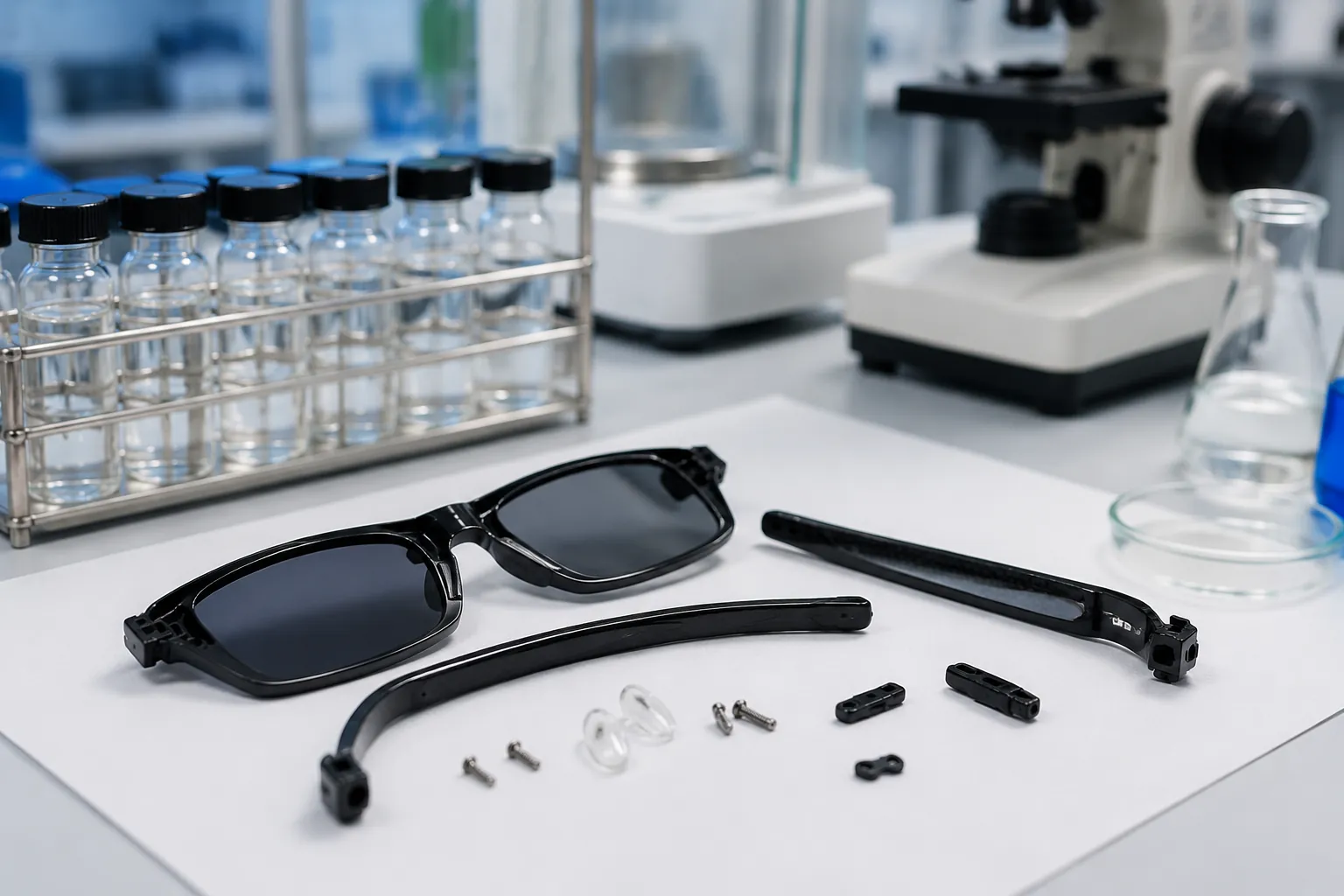
This guide is for brand owners, importers, distributors, and retail buyers comparing sunglass quotes that look similar but come back far apart. Most of the time, the gap is not random. It comes from scope: frame material, lens construction, hinge spec, decoration method, packaging, inspection steps, testing support, and how setup cost is spread across small runs. To compare quotes fairly, you need to see exactly what each factory included, what it left out, and what is still assumed.
Start with one question: what is actually included?
Most quote gaps are scope gaps. Not true like-for-like price gaps.
One factory may be quoting frame, lenses, simple logo print, polybag, and export carton only. Another may be including color matching, microfiber pouch, barcode labels, tighter lens sorting, and final AQL inspection. Both may still call the product the same custom sunglass.
The fix is simple. Send one locked specification sheet and ask every supplier to quote against that exact scope. If important fields are left open, each factory will fill them in differently. The cheapest quote often reflects narrower assumptions, not better efficiency.
- Frame material: PC, TR90, acetate, or metal; target weight; wall thickness; gloss or matte finish.
- Lens specification: AC, PC, nylon, TAC polarized, or glass; thickness; base curve; tint; UV requirement; hard coat or mirror if needed.
- Hardware: hinge type, spring hinge or not, screw material, plating requirement where relevant.
- Decoration: 1-color pad print, 2-color print, hot stamp, laser mark, metal logo plate, and exact logo placement.
- Packaging: polybag, pouch, cloth, paper sleeve, box, barcode sticker, warning label, and master carton count.
- QC scope: visual standard, hinge torque check, logo adhesion, lens defect criteria, drop test if required, and carton checks.
- Compliance: target market requirements and any support needed for CE EN ISO 12312-1, ANSI Z80.3, AS/NZS 1067, REACH, or FDA registration context where applicable.
Also define when lead time starts. From deposit? Artwork approval? Pre-production sample approval? A quote showing 28 days from deposit is not comparable to one showing 28 days from approved sample.
If a supplier handles molding, lens processing, decoration, and QC in-house, the quote may be easier to read because fewer steps are subcontracted. That does not automatically mean cheaper. It usually means fewer unknowns.
Frame cost gaps usually come from material, process, and finish
Two black frames can look almost identical in a photo and still cost very different amounts to make.
Start with material. Injected polycarbonate is common in promotional and fashion sunglasses because it is widely available and efficient to mold. TR90 is often chosen for flexibility and low weight, but its material and process needs vary by factory. Acetate sits in a different cost bracket altogether. It requires cutting, CNC shaping, tumbling, polishing, and more manual assembly than standard injected plastic frames.
Then look at the acceptance standard. A low quote may allow more sink marks, gate vestiges, color variation, temple misalignment, or rougher parting lines. The frame may still pass a casual check. It may not pass a retail buyer's standard.
| Cost driver | Lower-cost assumption | Higher-cost assumption | Effect on quote |
|---|---|---|---|
| Injected frame resin | General-grade PC with broader color tolerance | Higher-grade resin or TR90 with tighter color matching | Material choice and process control both affect cost |
| Wall thickness | Thinner section with lower material use | Thicker section for stiffness and lower warp risk | Material consumption and molding conditions change |
| Acetate processing | Fewer polishing passes and broader appearance tolerance | Better sheet matching and more finishing steps | Labor and scrap increase |
| Alignment finishing | Basic visual check only | Temple balance and fit correction per pair | More hand-finishing time |
On small runs, setup costs can matter more than resin cost alone. Machine setup, color matching, trial assembly, and logo prep still happen whether the order is small or large. That is why low-MOQ custom orders often show the widest unit-price spread.
Lenses are one of the biggest hidden price drivers
Lens cost is often misunderstood. Buyers see "UV400" and assume the lens spec is settled. It is not.
UV400 only refers to ultraviolet protection. It does not define lens material, thickness, optical quality, hard coating, polarization, mirror finish, or the records available to support market requirements.
AC lenses are common in lower-cost programs. PC lenses are often selected where better impact performance is needed. TAC polarized lenses cost more because they use laminated construction and need tighter control of bubbles, delamination, and cosmetic defects. Nylon and glass may also be used, but they should never be assumed.
Thickness and coating matter too. A thin lens and a thicker lens do not cost the same, feel the same, or handle the same. Hard coat, flash mirror, revo mirror, and other surface treatments add process steps and more inspection. Mirror finishes especially need tighter control of appearance and adhesion.
- Material: AC, PC, nylon, TAC polarized, or glass.
- Thickness and curve: these affect processing, fit, and consistency.
- Tinting: smoke, brown, green, gradient, and category consistency all need to be defined.
- Coating: hard coat, mirror, flash, revo, or other treatments add cost and QC checks.
- Inspection: optical distortion, edge chips, coating defects, color consistency, and polarization quality where applicable.
If the product is for a market that relies on CE EN ISO 12312-1, ANSI Z80.3, or AS/NZS 1067, the quote should state whether the factory is building and labeling to that target and what testing support or records it can provide. A quote that says only "UV400" is not equal to one that addresses the intended standard.
Practical rule: if one quote is much cheaper, ask four direct questions: Is the lens AC or PC? Is it polarized? Is hard coat included? Which standard is the finished product intended to align with?
Hardware and decoration can change price fast
Hinges and logos look minor on paper. They are not.
Standard barrel hinges are usually the entry-level option. Better screws, tighter torque control, and more consistent assembly raise labor and component cost, but they can reduce common after-sales problems such as loose temples, uneven opening force, or missing screws. Spring hinges add both component cost and assembly complexity. Never assume they are included.
Torque is a good example of hidden labor. One supplier may attach the temples and do a quick visual check. Another may adjust each pair for more consistent opening and closing force, then verify alignment before packing. That takes more time. It can also prevent complaints.
Decoration is another source of quote variation. One-color pad printing is usually the lowest-cost logo method, but cost rises when artwork uses multiple colors, exact color matching, fine lines, or placement on curved or textured surfaces. Ink adhesion can also vary with the substrate and finish. Laser marking is stable on some materials but not right for every surface. Metal logo plates add separate fabrication, attachment, and inspection steps.
| Feature | Budget option | Higher-cost option | Typical hidden cost point |
|---|---|---|---|
| Hinge | Standard metal hinge | Spring hinge or tighter torque control | More assembly time and more inspection |
| Logo | 1-color pad print | Metal plate or 2-color print | Setup, positioning, adhesion, and appearance checks |
| Temple marking | Single inside print | Inside print plus outside laser mark | Extra setup and inspection time |
| Lens finish | Solid tint | Mirror or TAC polarized | Coating or lamination control |
At low volume, tooling for a logo plate, print plate prep, or color matching can add noticeable cost per unit. That is one reason small-MOQ custom programs often produce big quote differences.
Packaging assumptions quietly add real cost
Packaging is one of the easiest ways for quotes to drift apart.
One supplier may quote only a polybag and export carton. Another may include a microfiber pouch, cleaning cloth, folding box, barcode label, warning label, and stronger master carton. The second quote looks higher, but it may simply reflect the complete delivered unit you actually need.
Retail and e-commerce programs usually need more than basic export packing. They may require scannable barcodes, assortment labels, branded presentation, or stronger protection to reduce transit damage and retailer deductions.
- Basic export pack: polybag, standard protection, outer carton only.
- Retail-ready pack: pouch or cloth, printed box, barcode label, warning label, assortment mark.
- E-commerce pack: stronger individual protection and better carton integrity.
Carton quantity matters too. A factory may quote a carton count that reduces packaging cost but does not fit your warehouse handling, pallet plan, or freight target. If the RFQ says only "standard packaging," each supplier will define that in its own way.
Ask for packaging as a line-by-line breakout. Then you can see whether the price gap comes from the sunglasses or from presentation and shipping configuration.
QC scope is often where cheap quotes make up margin
Factories do not inspect to the same level. That is a fact.
A low quote may include only a final visual check before packing. A stronger quote may include incoming material checks, in-process inspection, lens sorting, assembly checks, torque checks, and final AQL inspection.
For sunglasses, useful QC checkpoints usually include frame symmetry, lens seating, surface defects, hinge function, logo position, print adhesion, mirror adhesion where applicable, and carton condition. If the program is intended to align with CE EN ISO 12312-1, ANSI Z80.3, or AS/NZS 1067, there should also be control of lens category, UV performance, optical quality, labeling, and related records. REACH relates to chemical compliance. ISO 9001 and BSCI may show system structure, but they do not confirm the quality level of a specific style.
The key issue is not whether a factory lists certifications in general terms. It is whether the quotation states which inspection checkpoints are included and which defect thresholds trigger rework or rejection.
For example, buyers should ask for specifics such as:
- Visible paint miss acceptance on front or temple surfaces
- Logo position tolerance
- Allowance for slight lens edge chips concealed by the rim, if any
- How hinge looseness is checked before packing
- What AQL level applies to major and minor defects
Ask for the defect standard. "No obvious defects" is not a usable standard. A real standard defines what is acceptable, what is major, and what must be reworked before shipment.
This is why a cheap quote can become expensive later. If inspection and finishing are light, the buyer often pays through returns, claims, destination sorting, or slower sell-through.
Lead time, tooling, and MOQ explain the rest
If one factory quotes much faster bulk production than another, ask why.
It may be using an existing mold. It may be modifying an existing tool. It may have reserved machine time. It may be simplifying packaging or skipping development steps. The speed may be real. It still needs to be explained.
Tooling status matters as much as unit price. A project based on an existing platform is different from one that needs mold modification or fully new tooling. The same applies to logo fixtures, print plates, and color matching. If these items are not clearly stated, you cannot tell whether one quote is complete and another is partial.
MOQ changes unit cost because setup cost does not disappear on a small order. Sample labor, artwork setup, print plate prep, trial assembly, machine setup, and packaging prep still happen even when quantity is low.
- Confirm whether the style uses an existing mold, a mold modification, or fully new tooling.
- Ask whether sample charges include logo tooling, print plates, and color matching.
- Check whether the bulk price assumes one shipment window or split delivery.
- Confirm whether lead time starts from deposit, artwork approval, or approved pre-production sample.
When comparing factories, request price breaks at the same quantities and confirm whether MOQ applies per style, per color, or per total order. A supplier with a low headline MOQ may still require a minimum quantity per color to hold the quoted price.
A quote is only comparable when timing and setup assumptions match.
A checklist to normalize quotes before you choose
If you want an apples-to-apples comparison, send the same checklist to every factory and ask for written confirmation line by line. That removes much of the ambiguity.
- Frame: exact material, color standard, finish, target weight, and hinge type.
- Lens: material, thickness, tint, polarized or not, coating, UV requirement, and target compliance standard.
- Decoration: method, colors, location, and adhesion or durability expectation.
- Packaging: every component listed separately with material and print method.
- QC: in-process checks, final AQL, hinge function check, lens defect standard, and carton checks.
- Compliance: available support for CE EN ISO 12312-1, ANSI Z80.3, AS/NZS 1067, REACH, FDA registration context, and any importer documentation needs.
- Commercial terms: MOQ per style and per color, sample lead time, bulk lead time, and quantity price breaks.
The cheapest quote can still be the right one. Sometimes it does come from a more efficient factory with stronger in-house control. But if the gap is large and the explanation is vague, assume the scope is different until proven otherwise.
Get the inclusions, assumptions, and defect standard in writing before you place the PO. That is how you compare total cost, not just headline price.
Have a custom sunglasses project in mind?
Send us your styles, target market and quantities and we will return a detailed quote with MOQ, lead time and a sample plan.
Get a QuoteWhy source this from Wenzhou with LumiShades
Wenzhou in Zhejiang Province is widely regarded as China’s eyewear manufacturing capital, producing a large share of the world’s sunglasses. That concentration matters to buyers: a deep local supply chain for acetate sheet, hinges, lens blanks, plating and packaging means shorter component lead times, easier color and material matching, and a workforce with decades of eyewear-specific skill. LumiShades has manufactured in this ecosystem since 2009, and our vertical integration — in-house injection molding, acetate cutting, CNC milling, lens tinting, decoration and quality control — means no part of your order is quietly subcontracted to a workshop you cannot audit.
For international buyers, that vertical control translates into accountability. When a single factory owns every step, defects are traced and fixed at source rather than bounced between vendors, and your specifications survive intact from first sample to bulk. We back this with 15+ years of experience, shipments to 60+ countries, more than 5 million pairs produced per year and a 98.5% on-time delivery rate. Our certifications — CE EN ISO 12312-1, FDA registration, ANSI Z80.3, AS/NZS 1067, REACH, ISO 9001 and BSCI audit — mean the compliance documentation your market requires already exists. Explore our manufacturing capabilities and quality control process to see how this works in practice.
Frequently asked questions
Why are two quotes different when both say PC frame and UV400 lens? Because both terms are broad and incomplete. "PC frame" does not tell you resin grade, wall thickness, finish standard, hinge spec, or allowable cosmetic defects. "UV400" only covers UV protection. It does not tell you whether the lens is AC or PC, whether it is polarized, whether hard coat is included, what thickness is used, or whether the finished product is intended to align with CE EN ISO 12312-1, ANSI Z80.3, or AS/NZS 1067. Ask each factory for a written frame and lens specification, not shorthand terms.
How much does MOQ affect unit price on custom sunglasses? MOQ can affect unit price a lot because setup cost is spread across the order quantity. In a custom program, that may include color matching, print plate prep, logo tooling, sample labor, machine setup, and packaging setup. To judge the impact properly, ask each supplier for price breaks at the same quantities and confirm whether MOQ is per style, per color, or total order. Also ask which one-time costs are excluded from the unit price so you can compare total landed cost, not just piece price.
What should I ask about hinges before approving a quote? Ask for the exact hinge type, whether it is standard or spring hinge, the screw material, whether any plating requirement applies, and whether hinge opening and closing function is checked during finishing or final inspection. Also ask how the factory handles loose screws, uneven temple opening force, and temple alignment before packing. If hinge consistency matters in your channel, ask for the inspection method and acceptance standard in writing instead of relying on a general quality claim.
Is polarized always worth the extra cost? Not always. TAC polarized lenses cost more because they use laminated construction and need tighter control of bubbles, delamination, and cosmetic defects. They are often justified for driving, outdoor use, and higher-ticket retail programs where glare reduction is part of the product value. They may be unnecessary for low-cost fashion or promotional programs. If you are unsure, ask the factory to quote both polarized and non-polarized options against the same frame, packaging, and QC scope so the added cost is clear.
Do certifications alone tell me the factory quality level? No. ISO 9001 and BSCI may show that a factory has management or social compliance systems, but they do not prove that your specific sunglass model will meet your required quality level. Product-related references such as CE EN ISO 12312-1, ANSI Z80.3, AS/NZS 1067, REACH, and FDA registration context are more relevant, but you still need to confirm what testing support, records, inspection steps, and defect criteria are included in the quote. The practical step is to match the factory's stated support to a written product specification and QC standard for the exact style you are buying.
Ready to start?
Explore our shield & oversized sunglasses or request a quote — our sales team replies within 12 hours.
Request a Quote