
ODM or Full Custom Sunglasses: Best Route for Launch?
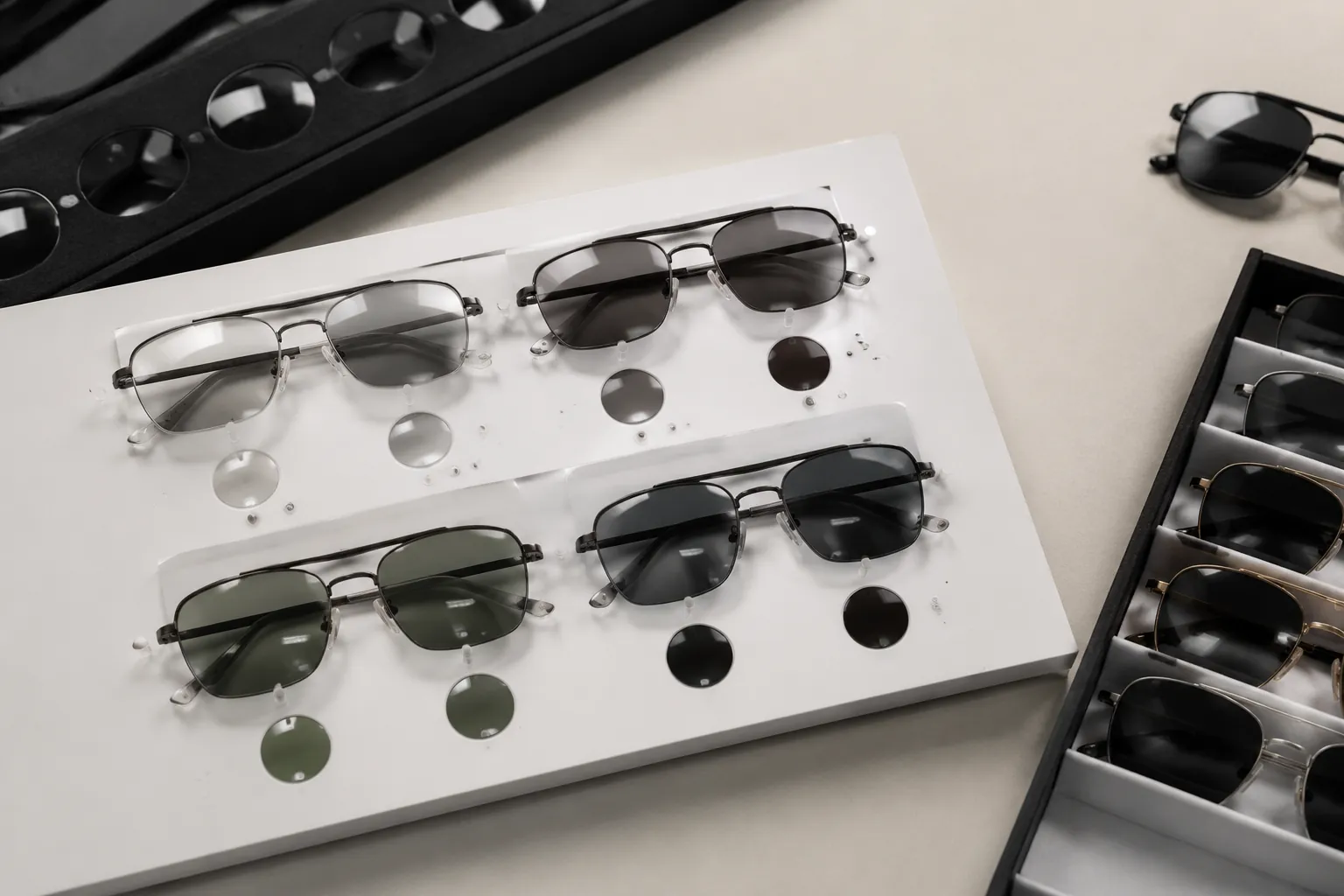
This guide is for brand owners, importers, distributors, and retailers deciding between an existing factory frame platform and a fully custom sunglass program. That choice affects timeline, MOQ, development cost, compliance work, and how much control you have over fit and product identity. Start there. Not with piece price. The aim is simple: show what changes between the two routes, what does not, and which points you should settle with a supplier before approving samples or placing a bulk order.
Start with the real decision: speed, cost, or design control
Many buyers start with unit price. That is usually the wrong first question. The better question is whether you are buying from an existing factory platform or paying for new product development. These are different sourcing routes with different risks, approval steps, and cash demands.
ODM usually means the supplier already has a frame design, production method, and assembly process in place. Buyers often change color, lens option, logo application, and packaging while leaving the underlying frame structure alone. Because the platform already exists, sampling and production prep are often faster and more predictable.
Full custom development means the frame structure is new or materially changed for your program. That can involve fresh technical drawings, prototype review, mold development for injection parts, or new machining and finishing workflows for acetate or metal components. It gives you more control over dimensions, fit, and visual identity. It also adds more engineering variables that must be checked before bulk production.
The practical split is clear. If your priority is a faster launch with lower upfront exposure, ODM is usually the better route to assess first. If your priority is a frame shape, fit, or construction built around your brand, full custom is the better fit. Problems start when buyers expect custom-level originality on an ODM schedule and budget.
Head-to-head: where ODM and full custom differ
| Factor | ODM factory style | Full custom tooling |
|---|---|---|
| Sample lead time | Usually shorter because the frame platform already exists and changes are often limited to finish, lens, branding, or packaging | Usually longer because drawing review, prototype approval, and development checks come before a final production sample |
| Bulk lead time | Usually shorter once the approved sample, packaging files, and order details are confirmed | Usually longer because pilot validation, tooling adjustment, or process refinement may be needed before mass production |
| MOQ | Often lower because the supplier is not recovering new frame development from the order | Often higher in practical terms because development cost normally needs repeat volume to make commercial sense |
| Upfront cost | Usually limited to sample fees, artwork setup, and packaging development | Usually includes development expense such as engineering time, prototype work, and possible tooling cost |
| Unit price logic | Often suitable for market testing and lower-volume launches, though pricing still depends on material, lens type, decoration, and packaging | Can become more efficient over repeat orders if development cost is spread across sustained volume |
| Brand differentiation | Moderate; branding and finish can be distinct, but the base silhouette is less exclusive | High; shape, fit, detailing, and construction can be built around your own specification |
| Technical risk | Usually lower because the platform has already been produced before | Usually higher because fit, assembly, tolerances, and cosmetic yield may need adjustment during development |
For many buyers, the real break point is not creative ambition. It is forecast confidence. ODM is easier to justify when demand is still being tested. Full custom makes more sense when the product matters strategically and you expect meaningful reorder volume.
That is why full custom should not be judged on ex-factory unit price alone. Compare total program cost against expected reorder potential, launch timing, and the commercial value of a more proprietary product.
What ODM lets you change without changing the frame
ODM does not mean you are buying a dead-stock item with your logo slapped on it. Many factory platforms allow useful customization without altering core frame geometry. The key is knowing which changes are cosmetic, which affect performance, and which trigger structural redevelopment.
- Color and finish: frame colorways, transparent or solid effects, matte or gloss finishing, and other finish options the material and process can support consistently.
- Lens specification: lens color, tint style, polarization option, mirror treatment, or other lens choices the supplier can provide for that frame and target market.
- Branding method: pad print, laser engraving, lens marking, hot stamp, or logo hardware where the frame construction supports the chosen method.
- Packaging set: pouch, case, cleaning cloth, barcode label, hangtag, leaflet, carton marking, and other packing components.
- Selected hardware details: on some constructions, limited changes to screws, nose pad style, or small trim details may be possible without redeveloping the full frame.
What usually cannot be changed cheaply is the frame skeleton itself. If you want to significantly alter lens opening shape, front curve, hinge position, temple thickness, bridge geometry, or overall fit architecture, the project is no longer a simple ODM modification.
That distinction matters. Cosmetic changes can often be quoted and sampled quickly. Geometric changes can affect lens fit, opening and closing angle, hinge alignment, stiffness, and visual symmetry. ODM works best when your differentiation comes from curation, branding, packaging, and market positioning rather than from a wholly original frame architecture.
What full custom development involves from drawing to pilot run
Full custom projects are often underestimated. A sketch can align your internal team, but it is not enough for mass production. It does not define tolerances, material behavior, or assembly requirements clearly enough.
- Design review: confirm target customer, material family, lens category, hinge type, and whether the frame is injection, acetate, metal, or mixed construction.
- Technical drawing: define core dimensions and construction details such as eye size, bridge width, temple length, thickness targets, base curve, logo area, and key fit assumptions.
- Prototype stage: produce an early sample to assess shape, wearability, lens fit, and visual proportion before finalizing development.
- Tooling or process setup: for example, mold development for injection parts or finalized machining, cutting, polishing, and assembly planning for acetate or metal programs.
- Pilot run: build a controlled small batch to check assembly consistency, alignment, lens insertion, cosmetic quality, and repeatability before authorizing bulk production.
- Compliance confirmation: verify that the final approved materials and lens configuration still match the test and documentation path needed for the destination market.
Material behavior is often where delays show up. Injection parts can drift slightly from design intent as tooling and process conditions are refined. Acetate and metal programs raise different issues, including machining consistency, shaping stability, polishing loss, and assembly alignment. Small dimensional changes can affect comfort, lens retention, hinge feel, and visual symmetry.
Tolerance control is not glamorous. It is critical. A design can look right in a prototype and still fail commercially if the supplier cannot repeat the approved result in production. That is why pilot review, process control, and clear sign-off criteria matter as much as styling in a full custom program.
Cost logic: tooling, forecast confidence, and delay risk
Buyers make better sourcing decisions when they compare total program cost, not isolated piece price. ODM is often the lower-risk route because starting costs are usually limited to sampling, artwork preparation, packaging setup, and the commercial terms tied to the production order.
Full custom changes that math. Development expense shows up before the first sellable bulk order is complete. Depending on the construction, that may include technical development, prototypes, tooling, revisions, and extra approval rounds. The question is not whether custom can look more distinctive. It is whether expected sales justify the added time and fixed cost.
Timing also has a cost. Missing a seasonal window, customer presentation, retail reset, or promotional launch can weaken the whole program even if the final unit economics look fine on paper. Often, a simpler product launched on time is commercially stronger than a more original product that arrives late.
A practical rule: use ODM when speed, lower development exposure, and easier market testing matter most. Use full custom when the frame itself is part of your brand asset, the margin structure can support development work, and expected reorder volume is strong enough to justify it.
Compliance and spec control: fast only works if bulk matches sample
For export programs, compliance needs to be addressed early. Not after appearance approval. The required documentation and testing path depend on where the sunglasses will be sold, what lens type is used, and which materials and finishes are included in the final bill of materials.
Common references buyers may need to discuss with suppliers include CE EN ISO 12312-1 for Europe, ANSI Z80.3 for the United States, AS/NZS 1067 for Australia and New Zealand, and REACH for restricted substances where applicable. FDA registration may also come up in some US import discussions. ISO 9001 and BSCI can be useful indicators of management systems and social compliance processes, but they do not prove that a sunglass model meets product-performance requirements.
ODM can be easier to manage from a compliance standpoint when the supplier already has experience with a similar frame and lens combination, but buyers should not assume every variation is automatically covered. Changes to lens type, tint, coating, polarization, material source, or frame construction can change what needs to be verified. Full custom usually increases that risk because more variables move at once.
Ask for these items early, not after you approve appearance:
- Target-market standard: the exact product standard or documentation path required for the countries where the goods will be sold.
- Approved bill of materials: a clear record of frame material, lens material, coating, hardware, and decoration method tied to the approved sample.
- Critical quality points: the specific items that will be checked in production, such as lens cleanliness, logo placement, hinge function, and color consistency.
- Bulk-match confirmation: written confirmation that production will follow the approved sample specification and not a substituted lens, coating, or material.
A common failure point is simple: buyers approve one combination and receive another. If bulk goods do not match the approved and documented specification, compliance documents may no longer reflect what is actually being imported or sold.
A practical buyer framework before you place the order
Before requesting quotations, define which situation matches your program.
- Choose ODM if: you need a commercially ready line faster, want to test demand before investing heavily, or prefer to limit upfront development risk.
- Choose full custom if: the frame silhouette, fit, or construction is central to your brand strategy and you have enough confidence in repeat demand to support development cost.
- Choose a hybrid route if: you want to launch faster first, then use sales data to decide which shapes or fit concepts deserve custom investment later.
The hybrid route is often sensible because it cuts guesswork. Launching with an existing platform can show which shapes, lens options, and price points actually move in your market before you commit to a longer development path.
Whichever route you choose, do not approve a sample on appearance alone. Lock the production details:
- Confirm exact material: identify the actual frame and lens materials rather than relying on broad terms.
- Freeze the lens specification: define tint, lens category, coating, mirror treatment, gradient, and polarization status.
- Approve decoration method: specify the exact logo application method because durability, placement, and setup differ by process.
- Define acceptance points: agree on the quality checks that matter, such as logo position, lens cleanliness, hinge feel, color consistency, and visible surface condition.
- Control the approval pack: keep the approved sample, artwork, packaging files, carton marks, and bill of materials in one final signed reference set.
If you are sourcing from Wenzhou or another major eyewear production cluster, process ownership also matters. A supplier that controls more production steps directly can often answer technical questions faster and manage corrections more directly than a pure trading intermediary. Better launches usually come from reducing unresolved technical decisions before production starts.
Have a custom sunglasses project in mind?
Send us your styles, target market and quantities and we will return a detailed quote with MOQ, lead time and a sample plan.
Get a QuoteWhy source this from Wenzhou with LumiShades
Wenzhou in Zhejiang Province is widely regarded as China’s eyewear manufacturing capital, producing a large share of the world’s sunglasses. That concentration matters to buyers: a deep local supply chain for acetate sheet, hinges, lens blanks, plating and packaging means shorter component lead times, easier color and material matching, and a workforce with decades of eyewear-specific skill. LumiShades has manufactured in this ecosystem since 2009, and our vertical integration — in-house injection molding, acetate cutting, CNC milling, lens tinting, decoration and quality control — means no part of your order is quietly subcontracted to a workshop you cannot audit.
For international buyers, that vertical control translates into accountability. When a single factory owns every step, defects are traced and fixed at source rather than bounced between vendors, and your specifications survive intact from first sample to bulk. We back this with 15+ years of experience, shipments to 60+ countries, more than 5 million pairs produced per year and a 98.5% on-time delivery rate. Our certifications — CE EN ISO 12312-1, FDA registration, ANSI Z80.3, AS/NZS 1067, REACH, ISO 9001 and BSCI audit — mean the compliance documentation your market requires already exists. Explore our manufacturing capabilities and quality control process to see how this works in practice.
Frequently asked questions
If I need sunglasses on shelf in six to eight weeks, should I avoid full custom tooling? In most cases, yes. Full custom is harder to fit into that schedule because it usually requires technical review, prototyping, and at least one round of development validation before bulk production. ODM is generally the more practical route when timing is tight. Ask the supplier for a written timeline covering sample approval, packaging approval, compliance documentation, production, and shipment readiness. If any of those steps are still vague, the schedule is not reliable yet.
At what volume does full custom tooling start to make financial sense? There is no universal threshold because cost depends on construction, material, complexity, and how much new development is required. The practical test is whether you expect enough repeat business to spread development expense across multiple orders without squeezing first-season margin. Ask the supplier to separate one-time development charges from recurring unit cost, then compare that structure against your forecast for sell-through, reorder timing, and expected annual volume.
Can I still make an ODM style look like my brand? Yes, if your brand strategy does not depend on owning a unique frame architecture. Buyers can often customize color, finish, lens option, logo application, and packaging in ways that create a distinct retail presentation. Ask the supplier for a modification list showing what can be changed without structural redevelopment, then request sample photos or references for each branding method you are considering.
Do ISO 9001 or BSCI mean the sunglasses automatically meet retail product standards? No. ISO 9001 and BSCI relate to management systems and social compliance processes, not product-performance compliance for a specific sunglass model. For product approval, ask which standard applies to your market, such as CE EN ISO 12312-1, ANSI Z80.3, AS/NZS 1067, or REACH-related material controls where relevant. Then confirm that the test documents and bill of materials match the exact lens and frame specification you plan to ship.
What is the most common mistake in a custom sunglasses project? A common mistake is approving the look of the sample before locking the production specification in detail. Buyers often sign off on appearance while leaving material grade, lens configuration, logo process, or acceptance criteria too vague. The fix is straightforward: require a final approval pack that includes the signed sample, bill of materials, lens specification, decoration method, packaging files, and written quality checkpoints before bulk production begins.
Ready to start?
Explore our cat-eye sunglasses or request a quote — our sales team replies within 12 hours.
Request a Quote