
Fix These Terms Early in a Sunglasses Development Deal
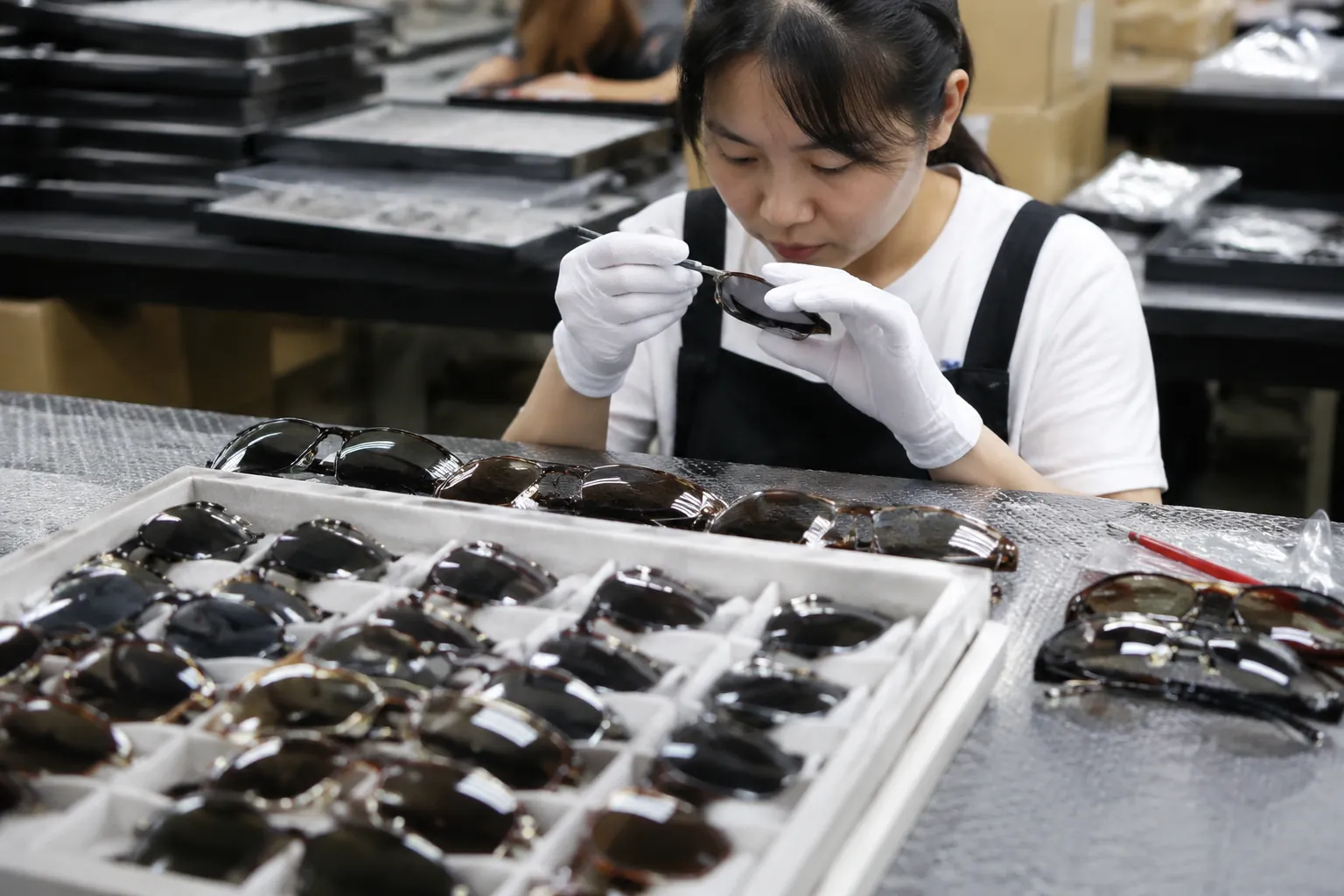
This guide is for brand owners, importers, distributors, and retail buyers developing custom sunglasses with an OEM or ODM factory. The issue is simple: if the commercial and technical rules are not fixed before sampling starts, the sample stage drags, costs move, and disputes show up right before bulk production. A development agreement is not filler. It is the working document that states what will be made, which processes are included, how many revision rounds are covered, when money is due, what counts as approval, and which approved version becomes the production reference.
Start with a defined development scope, not reference images
Many sample disputes start the same way. The buyer and factory are reacting to inspiration images instead of a defined product scope. Before the first sample request is accepted, the agreement should identify the product family, target price position, target ex-factory cost range, launch timing, expected order volume, and the exact development route: stock frame with cosmetic changes, modified existing construction, or full custom development.
Those routes carry different technical and commercial consequences. A stock-frame program may only require color, lens, logo, and packaging decisions. A modified existing construction may involve dimensional changes, hardware changes, or decoration updates that need revised parts or fixtures. A full custom acetate, injected, or metal frame usually needs approved drawings, material confirmation, hardware selection, fit review, and several checkpoints before a production-ready sample exists.
The agreement should also state which processes are included in the quoted scope. Be direct. If the quotation is based on pad printing but the buyer expects laser engraving or a custom metal logo insert, cost and lead time change. The same is true for lens upgrades such as polarized TAC lenses, mirrored coatings, anti-scratch treatments, or backside anti-reflective coating.
- State frame material: TR90, PC, acetate, metal, or mixed construction.
- State lens material and function: AC, PC, nylon, TAC polarized, mirror, gradient, category 2 or category 3 tint where applicable.
- State decoration method: pad print, silk print, laser engraving, foil stamp, hot transfer, or metal logo insert.
- State the fit reference: approved drawing, existing sample, face-fit measurements, or a combination.
- State packaging scope early: pouch, cleaning cloth, barcode sticker, swing tag, carton mark, and inner pack quantity.
If these points stay implied, the dispute later gets labeled a misunderstanding. Usually it is just poor definition. The result is rework, added freight, and extra sample rounds.
Cap revision rounds before cost and timing spread
Factories usually quote development work against an expected number of revisions. Buyers often assume the opposite and expect open-ended iteration until the sunglasses feel right. That gap needs to be closed in writing before sampling starts.
A practical structure is one initial development sample plus one or two revision rounds tied to consolidated written comments. After that, any additional round should carry a quoted charge and a revised lead time. On a stock-frame color adjustment, the extra cost may be limited. On structural revisions such as temple thickness, front curvature, hinge position, or lens base change, cost can rise fast because new fixtures, new parts, or new lens work may be required.
The agreement should also separate a revision from a new development request. Moving a temple logo slightly, changing lens darkness within the agreed lens family, or adjusting hinge tension is usually a revision. Changing from injected plastic to acetate, switching from non-polarized lenses to TAC polarized lenses, or replacing printed branding with a custom metal logo plate is usually a new request. Re-quote it.
Comment discipline matters. One sample round should produce one approval sheet or one marked document. If product, design, sales, and sourcing teams send separate comments at different times, the factory may miss items or treat later comments as a new round. That is a common source of delay.
Lead times only hold when the loop is controlled. If scope, revision limits, and the decision path are vague, the timeline is vague too.
Decide who owns samples, molds, and technical files
Buyers often focus on mold ownership, but sample ownership usually causes disputes earlier. The agreement should state whether sample fees are refundable or creditable against a bulk order, whether rejected samples must be returned, whether approved samples stay with the buyer, and whether the factory may retain one sealed control sample for quality reference. That last point matters later if there is an argument about tint depth, logo position, gloss level, fit, or hinge alignment.
Physical sample ownership should be treated separately from tooling ownership. If the buyer pays for full custom tooling, the agreement should say whether the tool is buyer-owned, factory-held, exclusive for a named market, or exclusive globally for that design. It should also state the storage period, maintenance responsibility, and what happens if there is no repeat order for an extended period.
Technical files need equally clear treatment. Buyers sometimes assume that CAD files, 2D drawings, acetate patterns, color standards, or process settings are automatically transferable. Often they are not. Some factories will share final dimension drawings but not internal production files or tooling programs. If transferability matters, negotiate it at the start, while there is still leverage.
| Item | Position to Define in the Agreement | Risk if Omitted |
|---|---|---|
| Development samples | Buyer keeps approved set; factory retains one QC control sample | Later disputes over what standard was actually approved |
| Molds and tooling | Ownership, exclusivity, storage term, maintenance cost, transfer conditions | Buyer cannot move or reuse the tool as expected |
| CAD and technical drawings | Which files are shared, which remain factory-confidential | Buyer assumes portability that does not exist |
| Logo plates, screens, and fixtures | Ownership, remake charge, and retention period for repeat orders | Unexpected setup charges on reorders |
If the buyer may want to dual-source or move production later, address that now. Not after development is finished.
Tie deposits to named triggers and real quantity assumptions
Deposit language should be precise. Phrases such as sample fee due at project start or bulk deposit due on order confirmation are too loose. The trigger for payment should be named.
For sampling, the trigger can be a signed sample brief, approved quotation, and receipt of final logo artwork. For bulk production, a stronger trigger is written approval of the pre-production sample, confirmed SKU and color breakdown, approved packaging artwork, and receipt of the purchase order. Without those inputs, production starts on assumptions.
The agreement should also separate non-refundable funds from creditable funds. Sample fees are often non-refundable at the sampling stage but may be credited against a first bulk order above an agreed threshold. Tooling deposits are usually non-refundable once tooling or related engineering work has started. Bulk deposits should not be due while open points remain on lens shade, logo finish, carton marks, or assortment ratio.
Quantity logic matters because sample expectations often outrun commercial reality. A factory may accept a relatively low MOQ for a simple stock-frame program, but the unit cost at that level may differ sharply from the cost at a larger volume. A development agreement should link the approved sample to the quoted quantity tier. A sample built with a metal logo plate, polarized TAC lens, and custom pouch may work at one volume and fail at another.
If the buyer approves a premium sample and later places a much smaller order while expecting the same unit price, pricing friction is predictable. State whether the sample specification is valid only at a stated MOQ or whether the factory must re-quote if volume changes materially.
Write approval checkpoints that match the real workflow
A sunglasses project does not move from concept to bulk in one jump. It moves through checkpoints. Each checkpoint should have a named approval method, a response window, and a defined consequence if the window is missed. Silence should count as approval only if both parties accept that rule in writing.
- Technical brief approval: dimensions, front width, bridge, temple length, lens type, branding method, packaging scope.
- First sample review: shape, fit, lens color direction, decoration position, overall build quality.
- Revised sample review: correction of listed issues only, not a fresh redesign brief.
- Pre-production sample approval: final standard for mass production, including packaging where relevant.
- Packing approval: barcode, carton mark, assortment, label placement, and accessory pack-out.
Each stage should have a practical response time, often a few working days, written into the agreement. The agreement should also specify what evidence is acceptable for approval. Photos can work for carton marks, shipping marks, and basic pack-out confirmation. They are weak evidence for lens tint, acetate pattern depth, finish quality, or metallic logo color. Those items are better approved by physical sample, signed swatch, or retained control sample.
The factory should also be protected from drifting approvals. If the buyer approves the pre-production sample and then asks for a logo position change or darker lens after material preparation has started, the agreement should allow a revised lead time and added cost. Even small visual changes can require new screens, new fixtures, or a new lens batch.
This is where many avoidable disputes start. Final inspection cannot fix development decisions that were never frozen clearly.
Set measurable tolerances and assign compliance clearly
If the agreement says the bulk order should match the sample as closely as possible, that is not a manufacturing standard. The agreement should state measurable tolerances for the points most likely to drift in eyewear production.
For commercial sunglasses, the tolerances do not need to be excessive, but they do need to be defined. Examples include logo position tolerance from an agreed datum point, overall front width tolerance, temple length tolerance, left-right alignment tolerance, and lens tint approval against a retained control sample under an agreed light source. Hinge performance can be defined by function and appearance, such as smooth opening, no burrs, and no visible finish damage caused by assembly.
Material behavior should also be acknowledged. Acetate can show natural pattern variation and finishing variation. Injection-molded materials such as PC or TR90 may offer stronger dimensional repeatability but still carry risks such as flash, warpage, or cosmetic molding defects if process control is weak. Metal frames may hold dimension well but introduce finish, weld, and plating consistency issues.
| Control Point | Typical Tolerance or Standard | Why It Matters |
|---|---|---|
| Logo position | Defined tolerance from approved location | Visible misalignment is immediately noticed by buyers |
| Front width | Defined tolerance from approved sample or drawing | Affects face fit and consistency across units |
| Temple length | Defined tolerance from approved sample or drawing | Impacts wear comfort and symmetry |
| Lens tint match | Match approved control sample under agreed light source | Photos alone do not reliably show shade differences |
| Hinge function | Smooth motion, no burrs, no visible finish damage | Poor assembly quality becomes a returns issue fast |
Compliance responsibility must be assigned just as clearly. If the product will be sold in the EU, US, or Australia/New Zealand, the agreement should state which standards or documents are required for that program, such as CE EN ISO 12312-1, ANSI Z80.3, AS/NZS 1067, REACH-related controls, FDA registration where applicable for the business, supplier declarations, or test reports. If the factory promotes quality-system or social-compliance credentials such as ISO 9001 or BSCI, verify those separately. They are not substitutes for product compliance.
The agreement should identify who pays for testing, whether testing is required on the finished style or by material family, which lab is acceptable, and what happens if a design change affects compliance. A change to lens tint, coating, or material can force the compliance position to be reviewed again.
Cover lead times, delay notices, freeze dates, and exit terms
Lead times should be written as exact day counts tied to the event that starts the clock. Statements such as sample in a certain number of days or bulk in a certain number of days work only if the required inputs are complete. The agreement should list those inputs: signed brief, artwork, color references, approved quotation, deposit if applicable, and written approval from the prior stage.
Freeze dates matter just as much. They mark the point after which changes are either refused or accepted only with cost and timing consequences. Without a freeze date, buyers may keep making small edits during production while still expecting the original ship date.
| Project Stage | Clock Starts When | Normal Lead Time | Change Risk After Start |
|---|---|---|---|
| Initial sample | Sample brief, artwork, and quote approved | As stated by factory for the agreed development route | Moderate |
| Revised sample | Consolidated comments received | Depends on change type and material availability | High if geometry or lens specification changes |
| Pre-production sample | Revision comments closed and bulk materials confirmed | As stated in the approved production plan | High |
| Bulk production | PP sample approved, deposit received, packaging confirmed | As stated in the purchase order confirmation | Very high |
| Repeat order | PO confirmed against approved standard | Depends on material availability and reorder conditions | Low to moderate |
The agreement should also require delay notification. If the factory misses timing because of a supplier issue, quality rework, tooling correction, or another internal problem, it should notify the buyer within a defined period and issue a revised ship plan. That gives the buyer a basis to adjust launch timing, bookings, and downstream commitments.
Finally, include an exit path. Not every development program should proceed to bulk. The contract should state which charges remain payable if the project stops, which samples or tools are returned, whether the project can be paused and resumed later, and what records govern any dispute.
- List payable items on exit: sample labor, tooling already cut, test fees, custom logo fixtures.
- List returned or retained items: approved samples, rejected samples, molds, logo plates, packaging artwork materials.
- State pause rights and restart conditions: storage period, maintenance fee, and re-sampling requirement.
- State the evidence standard for disputes: measurements, dated comments, photos, test reports, and approved control samples.
None of this is complicated. It is basic procurement control. If the agreement is detailed enough to govern revisions, approvals, tolerances, compliance, and payment triggers, the rest of the project is easier to manage.
Have a custom sunglasses project in mind?
Send us your styles, target market and quantities and we will return a detailed quote with MOQ, lead time and a sample plan.
Get a QuoteWhy source this from Wenzhou with LumiShades
Wenzhou in Zhejiang Province is widely regarded as China’s eyewear manufacturing capital, producing a large share of the world’s sunglasses. That concentration matters to buyers: a deep local supply chain for acetate sheet, hinges, lens blanks, plating and packaging means shorter component lead times, easier color and material matching, and a workforce with decades of eyewear-specific skill. LumiShades has manufactured in this ecosystem since 2009, and our vertical integration — in-house injection molding, acetate cutting, CNC milling, lens tinting, decoration and quality control — means no part of your order is quietly subcontracted to a workshop you cannot audit.
For international buyers, that vertical control translates into accountability. When a single factory owns every step, defects are traced and fixed at source rather than bounced between vendors, and your specifications survive intact from first sample to bulk. We back this with 15+ years of experience, shipments to 60+ countries, more than 5 million pairs produced per year and a 98.5% on-time delivery rate. Our certifications — CE EN ISO 12312-1, FDA registration, ANSI Z80.3, AS/NZS 1067, REACH, ISO 9001 and BSCI audit — mean the compliance documentation your market requires already exists. Explore our manufacturing capabilities and quality control process to see how this works in practice.
Frequently asked questions
How many sample revisions should a buyer include before extra charges apply? For most custom sunglasses programs, one initial sample plus one or two revision rounds is a workable structure. The agreement should define this explicitly and state that any further round requires a new quotation and revised lead time. To make that rule enforceable, require all comments for each round to be consolidated into one written approval sheet. Also define what counts as a revision versus a new development request. Material changes, lens-family changes, hardware changes, and branding-method changes should usually trigger re-quotation instead of being treated as ordinary revisions.
Should sample fees be refunded on the first bulk order? Only if the credit condition is written clearly. A practical clause states whether the sample fee is non-refundable, whether it can be credited against the first bulk order, the minimum order quantity or order value required to trigger that credit, and whether the credit applies per style or per project. Tooling and engineering charges should be separated from sample fees because they are often non-refundable once work has started. Buyers should also require the quotation and invoice to use the same labels so there is no later dispute about which charges were creditable and which were not.
What is the right trigger for a bulk production deposit? The strongest trigger is written approval of the pre-production sample, confirmation of the SKU and color breakdown, approval of packaging artwork and shipping marks, and receipt of the purchase order. The agreement should also say that the deposit is not due while material points remain open, such as lens tint, logo finish, carton marks, or assortment ratio. Buyers should require the factory to issue a written production confirmation that references the approved sample version, agreed quantity, agreed packaging, and committed ship window before funds are released.
Who should own molds and logo tooling for a custom sunglasses project? That depends on the commercial arrangement, but the agreement should state ownership directly and separately for each asset type: molds, logo plates, print screens, fixtures, and technical drawings. The clause should also cover exclusivity, storage term, maintenance responsibility, transfer conditions, and what happens after a period of inactivity. If the buyer may move production later, the agreement should say whether tooling can be transferred, what notice is required, and who pays the transfer-related cost. Without those details, ownership language alone is often too vague to help.
Can compliance responsibility stay general until after samples are approved? That is risky. The agreement should identify the target market and the required compliance documents or tests at the start of the project, including CE EN ISO 12312-1, ANSI Z80.3, AS/NZS 1067, REACH-related controls, or FDA registration where applicable for the business. It should also state who pays for testing, which party appoints the lab, whether testing is required on the finished style, and what happens if a later design change affects the compliance position. Buyers should not rely on general statements such as export standard or pass test. The standard, test scope, and responsibility need to be written precisely.
Ready to start?
Explore our square sunglasses or request a quote — our sales team replies within 12 hours.
Request a Quote