
Sunglasses Lens Decoration That Holds Up in Production
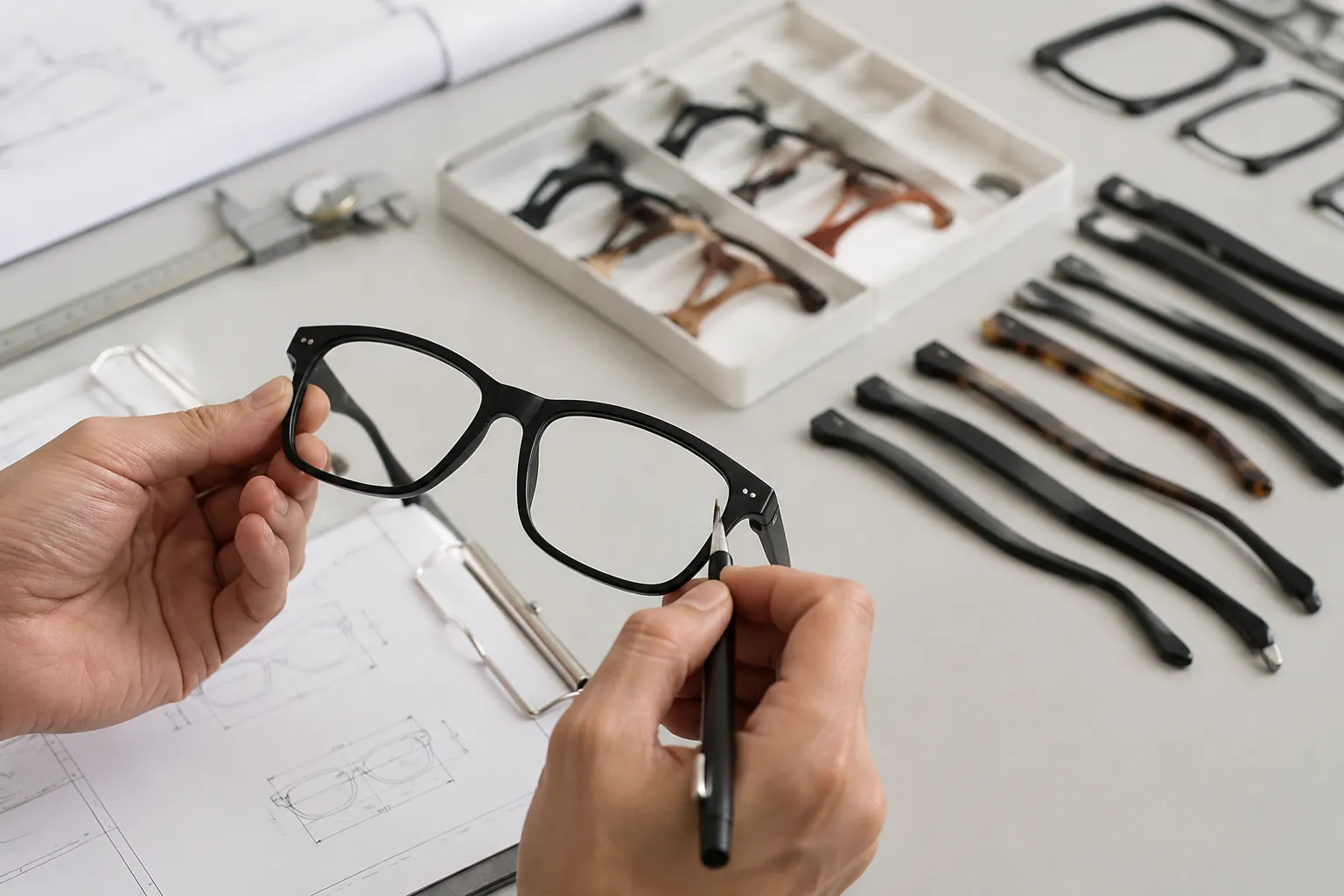
For brands, importers, distributors, and retailers buying custom sunglasses at volume, the hard part is not making one good sample. It is choosing a branding method that still looks clean after molding, polishing, coating, tinting, packing, freight, and retail handling. Some marks fail fast. Some survive production and still fail compliance. This guide sorts the options by durability, process risk, lead time, MOQ logic, and where the money actually goes.
What has to survive production
At scale, decoration is a manufacturing decision, not a graphic one. A logo can look perfect on a hand sample and still fail in bulk because the surface is too curved, the coating is too soft, the ink does not cure fully, or the operator moves too fast and skips a masking or cleaning step.
For sunglasses, the mark usually has to survive molding stress, cutting and polishing, tinting or lens coating, ultrasonic cleaning, carton friction, and final handling. If the mark is on a lens, it also has to survive abrasion, microfiber cloths, and alcohol wipes. If it is on a frame, it has to survive sweat, sunscreen, hinge flex, and repeated contact during try-on and shipping.
The question is not "Can we print a logo?" It is "Can this logo stay readable after the full process chain?" On a private-label program, the answer depends on the exact sequence of operations, not just the decoration method. A laser mark placed before polishing may shift in appearance. A pad print applied after coating may peel. A hot stamp on a curved lens may distort at the edges. That looks sloppy.
Blunt rule: if the logo cannot survive carton rub and a basic cleaning test, do not put it on the product.
Visible marks are usually kept small on sunglasses. That lowers the risk of optical distraction, placement inconsistency, and post-process damage. The exact size should be set by the material, the brand spec, and the target market.
Lens branding methods that actually hold up
Lens decoration is the hardest place to print. The lens is usually CR-39, TAC, PC, or another optical-grade plastic, often with hard coat, UV coating, mirror coating, or tint. That leaves fewer safe methods than frame branding, and the tolerance window is smaller because the mark may sit close to the optical zone.
The details matter. A lens may shrink or warp slightly after heat or coating. A curved surface can change ink coverage at the edges. If the factory does not control curing temperature, ink adhesion weakens. Lens branding should be treated as a controlled process, not a cosmetic afterthought.
| Method | Durability | Best use | Typical risk |
|---|---|---|---|
| Laser marking | High | Small logo, model code, UV claim area, discreet branding | Can look gray or uneven if power is too high, too low, or the lens is thin |
| Pad printing on lens | Medium | Small colored logo on promo styles or low-abrasion placements | Ink wear, adhesion failure, and optical distraction if the print is too close to the viewing area |
| Hot stamping | Medium | Short-run branding or special-effect marks | Poor abrasion resistance on curved lenses and weak edge definition |
| Etched or mold-integrated mark | High | Consistent factory mark on mass runs | Tooling cost and low flexibility once the mold is made |
Laser marking is usually the safest lens-branding choice for mass production because it avoids ink adhesion problems. It works best for small logos, codes, and discreet branding near the temple-side lens edge. The mark should be designed for the available print area and the lens shape. Fine lines and small text need to stay legible after finishing.
Pad printing on lenses can work, but only on the right substrate and only if the logo stays outside the main optical zone. Even then, you need test samples after tinting and hard coating, not before. Ink that looks solid on a raw lens may crack, ghost, or lift after coating cure or alcohol wiping. On coated polycarbonate, the factory should confirm adhesion with a cross-hatch or tape test before bulk release.
For high-volume private label, a small laser mark plus frame branding is usually a better bet than trying to turn the lens into a billboard. If you need visible brand impact, use the frame temple or hinge area where the artwork has a larger tolerance window and fewer optical restrictions.
Frame decoration methods by material
Frame material decides what is realistic. Acetate, injection plastic, metal, and mixed-material frames all behave differently under heat, solvent, and mechanical stress. Choose the wrong method and the defect rate climbs. The same artwork can look different across colors and finishes too.
Before decoration starts, the factory should confirm three things: surface prep level, minimum wall thickness, and whether the finish is matte, gloss, coated, or plated. A glossy injection frame can reject ink if mold-release residue remains. A thin metal temple can warp if laser heat is too aggressive. A dark acetate frame often needs engraving depth and contrast planning so the logo stays visible after polishing.
| Frame material | Good methods | Watch-outs | Scale note |
|---|---|---|---|
| Acetate | Laser engraving, metal logo plates, pad printing, foil stamp | Edge chipping if the cut is rough; dark materials need contrast planning | Good for premium branding and smaller runs |
| Injection plastic | Pad printing, in-mold texture/logo, laser on coated areas | Ink adhesion depends on surface prep; glossy surfaces are slippery | Best for lower-cost volume if print control is stable |
| Metal | Laser engraving, etching, enamel fill, riveted logo plates | Heat marks and finish damage if laser settings are wrong | Strong for durable, clean branding |
| Mixed material | Combination methods by component | More process steps, more alignment risk | Needs tight QC and clear artwork rules |
Acetate gives a clean look for engraving and logo plates. With correct CNC milling and polishing control, the factory can create a stable pocket or edge where branding sits flush instead of sitting on top of the surface. The logo area must be planned with the cut and polish process, not added afterward.
Injection frames are cheaper and faster in volume, but printed branding is more sensitive to surface treatment. If the surface is too glossy or has residue, pad print adhesion drops. The issue is often not the ink brand but the pretreatment: cleaning, flame treatment, corona treatment where appropriate, and proper curing. Skip that, and early wear shows up fast.
Metal logos are durable and look solid. They cost more because they add a component, an attachment step, and another tolerance to hold. Still, for premium styles, a small raised metal logo delivers shelf impact and usually survives retail handling well.
Pick the method by volume and price point
Decoration choice is tied to quantity. The economics change as the order moves from sample to repeat production because setup cost gets spread out and the decoration method stops dominating the unit price. Lead time changes too. A simple stock-frame print can move quickly, while a custom mold detail or logo plate usually adds tooling or fixture time.
For simple branding, first samples may be ready in about one to two weeks if the base frame is already available. More complex decoration, especially when it depends on a custom plate, insert, or mold adjustment, can take longer. Bulk production usually adds several weeks after approval, depending on coating, lens work, and packing complexity.
| Volume | Best-fit branding | Why it works | Cost behavior |
|---|---|---|---|
| 50-300 pairs | Laser engraving, simple pad print, small metal plate | Low setup burden, faster sampling, easier artwork changes | Unit price still carries setup and manual handling cost |
| 300-1,000 pairs | Laser + frame print, engraved acetate, limited color print | Enough volume to justify more stable tooling and QC | Price starts improving meaningfully |
| 1,000-5,000+ pairs | Tool-based marks, consistent pad print, integrated logo details | Repeatability matters more than flexibility | Unit cost can improve as setup is spread across the run |
Do not overbuild branding for low volume. A complex multi-step decoration on 50 pairs is usually a waste unless the product is a launch sample or a high-margin limited run. If a project needs a new fixture, a logo plate, and extra QC checks, fixed costs can dominate the first order. Once a style repeats, durable branding is usually cheaper over the life of the program than chasing a lower first-order price with fragile print.
For buyers comparing offers, ask suppliers to quote the same logo in three ways: basic print, durable engraving, and premium metal plate. Then compare piece price, rework risk, sample time, and reorder consistency. A slightly higher unit price can still win if it reduces rejects and simplifies repeat orders.
A practical production flow that reduces failures
Decoration should be locked into the production flow early. If artwork changes after tooling or after surface treatment, the result is usually rework. In eyewear, one small artwork change can affect mask shape, laser path, print position, or the final packing layout.
The cleanest production sequence is simple: approve the material first, then the process, then the art. If the supplier is not asking for that sequence, the decoration is probably not controlled tightly enough. A good factory will also define a placement tolerance and show how it checks that tolerance in QC.
- Confirm artwork size, exact placement, and minimum line thickness.
- Match method to material: laser, pad print, plate, or mold detail.
- Produce a signed sample after the same process chain used in bulk.
- Check legibility after tinting, coating, polishing, and packing simulation.
- Approve one master sample and one production reference sample.
- Run first-article QC on the first bulk lot before full release.
That sequence is basic, but it catches most avoidable failures. A logo with hairline strokes may look fine in CAD and blur in pad print because the ink spreads on glossy plastic. A laser mark may look sharp on a raw frame but change after polishing if the burn depth is too aggressive. Placement repeatability should be defined by the factory for each part and each decoration method, then checked against the approved sample.
For mass production, ask the factory to show the mark after the same final finishing steps the bulk order will use. Not before. If the supplier only shows a decoration sample on unfinished material, treat it as a rough concept, not approval. A reliable QC check should include alignment, contrast, edge sharpness, rub resistance, and carton scuff resistance before packing release.
QC should verify that the mark remains readable and does not interfere with other required product information. That is where small errors stop becoming full-carton claims.
Compliance and marking rules you cannot ignore
Branding is not free to sit anywhere. Some marks are cosmetic. Some are legally or practically sensitive. If you are selling into regulated markets, the product still needs to meet the relevant eyewear standards and material rules, and the decoration cannot interfere with that.
Compliance issues usually show up in three ways: the logo covers required information, the print creates optical distraction, or the decoration material itself is not compliant. That means the supplier must control not just design, but also inks, adhesives, plates, and coatings.
- CE / EN ISO 12312-1: keep required lens and product information clear and do not obscure mandatory markings.
- ANSI Z80.3: ensure any printed mark does not create optical distraction in the viewing area.
- AS/NZS 1067: branding should not interfere with required eyewear performance and identification.
- REACH: decoration inks, coatings, and adhesives must not introduce restricted substances beyond allowable limits.
- FDA registration: if the product enters that market path, keep product identity and traceability consistent across packaging and marking.
- ISO 9001 and BSCI: use these only as supplier-management references; they do not replace product testing or market compliance.
The practical point is simple. If you put a logo too close to the optical center, make it too large on a lens, or use a finish that flakes, you create a quality and compliance headache. Buyers often focus only on brand visibility. Visibility matters only after the product passes the standard and survives use.
Ask for material declarations on inks, plates, adhesives, and any special coatings. On volume programs, this is ordinary due diligence. If the supplier cannot provide a clear declaration or an internal compliance record, treat that as a risk on the program, especially for export orders.
How to brief your supplier so the logo survives
Most decoration problems start with vague artwork instructions. "Place logo here" is not enough. A factory needs exact dimensions, Pantone or process color reference if color is involved, the material, the finish, and the acceptable tolerance window. If the artwork is not buildable, the factory will either improvise or push back late in the cycle.
A good brief should also define where the logo may not go. That matters because the most visible space is not always the safest space. On a temple, a logo near the hinge may be rubbed by cases or hands. On a lens, the main viewing area is usually the wrong place unless the mark is tiny and fully approved for optical impact.
- Send vector artwork with stroke thickness stated in millimeters.
- Define placement from a fixed point, not from a visual guess.
- State whether the logo must be visible on both sides, inside only, or one side only.
- Specify whether the mark must survive rubbing, alcohol wipe, or salt-spray exposure if metal is involved.
- Confirm if the logo may shift slightly between laser and print due to material behavior.
For sunglasses, a small placement drift may be acceptable on some frame parts and unacceptable on others. On a narrow temple tip, that drift is obvious. On a wide acetate arm, it may be less noticeable. Be specific by part, not by assumption.
If you need price discipline, ask the supplier to quote three options: basic print, durable engraving, and premium metal plate. Then compare not just piece price, but rework risk, sample time, and expected reorder consistency. If the order will repeat, ask for a version that can stay stable across multiple production runs without resetting artwork.
What usually wins in real orders
There is no single best branding method. There is only the method that matches your volume, material, and risk tolerance. In real orders, the winner is usually the one that can be repeated without special handling or last-minute adjustments from production.
For short runs and launches, laser marking on frame parts is usually the cleanest choice. For acetate styles that need a better retail feel, engraving or a small metal logo plate is stronger. For low-cost injection frames, pad print is acceptable if surface prep is controlled and the mark is outside the stress-prone zones. For lenses, keep decoration small and conservative. Large printed graphics on lenses create more risk than value.
Buyers should also think in terms of the program, not the first order. A cheap print that fails after limited wear may look fine on the PO, but it becomes expensive once returns, complaints, and reorders are counted. A more durable method can save time at packing, reduce inspection rejects, and make the second order easier to reproduce.
If you are buying through a supplier with in-house molding, cutting, CNC work, lens tinting, decoration, and QC, the advantage is process control. That matters more than a long decoration menu. The best method is the one the factory can repeat reliably with clear tolerances and stable appearance from the first to the last carton.
Use one simple rule: prioritize durability first, visibility second, and unit cost third. If the logo survives production and handling, then you can argue about style.
Have a custom sunglasses project in mind?
Send us your styles, target market and quantities and we will return a detailed quote with MOQ, lead time and a sample plan.
Get a QuoteWhy source this from Wenzhou with LumiShades
Wenzhou in Zhejiang Province is widely regarded as China’s eyewear manufacturing capital, producing a large share of the world’s sunglasses. That concentration matters to buyers: a deep local supply chain for acetate sheet, hinges, lens blanks, plating and packaging means shorter component lead times, easier color and material matching, and a workforce with decades of eyewear-specific skill. LumiShades has manufactured in this ecosystem since 2009, and our vertical integration — in-house injection molding, acetate cutting, CNC milling, lens tinting, decoration and quality control — means no part of your order is quietly subcontracted to a workshop you cannot audit.
For international buyers, that vertical control translates into accountability. When a single factory owns every step, defects are traced and fixed at source rather than bounced between vendors, and your specifications survive intact from first sample to bulk. We back this with 15+ years of experience, shipments to 60+ countries, more than 5 million pairs produced per year and a 98.5% on-time delivery rate. Our certifications — CE EN ISO 12312-1, FDA registration, ANSI Z80.3, AS/NZS 1067, REACH, ISO 9001 and BSCI audit — mean the compliance documentation your market requires already exists. Explore our manufacturing capabilities and quality control process to see how this works in practice.
Frequently asked questions
Is laser engraving always better than pad printing on sunglasses? No. Laser is usually more durable, but it is not ideal for colored logos or larger graphics. Pad printing works when the surface is prepared well, the mark is small, and the placement stays outside the main wear and optical zones. For a buying decision, ask the supplier which method passes the final finishing and rub checks on the exact material you plan to order.
Can we print on the lens itself for retail branding? Yes, but keep it small and test it after tinting or coating. Lens printing has a higher failure rate than frame branding, so most brands use a discreet laser mark instead. Ask for a production-stage sample on the same lens material and finishing stack, and reject any placement that overlaps the viewing area or obscures required information.
What is the safest branding method for acetate frames? Laser engraving or a small metal logo plate are usually the safest options for acetate. Both can hold up well if the frame is cut and finished correctly. A poor edge finish can still cause chipping, so the frame process matters as much as the decoration method. Before approval, check the mark after polishing and final cleaning, not on an unfinished part.
How should we ask for decoration samples? Ask for a sample made with the same material and the same final process steps as bulk production. Do not approve artwork from an unfinished part or a mockup that skips tinting, coating, polishing, or final cleaning. Request the supplier to label the sample as a pre-production reference and confirm that it reflects the exact decoration method and placement.
Does decoration affect compliance for CE or ANSI orders? It can. A logo placed in the wrong area or ink that flakes can interfere with required markings or optical performance. Keep branding clear of the viewing area and use materials that are suitable for the target market. For export programs, ask the supplier for the relevant product test reports or compliance records before production starts.
Ready to start?
Explore our wayfarer sunglasses or request a quote — our sales team replies within 12 hours.
Request a Quote