
Safer First Lens Tint Mix for Custom Sunglasses
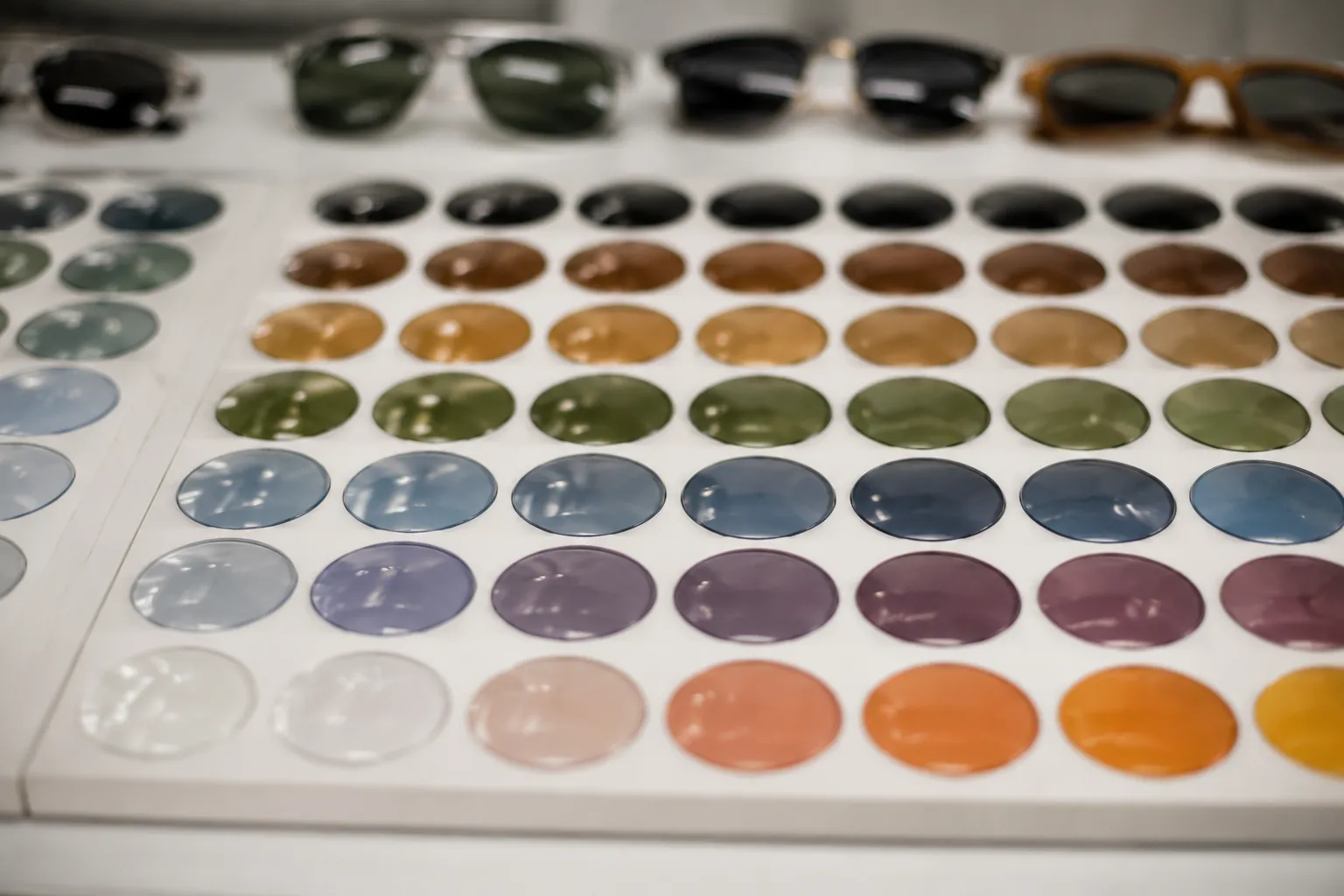
This guide is for brands, importers, distributors, and retailers placing an early custom sunglasses order and deciding which lens colors are most likely to sell. The goal is not to offer the widest tint range. It is to build a first assortment that covers mainstream demand, fits MOQ limits, supports compliance review, and reduces the risk of cash sitting in slow-moving stock. Define the tint mix clearly at sample stage. Do that, and approval is usually easier, spec disputes are fewer, and bulk QC has a cleaner reference point. A disciplined first mix also makes reorder decisions easier because the sales team can compare like-for-like colorways instead of trying to interpret a launch that was spread across too many weak variants.
Start with a risk rule, not personal taste
First-time buyers often choose lens colors from renders, trend boards, or a competitor sample they like. That can help with direction. It is not a safe opening strategy.
Start with a risk rule instead: put most units into proven, easy-to-wear tints, and keep experimental colors to a small test share. The key question is not which color looks most interesting in a meeting. The key question is which tint gives the broadest sell-through potential once the frame is on the shelf, listed online, packed for retail, and inspected in bulk.
In most commercial sunglass programs, smoke, brown, and green are the core options. Smoke is usually the volume anchor because it is easy to wear and pairs with many frame colors. Brown is the practical warm alternative and often works well where the frame palette leans tortoise, tea, champagne, honey, amber, or gold. Green is a classic option used in many heritage or premium-looking styles, but its appeal is often narrower than smoke and sometimes narrower than brown as well.
Bright mirrors, light gradients, pink, blue, purple, and yellow are not automatically wrong. The issue is risk. Every extra tint adds more than lens cost: another sample to review, another SKU to label, another line on the packing list, more QC comparison points, and more leftover stock if demand is weak. It can also force extra discussion about intended use, visible light transmittance, and how the finished product should be described to the market.
A practical first-order rule is simple:
- Most units in core tints with broad wearability
- A limited share in one or two controlled tests tied to a clear sales reason
- No more than one true fashion tint per frame launch unless you already have reliable sell-through data
- No equal split by color unless prior sales prove that the colors perform similarly
- No tint added just to create variety if MOQ forces each colorway below usable stock depth
Think controlled assortment, not full palette. For a first run, broad wearability usually wins. The opening order should tell you what the market accepts. It should not try to prove every design idea at once.
What each core tint means in wear and sell-through
Lens tint is not just styling. It affects perceived brightness, contrast, color neutrality, frame pairing, and how widely the SKU can sell. Review it on-face and on-shelf, not only as a loose lens chip on a desk.
| Lens tint | Typical transmittance position | Best commercial use | Main strength | Main risk |
|---|---|---|---|---|
| Smoke / grey | Usually used in darker sun-lens ranges | Core everyday sunglasses | Neutral color perception and broad acceptance across channels | Can look plain if the frame design or finish is weak |
| Brown | Usually dark to medium-dark sun-lens range | Fashion, driving-oriented, warm-tone collections | Warm visual tone and often perceived contrast enhancement | Less universal than smoke with some black or cool-metal frames |
| Green | Usually dark classic sun-lens range | Premium classics, heritage styles | Familiar classic appearance and balanced visual comfort | More frame-color sensitive and often narrower in appeal than smoke |
| Gradient smoke / brown | Top darker, bottom lighter | Women's, lifestyle, fashion collections | More differentiated than solid dark lenses without becoming highly niche | Higher consistency risk pair to pair and left to right |
| Blue / pink / purple / yellow fashion tints | Often in lighter fashion-oriented ranges | Trend capsules, festival, influencer drops | Strong visual impact and marketing value | Higher slow-sell risk and more approval discussion around use case and consistency |
Smoke is usually the safest anchor because it works across black, tortoise, crystal, gunmetal, silver, rose crystal, olive crystal, and many injected frame colors without obvious conflict. It also tends to create the fewest customer objections because the look is familiar and the color perception is neutral.
Brown often performs well in tortoise, tea, champagne, honey, gold, caramel, amber, and translucent acetate programs. It can make a frame look warmer and often supports lifestyle or driving-related positioning. On the other hand, it can feel less natural on very cold frame palettes unless the brand already sells warm lenses successfully.
Green is useful when the brand wants a more classic signal, especially with black, Havana, dark tortoise, brushed gold, or slim metal constructions. It can look right in heritage-inspired programs, but it should not automatically replace smoke as the main volume color unless prior data supports that choice.
Gradient lenses sit between safe and risky. A dark smoke gradient or brown gradient can add visible difference without moving into a very narrow use case. But gradients also create more room for disagreement over top density, transition line, lower-lens lightness, and lens-to-lens symmetry. That means more attention during sample approval and incoming QC.
Fashion tints can work. But context matters. If the frame already has a strong cat-eye shape, visible temple core, deep bevel, thick lamination, contrast logo plate, or a bold front color, a niche lens tint can make the SKU too narrow for an opening buy. Early orders need width of appeal, practical sell-through, and a clear reason for every additional colorway.
When comparing tints, ask the sales question directly: Which option can a retailer reorder without long explanation? The answer is usually smoke first, brown second, green third, and fashion colors only where the brand's customer profile clearly supports them.
A first-order mix that limits dead stock
If you are placing a first order without reliable sell-through history, use a weighted mix rather than equal quantities by color. Equal splits look tidy on paper. They often create the wrong inventory depth because weaker colors get too many units while stronger colors get too few.
As a starting point, use these channel-specific ratios:
- Mass retail or distributor program: keep the large majority of units in smoke, brown, and green; reserve a smaller share for one gradient or one fashion test.
- DTC fashion brand: keep core tints as the base of the assortment; use a controlled test position for one gradient or one trend color supported by campaign content.
- Optical retail side program: focus on smoke and brown first, with green only where the frame style is classic and the customer base already responds to it.
- Festival or trend-led capsule: a higher share of fashion tints may be acceptable, but only if you are prepared for a narrower use case, faster markdown risk, and lower reorder predictability.
A disciplined opening buy across one frame family might look like this:
- Largest quantity in smoke
- Second-largest quantity in brown
- Smaller support quantity in green
- One small run of gradient smoke or gradient brown
- Optional: one small run of a single fashion tint only if the brand has a defined customer use case
This does three useful things. First, it puts volume where demand is most likely. Second, it keeps each core color at usable stock depth for picking, replenishment, and reorder analysis. Third, it limits the amount of inventory trapped in experimental tints that may look good in campaign images but move slowly at store level.
If MOQ is set per colorway, use that threshold carefully. One small fashion test may be manageable. Several low-volume tests usually are not. Variety is not the same as assortment quality. Many retailers would rather have depth in proven sellers than five weak color options, each of which runs out too slowly to justify its own SKU maintenance and photo assets.
Apply the same discipline to sampling. Approve the core colors first. Add one extra tint only if the physical sample still needs a clear point of difference. If the frame already has a distinct story through material, shape, temple detail, or branding, the safer decision is often to keep the lens color simple.
A good working rule for first orders is to treat every non-core tint as a test budget. If you cannot explain the expected customer, target quantity, and reorder condition in one sentence, the tint is probably not ready for launch.
Match tint to frame material, hardware, and branding
Choose lens color alongside frame material, finish, and branding method. A tint that looks good as a loose chip can fall flat once it is installed in the actual front color with the intended hardware.
Injected frames often present color in a cleaner, more uniform way. Cool or bright fashion lenses can look more commercial in matte black, crystal grey, clear, navy, or other simple injected fronts because the frame itself stays restrained. Acetate frames already carry depth, translucency, and pattern movement, so smoke, brown, and green often read better than highly saturated fashion tints. On acetate, warm lenses also tend to coordinate more naturally with tortoise lamination and visible temple cores.
Metal frames need separate review because the hardware color is effectively the frame color. Gold-finish metal usually sits more naturally with brown or green lenses. Gunmetal and silver generally pair more easily with smoke and some blue shades. Rose gold can work with brown, smoke, or soft gradient tints, but pink fashion lenses can quickly become too specific unless the whole collection is built around that look.
Hardware matters too. Gold logo plates, foil logos, or metal trims often sit more naturally with brown or green lenses than with icy blue tones. Gunmetal and silver usually pair more easily with smoke and some blue shades. If branding is prominent, the lens should support the product story, not fight it.
Decoration method changes risk as well:
- Laser logo on lens: durable and precise, but often more visible on lighter tints and gradients
- Screen print logo on lens: strong branding effect, but needs tight placement control and durability review
- Metal logo plate on temple: can increase perceived value, but adds hardware color-matching pressure
- Hot foil or pad print on temple: cost-efficient, but can look less premium if the frame and lens combination is already visually busy
- Debossed or molded branding: lower visual conflict with the lens, but only if the frame material and tool quality support clean detail
Gradients need especially careful review. Buyers usually check for even top density, clean transition, lower-lens clarity, and left-right consistency. Variation that is hard to spot in a deep solid smoke lens is much easier to see in a light brown gradient. Expect more QC comments, more sample comparison, and more need for a retained approved reference.
Before final approval, review the exact combination that will ship: frame front color, temple color, core wire visibility if any, hardware finish, logo execution, and lens color together. A lens decision made in isolation is one of the main reasons buyers later feel that the final sunglasses look different from the original concept.
Compliance is mandatory, and the lens spec must be clear
Color choice does not remove the need for compliance. A fashion blue or pink lens still has to meet the applicable sunglass requirements for the destination market. Vague tech packs create avoidable risk here.
At minimum, the buyer should specify:
- Lens tint color and whether it is solid or gradient
- Target visible light transmittance requirement or approved range, if applicable to your product specification
- Destination market
- Frame material and lens material
- Logo method and logo position
- Whether the product is intended as a standard sun lens or a lighter fashion lens
- Whether the lens is polarized, mirrored, hard-coated, or includes any extra treatment
- The approval reference to be used in production and QC
Do not write only brown lens. That can mean very dark, medium, olive-brown, tea-brown, amber-brown, or a fashion-light version. Be specific. Use an approved visual reference and a transmittance target or tolerance agreed with the supplier and, where relevant, the test lab. The clearer the approval basis, the lower the chance of disputes later.
For export programs, buyers commonly request documents aligned to the target market and product specification. Typical references include CE EN ISO 12312-1, ANSI Z80.3, AS/NZS 1067, REACH, and, where relevant, FDA registration. For supplier qualification, buyers also commonly request ISO 9001 and BSCI. Depending on the market and materials, additional chemical or labeling checks may also be required.
Lighter fashion tints often need extra review because intended use, lens darkness, and product positioning may differ from a standard dark sunglass lens. That does not automatically make them non-compliant. It does mean the buyer should confirm the test basis, product category, warning language where relevant, and report requirements during sampling, not after production starts.
A short and clear lens specification list usually prevents more problems than a long email thread. At sample approval stage, many buyers find it useful to lock the following points in one document:
- Internal color name and supplier color reference
- Solid or gradient status
- Target transmittance or accepted range
- Lens material and any coating requirement
- Destination market and test standard reference
- Approved frame color that the lens must match
- Reference sample retained by both buyer and supplier
The more exact the lens spec, the easier it is for sourcing, QA, testing, and production teams to work from the same standard.
MOQ, pricing, and lead-time logic behind the tint mix
Lens assortment affects cost more than many new buyers expect. Unit price is shaped not only by material and construction, but also by setup count, sample rounds, scrap exposure, tinting complexity, and how fragmented the order becomes.
| Order structure | MOQ / volume effect | Commercial effect | Likely outcome |
|---|---|---|---|
| 1 frame, 1 core tint, 1 logo method | Best volume concentration | Lowest setup and QC complexity | Usually the easiest structure for pricing and production control |
| 1 frame, 3 core tints | Still efficient if each color has meaningful depth | Moderate complexity | Often manageable with clear approvals |
| 1 frame, 5 tints including gradients and fashion colors | Volume split becomes shallow | Higher setup count, more sample review, more mismatch risk | Greater chance of delay, scrap, or re-approval |
| Multiple frames with many low-volume fashion tints | Weakens the scale of each colorway | Fragmented purchasing and higher stock risk | Often leads to weaker pricing and more dead-stock exposure |
If MOQ is set per design or colorway, treat every additional tint as a cost decision, not just a styling decision. Some factories offer better pricing at higher consolidated volumes, but those breaks are harder to reach if the buy is split across too many low-efficiency variants.
The same applies to lead time. Straightforward solid tints are generally easier to sample and approve than gradients or lighter fashion lenses because there are fewer visible consistency issues to review. Every extra tint adds another approval point, especially if the spec is loose or the lens must match tightly to frame color and branding details.
Ask the practical question. Not whether a factory can make many colors, but whether your order size justifies the added complexity. In many first programs, a tighter tint plan leads to a cleaner buy, a simpler QC standard, and a better chance of reordering the right colors quickly.
It also helps to understand where time is usually lost:
- Sample revision because the approved lens color was described too broadly
- Re-check of gradient density or transition after frame installation
- Extra communication when the supplier and buyer use different visual references
- Delay caused by splitting a modest order into too many small colorway lots
- Relabeling or repacking when final color naming is inconsistent across carton, invoice, and SKU sheet
Pricing pressure can increase for the same reasons. Small fragmented color runs may create more scrap, less efficient planning, and less stable output. In practical terms, a first order with three disciplined tints often performs better commercially than a more ambitious order spread across six colors with weak depth.
A simple approval workflow that catches problems early
The safest first lens-color mix comes from a short, disciplined review process. Most tint disputes start with vague approval language, not lack of factory capability.
- Confirm the frame first. Lock material, frame color, hardware finish, lens material, and destination market before discussing the final lens mix.
- Select two or three core tints. In most first runs, that means smoke, brown, and possibly green.
- Add one test tint only. Use gradient smoke, gradient brown, or one fashion color, not several.
- Request lens chips and frame-installed samples. Loose chips help, but they do not replace seeing the lens in the actual frame.
- Review under consistent lighting. Daylight-equivalent conditions are better than mixed office lighting or phone photos taken at different times.
- Lock the spec sheet. Include lens name, visual reference, solid or gradient status, destination market, logo method, and compliance target.
- Approve a retained reference sample. Keep one approved sample for production alignment, QC comparison, and dispute handling.
- Inspect bulk against the approved sample. Check left-right lens match, gradient evenness, logo cleanliness, and tint drift across the lot.
If the supplier handles multiple production steps in-house, communication may be faster because fewer stages are passed outside. Even then, the buyer still needs clear documentation. A short, precise approval file is more useful than a long message thread full of subjective comments such as make it a bit deeper or slightly cooler brown.
For practical use, many teams rely on this approval checklist before bulk production starts:
- Approved color name matches the PO and SKU sheet
- Lens is reviewed in the exact frame color to be produced
- Left and right lenses match under controlled lighting
- Gradient top density and fade line are accepted in writing
- Logo placement and visibility are confirmed on the final tint
- Destination-market compliance basis is confirmed with the supplier
- One retained sample is stored by the buyer and one by the supplier
Practical rule: If you cannot explain why a fourth lens color belongs in the launch, who it is for, and how you will judge success, do not add it to the first order.
This workflow is simple, but it prevents a large share of first-order problems. It turns lens selection from a taste discussion into a controlled sourcing decision.
What first-time buyers usually regret
The regrets are predictable: too many niche blue lenses, a light pink tint that photographed well but sold slowly, a gradient with uneven top density, or a green lens that clashed with the chosen hardware. These are not usually manufacturing failures by themselves. More often, they are assortment failures or approval failures.
Another common regret is choosing colors before the commercial structure is clear. A buyer may approve five tints for one style, then discover that MOQ, carton packing, and channel depth make the assortment hard to manage. By the time the issue becomes visible, the order is already fragmented and the selling season is closer.
The safer path is plain. Build the opening range around smoke first, brown second, green where it fits the frame and brand story, and one controlled test tint. Then let reorder data decide what earns a place in the next round.
This is also why production flexibility matters in practical terms. If the supplier can sample efficiently and repeat the approved color consistently, you do not need to gamble on every possible tint in the first order. Start with a narrow, commercially defensible range, read the market, reorder what moves, and expand only after demand is proven.
That approach may look less exciting on a presentation board. It is usually better for margin protection, stock health, and buyer-supplier alignment. In early custom sunglasses programs, the safest tint mix is often the one that leaves room to scale the winners instead of explaining the leftovers.
When buyers review first-season results, the strongest performers are usually not the most unusual tints. They are the colorways that were easy to merchandise, easy to reorder, and easy for end customers to wear. That is why a cautious first mix is not conservative for its own sake. It is a way to gather useful market evidence without paying too much for weak assumptions.
Have a custom sunglasses project in mind?
Send us your styles, target market and quantities and we will return a detailed quote with MOQ, lead time and a sample plan.
Get a QuoteWhy source this from Wenzhou with LumiShades
Wenzhou in Zhejiang Province is widely regarded as China’s eyewear manufacturing capital, producing a large share of the world’s sunglasses. That concentration matters to buyers: a deep local supply chain for acetate sheet, hinges, lens blanks, plating and packaging means shorter component lead times, easier color and material matching, and a workforce with decades of eyewear-specific skill. LumiShades has manufactured in this ecosystem since 2009, and our vertical integration — in-house injection molding, acetate cutting, CNC milling, lens tinting, decoration and quality control — means no part of your order is quietly subcontracted to a workshop you cannot audit.
For international buyers, that vertical control translates into accountability. When a single factory owns every step, defects are traced and fixed at source rather than bounced between vendors, and your specifications survive intact from first sample to bulk. We back this with 15+ years of experience, shipments to 60+ countries, more than 5 million pairs produced per year and a 98.5% on-time delivery rate. Our certifications — CE EN ISO 12312-1, FDA registration, ANSI Z80.3, AS/NZS 1067, REACH, ISO 9001 and BSCI audit — mean the compliance documentation your market requires already exists. Explore our manufacturing capabilities and quality control process to see how this works in practice.
Frequently asked questions
For a first order, should I choose smoke or brown as the main lens color? Choose smoke if you want the broadest commercial coverage and the lowest styling risk. It is usually the easiest tint to pair with black, tortoise, crystal, silver, gunmetal, and many standard frame colors. Choose brown as the second color when the frame palette is warm, especially tortoise, champagne, tea, honey, amber, or gold-accented styles. If you are unsure, make smoke the primary colorway and brown the secondary one, then compare reorder performance before expanding further.
How many lens colors should one new frame launch have? For most first launches, keep it to two to four colors. A practical structure is three: smoke, brown, and either green or one test tint. If MOQ is high or your order volume is limited, staying closer to two or three colors is usually safer than stretching to four or five. Before adding any extra color, ask three questions: Who is it for, how many units can you support at useful depth, and how will you judge whether it deserves a reorder?
Are fashion tints harder to approve than standard dark lenses? Often yes. Lighter tints and gradients show variation more clearly, especially when you compare left and right lenses side by side or review multiple samples under consistent lighting. They can also require more discussion about intended use, transmittance, and final product positioning. If you want to use a fashion tint, ask the supplier for both a loose lens reference and a frame-installed sample, confirm the destination-market test basis early, and keep the first quantity small until consistency is proven.
Does adding more lens colors increase lead time? It can. Every additional tint adds another item to sample, approve, label, and inspect. The risk is higher with gradients and lighter fashion colors because buyers usually review them more closely for density, transition, and left-right consistency. To reduce delay risk, limit the first order to core tints plus one test color, specify solid or gradient clearly, define the approved visual reference, and lock the compliance requirement before bulk production starts.
What compliance documents should I ask for on sunglasses? Request documents based on your destination market and exact product specification. Common references are CE EN ISO 12312-1, ANSI Z80.3, AS/NZS 1067, and REACH. Where relevant to the product and market, buyers may also ask about FDA registration. For supplier qualification, ISO 9001 and BSCI are commonly requested. To make the request actionable, send the supplier a written spec that includes the destination market, lens type, intended use, frame and lens materials, whether the lens is solid or gradient, and whether it is a standard dark sun lens or a lighter fashion tint. That gives the factory and test partner a clear basis for preparing the right documentation.
Ready to start?
Explore our aviator sunglasses or request a quote — our sales team replies within 12 hours.
Request a Quote