
Polarized vs Non-Polarized Sunglasses: B2B Channel Guide
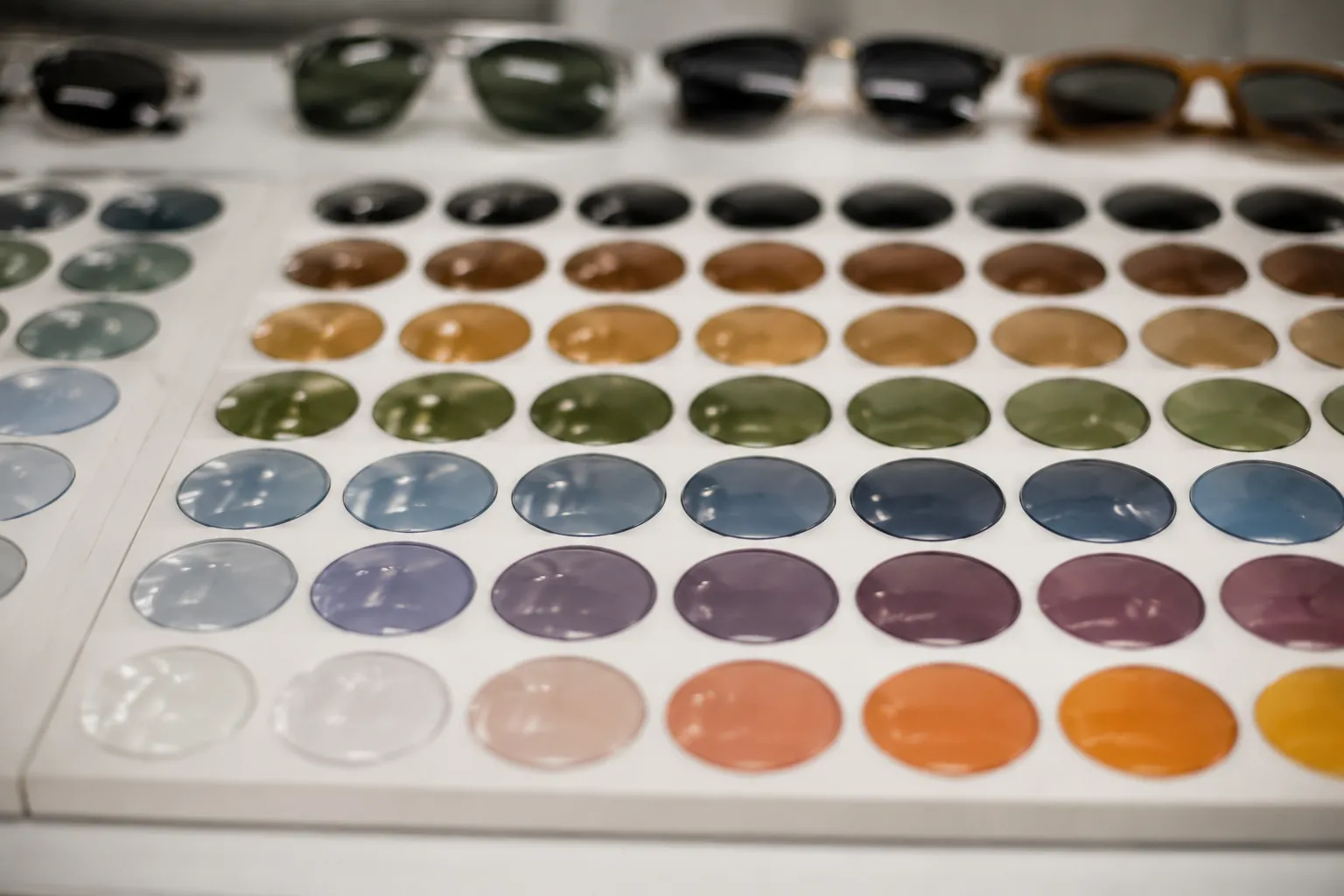
This guide is for brand owners, importers, distributors, and retail buyers deciding whether polarized or non-polarized sunglasses fit a specific sales channel. Lens choice affects more than optics. It changes product cost, target retail price, labeling, testing requirements, QC checkpoints, complaint risk, and reorder speed. The right answer depends on where the product will be sold, how the customer will use it, what price architecture the channel can support, and whether the approved sample matches bulk production. Use this framework before sampling or booking volume.
Start with the channel, not the lens claim
Many buyers start with the wrong question: should this style be polarized? Start elsewhere. Ask where it will be sold and what problem it is meant to solve.
Polarization is a functional feature. It is not an automatic upgrade. Polarized lenses reduce reflected glare from flat surfaces such as roads, water, snow, vehicle hoods, and windshields. That matters in driving, boating, fishing, marine retail, resort activity, and outdoor-specialty channels. In those settings, the benefit is easy to explain and usually supports a higher retail price.
Non-polarized lenses follow different logic. They can still provide UV protection and be developed to meet the relevant sunglass standard for the target market, but they do not include a polarizing filter. For fashion retail, event merchandise, music festivals, promotional giveaways, and low-ticket accessory programs, customers usually buy on shape, color, brand look, and price. In those channels, a polarized upgrade often adds cost without adding enough sell-through.
This channel-first view also helps assortment planning. A buyer serving both resort retail and promotional distribution does not need one lens specification for every SKU. The same frame platform can often support a non-polarized version for opening price points and a polarized version for outdoor or travel use. That is usually stronger than adding polarization late in development with no clear retail purpose.
MOQ can support that split. But actual minimums vary by factory, material, logo method, and packaging complexity. Confirm MOQ by SKU, not only by frame mold, especially if polarized and non-polarized versions use different lens constructions, packaging, or claims.
A channel-by-channel buying framework
| Channel | Best lens choice | Typical retail logic | Indicative sourcing impact | Main risk if wrong |
|---|---|---|---|---|
| Fashion retail | Usually non-polarized | Opening to mid-tier price points driven by style, color, and brand look | Lower lens cost, simpler approvals, easier seasonal color testing | Over-spec product that shoppers will not pay extra for |
| Promotional and giveaway | Non-polarized | Budget-controlled programs where logo visibility and unit cost dominate | Best fit for large runs, simple packaging, and basic logo execution | Polarized option pushes unit cost above campaign ceiling |
| Outdoor specialty | Usually polarized | Function-led sale with a clear glare-reduction story | Higher lens cost but stronger retail justification and clearer product differentiation | Non-polarized product may underperform customer expectations |
| Department store mid-tier | Mixed by price band | Need good-better-best range architecture | Often split into opening non-polarized SKU and upgraded polarized SKU | Confusing assortment if the benefit ladder is unclear |
| Resort and travel retail | Mixed | Impulse fashion purchase plus practical vacation use | Same frame family can support two lens specs and two ticket levels | One-spec strategy misses either value buyers or active users |
| Auto, marine, fishing programs | Polarized | Use case is direct, technical, and easy to explain | Requires tighter functional QC, clearer labeling, and consistent lens execution | Returns or complaints if glare reduction is weak or inconsistent |
Use this table as a commercial filter, not a rulebook. Strong buyers split ranges by channel, use case, or target retail price. Keeping one frame platform and changing the lens specification is often more efficient than developing two separate frames.
- One frame, one market: choose the lens type that fits the main use case.
- One frame, multiple channels: create polarized and non-polarized versions with different packaging and price points.
- Uncertain demand: start with the lower-risk non-polarized version unless the claim is clearly function-led.
What polarization changes in cost and positioning
Polarized lenses usually cost more than non-polarized lenses. The reason is simple: added materials and tighter process control. A non-polarized sunglass lens may be produced in materials such as polycarbonate or acrylic, depending on design and target market. A polarized lens includes a polarizing filter and must be made so the lens performs consistently and still looks right in the approved tint.
That changes more than raw cost. It changes production control. Buyers should ask how the factory checks lens appearance, left-right visual consistency, and the polarization function for the exact lens construction being ordered. For fashion non-polarized products, acceptable variation may be defined mainly by an approved visual standard. For polarized products sold for driving, marine, or fishing use, expectations are higher. Function matters as much as appearance.
For private-label programs, the key question is not whether polarized costs more. It does. The real question is whether the channel can turn that extra cost into enough retail value, margin, or lower complaint risk to justify it. A low-ticket promotional program and a marine retail program should not land on the same answer by default.
Non-polarized lenses also give buyers more flexibility in trend-led collections. Fashion tints, gradients, mirrored looks, and frequent seasonal changes are often easier to manage when the lens is sold mainly on appearance. Polarized programs need tighter alignment between the product claim, the approved sample, the test file, and the final labeling. No shortcuts.
When comparing quotations, ask suppliers to separate these cost drivers clearly:
- Lens material and construction
- Frame material
- Logo method
- Packaging type
- Testing and documentation support for the destination market
That breakdown shows whether the price gap comes from the polarized lens itself or from other upgrades added at the same time.
Returns risk starts with the wrong product promise
Most returns come from a mismatch between promise and execution. In fashion retail, complaints often focus on fit, scratches, logo wear, hinge feel, or color mismatch against the approved sample. In outdoor retail, complaints are more likely to mention visual comfort, distortion, inconsistent lens appearance, or weak glare reduction relative to the product claim.
Frame material affects that risk. Injection-molded plastic frames and TR90-style frames are common in promotional and value-driven programs because they support cost control on larger runs. Acetate programs usually offer higher perceived value, richer color effects, and a more premium hand feel. That makes them a better fit for boutique or premium fashion channels. They also involve more finishing labor and usually longer development time than simpler injection programs.
Decoration choice matters too. A giveaway program may use one-color pad printing on the temple because it is economical and fast to approve. A mid-tier retail program may add laser marking or more refined print execution. Premium private-label eyewear may use metal logo plates, more detailed case branding, or branded packaging components. Every extra process adds an approval point. Every approval point adds delay risk.
For practical planning, align these four items early:
- Frame material: injected plastic, TR90-style material, metal, acetate, or mixed construction
- Lens type: non-polarized, polarized, mirrored, gradient, or solid tint
- Decoration method: pad print, laser engraving, metal logo plate, hot foil, or debossing on packaging
- Target shelf price: opening price, mid-tier, or premium specialty retail
If the hangtag or product page is built around driving, boating, fishing, marine use, or glare reduction, treat polarized lenses as the default starting point unless the target price clearly rules them out.
Compliance and QC checkpoints to request before bulk
Both polarized and non-polarized sunglasses require market-specific compliance review. Common reference standards include CE EN ISO 12312-1 for Europe, ANSI Z80.3 for the United States, and AS/NZS 1067 for Australia and New Zealand. Chemical compliance discussions often include REACH for applicable materials and finishes. In some US import workflows, buyers also review whether FDA registration or related supplier-side documentation is relevant to the product category and import process. On the supplier management side, buyers may ask whether the factory operates under ISO 9001 quality management procedures or has passed a BSCI social compliance audit, but those are factory credentials, not product certificates.
The main point is straightforward: request documents that match the exact frame and lens configuration being purchased. A report for one model, lens tint, or lens construction should not be assumed to cover another. A non-polarized smoke lens in one frame is not the same as a mirrored polarized lens in another.
Ask for these checkpoints before bulk approval:
- Test reports or compliance documents matched to the exact SKU or construction being ordered
- Lens category or visible light transmission data matched to the approved lens tint
- UV performance and required product labeling for the destination market
- Chemical compliance review for frame materials, coatings, inks, nose pads, and metal components where applicable
- Written confirmation that bulk production uses the same lens construction as the approved sample
- Functional verification for polarized SKUs so the product claim is supported by internal QC
On the QC side, ask how the factory controls scratch inspection, tint comparison, left-right lens matching, hinge function, logo position, and carton traceability. If the supplier claims in-house development or assembly advantages, ask which steps are actually done in-house and which are outsourced. That affects response speed, consistency, and how quickly issues can be corrected on repeat orders.
Lead time, sampling, and where orders slip
Lead times vary by factory capacity, material availability, season, packaging complexity, and approval speed. Suppliers often quote separate timelines for sampling and bulk production, but treat those timelines as conditional until specifications are frozen.
Non-polarized programs are often easier to approve because review is mainly visual: frame color, lens shade, logo placement, and packaging. Polarized programs can need extra review because buyers may need to confirm product claims, label wording, compliance file matching, and final lens appearance for a function-led SKU.
Most delays come from approval changes, not from production itself. Common causes include:
- Logo artwork delivered in the wrong format or changed after sample approval
- Lens color changed after packaging files or barcodes are already finalized
- Switching from non-polarized to polarized after cost approval or compliance review
- Too many decoration methods combined in one run, creating avoidable coordination steps
- Approval based on one sample without a clear written standard for bulk color tolerance or logo position
Reduce risk by freezing these five items before deposit:
- Final frame material and color reference
- Final lens construction and tint
- Final decoration placement and artwork
- Final packaging specification
- Required compliance documents by destination market
Use samples to confirm design and execution. Do not use them to keep debating the core lens strategy after the commercial plan should already be fixed.
A practical range strategy: one frame, two versions
One of the most effective B2B eyewear strategies is simple: use one frame platform for two different commercial roles. A unisex square frame, for example, can be developed in a non-polarized version for fashion retail and a polarized version for outdoor or travel retail.
For the fashion version, the better specification may be a non-polarized smoke, gradient, or trend-tint lens with a standard printed logo and packaging built around style and price access. For the outdoor version, the better specification may be a polarized smoke or brown lens with clearer functional copy and packaging that explains glare reduction for driving or water-related use.
The frame tooling stays the same. That helps control development cost. More important, the retail logic stays clear because each version is built for its actual channel instead of being forced into a compromise spec.
This approach also improves testing and reorder discipline. Buyers can compare two lens strategies on the same frame shape, keep visual consistency across channels, and simplify future updates because the frame platform is already validated. If one version performs better, the next order decision is easier because the frame does not need to be redeveloped.
Before launching a two-version strategy, confirm three operational points with the supplier:
- Whether MOQ applies per lens version, per color, or per frame platform
- Whether each version needs separate packaging, labeling, or compliance documents
- Whether the approved sample archive clearly distinguishes the polarized and non-polarized builds
Well-run eyewear programs treat lens choice as part of assortment planning, not as a technical note added at the end. That protects margin, cuts avoidable returns, and makes SKUs easier to reorder with confidence.
The production-approval checklist buyers should use
Before approving bulk production, ask these questions directly:
- Is the customer buying this style mainly for glare reduction, or mainly for look and price?
- Does the target retail price support a polarized version without damaging the required margin?
- Will the sales channel explain the polarized benefit clearly enough to justify the added cost?
- Do the approved sample and bulk order use the same lens material, tint standard, and construction?
- Are the compliance documents matched to this exact SKU and destination market?
- Have frame color, logo artwork, packaging, barcode, carton marking, and labeling been frozen before booking production?
- Has the supplier confirmed what is covered by product testing and what is only supported by factory-level credentials such as ISO 9001 or BSCI?
If any answer is unclear, the order is not ready. That is where margin loss starts: over-specified lenses for the wrong channel, last-minute material changes, packaging rework, or compliance confusion after production has already been scheduled.
For many fashion and promotional programs, non-polarized is the stronger commercial answer because it protects price point, speed, and trend flexibility. For outdoor, driving-led, marine, and fishing channels, polarized usually earns its place because the user benefit is immediate and easy to explain. The best buyers do not ask which lens is universally better. They ask which lens fits the channel, the end use, the price architecture, and the reorder plan.
Have a custom sunglasses project in mind?
Send us your styles, target market and quantities and we will return a detailed quote with MOQ, lead time and a sample plan.
Get a QuoteWhy source this from Wenzhou with LumiShades
Wenzhou in Zhejiang Province is widely regarded as China’s eyewear manufacturing capital, producing a large share of the world’s sunglasses. That concentration matters to buyers: a deep local supply chain for acetate sheet, hinges, lens blanks, plating and packaging means shorter component lead times, easier color and material matching, and a workforce with decades of eyewear-specific skill. LumiShades has manufactured in this ecosystem since 2009, and our vertical integration — in-house injection molding, acetate cutting, CNC milling, lens tinting, decoration and quality control — means no part of your order is quietly subcontracted to a workshop you cannot audit.
For international buyers, that vertical control translates into accountability. When a single factory owns every step, defects are traced and fixed at source rather than bounced between vendors, and your specifications survive intact from first sample to bulk. We back this with 15+ years of experience, shipments to 60+ countries, more than 5 million pairs produced per year and a 98.5% on-time delivery rate. Our certifications — CE EN ISO 12312-1, FDA registration, ANSI Z80.3, AS/NZS 1067, REACH, ISO 9001 and BSCI audit — mean the compliance documentation your market requires already exists. Explore our manufacturing capabilities and quality control process to see how this works in practice.
Frequently asked questions
Is polarized always better for retail sell-through? No. Polarized is not automatically better for sell-through. It works best when the end customer understands and values glare reduction, such as in driving, marine, fishing, and outdoor-use programs. In fashion, festival, and promotional channels, customers may care more about frame shape, lens color, and price. Test the decision against the actual shelf story. If store staff, packaging, or the product page will not explain the benefit clearly, the extra cost may not convert into better sales.
Can I use the same frame for polarized and non-polarized programs? Yes. This is a common and practical B2B strategy. Using one frame platform with two lens builds lets you serve different channels, compare two price points, and reduce development cost. Before placing the order, confirm whether MOQ is calculated per frame, per color, or per lens version. Also confirm whether each version requires separate labeling, packaging, or compliance documents.
What compliance documents should I request for sunglasses orders? Request documents that match the exact SKU, lens construction, and destination market. Common references include CE EN ISO 12312-1 for Europe, ANSI Z80.3 for the US, AS/NZS 1067 for Australia and New Zealand, and REACH-related chemical compliance where applicable. If your import workflow requires it, also confirm whether FDA registration or related supplier documentation is relevant. Keep product compliance separate from factory credentials: ISO 9001 and BSCI relate to factory systems or audits, not proof that a specific sunglass model meets market requirements. Ask the supplier to identify each document by model, lens type, tint, and test date.
How should MOQ and volume pricing affect lens choice? Use MOQ and volume pricing to judge commercial flexibility, not just unit price. At low quantities, the goal is often sampling, buyer review, or limited market testing. At higher volumes, it becomes easier to spread setup costs for custom packaging, logo methods, and multiple versions of the same frame. If you are considering both polarized and non-polarized options, ask for a side-by-side quote showing MOQ, unit price, packaging assumptions, and whether testing or document support changes by version. That makes the trade-off easier to evaluate against your target margin.
What usually delays a sunglasses order more: frames or lenses? In most cases, approval changes cause more delay than the physical production step. The most common problems are late artwork changes, lens tint revisions after packaging is finalized, switching from non-polarized to polarized after quotation approval, and missing compliance documents for the final SKU. To reduce delay, lock the lens construction, tint, artwork, packaging, and destination-market document list before deposit, and make sure the approved sample record is detailed enough to guide bulk inspection.
Ready to start?
Explore our rimless sunglasses or request a quote — our sales team replies within 12 hours.
Request a Quote