
When Nylon Lenses Are Worth the Extra Cost
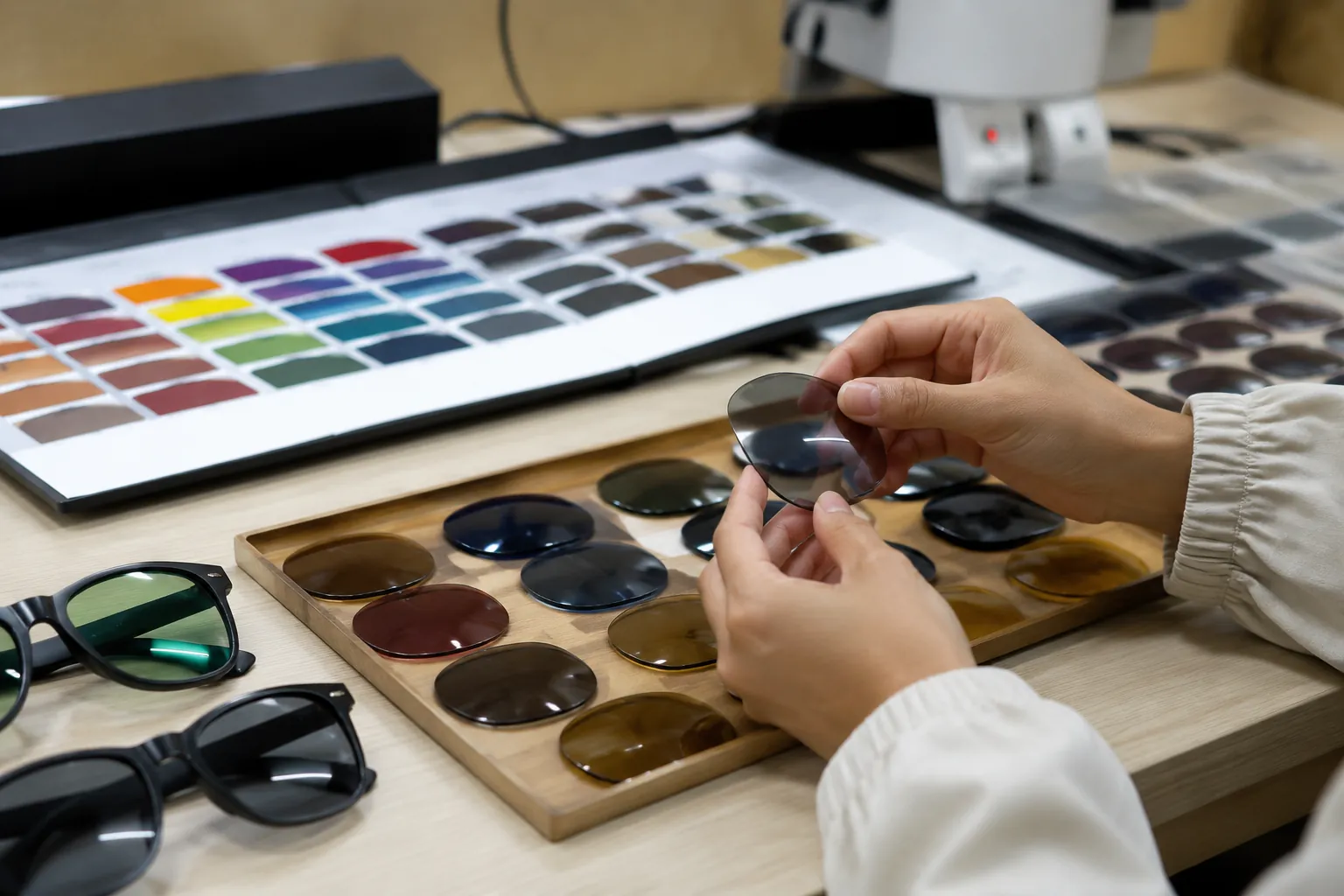
This guide is for brand owners, importers, distributors, and retailers deciding whether nylon lenses belong in a custom sunglasses program. The question is simple: does nylon improve the product enough to justify the higher cost? For most buyers, that means checking the use case, frame geometry, retail position, compliance needs, and the factory's process control before approving the upgrade.
Start with the use case, not the material pitch
Nylon lenses usually cost more than common polycarbonate or acrylic-based options. So the upgrade needs a reason. Start with end use: what the wearer is doing, how long the sunglasses stay on face, how much curve the frame needs, and whether the user is likely to notice weight and visual differences.
Nylon is often a strong fit for three program types. First, active or sport eyewear where wrap coverage, movement, sweat, and long wear matter. Second, lightweight premium styles where lower front weight can improve comfort and balance. Third, designs with higher base curves or more complex shield shapes that put more demand on the lens.
It is usually a weaker fit for low-price fashion programs, basic promotional sunglasses, or projects that sell mostly on color, logo, or price. In those cases, buyers often get more value from better fit, coatings, and cosmetic consistency while using a lower-cost lens material that still meets the product requirement.
Practical rule: choose nylon when the wearer is likely to feel the difference in comfort, weight, or performance. If the sale is driven mainly by price, the upgrade is often hard to recover.
What nylon changes in actual wear
Buyers usually choose nylon for a mix of properties, not one headline benefit. In practice, the key points are low weight, flexibility, and better suitability for curved sport-oriented lenses.
Lower lens weight can improve comfort, especially in large shields and high-wrap frames where front-end mass affects balance on the nose and temples. In a small frame, the difference may be minor. In a larger lens format, it can matter over long wear periods.
Flexibility can help both in active use and in production. A more flexible lens may be more forgiving during insertion and everyday handling than a brittle low-cost alternative. That does not make nylon damage-proof. It does make it better suited to designs that place more stress on the lens during assembly or wear.
Another reason buyers choose nylon is curved-lens performance. Sport sunglasses and shields often rely on shapes that are harder to execute well than flatter fashion styles. In those cases, material choice matters. So does process control. Nylon is widely used in performance eyewear for that reason.
There are trade-offs. Nylon costs more. And the finished result still depends on tinting, coating, surfacing, and assembly quality. On a simple low-wrap fashion sunglass, the user may not notice enough benefit to justify the change.
Head-to-head: where nylon beats other common lens options
| Lens material | Best fit | Main strengths | Main limits | Typical sourcing logic |
|---|---|---|---|---|
| Nylon | Sport, performance, premium lightweight styles | Low weight, flexibility, well suited to wrapped shapes and long wear | Higher cost; quality depends on good tint, coating, and process control | Use when the product must deliver noticeable comfort or performance gains |
| Polycarbonate | Mainstream sunglasses, safety-oriented product, value-to-mid tier | Widely used, impact-resistant, practical cost-to-performance balance | May be less preferred for some premium lightweight or highly wrapped applications | Common default for custom programs balancing durability and cost |
| AC | Fashion and promotional sunglasses | Low cost, easy color presentation | Lower performance ceiling; less suitable for demanding active use | Use where price target drives the project and visual demands are basic |
| TAC polarized lens build | Polarized fashion and lifestyle product | Adds polarization at workable cost; common in retail assortments | Durability and consistency depend on lamination quality and construction | Good for glare reduction where premium sport positioning is not required |
This is not a ranking table. It is a fit table. The best lens material is the one that matches the frame design, user expectation, price point, and compliance target. Higher cost only makes sense if the product benefit is real and repeatable.
The cost question: where the upgrade pays back
Lens material is not just a line-item cost. It affects assembly handling, coating choices, production consistency, and product positioning. Judge nylon on total program value, not piece price alone.
Here is where nylon can pay back:
- Better comfort in large or high-wrap styles: lower lens weight can improve balance and all-day wear.
- Stronger performance positioning: if the product is sold on active use, lightweight feel, or premium function, nylon supports that claim.
- Better fit for demanding geometries: in wrapped sport frames or larger shields, nylon may be the better technical choice than a low-cost alternative.
- Fewer avoidable complaints when the spec is right: if the main issue is comfort, front-heavy feel, or suitability for curved designs, nylon may solve the actual problem.
Where it often does not pay back: low-ticket impulse buys, logo-led promotional product, simple fashion shapes with minimal curve, and tenders where price drives the decision. In those programs, buyers often get more return from better frame fit, hinge quality, coating consistency, or packaging execution before upgrading the lens substrate.
Be blunt about it. If there is no clear problem to solve, the added cost is hard to defend.
Designs that benefit most from nylon lenses
Not every frame gets real value from nylon. The best case usually shows up in shapes that place more demand on the lens.
- High-wrap sport frames: cycling, running, golf, fishing, and outdoor styles with meaningful face curve. The main reason is better suitability for that geometry and long active wear.
- Large shield sunglasses: one-piece lens designs can become front-heavy. Lower lens weight can improve comfort and balance.
- Semi-rim or drilled performance styles: designs that place more stress on the lens during mounting may benefit from a material with more flexibility.
- Premium travel and all-day wear styles: when users wear the product for long periods, even small weight reductions become more noticeable.
Less compelling applications include small classic aviators, low-wrap fashion frames, and budget retail packs where styling and price define most of the value. In those products, the customer is usually reacting more to appearance and price than to lens substrate.
If the answer is not obvious, compare two development samples in the same frame using different lens materials. Check weight balance, wearer comfort, insertion stress, and visual performance in normal use. A like-for-like sample test beats a generic material claim every time.
What to check at sampling stage
A nylon lens program needs careful sampling because you are paying for a performance-oriented material. If the factory cannot reproduce the intended result consistently, the upgrade loses value.
Do not approve from a rendering alone. Review physical samples under normal lighting and on-face wear.
- Optical appearance: inspect the main viewing area for visible distortion, waviness, or inconsistency, especially on wrapped lenses.
- Tint consistency: compare left and right lenses side by side under the same light source and against the approved color standard.
- Coating performance: verify the appearance and adhesion of mirror, hard coat, or other surface treatments according to the agreed test method.
- Lens fit tolerance: check whether insertion creates stress marks, edge damage, or frame deformation at corners, notches, or other high-tension points.
- Color repeatability: if the order will repeat, approve and retain a signed reference sample or master standard for future production.
Before pre-production, confirm the final lens construction in writing: base curve, thickness specification, tint, polarization if applicable, and any mirror or flash coating. Small unapproved changes here can alter both appearance and wear performance.
Compliance and quality control: what nylon does not excuse
A better lens material does not remove the need for compliance testing. The finished sunglasses still need to meet the legal and customer requirements of the market where they will be sold. Depending on the market and product spec, buyers may need documentation or testing aligned with CE EN ISO 12312-1, ANSI Z80.3, AS/NZS 1067, REACH, and FDA registration where applicable. Factory-level systems such as ISO 9001 and BSCI may also matter if the buyer or retailer requires documented quality management and social compliance review.
At production stage, QC should focus on the issues that get expensive after shipment:
| QC checkpoint | What to inspect | Why it matters |
|---|---|---|
| Incoming lens material | Color lot consistency, surface defects, thickness range | Helps prevent visible mismatch and avoidable downstream variation |
| After tinting or coating | Shade uniformity, mirror coverage, adhesion, cosmetic cleanliness | Surface defects are highly visible and often lead to rejection |
| Lens insertion | Stress marks, edge chipping, frame deformation | Wrapped or high-tension frames are more sensitive at this stage |
| Final assembly | Visual alignment, lens cleanliness, logo placement, hinge function | Prevents both cosmetic and functional complaints at receipt |
If you are selling into multiple markets, align the compliance plan before bulk production starts. Do not assume one test report or one market standard automatically covers all customers, channels, or destinations.
A practical buying framework
Most buyers make better nylon decisions with a short filter. Not a long debate about material theory.
- Your target user wears the product actively or for long periods. If yes, weight and comfort matter more.
- The frame has wrap, shield geometry, or a large lens area. If yes, nylon's advantages are more likely to be noticeable.
- The retail price or channel can support the upgrade. If not, prioritize fit, coatings, and finishing consistency first.
- You can evaluate physical samples against a clear standard. Do not approve nylon from digital images or generic claims alone.
- The supplier can document process control and compliance readiness. That includes stable sample repeatability, clear specifications, and the right testing path for your market.
Bottom line: nylon is worth the extra cost when the user can feel a real comfort benefit, when the frame geometry makes the material technically relevant, or when the product story depends on credible performance attributes. If those conditions are missing, a simpler lens specification is often the better commercial choice.
Have a custom sunglasses project in mind?
Send us your styles, target market and quantities and we will return a detailed quote with MOQ, lead time and a sample plan.
Get a QuoteWhy source this from Wenzhou with LumiShades
Wenzhou in Zhejiang Province is widely regarded as China’s eyewear manufacturing capital, producing a large share of the world’s sunglasses. That concentration matters to buyers: a deep local supply chain for acetate sheet, hinges, lens blanks, plating and packaging means shorter component lead times, easier color and material matching, and a workforce with decades of eyewear-specific skill. LumiShades has manufactured in this ecosystem since 2009, and our vertical integration — in-house injection molding, acetate cutting, CNC milling, lens tinting, decoration and quality control — means no part of your order is quietly subcontracted to a workshop you cannot audit.
For international buyers, that vertical control translates into accountability. When a single factory owns every step, defects are traced and fixed at source rather than bounced between vendors, and your specifications survive intact from first sample to bulk. We back this with 15+ years of experience, shipments to 60+ countries, more than 5 million pairs produced per year and a 98.5% on-time delivery rate. Our certifications — CE EN ISO 12312-1, FDA registration, ANSI Z80.3, AS/NZS 1067, REACH, ISO 9001 and BSCI audit — mean the compliance documentation your market requires already exists. Explore our manufacturing capabilities and quality control process to see how this works in practice.
Frequently asked questions
How much MOQ do I need to justify nylon lenses on a custom program? There is no universal MOQ that makes nylon worth it on its own. The decision should come from unit economics and channel fit. Ask your supplier for a material-cost comparison between nylon and your fallback option in the same frame, then calculate whether the added cost can be recovered through retail price, distributor margin, or lower complaint risk in the intended use case. Nylon is easier to justify in sport, premium lightweight, or performance-oriented product than in price-led programs.
Are nylon lenses always better than polycarbonate? No. They solve different problems. Nylon is often chosen for lightweight comfort, flexibility, and suitability for wrapped sport designs. Polycarbonate is widely used because it offers strong practical performance at a balanced cost. To choose well, compare the same frame in both materials and review four points: weight, wearer comfort, optical appearance in the final curve, and total landed cost.
Will nylon lenses increase lead time? Not necessarily, but they can make development more sensitive. Lead time depends less on the material name than on whether the supplier can control tinting, coatings, and sampling consistently. To avoid delays, confirm the lens specification early: base curve, thickness, tint, polarization status, and any mirror or hard-coat requirement. Then lock an approved reference sample before bulk production so repeatability issues do not stop shipment later.
What tests or documents should I ask for on nylon sunglasses? Start with the market you are selling into, then ask for evidence that matches that destination. Common references include CE EN ISO 12312-1, ANSI Z80.3, and AS/NZS 1067 for sunglass performance requirements, plus REACH where chemical compliance is relevant and FDA registration where applicable for the U.S. market. If your customer also requires factory documentation, ask whether the supplier maintains ISO 9001 and BSCI records. Most important: confirm that the documents apply to the finished product category and target market, not just to a generic material or unrelated model.
Do nylon lenses make sense for fashion sunglasses? Sometimes, but not by default. They make the most sense in premium fashion styles where low weight, large shields, or long wear are part of the product promise. They are less compelling in basic fashion or promotional sunglasses where styling and price drive the purchase. A useful test is simple: will the customer notice the benefit, and can the sales channel explain it clearly? If not, nylon may not be the best use of budget.
Ready to start?
Explore our square sunglasses or request a quote — our sales team replies within 12 hours.
Request a Quote