
Private Label Photochromic Sunglasses: Spec, Fit, Limits
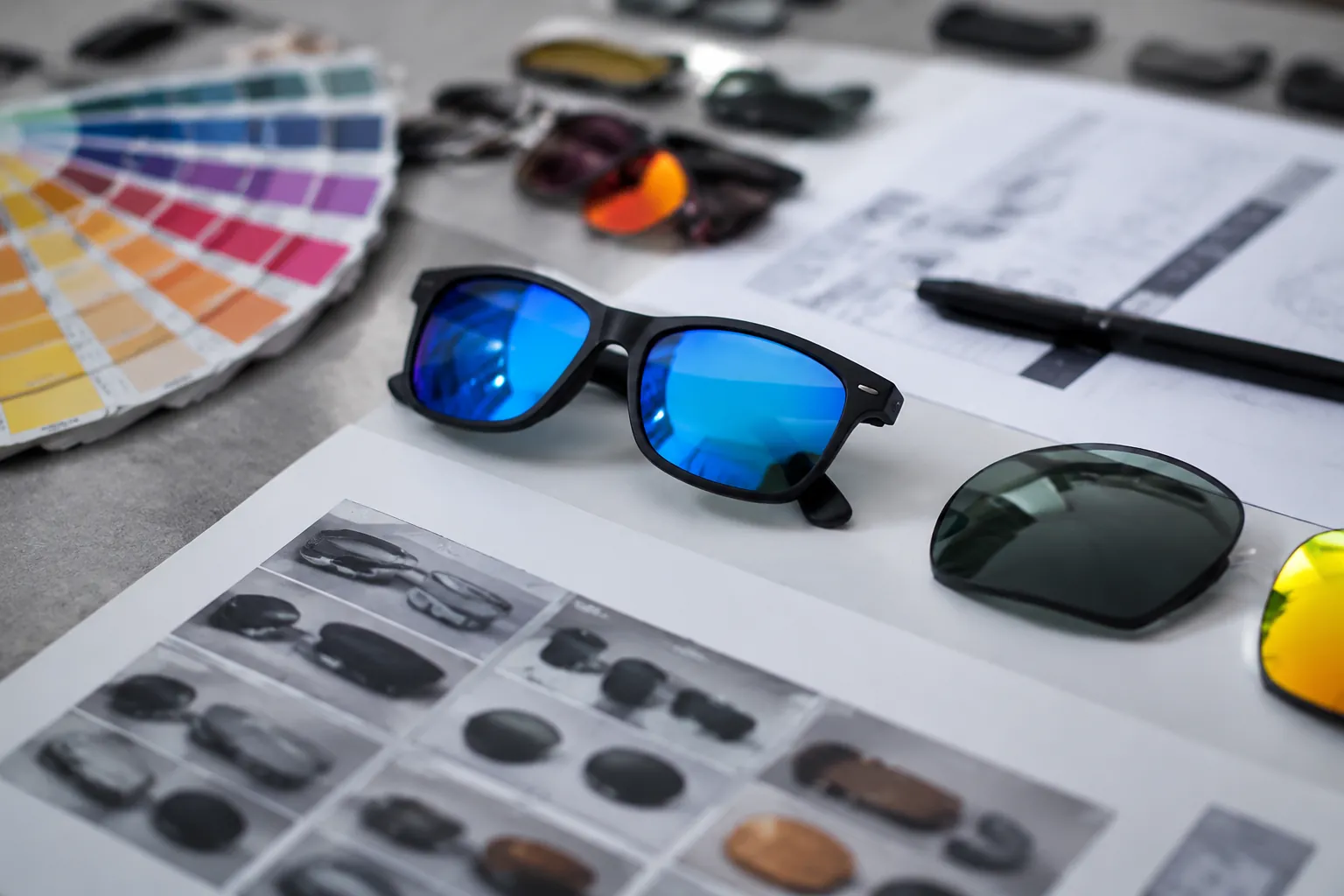
This guide is for eyewear brands, importers, distributors, and retailers assessing photochromic sunglasses under a private label program. The main question is simple: will the product perform clearly enough, in real use, to justify the added cost and the extra explanation it needs at retail? Sometimes yes. Often no. Used well, photochromic sunglasses can work in outdoor, sport, and travel assortments. Specified loosely or sold with vague claims, they can drive avoidable returns, slower reorders, and channel frustration. The sections below focus on the issues that matter most to buyers: where these lenses fit, how activation behaves in practice, what to write into the spec sheet, and how MOQ, pricing, compliance, and QC should be handled before bulk production.
Start with the commercial case, not the lens story
Photochromic sunglasses are not a universal upgrade over fixed-tint sun lenses. They make sense only when the user benefits from changing visible light transmission and the sales channel can explain the feature without overselling it.
In practice, a photochromic lens darkens mainly in response to UV exposure. Final darkness can also shift with temperature and other conditions. It does not switch instantly. It does not behave the same way outdoors, indoors, and inside vehicles.
That is where many complaints start. Not with defects. With bad expectations. A consumer expects fast darkening everywhere, then tests the product in a car cabin, under weak winter sun, or indoors near a window. The lens may be working normally, but the product still fails commercially if the retail promise was loose or misleading.
The strongest fit is usually outdoor and sport use: cycling, running, hiking, fishing, golf practice, travel, and casual outdoor wear in mixed light. In those cases, one pair can cover brighter and dimmer conditions without a lens change. The weaker fit is fashion-first retail, where customers often want a stable lens appearance, and driving-led programs, where windshield UV filtering can limit activation.
From a sourcing standpoint, photochromic projects need a tighter pre-production brief than a standard fixed-tint category 3 sunglass. Define the target lens category, inactive and activated VLT range, color shift, activation expectation, evaluation environment, and acceptable lot variation. Write it down. If you do not, the buyer and factory may approve two different ideas of acceptable performance.
The good news is that most private label programs do not need a new frame platform. Existing injected PC, TR-style sport, metal, or acetate frames can often be used if the lens spec, testing method, and retail messaging are set correctly.
Where photochromic lenses fit and where they do not
Not every channel can support a product that needs explanation. The better channels are the ones with informed staff, clear packaging copy, and product pages that state limits directly.
| Channel | Commercial fit | Typical lens expectation | Why it works or fails | Buyer note |
|---|---|---|---|---|
| Outdoor retailers | Strong | Variable light performance | Customers already understand function-led product features | Use VLT ranges and simple outdoor-use claims |
| Sport distributors | Strong | Adaptation in changing light during activity | Useful for cycling, fishing, running, and golf in mixed conditions | Prioritize wrap coverage, lens retention, and anti-slip temples |
| Travel retail | Moderate | Convenience and one-pair versatility | The product story is easy to like, but staff education is often inconsistent | Keep front-of-pack messaging short and precise |
| Fashion boutiques | Weak to moderate | Stable aesthetic look | Shifting lens appearance can conflict with style-first buying behavior | Offer selectively, mainly in lifestyle capsules with a technical angle |
| Automotive channels | Weak | In-car darkening | Windshields often reduce UV reaching the lens, which can limit activation | Avoid strong in-car performance claims |
If a distributor or retail team cannot explain the product clearly, the SKU is usually not ready to scale. A simple line is often enough: darkens outdoors in UV, stays lighter in lower UV, and may activate less inside vehicles.
- Best fit: outdoor and sport assortments with technical product pages and trained staff
- Acceptable fit: travel and lifestyle ranges with strong packaging copy and disciplined claims
- Poor fit: trend-led fashion drops where visual consistency matters more than functional lens behavior
The rule is blunt. The more explanation a product needs, the better your packaging, hangtag, and product-page copy must be. Weak messaging pushes returns up even when manufacturing quality is acceptable.
How the lens behaves: numbers buyers should ask for
Many sourcing problems start because buyers approve a lens by color name alone. Smoke, brown, or gray-green is not a usable production spec. Ask for measurable performance under agreed test conditions.
A practical target usually includes both an inactive VLT range and an activated VLT range, each defined with tolerances rather than single values. The right range depends on intended use, lens category target, and market position. A sport program may accept a lighter inactive state for versatility. A lifestyle program may want a darker activated state for stronger sunglass perception. The key point is simple: specify the target as numbers, not comments like "looks dark enough."
Temperature matters. Many photochromic systems darken more in cooler conditions and less in high heat. A lens reviewed outdoors on a mild day may look darker than the same lens reviewed in a much hotter environment. That is why "matches sample" is too vague unless the evaluation condition is recorded. The supplier should state how the activated sample was checked, including whether the review was done under outdoor sunlight or a controlled UV source.
Speed matters too, but this is where buyers need discipline. Avoid hard retail promises such as fixed timing claims unless you have validated test data tied to a defined method. A safer approval standard is descriptive: visible darkening begins under UV exposure, reaches a commercially useful shade within an agreed period under the chosen test condition, and fades back more slowly when UV is removed.
Color control also needs more than one glance. Approve the inactive state and the activated state side by side. Keep a signed retained reference sample. Define a visual tolerance for lot approval. At minimum, there should be no obvious left-right mismatch and no obvious same-lot mismatch under a defined inspection condition, backed by VLT checks where available.
The return drivers you can predict and prevent
Most return issues are predictable. Good factories know them. Smart buyers write controls into the order file before production starts.
- Customer says the lens is too slow. Photochromic activation and fade-back are not instant. Prevention: avoid inflated retail claims and test the lens in realistic outdoor conditions before launch.
- Customer says it is not dark enough in the car. Common and avoidable. Many windshields reduce UV transmission. Prevention: state clearly that activation may be reduced inside vehicles.
- Activated color does not match the approval sample. Prevention: approve and retain references for both inactive and activated states on both the buyer side and factory side.
- Lot-to-lot inconsistency. Prevention: keep the same raw lens source where possible and define acceptable appearance and VLT tolerance bands in writing.
- Wrong frame for the use case. Prevention: pair sport-oriented lenses with wrap geometry, secure lens fit, and side coverage where needed.
- Decoration or assembly defects distract from lens value. Prevention: include logo placement, hinge torque or hinge feel standard, screw security, and packing checks in final QC.
A practical factory QC routine for photochromic sunglasses should include incoming lens inspection, assembly checks, cosmetic review in the unactivated state, activation comparison against the approved reference, and final packed-goods verification. For frames with pad printing, logo position should be checked against an approved artwork standard with a defined placement tolerance suited to logo size and temple geometry. For laser engraving on metal or coated parts, contrast and consistency should also be reviewed.
Frame assembly controls should cover hinge function, screw security, lens seating, and symmetry. Many buyers use a simple internal checklist covering opening and closing feel, visible lens-groove issues, front-to-temple alignment, and scratch inspection after final cleaning. Basic checks. Still important. They often decide whether a B2B program is repeatable or just sample-stage good.
A practical spec sheet for private label buyers
If you want repeatability, write a spec sheet that the factory, QC team, and importer can all use without guesswork. These points should be standard.
- Frame material and construction: injected PC for cost-sensitive ranges; TR-style or nylon-like sport frames for active use; acetate for premium lifestyle programs; metal fronts for fashion-led assortments where technical positioning is secondary
- Lens substrate: specify PC, TAC-based laminated lens, nylon, or other substrate, then state the photochromic system and base color clearly
- VLT target: define both inactive and activated transmission ranges with tolerances
- Activated color target: gray, smoke, brown, green, or another approved retained sample reference
- Use case: sport, outdoor, travel, lifestyle, or mixed use
- Evaluation condition: outdoor sunlight or agreed UV-source test, with the review condition recorded
- Decoration method: pad print for economical branding, laser engraving for permanent marks on suitable surfaces, metal logo plates for premium acetate builds
- Packing: polybag, microfiber pouch, case, barcode label, hangtag, and carton mark requirements by SKU
- Compliance file: market-specific test reports and material records aligned to destination requirements
It also helps to define what is critical to quality. Lens shade consistency, logo position, frame alignment, and barcode accuracy may be marked as critical. Minor inner-surface cosmetic variation may be treated separately if it does not affect saleable appearance or performance. That gives the factory and QC team a clearer approval hierarchy.
On compliance, buyer files commonly reference CE EN ISO 12312-1 for Europe and other markets using that framework, ANSI Z80.3 for the US market where applicable, AS/NZS 1067 for Australia and New Zealand, and REACH material controls where relevant. Depending on the US import model and product classification, buyers may also ask the supplier to confirm FDA registration status where relevant to the product and channel. On supplier qualification, ISO 9001 and BSCI can be useful factory-level indicators, but they do not replace product-specific compliance testing. Exact obligations depend on product type and destination market, so importers should confirm requirements by SKU and country rather than assume one document set covers everything.
Cost, MOQ, decoration, and lead-time logic
Photochromic programs should be costed as a full package, not as a basic frame with a rough lens surcharge. The frame may follow normal private label economics, but the lens upgrade, added QC, and tighter approval cycle all affect margin.
| Order stage | Typical quantity | Commercial logic | Cost effect | Lead-time note |
|---|---|---|---|---|
| Sampling | 1-5 prototypes or pre-production samples | Used to lock frame, lens, and branding method | Highest per-unit cost due to setup and manual handling | Often around 7-10 days for existing frame platforms, longer if custom packaging or special lens sourcing is involved |
| Entry MOQ | Low-volume pilot by design | Useful for market testing or distributor review | Viable but usually with weaker unit economics and limited negotiating room | Good for pilots, not for optimized margin |
| Commercial volume | Mid-volume production | Better balance of lens sourcing, decoration, and QC efficiency | More stable costing and easier carton planning | Bulk production often falls in the several-week range after approval, subject to lens availability and packaging complexity |
| Scale volume | Forecast-driven repeat orders | Best fit for stable programs and planned lens demand | Frame-side cost usually improves, but the photochromic lens upgrade still drives final margin | Forecast early if the lens source has long replenishment cycles |
Separate frame economics from lens upgrade economics. A high-volume frame may price well, but the landed cost can still rise fast if the lens chemistry changes, the packaging becomes retail-heavy, or too many colorways split the run inefficiently.
Decoration choice also affects cost and timing. Pad printing is usually the most economical and flexible for temple logos, but abrasion performance depends on ink system, curing, and surface preparation. Laser engraving gives permanence and precision on compatible materials and coatings, but artwork contrast can vary by substrate. Metal logo plates can increase perceived value on acetate styles, but they add parts, assembly time, and more approval points.
For new channels, small pilots make sense only if the buyer can collect useful sell-through and return feedback quickly. If not, a cleaner route is often one approved sample set followed by a focused pilot with a strong distributor rather than a scattered first order across too many stores or frame colors.
A sourcing workflow that cuts misunderstandings
The best photochromic programs follow a disciplined sequence. Skip steps and problems usually show up later as rework, delayed approvals, or weak sell-through.
- Define the channel and use case. Decide whether the product is for outdoor sport, lifestyle, or travel. This drives frame design and copy tone.
- Choose the frame platform first. Lock material, structure, and target price before fine-tuning the lens.
- Write measurable lens requirements. Include inactive and activated VLT targets, base color, activated color, and test condition.
- Approve two visual states. Review and sign off the lens both unactivated and activated. One state is not enough.
- Confirm decoration method and artwork position. State print size, location, and tolerance for logo placement.
- Align packaging and claims. Make sure hangtags, care cards, and product pages describe use limits accurately.
- Check compliance documents by market. Build the importer file by SKU, not by assumption.
- Run a pilot with clear QC points. Include lens appearance, frame alignment, logo accuracy, hinge feel, and packing correctness.
This workflow is easier to control with suppliers that handle more steps in-house, because fewer subcontract handoffs reduce mismatch risk across frame assembly, lens handling, decoration, and final packing. Every external transfer adds time, handling, and another chance for the approved sample standard to be interpreted differently.
Simple rule: if your sales team cannot explain the lens behavior in one short sentence, and your factory cannot test it against a written standard, the SKU is not ready for scale.
Where photochromic works best by tier and market
Photochromic sunglasses usually work best in three B2B situations.
First, outdoor specialty assortments. The customer is outside, moving between shade and sun, and already expects function-led gear. The value is visible and easier to explain.
Second, mid-tier private label ranges. These programs often need one technical story that separates the product from basic fixed-tint sunglasses without pushing the retail price into luxury territory. A well-chosen sport or lifestyle frame with disciplined packaging copy can support that position.
Third, multi-market distributor programs. One stable frame design can be adapted with market-specific labeling and compliance files. Here, repeatability matters more than launch excitement. Buyers need stable lens sourcing, retained reference samples, dependable lead times, and clean SKU-level documentation.
For pure fashion drops, fixed tint is often the better choice because it is easier to merchandise visually and easier to repeat across lots. For technical outdoor ranges, photochromic can earn shelf space when the brief, channel education, and QC method are aligned. It is not a magic feature. It is a fit question, a process question, and a communication question.
Have a custom sunglasses project in mind?
Send us your styles, target market and quantities and we will return a detailed quote with MOQ, lead time and a sample plan.
Get a QuoteWhy source this from Wenzhou with LumiShades
Wenzhou in Zhejiang Province is widely regarded as China’s eyewear manufacturing capital, producing a large share of the world’s sunglasses. That concentration matters to buyers: a deep local supply chain for acetate sheet, hinges, lens blanks, plating and packaging means shorter component lead times, easier color and material matching, and a workforce with decades of eyewear-specific skill. LumiShades has manufactured in this ecosystem since 2009, and our vertical integration — in-house injection molding, acetate cutting, CNC milling, lens tinting, decoration and quality control — means no part of your order is quietly subcontracted to a workshop you cannot audit.
For international buyers, that vertical control translates into accountability. When a single factory owns every step, defects are traced and fixed at source rather than bounced between vendors, and your specifications survive intact from first sample to bulk. We back this with 15+ years of experience, shipments to 60+ countries, more than 5 million pairs produced per year and a 98.5% on-time delivery rate. Our certifications — CE EN ISO 12312-1, FDA registration, ANSI Z80.3, AS/NZS 1067, REACH, ISO 9001 and BSCI audit — mean the compliance documentation your market requires already exists. Explore our manufacturing capabilities and quality control process to see how this works in practice.
Frequently asked questions
Do photochromic sunglasses work well for driving products? Usually not as the main selling point. Many car windshields reduce the UV that reaches the lens, so activation inside the vehicle can be much weaker than outdoors. If you are developing a driving-oriented SKU, ask the supplier to state clearly how the lens was evaluated and avoid packaging claims that imply strong in-car darkening. In practice, buyers should either position the product for general outdoor use or test a driving-focused lens concept specifically for that use case before launch.
What is the minimum order for a private label photochromic style? There is no single industry-wide MOQ because it depends on the frame platform, lens source, decoration method, and packaging complexity. In practice, buyers often use a low-volume pilot for distributor review or market testing, then move to a more efficient commercial run once the specification is proven. The practical step is to ask the factory for MOQ in three layers: sample quantity, pilot quantity, and repeat-order quantity. Also ask whether MOQ changes if you split colors, use custom packaging, or require special lens sourcing.
How long do samples and bulk production take? Lead time depends on whether the frame platform already exists, whether the photochromic lens is in stock or made to order, and whether packaging is standard or custom. For an existing frame with straightforward branding, samples are often completed in about 7-10 days. Bulk production commonly takes several weeks after sample approval, order confirmation, and deposit, but the real schedule should be confirmed against lens availability and packaging readiness. Ask for a stage-by-stage timeline covering sampling, approval, material booking, production, QC, and shipment booking rather than relying on one headline lead-time number.
Which compliance standards should I check for export markets? For sunglasses, buyers commonly review <strong>CE EN ISO 12312-1</strong> for Europe and related markets, <strong>ANSI Z80.3</strong> for the US market where applicable, <strong>AS/NZS 1067</strong> for Australia and New Zealand, and <strong>REACH</strong> material controls where relevant. Depending on the US sales model and product classification, you may also need to confirm <strong>FDA registration</strong> status where relevant. At the factory level, <strong>ISO 9001</strong> and <strong>BSCI</strong> can support supplier evaluation, but they are not substitutes for product-specific compliance. The practical rule is to build a compliance checklist by destination market and SKU, then ask the supplier to provide matching reports and declarations before bulk shipment.
What is the main mistake buyers make with photochromic lenses? They approve the lens by color name or by a single visual sample. That is not enough. A proper approval should cover both inactive and activated states, plus written expectations for VLT range, activated color, and the evaluation condition used for review. To avoid disputes, keep a retained signed sample, record the test condition used to judge activation, and state the acceptable tolerance in the purchase file. If those points are missing, later arguments about whether the lens is "right" become subjective and expensive.
Ready to start?
Explore our rimless sunglasses or request a quote — our sales team replies within 12 hours.
Request a Quote