
Polarized vs Non-Polarized Sunglasses for B2B Buyers
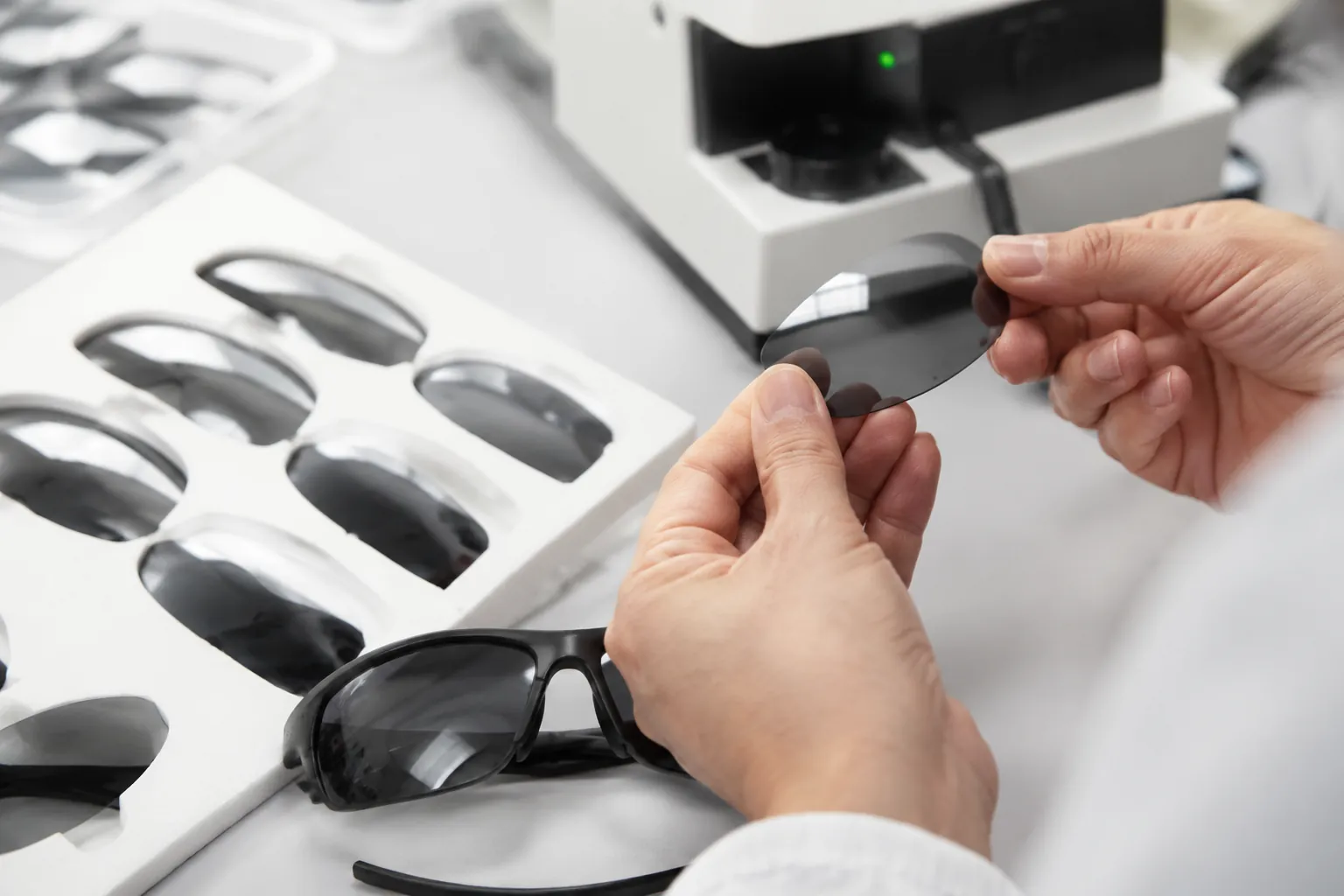
This guide is for brand owners, importers, distributors, and retail buyers building a sunglass line or reviewing an existing range. The real question is not which lens is better in theory. It is which lens type fits your channel, price architecture, customer expectations, compliance needs, and return tolerance. Decide early. You avoid sample churn, claim mismatches, margin pressure, and slow-moving stock.
Start with channel economics, not lens opinion
Buyers often begin with a product question: should the line be polarized? For a B2B program, that is too narrow. Start with the selling environment. What retail price must the product hit? How much explanation will staff, packaging, or a product page actually provide? What level of functional performance does the end customer expect at that price?
Polarization solves one thing: reflected glare from horizontal surfaces such as wet roads, water, snow, bright pavement, car hoods, and sand. In channels where customers face that problem, polarized lenses can justify the higher cost. In channels driven by fashion, impulse purchase, gifting, events, or low opening price, non-polarized often makes more sense.
Think in channel groups:
- Outdoor, fishing, boating, driving, resort, travel retail: polarized often has a clear commercial case because the glare reduction is easy to understand and show.
- Optical, sports specialty, premium department-store programs: customers often expect a stronger functional story, so non-polarized needs a clear reason.
- Fashion chains, festival merchandise, promotional campaigns, seasonal capsules: non-polarized often fits better because price and style rotation matter more than glare reduction.
- Value retail, convenience, high-volume distributor programs: non-polarized can perform well if UV performance, tint consistency, and frame finish are solid.
That matters because lens choice affects landed cost, gross margin, sales training, claim handling, and reorder confidence. It is not only a lens decision. It is a merchandising and operations decision too.
Where polarized wins: clearer value, easier demo
Polarized lenses work best where the value can be shown fast. Near a windshield, bright pavement, or reflective water, the difference is visible. That gives the retailer a simple pitch and gives the customer a reason to pay more.
For driving, marine, golf, ski-resort, and outdoor assortments, at least one polarized program often makes commercial sense. If the product is priced as premium but uses a standard tinted lens with no clear function, returns can rise. Customers notice the gap.
There are trade-offs. Some users see reduced visibility or rainbow-like effects on certain LCD or LED screens, dashboards, and instrument panels at some angles. That is normal. It is not a defect. It becomes a B2B problem when packaging, product pages, or sales staff do not explain it.
On the sourcing side, polarized usually costs more because the lens construction is more complex than a standard tinted lens. Buyers should confirm what material is being quoted, how polarization is achieved, and what quality controls apply to finished lenses. Ask how the factory checks left-right lens matching, cosmetic defects, and polarization-related inspection points in final QC. If the product is sold as polarized, the claim must be consistent in production and labeling.
Short version: polarized works best when the retail price can carry the upgrade, the use case is obvious, and the product story fits in one sentence. Reduced reflected glare. Better comfort outdoors.
Where non-polarized wins: price, screens, and volume
Non-polarized lenses are not a downgrade by default. Often they are the better buy.
If the line is built around trend frames, color stories, opening price points, or multi-buy offers, non-polarized gives the buyer more room. The cost gap versus polarized can go into frame material, hinge quality, decoration, packaging, or margin protection. In price-sensitive channels, that is usually the smarter use of cash.
Non-polarized also creates fewer complaints about screen visibility. For customers using phones, in-car displays, POS screens, warehouse scanners, or industrial monitors all day, standard tinted lenses may be the safer choice if glare reduction is not the main selling point.
Common use cases include:
- Entry-price fashion assortments
- Promotional orders where branding is the priority
- Teen and kids seasonal programs with fast style turnover
- Private-label launches testing shape and fit before adding premium lens upgrades
Execution still matters. A well-made non-polarized lens with stable tint, acceptable optical quality, proper UV performance, and low surface defects will usually beat a poorly controlled polarized lens. Ask simple questions: How close is bulk tint to the approved sample? What cosmetic defects are rejected at final QC? How are scratches, dust, edge chips, and left-right mismatch controlled? Small issues become return drivers at scale.
For broad lifestyle programs, non-polarized often wins because it supports cleaner price architecture and fewer avoidable complaints. Not because it is technically superior.
Commercial trade-offs in one table: cost, use case, and risk
| Decision factor | Polarized | Non-polarized | What it means for the buyer |
|---|---|---|---|
| Typical channel fit | Outdoor, marine, driving, optical, resort | Fashion, promo, value retail, event, general lifestyle | Match the lens to the reason the customer is buying |
| Retail price support | Usually supports a higher ticket if the glare-reduction benefit is explained clearly | Better for opening price points and multi-buy promotions | Protect your margin ladder instead of over-specifying entry SKUs |
| Screen compatibility | May reduce visibility on some LCD or LED displays at certain angles | Usually fewer complaints related to screens and dashboards | Important if the user is driving, scanning, or device-heavy |
| Unit cost direction | Typically higher than standard tinted lenses; exact difference depends on material, construction, and volume | Usually lower and simpler to scale | Useful when building good-better-best architecture |
| Cosmetic/QC sensitivity | Often higher because polarization-related consistency and lens pairing must be controlled | Simpler process and fewer polarization-specific checks | Polarized demands tighter process discipline |
| Best role in a line plan | Hero SKU, step-up SKU, or channel-specific upgrade | Core volume SKU | Most buyers should consider carrying both, not choosing one only |
MOQ and pricing logic should support testing, not guessing. A practical approach is to test one frame in both lens types before rolling the line out widely. That isolates the lens variable and gives cleaner reorder data. Exact MOQs and price breaks vary by supplier, material, decoration method, and packaging, so confirm those numbers in writing before you commit to the range plan.
Build the range in tiers: SKU strategy, materials, and decoration
For many B2B buyers, the best answer is not polarized or non-polarized. It is both, built into a tiered range.
- Core volume SKU: non-polarized lens, proven frame shape, conservative tint, broad retail appeal.
- Step-up SKU: same frame or same family with polarized lens, stronger feature messaging, and a higher target margin.
- Fashion or seasonal capsule: mirrored, gradient, or color-led non-polarized styles where aesthetics drive the purchase.
This lowers inventory risk. The non-polarized SKU covers opening price points and broad channels. The polarized SKU gives you an upsell path for premium accounts and online comparison shoppers. Keeping both in related silhouettes can also simplify fit approval, packaging, display planning, and replenishment.
Process control matters. If the supplier manages more of the production steps in-house, there is usually less variation between versions. Ask which processes are internal, which are outsourced, and where final quality responsibility sits. A lens change affects more than lens cost. It can change handling steps, inspection points, and yield expectations.
Decoration method matters too. For promotional or value programs, pad printing is often the lowest-cost logo method. For a more durable mark, laser engraving on the lens or temple may fit better where technically suitable. Metal logo plates can raise perceived value, but they add components, assembly time, and approval points. Evaluate those choices with lens type. The retail promise is the whole product, not one feature.
Compliance and documentation: match the paperwork to the BOM
Polarized or non-polarized, the shipment still has to meet the target-market requirement. Ask for test documents that match the actual production bill of materials, not a generic certificate from a similar style.
Relevant requirements can include CE EN ISO 12312-1, ANSI Z80.3, AS/NZS 1067, REACH, and FDA registration where applicable. Process certifications such as ISO 9001 and social-audit frameworks such as BSCI can show system discipline, but they do not replace product-level compliance files.
Ask for these details before approval:
- Lens category and visible light transmission range for each tint
- UV performance report for the exact production lens type
- Material declaration where REACH or chemical restrictions apply
- Confirmation that both polarized and non-polarized versions were assessed if both will be sold
- Artwork and packaging review to confirm legal markings and lens claims are correct
This matters even more if the buyer approves one sample and later changes the lens to hit cost. Change the lens construction and you may need updated confirmation. Keep the compliance file aligned with the final BOM, including frame material, lens material, tint category, and any claim printed on packaging or hangtags.
Sampling, lead times, QC checkpoints, and return risks
The lens decision affects development timing more than many buyers expect. Every added variable creates room for mismatch. Tight process reduces that risk.
A standard approval flow should look like this:
- Approve frame CAD or counter sample
- Approve frame material and color
- Approve lens material, tint, and polarization requirement
- Confirm logo method: pad print, laser, heat transfer, or metal logo plate
- Review compliance documents for the exact construction
- Approve packaging, barcode, warnings, and carton marks
- Run a pre-production sample before bulk
Sample and bulk timing varies by factory capacity, materials, and the number of approvals required. Ask for a written schedule covering sample development, pre-production sample approval, bulk production, inspection, and shipment readiness. If tint, mirror finish, logo placement, or packaging language changes late, the schedule may reset.
QC should not stop at a quick visual check. Ask what the supplier actually inspects: lens scratches, dust, sink marks, edge chips, left-right tint consistency, hinge function, logo position, and carton assortment accuracy. AQL, final random inspection, and retained golden samples help, but many returns come from plain execution failures.
Common causes of avoidable returns include:
- Customer expected polarization but packaging did not state lens type clearly
- Polarized users complain about dashboard or phone visibility they were never warned about
- Bulk tint does not match the approved sample closely enough
- Lens cleaning marks or trapped dust pass through final assembly
- Premium pricing is used, but the finish does not support the promise
Simple rule: choose the lens type your service team can explain clearly. If low service contact, low return rate, and a simple story matter most, choose the spec that creates less friction in your channel. For many importers and retailers, that means a split strategy: non-polarized for the base range, polarized for selected premium SKUs and channel-specific accounts. Test in controlled quantities. Scale what works. Let reorder behavior decide the rest.
Have a custom sunglasses project in mind?
Send us your styles, target market and quantities and we will return a detailed quote with MOQ, lead time and a sample plan.
Get a QuoteWhy source this from Wenzhou with LumiShades
Wenzhou in Zhejiang Province is widely regarded as China’s eyewear manufacturing capital, producing a large share of the world’s sunglasses. That concentration matters to buyers: a deep local supply chain for acetate sheet, hinges, lens blanks, plating and packaging means shorter component lead times, easier color and material matching, and a workforce with decades of eyewear-specific skill. LumiShades has manufactured in this ecosystem since 2009, and our vertical integration — in-house injection molding, acetate cutting, CNC milling, lens tinting, decoration and quality control — means no part of your order is quietly subcontracted to a workshop you cannot audit.
For international buyers, that vertical control translates into accountability. When a single factory owns every step, defects are traced and fixed at source rather than bounced between vendors, and your specifications survive intact from first sample to bulk. We back this with 15+ years of experience, shipments to 60+ countries, more than 5 million pairs produced per year and a 98.5% on-time delivery rate. Our certifications — CE EN ISO 12312-1, FDA registration, ANSI Z80.3, AS/NZS 1067, REACH, ISO 9001 and BSCI audit — mean the compliance documentation your market requires already exists. Explore our manufacturing capabilities and quality control process to see how this works in practice.
Frequently asked questions
Should we launch a new sunglass line with only polarized lenses? Usually no. For a new line, a mixed range is lower risk. Start with a non-polarized core SKU to cover opening price points and broad channels, then add polarized versions where the glare-reduction benefit is easy to explain and the retail price can support it. If you are unsure, test the same frame in both lens types so you can compare sell-through, margin, complaints, and reorder rate without changing multiple variables at once.
Do polarized and non-polarized versions need separate testing documents? Often yes. Because the lens construction differs, ask for documentation that matches the exact production BOM for each version being sold. At minimum, confirm that the reports and declarations align with the final frame material, lens material, tint category, and lens claim. If your market requires CE EN ISO 12312-1, ANSI Z80.3, AS/NZS 1067, REACH, or FDA-related documentation, verify applicability with your compliance team or importer before shipment.
What MOQ works for A/B testing lens types? There is no universal MOQ. It depends on the supplier, frame construction, lens type, decoration, and packaging. The practical move is to request the lowest feasible MOQ for one frame in two lens versions, then compare sell-through and return behavior in a controlled test. Ask for MOQ by SKU, by color, and by packaging configuration, and confirm how price changes at higher quantities before approving the trial.
What is a realistic sampling and bulk timeline? There is no single fixed timeline for every factory or project. Ask for a written schedule covering sample development, sample revision if needed, pre-production sample approval, bulk production, inspection, and shipment readiness. Also ask what events will reset the clock, such as changes to lens tint, mirror finish, logo method, packaging text, or compliance paperwork. A timeline only helps if the approval gates are clear.
How do we reduce returns on polarized programs? Three actions matter most. First, label the product clearly as polarized on packaging, product pages, and carton-level documentation where relevant. Second, explain the benefit in plain language: reduced reflected glare from roads, water, and similar surfaces. Third, disclose that some screens or dashboards may look different at certain angles. Before bulk approval, also check that the polarized claim is consistent across the sample, packaging artwork, compliance file, and final inspection criteria.
Ready to start?
Explore our square sunglasses or request a quote — our sales team replies within 12 hours.
Request a Quote