
Photochromic Sunglasses: Cost, MOQ, Lead Time
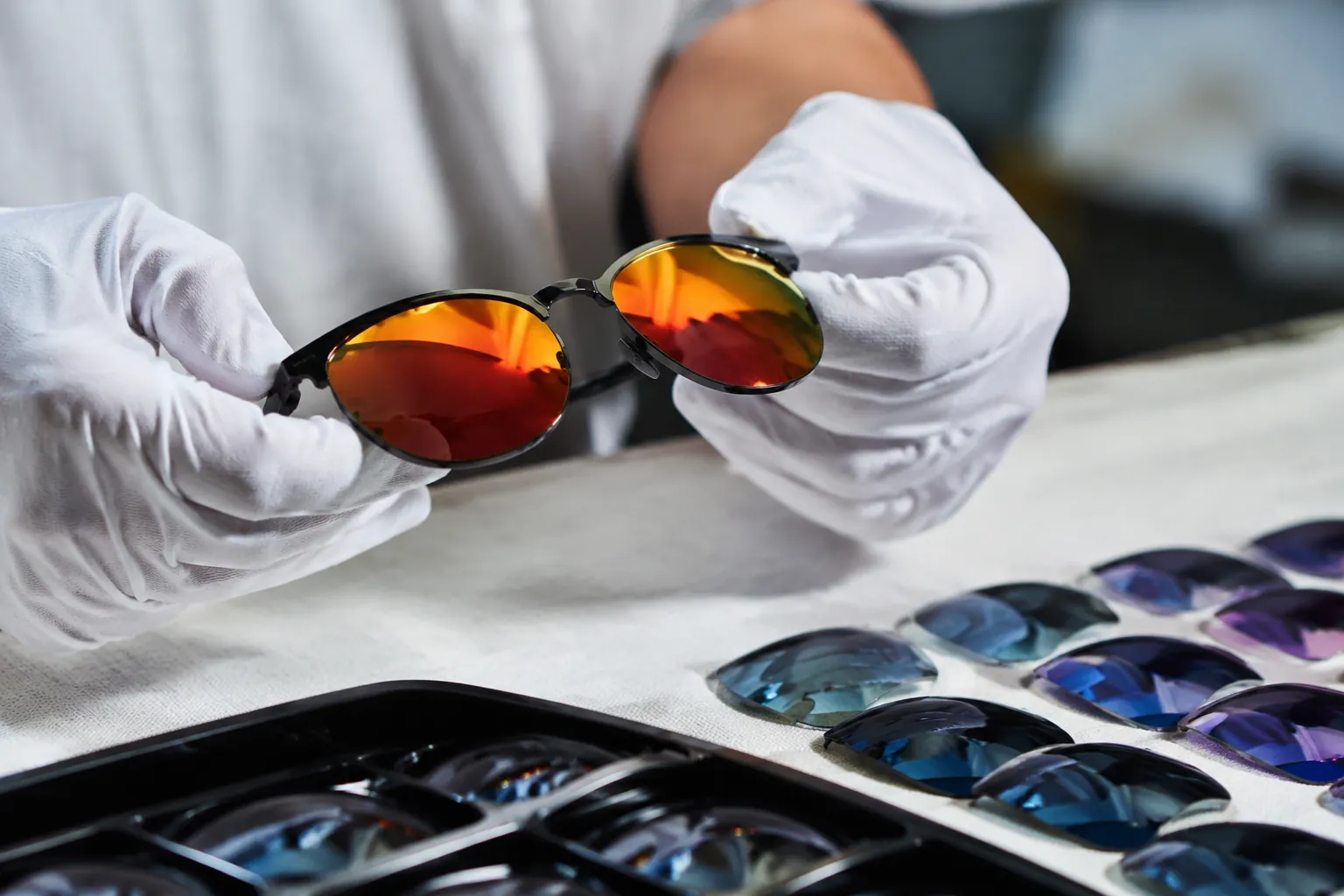
This guide is for brands, importers, distributors, and retailers comparing photochromic sunglasses with standard tinted styles. The real question is not whether the lens technology is interesting. It is whether it fits your target price, reorder speed, compliance file, and end-user expectations. Use the framework below to judge commercial fit, cost drivers, production timing, performance checks, and the documents you should request before bulk approval.
Start with the business case, not the lens feature
Photochromic sunglasses attract attention because the lens changes with light conditions. That can help in outdoor, travel, and everyday-use positioning. But the feature does not create demand by itself. The sourcing decision is commercial: will this lens help you sell at the right price, through the right channel, with the lead time and paperwork your market requires?
Demand usually varies by channel:
- Fashion retail: style and lens appearance drive the sale. If the lens looks lighter indoors than shoppers expect from a sunglass, some will see it as a compromise, not an upgrade.
- Outdoor and travel: the value proposition is clearer because changing light conditions are part of normal use. Focus on activation behavior, comfort, and realistic customer expectations.
- Sport-adjacent retail: hiking, cycling, golf, resort, and similar channels can support photochromic well if the use case is functional rather than purely aesthetic.
- Optical and pharmacy channels: customers are more familiar with lens-function claims, but they also expect better documentation, tighter labeling control, and more consistent pair-to-pair appearance.
- Promotional programs: these are usually price-led. Photochromic lenses often break the economics unless the item is positioned as premium.
A simple screening rule helps: if your target shelf price cannot absorb a meaningful premium over a standard tinted sunglass, photochromic is usually the wrong choice for the core SKU. A good sample will not fix a weak margin structure.
Also, do not present photochromic as a universal upgrade. Some customers want a consistently dark sunglass. Full stop. This product works best when the buying reason is functional use, not just appearance.
Where the added cost really comes from
Photochromic cost is not just a lens-material issue. It comes from lens supply, appearance control, performance review, and longer approval time. A standard tinted sunglass is mostly a color-and-finish decision. A photochromic sunglass adds a performance variable. That changes the buying process.
In production, the main cost drivers are usually:
- Lens material premium: photochromic lens options generally cost more than conventional tinted lenses.
- Performance approval: buyers often need to review indoor appearance, activated appearance, and return-to-base behavior before approving the lens.
- Pair matching: left and right lenses should look acceptably uniform in both unactivated and activated states.
- Additional sampling: first submissions may not match the buyer's target for darkness, tone, or residual indoor tint.
- Scrap and rework risk: if appearance or performance falls outside the approved standard, reject rates can rise.
- Material availability: lens options may be narrower than standard smoke, brown, green, or mirrored sunglass lenses.
For many programs, the pacing item is the lens specification and approval process, not the frame. Even if frame production is simple, the lens still needs to be reviewed against the intended use and the market claim.
Here is a practical cost-and-complexity comparison:
| Lens option | Typical cost impact | Typical lead-time impact | Buyer risk | Best fit |
|---|---|---|---|---|
| Standard tinted sunglass lens | Baseline | Baseline bulk timing | Low | Fashion, promo, and faster reorder programs |
| Gradient or mirrored standard lens | Moderate premium over baseline, depending on finish | Small increase for added coating or finishing steps | Low to moderate | Mid-market fashion and branded collections |
| Photochromic lens | Higher than standard tint in most cases | Extra time for lens approval and material planning | Moderate | Outdoor, travel, and function-led retail |
| Photochromic with mirrored or heavily decorated frame | Highest combined premium | Higher coordination risk across lens, frame, and finishing steps | Moderate to high | Premium private label and controlled distribution |
The exact premium depends on lens specification, quantity, finishing requirements, and the supplier's material source. Ask for a direct quote comparison between the same frame with a standard tinted lens and with the proposed photochromic lens. Do not rely on a generic percentage estimate.
How photochromic changes MOQ and price-break logic
Low MOQs are sometimes possible for photochromic sunglasses, but the business logic differs from standard tinted programs. The issue is not only whether a factory will accept a small order. It is whether the order is large enough to absorb the extra approval work, lens premium, and QC attention without wrecking unit economics.
Buyers can assess order levels this way:
- Small pilot order: useful for concept validation, a controlled account test, or a narrow niche launch. Expect the highest unit cost and less flexibility in lens options.
- Mid-size opening order: often the first level at which photochromic becomes easier to justify for a simple frame and limited branding.
- Rollout order: better suited to spreading approval and QC cost across enough pairs to produce cleaner pricing and more useful market feedback.
- Larger repeat order: usually the point at which the supplier can plan lens purchasing and production more efficiently, assuming the approved lens specification stays unchanged.
A common buyer mistake is to anchor on frame pricing from a standard sunglass program and assume the same cost logic will apply. It usually will not. Even with a basic frame, the photochromic lens adds cost and approval complexity that stay in the build.
A practical buying method is simple: quote the same frame in two versions, one with a standard tinted lens and one with the exact photochromic lens under review. Then compare landed cost, expected selling price, and channel fit before sampling. That gives you a real decision basis.
Lead time: where the extra days show up
Photochromic programs can follow normal sample and bulk workflows, but first orders often take longer because the lens needs closer review before bulk release. In many cases, the delay happens before mass production starts, not during final assembly.
A realistic workflow looks like this:
- Design brief and frame selection: confirm style, sizing, fit, branding position, and packaging requirements.
- Lens specification approval: define the intended lens type, indoor appearance, activated appearance, and any finish limits.
- Prototype build: produce the sample using the proposed lens specification.
- Visual and functional review: check indoor appearance, outdoor darkening behavior, return-to-base behavior, and pair matching.
- Revisions if needed: if the sample does not match the approved target, another sample round may be necessary.
- Bulk booking and production: once the lens is frozen, proceed to material planning, production, fitting, finishing, and final QC.
The main lead-time risks are predictable: changing the lens after sample approval, combining photochromic with extra lens finishes, or changing the target appearance late in development. None of these is fatal. All of them can move the schedule.
If you have a fixed launch date, build in approval buffer before bulk booking. Treat a first-order photochromic program as development work, not as a simple repeat of a standard tinted sunglass.
For planning, this simplified model is useful:
- Standard sunglass: one sample round followed by bulk production.
- Photochromic first order: one sample round plus the possibility of an additional review cycle before bulk release.
- Photochromic reorder: timing can improve if the lens specification, frame, and labeling remain unchanged and the supplier can source the same approved lens again.
Performance limits that drive returns and reviews
Most market problems with photochromic lenses are expectation problems. The lens may work as intended, but not in the way the customer assumed. Activation depends on light conditions, temperature, lens chemistry, and the use environment. Buyers should check those limits before approving bulk production or writing product claims.
Three issues should be reviewed before release:
- Residual indoor tint: some photochromic sunglass lenses retain visible tint indoors. That may be acceptable, but the product should be merchandised honestly.
- Driving performance: customers often expect strong darkening behind a car windshield. In practice, the lens may not darken to the same level as it does in direct outdoor UV exposure.
- Pair matching and behavior: the two lenses should look acceptably matched in appearance and respond similarly enough for normal wear and display.
Temperature can also affect lens behavior. Real-world performance varies. So review samples in conditions that match the target market whenever possible.
For approval, ask for both visual review and measured verification where available. If the target market uses category labeling or visible light transmission requirements, confirm how the lens was measured and under what test conditions. Do not approve the product based only on marketing language such as "fast transition" or "outdoor adaptive."
Buyer rule: approve photochromic sunglasses by use case, not by feature claim. A lens that works for resort retail may not satisfy optical, cycling, or commuter expectations.
Compliance: what to request and what to verify
Photochromic sunglasses must meet the same destination-market requirements as other sunglasses, but the changing lens behavior means buyers should pay closer attention to the exact tested configuration. The key question is not whether a supplier has paperwork. It is whether the paperwork applies to the exact lens, coating, and product version being shipped.
Common documents and standards buyers may request include CE EN ISO 12312-1, ANSI Z80.3, AS/NZS 1067, REACH, FDA registration, ISO 9001, and BSCI. These do not all serve the same purpose. Some relate to product performance or market access. Others relate to management systems or social compliance. Request only what fits the destination market and the type of verification you need.
What to check in practice:
| Requirement area | What can go wrong | Buyer action |
|---|---|---|
| CE EN ISO 12312-1 | Testing was done on a different lens configuration from the final shipment | Confirm the tested lens type, color, coating, and category match the production version |
| ANSI Z80.3 | US-market labeling or performance assumptions do not match the shipped product | Verify the lens classification, warnings, and product labeling before production closes |
| AS/NZS 1067 | Lens category or intended-use alignment is unclear for the destination market | Check the category and use case against the exact product specification before shipment |
| REACH | Material declarations are incomplete for frame, coating, decoration, or accessories | Request current declarations for relevant materials and finishes in the supplied product |
| FDA registration | Importer treats registration as proof that the sunglasses themselves are compliant | Use it as a supplier or facility document where relevant, not as a substitute for product compliance evidence |
ISO 9001 and BSCI can help in supplier screening, but neither replaces product-specific compliance documents. ISO 9001 indicates a quality management system. BSCI relates to social compliance auditing. Neither proves that a specific sunglass model meets lens-performance or labeling requirements.
If your channel requires a stronger paper trail, ask for a test summary or report reference that identifies the frame style, lens type, date, and applicable standard. That makes file control easier if a distributor, retailer, or marketplace later asks for support.
Run a margin test before you sample
Before requesting prototypes, run a margin screen. Do it early. It is faster to reject a weak business case on paper than after two or three sample rounds.
- Set a target landed cost. Include product cost, packaging, freight assumptions, duty, and any testing or administrative overhead.
- Quote the standard version and the photochromic version. Use the same frame, packaging, and branding so the lens is the main variable.
- Set the required markup by channel. Wholesale, retail, marketplace, and optical-adjacent channels absorb cost differently.
- Add likely service costs. If the feature may create more customer questions, returns, or training needs, include that in the model.
- Test whether the feature raises selling price or improves sell-through. If it only adds cost, the business case is weak.
Photochromic sunglasses usually make sense when three conditions are present: the user values function, the price point has room above a basic sunglass, and the channel can explain what the lens does and does not do. If those conditions are missing, a standard tinted lens is often the lower-risk choice.
A disciplined launch method is to test one frame in two lens versions: standard tint and photochromic. Keep the frame, trim, and packaging constant. Then compare margin, reorder rate, return reasons, and customer feedback. That gives a cleaner answer than launching many variables at once.
A sourcing plan that reduces expensive mistakes
If you decide to proceed, keep the first order controlled. The more variables you add, the harder it becomes to tell whether the lens concept is commercially working.
- Choose one proven frame shape. Avoid adding fit risk and lens-performance risk at the same time.
- Keep decoration simple. Reduce variables that do not affect the lens decision.
- Approve against a written lens brief. Record the target appearance, intended use, market, and any labeling requirements.
- Buy enough units to read the market properly. A very small order can test interest, but it may not give reliable commercial data.
- Build time buffer before launch. First-order approval often takes longer than a standard sunglass program.
- Inspect lens matching and finish consistency. Uneven appearance between left and right lenses is one of the fastest ways to create rejects or customer complaints.
The most important discipline is file control. Keep the approved sample, written lens brief, test references, labeling text, and final purchase specification together. Photochromic sunglasses are manageable when the buyer controls the exact configuration being ordered. Problems usually start when the product claim stays the same but the lens configuration changes and the paperwork is not updated.
Have a custom sunglasses project in mind?
Send us your styles, target market and quantities and we will return a detailed quote with MOQ, lead time and a sample plan.
Get a QuoteWhy source this from Wenzhou with LumiShades
Wenzhou in Zhejiang Province is widely regarded as China’s eyewear manufacturing capital, producing a large share of the world’s sunglasses. That concentration matters to buyers: a deep local supply chain for acetate sheet, hinges, lens blanks, plating and packaging means shorter component lead times, easier color and material matching, and a workforce with decades of eyewear-specific skill. LumiShades has manufactured in this ecosystem since 2009, and our vertical integration — in-house injection molding, acetate cutting, CNC milling, lens tinting, decoration and quality control — means no part of your order is quietly subcontracted to a workshop you cannot audit.
For international buyers, that vertical control translates into accountability. When a single factory owns every step, defects are traced and fixed at source rather than bounced between vendors, and your specifications survive intact from first sample to bulk. We back this with 15+ years of experience, shipments to 60+ countries, more than 5 million pairs produced per year and a 98.5% on-time delivery rate. Our certifications — CE EN ISO 12312-1, FDA registration, ANSI Z80.3, AS/NZS 1067, REACH, ISO 9001 and BSCI audit — mean the compliance documentation your market requires already exists. Explore our manufacturing capabilities and quality control process to see how this works in practice.
Frequently asked questions
Do photochromic sunglasses usually require a higher MOQ than standard tinted styles? Not always as a technical minimum, but often in practical buying terms. A supplier may accept a small opening order, yet the unit cost and approval burden are usually harder to justify at low volume. Ask the factory for quotes at several breaks using the same frame and the exact photochromic lens you want, then compare landed cost and expected selling price before committing.
Will photochromic lenses fit the same sample and bulk timeline as regular sunglasses? Sometimes on repeat programs, but first orders often take longer because the lens needs more review before bulk release. Freeze the lens specification early, approve against an actual sample, and leave time for at least one possible revision cycle if appearance or performance does not match the brief.
How much more do photochromic lenses cost than standard tinted lenses? There is no single reliable premium that applies across all factories and lens types. Cost depends on lens source, quantity, finishing, and how tightly the supplier must control appearance and matching. The practical way to estimate the premium is to request two quotations for the same frame: one with a standard tinted lens and one with the exact photochromic lens under consideration.
Are photochromic sunglasses a good fit for low-price promotional programs? Usually not. Promotional programs are typically cost-led and often leave limited room for a higher lens cost or a longer approval cycle. If you are considering photochromic for this channel, first confirm that the end user will understand the feature and that the added cost will not destroy your target margin.
What compliance documents should I ask for on a photochromic sunglass order? Request the documents that match your destination market and exact product configuration. Depending on market, that may include CE EN ISO 12312-1, ANSI Z80.3, AS/NZS 1067, REACH, and FDA registration where relevant. If the supplier also provides ISO 9001 or BSCI, treat those as supporting supplier-screening documents, not as substitutes for product-specific compliance evidence. Always verify that the paperwork applies to the exact lens, coating, and labeling version being shipped.
What is the most common buyer mistake with photochromic sunglasses? Approving the product based on the feature claim instead of the actual use case. A buyer should review indoor appearance, outdoor darkening behavior, pair matching, likely driving performance, and destination-market labeling before bulk approval. The safest process is to approve against a written lens brief and retain the approved sample as the reference for production and inspection.
Ready to start?
Explore our cat-eye sunglasses or request a quote — our sales team replies within 12 hours.
Request a Quote