
Custom Sunglasses Reorders: From MOQ to Scale
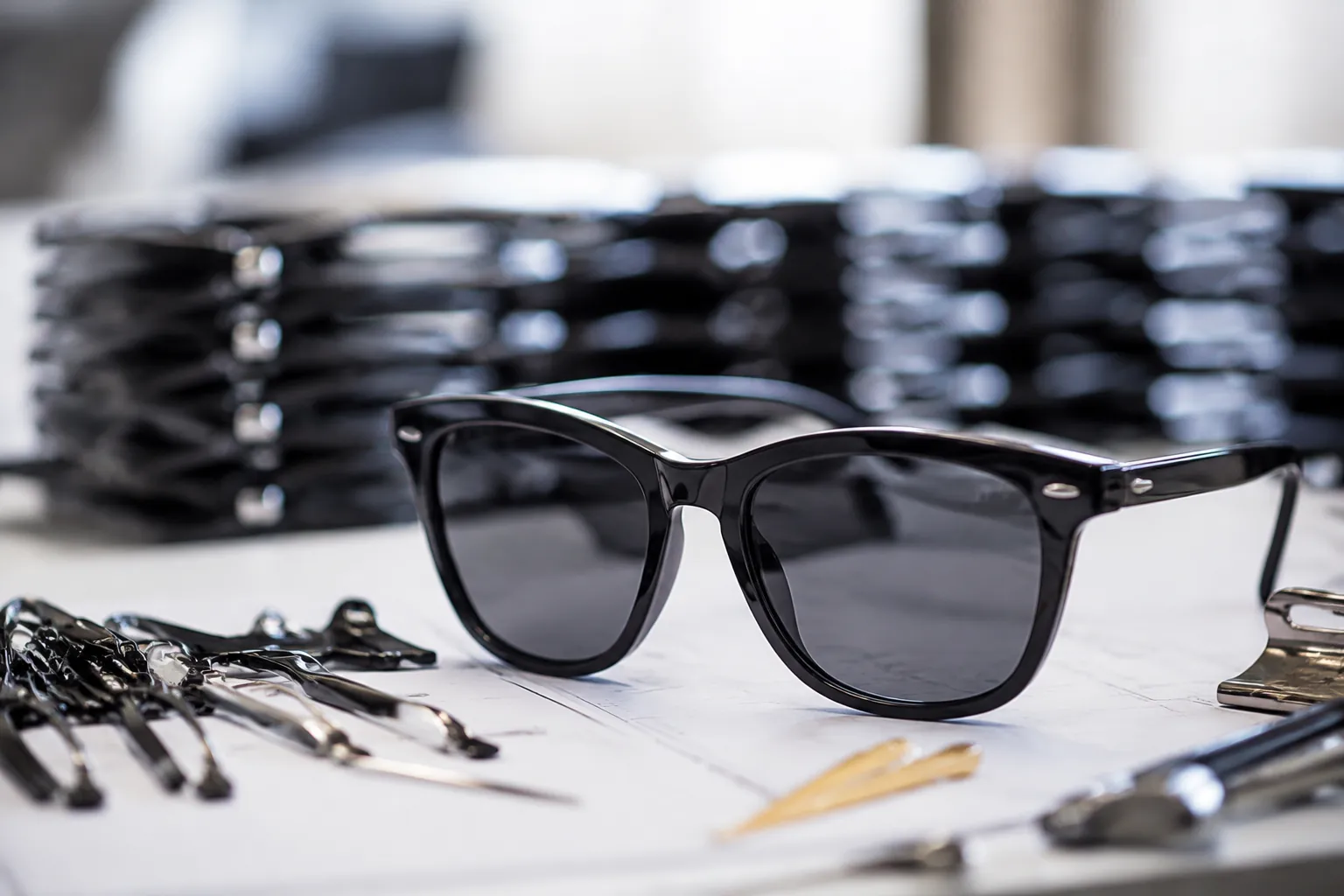
This article is for brand owners, importers, distributors, and retailers buying custom sunglasses in volume. The goal is not to chase the lowest first-order price. It is to build a buying process that repeats: start at the lowest workable MOQ, test demand, lock the approved specification, then scale without creating stock risk or quality drift. In eyewear, margin depends as much on process control as on quoted price. Buyers who manage sampling, tolerances, decoration approvals, compliance continuity, and reorder timing usually make better long-term decisions than buyers who negotiate hard but keep changing the product late.
Use MOQ to test demand, not to chase margin
The first order should answer a commercial question before it answers a pricing question: will this style sell at the target retail price, with an acceptable return profile and real reorder potential? For many custom sunglasses programs, a low-MOQ launch works best as a controlled market test, not a margin play.
At small quantities, unit cost is higher because fixed setup work is spread across fewer pairs. In sunglasses, that setup may include color confirmation, lens tint approval, logo setup, decoration positioning, packaging review, QC preparation, and carton mark checks. Even without a new mold, a short run still consumes engineering, purchasing, and production time.
So do not expect 50-pair pricing to look anything like 1000-pair pricing. It will not. A small batch may carry a higher ex-factory cost, but it limits the cost of being wrong. If the style fails, the loss is contained. If it sells, you have a clean case for a reorder.
Keep the first run simple. One frame shape. One lens program. One packaging format. No more than one or two colorways. Every extra variable makes the test harder to read. If a small batch is split across too many colors, logo methods, or packaging concepts, the sales result tells you less.
- Launch one proven silhouette before adding multiple shapes.
- Limit first-run colors to one core option and one secondary test at most.
- Use standard branding methods such as pad printing or laser engraving before approving more complex logo applications.
- Set a reorder trigger in advance based on your own sell-through target and review period.
- Define an acceptable incoming defect threshold before production starts.
The MOQ order is a paid validation run. Treat it that way.
Build the first order around measurable specifications
Serious buyers do not approve custom sunglasses from photos alone. In eyewear, small deviations turn expensive fast. A logo shifted slightly can fail brand review. A lens tint that runs warmer or cooler than the approved sample can break consistency across a collection. A front width variance can change perceived fit.
A disciplined approval flow usually follows five stages: concept confirmation, material selection, pre-production sample, packaging review, and production release. Whether the supplier works in-house or through subcontractors, each approval point should be documented and tied to a physical or signed reference.
For the first production order, lock the following points in writing and tie them to a physical sample:
- Frame material and finish: injection material or acetate, glossy or matte surface, and any rubberized or soft-touch coating if used.
- Lens specification: base tint, category target where applicable, polarized or non-polarized construction, color family, and any mirror or flash coating.
- Branding method: pad print, laser engraving, screen print, heat transfer, or inset metal logo plate.
- Critical dimensions: eye size, bridge, temple length, front width, and any tolerance expectations agreed for repeat runs.
- Packaging bill of materials: pouch, polybag, cleaning cloth, barcode label, inner box, export carton marks, and assortment method.
Also separate appearance-sensitive checkpoints from function-sensitive ones. Lens shape matching, hinge alignment, and temple opening tension affect how the product feels in hand. Tolerances vary by style, material, and production method, so discuss them during sampling and confirm them again before bulk production.
Skip this discipline and the reorder is not really a reorder. It is a new development project hiding under an old SKU name.
Know which changes cost time and which cost money
Not every revision creates the same operational impact. Buyers often focus only on quoted price changes, but schedule damage can erase profit first. A small lens tint adjustment may require only a new approval sample. A change from pad printing to an inset metal logo plate can affect component sourcing, fixture setup, assembly sequence, and inspection criteria.
Material choice matters too. Injection styles are often the cleanest path for low-MOQ launches because repeatability is usually better once construction is fixed. Acetate offers a different hand feel and a more premium position, but it adds steps: sheet selection, cutting, CNC shaping, polishing, hinge fitting, and balancing. More steps can improve presentation. They also create more approval points and more process variation.
| Change Type | Typical Factory Impact | Risk to Reorder Timing | Buyer Guidance |
|---|---|---|---|
| Lens tint shade adjustment | New tint confirmation and visual matching | Medium | Approve and keep a physical reference sample for future runs |
| Frame color swap on same tool | Material color change and appearance check | Low to medium | Usually manageable if construction stays unchanged |
| Logo method change | New fixture, new decoration process, possible tooling revision | High | Avoid during urgent repeat orders unless the branding change is essential |
| Material shift from injection to acetate | Different production route and different finishing workflow | High | Treat as a new project with fresh sampling and timeline review |
Once a design starts selling, protect the approved specification. Test new ideas on the next SKU, not the next replenishment order.
Move up the volume ladder on purpose
Many sunglasses suppliers use a pricing ladder, with better unit economics at higher quantities such as 300, 1000, and 5000+ pairs. The exact gap depends on frame construction, lens option, decoration method, packaging scope, and order complexity. Any low-end price should be treated as volume-dependent, not universal.
The right move is to climb the ladder only when sales evidence supports it. A practical sequence looks like this:
- Low MOQ: demand test. Confirm customer response, return reasons, and whether the product can hold target retail.
- 300 pairs: first meaningful cost improvement. Suitable when early sell-through is positive but the style still has limited history.
- 1000 pairs: stable reorder stage. Better material efficiency, lower setup burden per unit, and more room to optimize packaging and freight planning.
- 5000+ pairs: program volume. Best suited to chain retail, promotional distribution, or evergreen best sellers with repeat demand.
Do not jump from a small validation run to a large commitment just because the spreadsheet margin looks better. If the style slows down, carrying cost can wipe out the unit-price gain quickly. A slower ladder often protects more profit because it ties stock commitment to verified demand.
| Volume Tier | Primary Goal | Typical Unit-Cost Logic | Best Use Case |
|---|---|---|---|
| Low MOQ | Validate demand | Highest cost because setup is spread across fewer units | New style launch or market test |
| 300 pairs | Improve margin carefully | Setup cost is diluted and purchasing becomes more efficient | Early winner with limited history |
| 1000 pairs | Stabilize a proven SKU | Better line efficiency and lower landed-cost potential | Reliable seller with repeat demand |
| 5000+ pairs | Maximize scale economics | Strongest price leverage, especially on standard specifications | National retail, promotions, or evergreen programs |
Advance to the next tier only after the current tier proves three things: the SKU sells, the specification is stable, and the quality result is consistent enough to repeat with confidence.
Plan reorders backward from the shelf date
Eyewear lead times only look short on paper. Sample lead times and bulk production lead times vary by supplier, style, material, and approval speed. More important, factory lead time is only one part of the full replenishment window. Internal review, payment processing, freight booking, customs clearance, and warehouse receiving all add time.
The safer method is to count backward from the required stock-in date. Start with inbound transit. Then subtract bulk production, then sample or pre-production approval, then a correction buffer. Buyers who treat factory production time as the whole timeline usually place reorders too late.
If your warehouse needs stock by a fixed date, build the reorder date from the supplier's confirmed production lead time, your likely transit mode, customs and receiving time, and a realistic buffer for approvals or corrections. Use your actual supply chain. Not a generic estimate.
| Order Stage | Typical Time | What Usually Delays It |
|---|---|---|
| Sample development | Supplier-dependent | Unclear tech pack, repeated artwork edits, lens color changes |
| Pre-production approval | Buyer-dependent | Slow internal sign-off, incomplete comments, missing packaging confirmation |
| Bulk production | Supplier-dependent | Late material confirmation, decoration issues, packaging revisions |
| Shipment release | Short but critical | Balance payment delay, shipping mark mismatch, document errors |
Reorder planning should begin before the first batch sells out. If your replenishment cycle includes production, transit, and receiving, the reorder point must be set while stock is still available to cover that full gap.
Protect margin with compliance continuity and defect control
Cheap eyewear gets expensive fast when it fails compliance, creates returns, or triggers claims in the destination market. Reorder planning should cover compliance continuity, not just pricing continuity. Buyers should confirm which standards apply to the target market and whether the approved production configuration still matches the tested or documented configuration.
Relevant standards and systems may include CE EN ISO 12312-1, ANSI Z80.3, AS/NZS 1067, REACH, FDA registration, ISO 9001, and BSCI. These do not mean the same thing. They are not interchangeable. Product standards such as CE EN ISO 12312-1, ANSI Z80.3, and AS/NZS 1067 relate to sunglasses performance requirements in specific markets. REACH addresses chemical compliance obligations. FDA registration is a regulatory registration issue, not a substitute for product-performance testing. ISO 9001 and BSCI relate to management systems and social compliance, not proof that a specific sunglass style meets market-performance requirements.
If the buyer changes lens material, lens category, tint depth, frame material, or key construction details, the compliance basis may no longer be identical. A style that was reviewed or tested in one exact build should not be changed casually on a repeat purchase order without technical review.
QC should focus on the defects that damage margin fastest:
- Lens appearance defects such as scratches, flow marks, bubbles, color inconsistency, and coating irregularities.
- Frame symmetry issues including twisted fronts, uneven temples, or unstable fit on a flat inspection surface.
- Hinge performance problems such as loose screws, uneven opening tension, or poor alignment after repeated opening and closing.
- Decoration errors including logo misplacement, weak adhesion, poor engraving contrast, or plating inconsistency.
- Packing mistakes such as wrong barcode labels, mixed carton assortments, or incorrect country-of-origin markings.
In practice, reorders run more smoothly when the same inspection checklist follows every batch. Standardize acceptable defects, appearance standards, and packing requirements once, then enforce them every time.
Choose the right cost-down method at each stage
There are smart ways to lower cost and sloppy ways to lower cost. Smart cost reduction preserves the look, fit, and compliance path. Sloppy cost reduction creates returns, inconsistent customer feedback, or a second development cycle that cancels out the savings.
At the 300-pair stage, the cleanest savings often come from simplification rather than redesign. Buyers may reduce color fragmentation, standardize one lens color across the run, or remove unnecessary packaging inserts. At 1000 pairs, better factory efficiency and larger material purchases usually create more room for price improvement. At 5000+ pairs, secondary packaging, carton pack ratio, assortment logic, and trim standardization can materially affect landed cost.
The best reorder is boring: same fit, same look, same compliance path, lower cost because volume is higher and execution is cleaner.
Be careful with aggressive substitutions. Lower-grade hinges, unstable plating, thinner cartons, weaker pouches, or decoration shortcuts may save a few cents while creating larger downstream costs. If the supplier cannot explain clearly where the cost reduction comes from, stop and review it. Good cost-down work is specific: fewer SKUs, simpler packing, better volume utilization, or a more efficient production flow.
Turn one good seller into a repeatable system
The real gain is not one successful SKU. It is a system that lets you test new designs at low MOQ, identify winners quickly, and move those winners into 300, 1000, and 5000+ pair reorders with fewer surprises and tighter control. That system should live in documents, samples, and checkpoints, not in someone's memory.
Create a reorder file for every active style. It should contain the approved physical sample reference, full bill of materials, exact lens specification, logo artwork file, placement record, packaging BOM, inspection checklist, carton mark layout, compliance basis, target landed cost, and reorder trigger point. If your buyer, merchandiser, or sourcing agent changes, the style should still be executable without guesswork.
When a supplier offers in-house capabilities such as molding, acetate processing, CNC work, lens tinting, decoration, and QC, the buyer may gain better control over timing and fewer handoff errors. Even then, the result still depends on disciplined approvals and documented specifications. Be decisive on the first order. Be conservative with specification changes. Be deliberate about when to climb the pricing ladder.
That is how a small batch becomes a scalable program instead of an inventory problem.
Have a custom sunglasses project in mind?
Send us your styles, target market and quantities and we will return a detailed quote with MOQ, lead time and a sample plan.
Get a QuoteWhy source this from Wenzhou with LumiShades
Wenzhou in Zhejiang Province is widely regarded as China’s eyewear manufacturing capital, producing a large share of the world’s sunglasses. That concentration matters to buyers: a deep local supply chain for acetate sheet, hinges, lens blanks, plating and packaging means shorter component lead times, easier color and material matching, and a workforce with decades of eyewear-specific skill. LumiShades has manufactured in this ecosystem since 2009, and our vertical integration — in-house injection molding, acetate cutting, CNC milling, lens tinting, decoration and quality control — means no part of your order is quietly subcontracted to a workshop you cannot audit.
For international buyers, that vertical control translates into accountability. When a single factory owns every step, defects are traced and fixed at source rather than bounced between vendors, and your specifications survive intact from first sample to bulk. For procurement review, buyers can request process records, approved samples, quality checkpoints and project-specific compliance files before placing a bulk order. Required testing and documentation are confirmed against the destination market and product specification rather than assumed from a generic certificate list. Explore our manufacturing capabilities and quality control process to see how this works in practice.
Frequently asked questions
Should I start with 50 pairs even if the unit price is high? If the style is unproven, a low-quantity first order is often the safer commercial choice. Use that run to measure sell-through, customer feedback, return reasons, and incoming quality. Before ordering, define what result would justify a reorder: target sell-through period, acceptable return level, and acceptable defect level. If those metrics are not clear, the first order is not a useful test, no matter how low the MOQ is.
When is the right time to move from 50 pairs to 300 pairs? Move up only when three conditions are met: the style is selling, the approved specification is stable, and the first run did not reveal a quality or compliance problem. Review actual sales speed, not just early enthusiasm. Confirm that frame color, lens spec, logo method, and packaging are not still changing. Then ask the supplier to requote the exact same specification at 300 pairs so you can compare true like-for-like pricing.
What changes are safest on a reorder? The safest changes are usually cosmetic adjustments that do not alter construction, process flow, or compliance basis, such as a controlled frame color change on the same approved build. Changes to material, lens performance, logo application method, or packaging structure require more caution because they can affect lead time, cost, inspection criteria, and market compliance. Before approving any change, ask the supplier which tools, components, tests, and approvals must be updated.
How do I avoid stockouts if bulk production takes 25 to 35 days? Do not wait for inventory to reach zero. Build a reorder point from your real replenishment cycle: supplier lead time, approval time, transit, customs, warehouse receiving, and a buffer for corrections. Then compare that total with your average weekly sales. A practical method is to calculate how many weeks of stock you need to cover the full replenishment window and place the reorder before inventory drops below that level.
Do certifications automatically cover every version of a style? No. Compliance applies to the actual product configuration that was reviewed, tested, or documented. If you change lens material, tint, category, frame material, or construction details, confirm whether the original compliance basis still applies. Ask for the exact test report or compliance document tied to the approved specification, check that the configuration matches your purchase order, and get technical confirmation before repeating the order with changes.
Ready to start?
Explore our rimless sunglasses or request a quote — our sales team replies within 12 hours.
Request a Quote