
Custom Sunglasses Mold Terms: Ownership, Storage, Exit
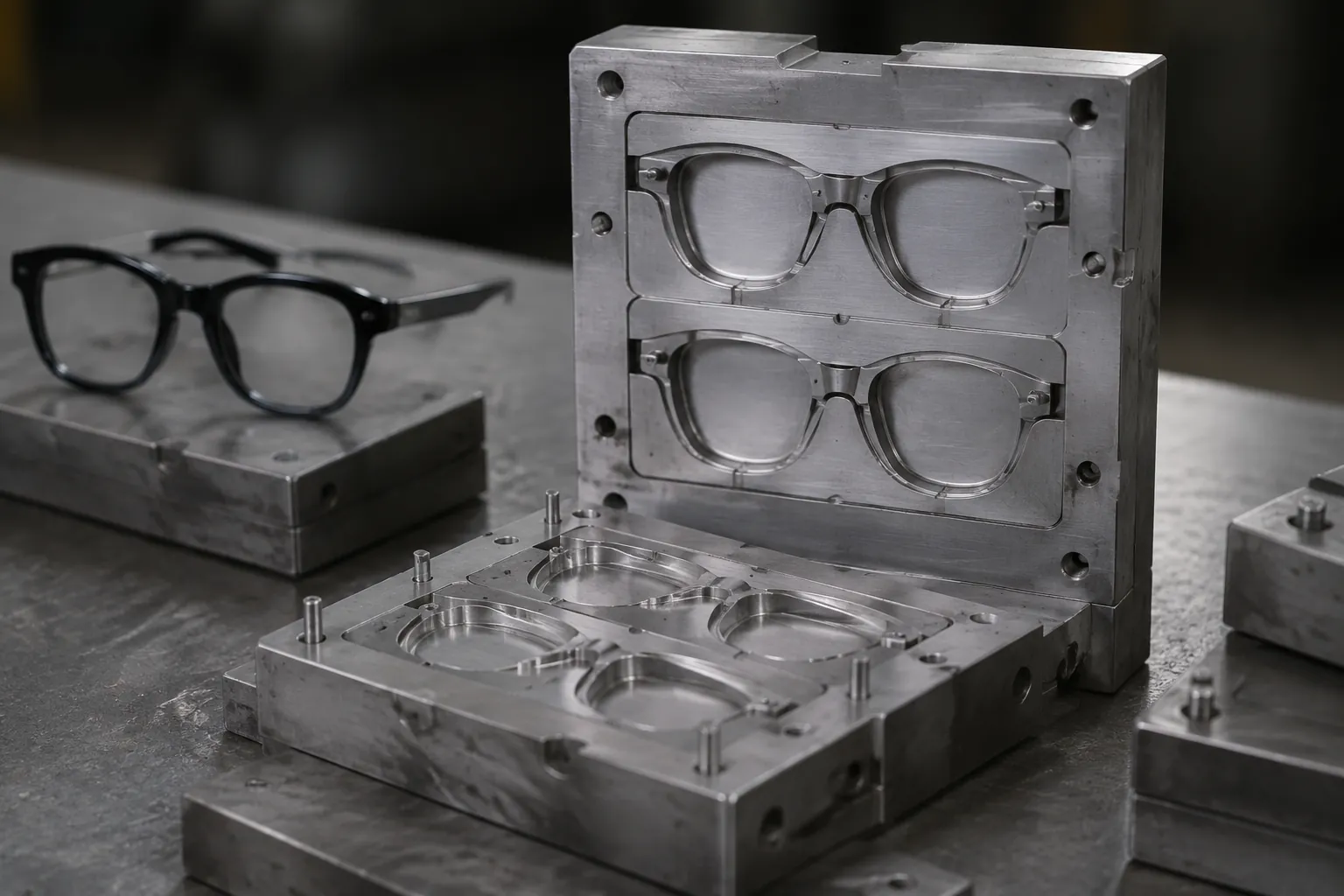
If you buy custom sunglasses at volume, mold terms matter almost as much as unit price. Weak tooling language can lock up your frame design, slow reorders, or turn a supplier change into a dispute over custody, repair cost, and file access. Fix that before development fees are paid. This guide explains what to define before tooling starts so your assets remain usable if you scale production, split supply across factories, or move the program entirely.
What mold ownership should cover
In eyewear sourcing, "mold ownership" is not a single sentence on a quotation. It usually covers at least four separate issues: who paid the tooling fee, who owns the physical mold base and inserts, who owns the product design and technical drawings, and who has authority to approve changes for production. When those points are merged or left vague, disputes start later. A factory may argue that your payment covered sampling, CAD work, or trial engineering only, not ownership or transfer rights.
For custom sunglasses, the tooling package is often broader than buyers expect. A single frame family may require a front-frame injection mold, left and right temple tools, nose area inserts, logo inserts, hinge-fit fixtures, lens edge references, trimming fixtures, and packaging or decoration jigs. A metal-and-injection hybrid frame may also involve separate components for hinge anchors or trim parts. If the contract only says "one mold," the supplier may later classify some of those items as internal process tooling that does not transfer.
Itemize the tool set by product code, revision, and component. The tooling schedule should identify frame model, lens base curve, cavity count, material family, surface finish standard, shrinkage basis where relevant, and any replaceable inserts for size, logo, or color variants. On acetate programs, state whether cutting templates, polishing jigs, heating forms, CNC fixtures, and bevel references are included. On injection programs, specify whether hot-runner parts, spare inserts, texture blocks, gauge fixtures, and fit-check tools are buyer-owned assets.
The cleanest commercial rule is straightforward: if the buyer pays a dedicated tooling fee, the buyer owns the tooling unless the signed contract states otherwise in plain language. If the factory wants to retain ownership, then the agreement should say the buyer is purchasing exclusive use rights for a defined term, with a written buyout formula, depreciation method if any, and a transfer procedure at the end of the term.
Ownership language should also define what the supplier cannot do. The factory should not use the tool for any third party, related company, trading affiliate, or house brand. It should not make overruns beyond agreed production tolerance, sample for other customers using the same dedicated mold, or alter inserts without written approval. If backup cavities or duplicate tools are created, the contract should state whether they are included in buyer ownership and whether the buyer must approve their manufacture in advance.
Practical rule: put ownership terms in the signed commercial agreement or tooling agreement, not only in email, chat messages, purchase order notes, or a pro forma invoice.
Separate the mold from the production file package
The mold is only part of the asset. The digital and physical production package matters just as much. A transfer-ready eyewear file set should include final 2D drawings, 3D CAD, lens curve data, color references, approved material specifications, logo placement details, decoration method instructions, assembly notes, and dimensional tolerances. Without that package, a second factory may receive the tool and still lose weeks reverse-engineering how to run it.
This gap shows up quickly on frames with tight fit requirements. If the approved shrinkage allowance, gate position, insert venting logic, hinge seating depth, polishing sequence, or lens bevel standard is missing, a new supplier can produce flash, stress whitening, poor lens retention, temple imbalance, or visible asymmetry even with the original mold. Transfer of steel without transfer of knowledge is not a clean exit.
Ask for release of the approved production data at sample approval or no later than the first mass-production payment. Tie that release to a revision-controlled document list. For acetate frames, that should include board thickness, cutting allowances, bevel references, tumbling or hand-polish standards, heating and forming notes, pin or hinge installation method, and assembly checks after polishing. For injection frames in PC, TR90, nylon blends, or bio-based polymers, it should include shrinkage assumptions, resin grade, drying conditions, molding temperature range, cycle notes, gate trimming standard, cooling cautions, and critical inspection points.
It is also useful to separate file categories in the contract. Commercial artwork files, such as logo graphics and packaging layouts, should be listed separately from technical production files, such as CAD and tooling drawings. Both matter during a supplier transition, but they are often stored by different departments and released inconsistently. A buyer that only asks for "all files" may receive a partial package that omits either branding assets or technical data.
The file package should be updated when the approved product changes. If the frame front thickness is adjusted, the hinge screw changes, the lens curve is revised, or a new color process is approved, the file issue log should reflect that revision. Otherwise the buyer may hold one version while the factory runs another.
Buyer file checklist:
- final 2D and 3D design files with product code and revision number
- approved material specification for frame, lens, hinge, screws, nose pads, and decorations where applicable
- tooling drawings, cavity count, insert list, and spare-parts list if purchased
- critical dimensions and tolerances for fit, symmetry, and assembly alignment
- approved sample photos, master samples, and inspection notes tied to the same revision
- packaging artwork and labeling files needed to continue shipment without relaunch work
No file package, no real transfer. A factory may release "the mold" while still keeping control of the process details needed to make acceptable product at scale.
Storage, labeling, and maintenance cost
Storage terms look minor until the program goes quiet or the buyer changes suppliers. Then they become important. Your agreement should state where the molds are stored, how they are labeled, who pays storage and insurance, who can access them for inspection, and what happens after a defined period of inactivity.
In eyewear manufacturing hubs such as Wenzhou, Taizhou, Shenzhen, and Xiamen, factories often store large numbers of customer tools in mixed-use rooms. That is common practice, but "stored at factory" is not enough. Require each tool to be tagged with buyer name, SKU, cavity count, latest revision, and an asset number that matches the tooling schedule. State that buyer-owned tools must be kept separate from house tools and must not be used for any other customer, affiliate, or overrun order.
The agreement should also cover storage environment. Injection molds are vulnerable to rust if moisture control is poor. Fine-feature inserts can be damaged by careless stacking. Acetate fixtures and polishing jigs can deform if they are stored under weight or near heat. If the tooling is high value, require shelves or cradles, wrapped surfaces, anti-rust protection where applicable, and a clear sign-out process when tools move to production.
Preventive maintenance needs specific wording. On injection molds, that usually means cavity cleaning, anti-rust oil, vent cleaning, gate inspection, ejector checks, alignment checks, and a short verification run before restart if the tool has been idle. On acetate or CNC-driven programs, it may include fixture inspection, blade or cutter checks, polishing-jig review, heating-form verification, and sample confirmation against the approved master. If no one owns maintenance responsibility, the first reorder often comes back with flash, mismatch, poor fit, or cosmetic scrap.
It also helps to define inactivity thresholds. For example, after six months idle, the supplier may need to inspect and report condition. After twelve months idle, the supplier may need to perform agreed preservation steps and issue photo records. If the supplier wants to charge storage or maintenance after a long idle period, the fee basis and services should be stated in advance, not introduced when the buyer requests a reorder or transfer.
| Storage model | Buyer control | Typical cost | Main risk | Best fit |
|---|---|---|---|---|
| Factory stores free | Low to medium | $0 direct fee | Idle tool receives minimal oversight or unclear maintenance | Stable single-supplier program with frequent reorders |
| Factory stores paid | Medium | Annual storage fee set by agreement | Fee disputes or vague maintenance scope | Buyer wants convenience with written custody terms |
| Buyer stores off-site | High | Higher logistics and insurance cost | Damage during packing, shipping, or reinstallation | High-value tooling or dual-factory strategy |
| Third-party bonded storage | Medium to high | Moderate annual fee plus handling | Extra coordination and slower access | Programs requiring neutral custody |
Minimum storage clause items:
- Exact storage location and responsible legal entity
- Tool labels tied to buyer SKU and revision
- Separation from factory-owned or shared tooling
- Insurance and loss-reporting responsibility
- Inspection rights for buyer or third-party agent
- Inactivity timeline and preservation duties
- Storage and maintenance fee schedule, if any
For many OEM buyers, factory storage works well. It only works safely when duties are specific, written, and easy to verify.
Wear, repair, and material-related failure
Molds wear out. The commercial issue is not whether wear happens, but who pays, when approval is required, and how the cause is determined. Your clause should separate ordinary wear from preventable damage. Ordinary wear may include polishing, light rust removal, vent cleaning, ejector service, alignment checks, and minor insert touch-up after approved production. Preventable damage can come from using the wrong resin grade, excessive injection pressure, poor cooling control, misuse of clamping force, poor handling during changeover, or unauthorized engineering changes.
This matters because eyewear materials do not behave the same way. TR90, nylon, polycarbonate, castor-based blends, and standard injection plastics each require different process control. Acetate programs add cutting, heating, bending, pinning, and polishing variables that affect final geometry and surface quality. If a factory substitutes material without written approval or runs outside the agreed process window, the buyer should not carry the resulting tooling damage or remake cost.
Use a simple allocation rule. Routine maintenance during active orders is part of the supplier's manufacturing responsibility and included in the normal production relationship unless the agreement states otherwise. Repairs caused by buyer-requested design changes, such as a revised lens curve, logo recess, hinge geometry, or cavity expansion, can be charged to the buyer with a written quotation. Any repair above a pre-agreed threshold should require written buyer approval before work begins, except emergency work necessary to prevent immediate damage to the tool.
It is also useful to define the evidence standard for damage claims. The supplier should provide dated photos, a short root-cause note, the affected component list, estimated downtime, and a repair quotation. If the supplier claims the buyer's specified material caused damage, the supplier should show the approved spec, the actual material used, and the process record from the affected run. Without that, repair charges become hard to audit.
Add restart rules for idle tooling. If the tool has not run for a defined period, the contract should state whether a pilot run or first-article verification is required before mass production and who pays for that validation. That short clause can prevent a full batch from being built on a tool that has drifted, corroded, lost surface consistency, or developed fit variation after storage.
Common repair triggers to define in advance:
- design-change machining requested by the buyer
- damage caused by unauthorized material substitution
- damage caused by process outside the approved window
- corrosion or handling damage during storage
- wear after an agreed production volume threshold
- restart validation after long idle periods
Transfer terms if you change factory
This is the clause many buyers wish they had drafted more carefully. If you want the tool back, the contract should define when release is required, how fast it must happen, what must travel with the mold, and which charges can legally delay release. Avoid wording like "reasonable time." Use a fixed timeline in working days after written request and payment of all undisputed tooling and production charges.
The handover package should be itemized. At minimum, it should include the mold base, all inserts, spare components if purchased, gauge fixtures if listed in the ownership schedule, final golden samples, latest approved drawings, production settings or process notes, and a signed inventory record stating condition at release. If the tool must be disassembled before shipment, the clause should say who performs the work, what rust-prevention method is used, how components are labeled, and how the mold is boxed or crated for transport.
Packing details matter. Multi-cavity tools, fine-logo inserts, and lens-related fixtures can be damaged by poor blocking, moisture, or rough forklift handling during transit. Specify anti-rust treatment, rigid support, moisture barrier where needed, and shock-protected packing. Buyers should also reserve the right to appoint a third-party carrier or inspector to witness pickup, verify cavity count, confirm visible condition, and photograph the packed crates before dispatch.
The release clause should state that the factory cannot hold the tool over unrelated claims such as forecast loss, future volume promises, target annual purchase levels, or undocumented development expenses. If those items are not expressly agreed and invoiced, they should not block release of buyer-owned assets. This point matters most when the commercial relationship is ending and both sides are interpreting old conversations differently.
It is also worth addressing transfer assistance. A new supplier may need a short technical handover call or clarification on prior settings. If you want that support, state whether the outgoing supplier must provide a limited amount of transition cooperation and whether that support is included or separately charged.
- Confirm tooling fees and all undisputed production invoices are paid.
- Issue a written release request citing the contract clause and required handover date.
- Request inventory with cavity count, insert list, spare parts, and condition notes.
- Inspect the tool in person or through a third-party agent before packing.
- Pack with anti-rust protection, rigid support, and labeled accessories.
- Receive transfer certificate, file package, and sample references.
- Log arrival condition at the new location immediately after receipt.
A clear transfer clause reduces delay, limits negotiation after the relationship turns difficult, and gives the next factory a better chance of a fast restart.
How pricing should connect to tooling control
Tooling control and unit price are linked. Buyers often negotiate them separately and lose leverage on both. In sunglasses sourcing, pricing usually improves as volume rises because setup cost, scrap absorption, and decoration efficiency spread across more units. A small trial order may bring little price advantage because setup, logo screens, lens color matching, material preparation, and QC time still need to be covered. At higher volume, buyers have more room to push on both unit price and tooling terms.
Product complexity changes the cost structure. Simple promotional sunglasses usually cost less than programs with polarized TAC lenses, nylon lenses, premium coatings, spring hinges, multi-color spray, or foil logo work. Decoration method matters too. Pad print is usually lower cost and flexible for small runs. Hot foil or laser may add setup cost but can improve consistency on some designs. Embedded logos, metal ornaments, or custom hinge details may require dedicated inserts, fixtures, or extra assembly checks.
Lead time should be tied to the actual development path. Sample work can move relatively quickly for straightforward modifications based on an existing frame architecture. A fully new dedicated mold takes longer once design freeze, tool cutting, trial shots, correction rounds, finish approval, lens fitting, and packaging confirmation are included. Bulk production is only realistic after the tool, finish standard, lens specification, branding details, and decoration method are all approved against the same revision set.
If the factory amortizes tooling into the piece price, ask them to show what part of the quote reflects development recovery and over what forecast volume. Otherwise you may pay twice: once through a higher unit cost and again through a later change-order, engineering fee, or release fee. If you pay an explicit tooling charge, ask for stronger ownership language, lower engineering-change markup, faster file release, and a cleaner exit right.
Buyers should also compare total program cost rather than focusing only on ex-works unit price. A slightly lower piece price can be expensive if it comes with weak mold control, vague maintenance responsibility, high transfer friction, or hidden restart fees after idle periods. The right commercial question is not only "what is the cost per pair," but also "what does it cost to keep this program movable and usable over time."
Compliance, QC records, and contract safeguards
Ownership on paper is not enough. The program also has to remain usable after transfer. Your final specification should match the target market and the claims the supplier can actually support. For sunglasses, that may include CE EN ISO 12312-1 for applicable EU programs, ANSI Z80.3 for the U.S. market, AS/NZS 1067 for Australia and New Zealand, and REACH-related substance control where relevant. If the supplier claims FDA registration, ask for the registration details and confirm that the claim applies to the correct legal entity and product context.
QC records belong in the tooling framework because the next factory must be able to reproduce the approved product, not just possess the steel. Capture the critical checkpoints: lens fit, hinge alignment, temple spread, front symmetry, cosmetic finish, logo position, color tolerance, coating appearance, and packing standard. Many factories use AQL-based inspection for bulk orders, but the key point is consistency. The acceptance logic should survive a supplier change.
Keep an exit-proof file. It should include master samples, approved defect limits, and records of known cosmetic boundaries such as acceptable gate vestige, light sink allowance, polish haze threshold, minor color variation, or lens-edge witness marks if those are commercially accepted. Without that record, the next supplier is guessing, and the buyer may end up re-approving conditions that were already settled.
The contract should also control modifications. No mold modification, insert change, material substitution, logo relocation, plating change, coating switch, or process-window change should be valid without written buyer approval. If a verbal discussion leads to a technical adjustment, that adjustment should still be documented in a revised file or signed change notice. This is especially important for eyewear because small geometry changes can affect fit, lens retention, hinge life, and compliance results.
Keep these records on file:
- tooling invoice, ownership clause, and revision-controlled tool list
- final approved specification sheet with fit and cosmetic tolerances
- sample approval photos plus physical golden samples
- material declarations, test reports, or certification references linked to the SKU
- process notes for approved mass production where commercially agreed
- handover inventory and transfer confirmation for any move
One more safeguard matters in practice: state that the buyer owns the approved artwork, drawings, branding files, and custom product data unless the contract explicitly says otherwise. That keeps the mold, the file package, and the brand assets from becoming negotiation leverage later.
Have a custom sunglasses project in mind?
Send us your styles, target market and quantities and we will return a detailed quote with MOQ, lead time and a sample plan.
Get a QuoteWhy source this from Wenzhou with LumiShades
Wenzhou in Zhejiang Province is widely regarded as China’s eyewear manufacturing capital, producing a large share of the world’s sunglasses. That concentration matters to buyers: a deep local supply chain for acetate sheet, hinges, lens blanks, plating and packaging means shorter component lead times, easier color and material matching, and a workforce with decades of eyewear-specific skill. LumiShades has manufactured in this ecosystem since 2009, and our vertical integration — in-house injection molding, acetate cutting, CNC milling, lens tinting, decoration and quality control — means no part of your order is quietly subcontracted to a workshop you cannot audit.
For international buyers, that vertical control translates into accountability. When a single factory owns every step, defects are traced and fixed at source rather than bounced between vendors, and your specifications survive intact from first sample to bulk. For procurement review, buyers can request process records, approved samples, quality checkpoints and project-specific compliance files before placing a bulk order. Required testing and documentation are confirmed against the destination market and product specification rather than assumed from a generic certificate list. Explore our manufacturing capabilities and quality control process to see how this works in practice.
Frequently asked questions
Who should own the mold if the buyer pays the tooling fee? If the buyer pays for dedicated tooling, the contract should state that the buyer owns the physical mold, inserts, and related tooling assets listed in the tooling schedule. If the supplier keeps ownership, the agreement should clearly state that the buyer only receives exclusive use rights for a defined term, with a written transfer or buyout mechanism and a clear method for calculating any remaining value.
Should the factory release production files together with the mold? Yes. The buyer should receive the approved production package, including final drawings, CAD files, material specifications, tooling drawings, cavity or insert details, approved samples, and inspection references. Without those files, a second factory may have the physical tool but still be unable to run stable production or match the approved product.
Who usually pays for normal mold maintenance? During active production, routine cleaning, rust prevention, vent service, ejector checks, and minor upkeep are usually part of the factory's manufacturing responsibility. Repairs caused by buyer-approved design changes can be charged back with written approval, but damage caused by poor process control, poor storage, or unauthorized material substitution should remain the factory's responsibility.
What should a transfer clause include? It should cover release timing in working days, payment conditions limited to undisputed charges, inventory of molds and inserts, condition notes, packing requirements, anti-rust protection, the file package, sample references, and the buyer's right to appoint a third-party inspector or carrier. It should also state that unrelated commercial claims cannot block release of buyer-owned tooling.
Does mold ownership affect price per pair? Yes, indirectly. If you pay for dedicated tooling, you should negotiate stronger ownership rights, fewer hidden engineering fees, cleaner file access, and a better exit path. Unit price still depends on volume, lens type, decoration complexity, material, and assembly content, so review the tooling arrangement together with MOQ, lead time, and total program cost.
Ready to start?
Explore our aviator sunglasses or request a quote — our sales team replies within 12 hours.
Request a Quote