
Open-Mold Sunglasses for Faster B2B Launches
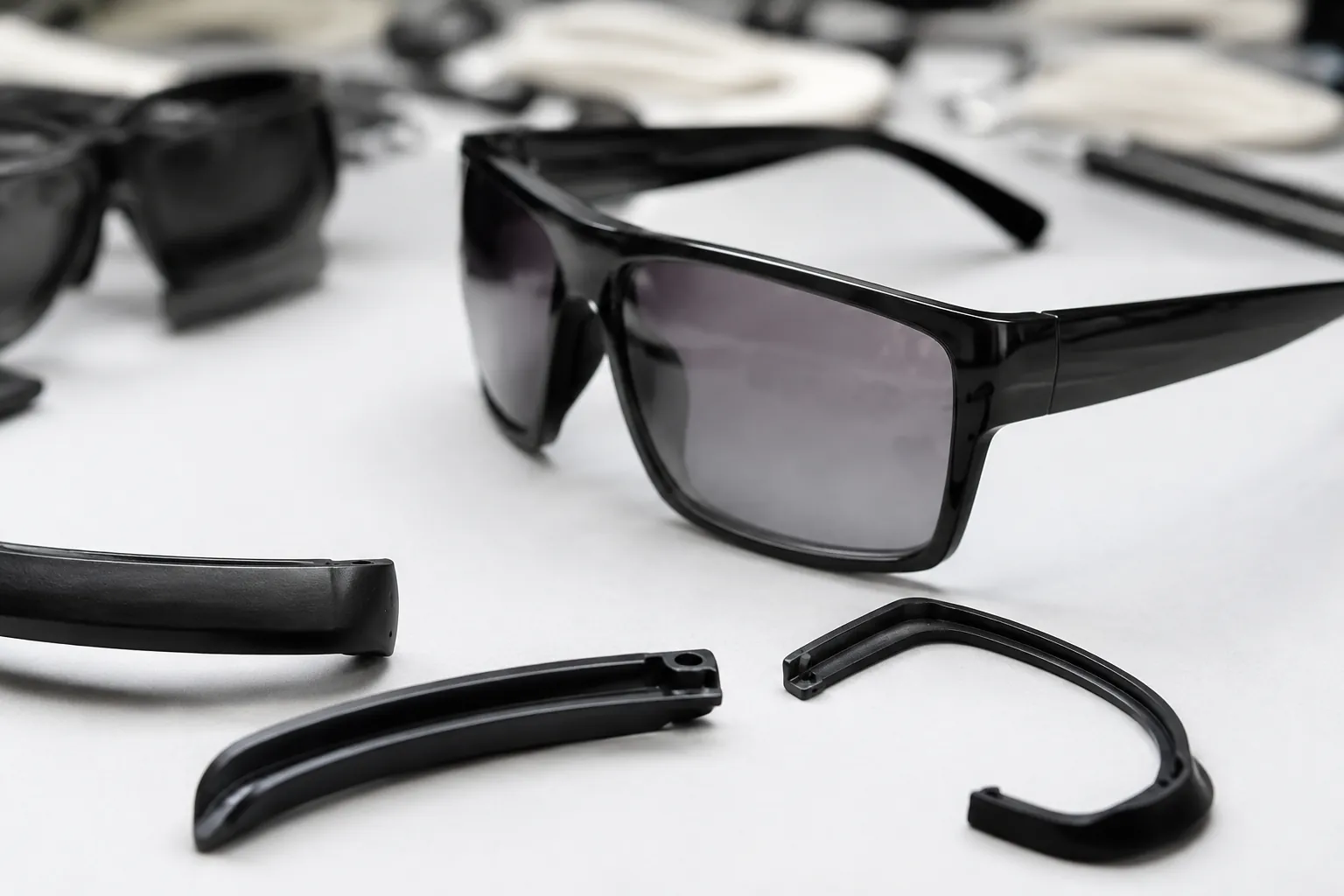
This guide is for brand owners, importers, distributors, and retail buyers who want to launch sunglass styles without starting with a fully custom mold. The logic is simple. The frame tooling already exists, so buyers can often review samples sooner, avoid mold cost at the start, and test more than one SKU with less development risk. But open-mold still needs discipline. Fit, lens appearance, logo execution, packaging, labeling, and compliance all need close control. Open-mold is not a shortcut around product development. It is a sourcing strategy that trades tooling originality for speed, lower upfront commitment, and easier market testing.
Why open-mold works for commercial launches
Open-mold sunglasses use an existing frame tool instead of a new mold. That removes one of the biggest cost and timing variables in development. For many B2B buyers, the gain is not just lower upfront spend. It is a more predictable path to sampling because the factory already knows the frame structure, assembly flow, and finishing process.
When a factory has produced a frame before, it may already understand practical issues such as lens-fitting tolerance, hinge assembly, surface finishing, and packing flow. That helps reduce avoidable trial and error during sampling. The effect varies by material and construction, but the sourcing logic stays the same: an established frame platform usually carries less development risk than a new one.
Open-mold also helps with early assortment decisions. Instead of putting budget behind one unproven mold, buyers can compare several shape directions, lens looks, and branding options before deciding which styles deserve more investment. That matters for seasonal capsules, retail line extensions, distributor programs, promotional launches, and first orders in unfamiliar channels.
There are limits. Open-mold is usually the wrong choice if your strategy depends on a highly distinctive silhouette, a proprietary structural feature, or a frame geometry that does not exist in the supplier catalog. If your edge comes from speed, merchandising, color direction, packaging, and disciplined replenishment, open-mold is often the better route.
How to shortlist styles without building a generic line
The biggest sourcing mistake is choosing frames from thumbnails alone. A catalog image does not show front thickness, lens curve, bridge fit, logo area, weight balance, or how a frame actually sits on the face. Start with the wearer and the channel. Not the trend board.
- Start with channel requirements. Boutique fashion, sports retail, gifting, travel retail, and pharmacy channels need different levels of coverage, weight, logo visibility, and styling intensity.
- Limit each shape family. Keep one or two candidates in aviator, square, wrap, round, or cat-eye instead of collecting minor variations that compete with each other.
- Check visible differentiation points. Temple profile, bridge construction, front thickness, end-piece angle, and lens color usually create more shelf distinction than small drawing changes.
- Review dimensions before sampling. Ask for eye size, bridge width, temple length, lens height, front width, approximate weight, and material type.
- Eliminate overlap early. If two frames serve the same retail role, keep the one that is easier to fit, brand, and reorder consistently.
A practical first shortlist is often bigger than the final launch list. Buyers may review several styles, then cut the range after sample review. This usually leads to better buy depth and simpler replenishment than launching too many shallow SKUs at once.
Ask for more than basic measurements. Confirm whether the frame is injection-molded plastic, TR90, polycarbonate, metal, or acetate; whether it uses standard barrel hinges, spring hinges, or integrated metal assemblies; and whether the lens is a standard sunglass lens, polarized TAC, nylon, or polycarbonate. These details affect durability, finish expectations, decoration options, and how much change is realistic without slowing the program.
Dimension benchmarks can help, but they are not a substitute for fit review. Adult sunglass sizing varies widely by category. Oversize fashion frames, narrow sport wraps, youth styles, and low-bridge fits all follow different logic. A good shortlist is built around the target wearer and retail channel, not generic size averages.
What to customize so the product still looks like yours
Not every customization adds the same value. Some changes are obvious to the customer and help the product feel branded. Others add sourcing and handling complexity without changing much at shelf level. Keep it tight.
| Customization point | Customer visibility | Factory impact | Typical lead-time effect | Best use |
|---|---|---|---|---|
| Lens color, mirror, or gradient | High | Low to medium | Usually limited if the lens option is already available | Fast differentiation across one frame shape |
| Temple logo print, laser mark, or metal plate | High | Low to medium | Depends on decoration method and component readiness | Private label and retailer branding |
| Frame color, rubber paint, or lamination effect | High | Medium | Depends on material, finish, and color approval | Fashion collections and seasonal launches |
| Custom pouch, box, and cleaning cloth set | Medium | Low to medium | Can extend timeline if artwork or packaging sourcing is late | Higher perceived value and retail readiness |
| Minor size or structure adjustments | Low to medium | High | Can add development time and feasibility review | Only when fit issues are proven in sample review |
The fastest differentiation usually comes from lens appearance and branding. Lens tint, gradient depth, mirror finish, flash coating, and polarization can change the first impression of a frame more than small geometry edits. Decoration method matters too. Pad printing works for simple side logos. Laser marking can hold up well on suitable surfaces. Metal logo plates can increase perceived value, but they require tighter component control.
Material changes what is worth customizing. On acetate frames, sheet pattern, translucency, bevel polish, and edge finishing strongly affect perceived quality. On injection frames, color, paint finish, soft-touch coating, and logo execution usually matter more. Buyers should watch complexity on low-volume programs. Multiple colors, hardware options, packaging variants, and barcode splits add real operational burden even when each item seems minor on its own.
The best open-mold programs are edited hard. A few visible differences, executed well, usually create a stronger branded result than trying to customize everything in a small order.
What a fast development schedule actually looks like
Open-mold is faster than full custom development only if decisions are made in the right order. Most delays do not start on the production floor. They start in fragmented approvals.
A practical development schedule usually looks like this:
- Step 1: confirm target market, shortlisted models, lens category, branding method, packaging scope, labeling, and required compliance documents.
- Step 2: request samples for the exact frame options being considered, including material, lens type, and intended branding position where possible.
- Step 3: review fit, lens appearance, logo placement, packaging mockups, and commercial comments in one consolidated round.
- Step 4: approve artwork, carton marks, barcode files, care or warning text, and the final product specification before bulk production starts.
- Step 5: begin bulk production only after the approved sample record and compliance file match the shipment specification.
Inside the factory, the workflow is more detailed than many buyers expect. Injection styles may include material preparation, molding, trimming, assembly, lens insertion, decoration, adjustment, inspection, and packing. Acetate styles add cutting, CNC work, tumbling or polishing, heat shaping, assembly, lens fitting, and manual alignment. Each extra process step creates another chance for unclear approvals to turn into delay or inconsistency.
Component timing matters too. If the program includes custom metal logos, retail boxes, microfiber pouches, hangtags, or special labels, those items should move into production as soon as artwork and specifications are locked. Many avoidable schedule problems begin when packaging text, barcode files, or carton marks change after the supplier has already started material planning.
For a fast launch, close comments in one organized review round wherever possible. That saves time. Repeated small revisions do not.
MOQ and price logic: where open-mold really saves money
Open-mold lowers entry cost by removing mold investment and making small opening orders more realistic. But unit price still depends on quantity, material, lens specification, decoration, packaging, and how fragmented the SKU mix becomes. Separate tooling savings from true unit-cost efficiency.
| Order quantity | Typical sourcing use | Unit cost direction | Main caution |
|---|---|---|---|
| 50 pairs/design | Market test, buyer presentation, or limited pilot order | Highest cost per pair | Too many custom details can remove the open-mold cost advantage |
| 300 pairs/design | Focused small launch | Usually more efficient than a test MOQ | Requires tighter SKU discipline |
| 1000 pairs/design | Core line build | Typically stronger value | Packing accuracy and compliance control become more important |
| 5000+ pairs/design | Retail chain or distributor volume | Usually benefits from better purchasing and production efficiency | Forecast errors become more expensive |
At very low volumes, the buyer is paying for flexibility. Setup labor, small-batch handling, packaging preparation, and approval work are spread across fewer units. As volume rises, those fixed activities are diluted more effectively. The commercial breakpoints vary by supplier and specification, so buyers should ask for quotations at multiple quantity levels instead of guessing where the savings start.
Ex-factory price is only part of the decision. A cheaper frame that creates more rejects, slower packing, or more remake requests can cost more overall than a slightly higher-priced style with stable production behavior. Ask which operations are handled in-house and which are outsourced. That affects lead-time control, remake speed, and communication when specifications change.
For landed-cost planning, also look at accessory count, carton efficiency, labeling complexity, and freight mode. A line with too many low-volume SKUs may look flexible on the purchase order and then perform badly in replenishment and inventory control.
Compliance checks to lock before bulk order
Compliance is not a paperwork extra. It affects whether the goods can be sold in the destination market, whether retailer requirements are met, and whether the shipment file matches the actual product.
Before placing bulk production, buyers should confirm which standard applies to the target market and whether the exact frame and lens specification matches the available documentation. Common references in sunglass sourcing include CE EN ISO 12312-1, ANSI Z80.3, AS/NZS 1067, REACH, FDA registration, ISO 9001, and BSCI.
These documents do not serve the same purpose. CE EN ISO 12312-1, ANSI Z80.3, and AS/NZS 1067 relate to sunglass performance requirements in different markets. REACH relates to chemical restrictions in materials. FDA registration often comes up in U.S. sourcing discussions, but buyers should confirm with their own compliance team or counsel what is actually required for the product and import route. ISO 9001 and BSCI are management and social compliance signals. They are not substitutes for product-specific sunglass testing.
One common mistake is assuming one report covers every variation. It may not. Changes to lens tint, visible light transmission category, mirror coating, polarization structure, or material can affect whether the file still matches the shipped product. Make sure the approved sample, the quoted specification, and the compliance file all describe the same item.
Routine QC criteria should also be defined before bulk. Useful checkpoints include lens scratch standards, hinge security, left-right balance, logo placement tolerance, color consistency, labeling accuracy, and packing accuracy. Product-specific verification is more useful than general claims about quality systems when the shipment is headed for retail sale.
Fit, finish, and tolerance points that affect sell-through
Buyers notice defects quickly. End customers notice discomfort even faster. Treat open-mold review as a performance check, not just a visual signoff.
During sample review, assess how the frame sits on the target wearer profile. Useful checkpoints include temple opening feel, bridge comfort, front balance, lens coverage, and whether the frame slides, pinches, or sits unevenly. A frame can look strong in photos and still fail in the intended channel if the fit is wrong.
Tolerance expectations should match the material and construction. Injection frames often allow more repeatable dimensional control than acetate because acetate involves cutting, CNC work, polishing, and hand assembly. That does not make acetate worse. It means the acceptance standard should reflect the real process and the product price level.
Instead of relying on vague instructions, buyers should request defined approval points that can be checked consistently:
- Appearance: no visible scratches, sink marks, contamination, polish haze, or obviously crooked logos under agreed inspection conditions.
- Assembly: temples open evenly, hinges are secure, and lenses fit cleanly without visible stress, looseness, or rattle.
- Measurement: key dimensions follow the agreed specification and any stated factory tolerance for the chosen material and construction.
- Packing: barcode labels, carton marks, accessories, assortments, and inner-pack details match the purchase order exactly.
Specific, measurable approval criteria usually produce better bulk consistency than subjective requests such as "make it more premium" or "improve finish." Clear checkpoints give the factory something it can actually control.
When to stay open-mold and when to move to custom tooling
Open-mold is not a lesser option, and it does not have to be permanent. For many buyers, it is the first phase of a more structured product plan.
Stay with open-mold when orders are still spread across multiple SKUs, when your differentiation comes mainly from lens presentation, branding, packaging, and channel execution, or when you are still learning which fits and shapes work best by market. It is also the better route when speed matters more than owning the frame architecture.
Move toward a custom mold when one shape becomes a proven repeat seller and you need changes that decoration cannot solve. Common triggers include stable reorder volume, retailer commitment, recurring fit feedback, or the need for a signature temple section, bridge geometry, end-piece angle, or a silhouette not available from catalog tooling.
A practical path is staged. Test through open-mold first. Narrow the range based on sell-through and reorder behavior. Standardize packaging and compliance records. Then evaluate custom tooling for the shapes that have already shown demand. That reduces guesswork and makes the business case easier to measure.
Speed creates value only when the finished product looks intentional, fits the target customer, and ships with the right compliance support for the market.
Have a custom sunglasses project in mind?
Send us your styles, target market and quantities and we will return a detailed quote with MOQ, lead time and a sample plan.
Get a QuoteWhy source this from Wenzhou with LumiShades
Wenzhou in Zhejiang Province is widely regarded as China’s eyewear manufacturing capital, producing a large share of the world’s sunglasses. That concentration matters to buyers: a deep local supply chain for acetate sheet, hinges, lens blanks, plating and packaging means shorter component lead times, easier color and material matching, and a workforce with decades of eyewear-specific skill. LumiShades has manufactured in this ecosystem since 2009, and our vertical integration — in-house injection molding, acetate cutting, CNC milling, lens tinting, decoration and quality control — means no part of your order is quietly subcontracted to a workshop you cannot audit.
For international buyers, that vertical control translates into accountability. When a single factory owns every step, defects are traced and fixed at source rather than bounced between vendors, and your specifications survive intact from first sample to bulk. For procurement review, buyers can request process records, approved samples, quality checkpoints and project-specific compliance files before placing a bulk order. Required testing and documentation are confirmed against the destination market and product specification rather than assumed from a generic certificate list. Explore our manufacturing capabilities and quality control process to see how this works in practice.
Frequently asked questions
How many open-mold styles should I launch in one order? For a first commercial launch, most buyers are better served by a tight assortment than a broad one. Choose enough styles to test different shape or channel directions, but keep enough quantity per SKU to support clean packaging, clearer sales feedback, and meaningful reorders. Before confirming the order, compare total volume per design, accessory complexity by SKU, and whether the retail channel can actually support that spread.
Can I change the frame size on an open-mold design? Sometimes, but buyers should treat size changes as an engineering question, not a simple decoration request. Small adjustments may be possible on some styles, but changes that affect lens fit, hinge position, temple geometry, or tooling-related dimensions can trigger extra development work or make the change impractical. Ask the supplier which dimensions can be adjusted, how that affects assembly, whether a new sample is required, and whether the existing compliance file still applies after the revision.
What documents should I ask for before bulk shipment? Ask for documents that match both your target market and the exact product you are shipping. That usually includes the applicable sunglass compliance file for the final lens and frame specification, any relevant REACH-related material documentation, the approved sample record, final artwork approvals, barcode files, carton marks, packing list details, and labeling text. Also confirm whether the supplier is providing product-specific reports under CE EN ISO 12312-1, ANSI Z80.3, or AS/NZS 1067 where relevant, and verify internally whether FDA registration or other importer-side documentation matters for your route to market.
Is 50 pairs per design a practical MOQ for private label? Yes, it can be practical for a pilot order, a buyer presentation, a limited market test, or a small-channel launch. The tradeoff is simple: unit cost is usually least efficient at that level, and extra custom elements such as multiple packaging versions, hardware changes, or barcode splits can quickly weaken the value of starting small. If you are using a low MOQ, keep the specification disciplined and ask for quoted breaks at higher volumes too, so you can plan reorder economics before the first shipment leaves.
What parts of production should be in-house at the factory? Prioritize the processes that most affect lead-time control, consistency, and rework speed. Useful questions include whether molding or frame forming is done in-house, whether lens processing or sourcing is directly controlled, whether decoration is internal, how assembly and final inspection are managed, and who handles packaging preparation. The goal is not that every process must sit inside one building. The goal is that the supplier can clearly explain ownership of each critical step, response time when problems appear, and how quality control is maintained across the full order flow.
Ready to start?
Explore our square sunglasses or request a quote — our sales team replies within 12 hours.
Request a Quote