
Approve a Golden Sample and Avoid Rework
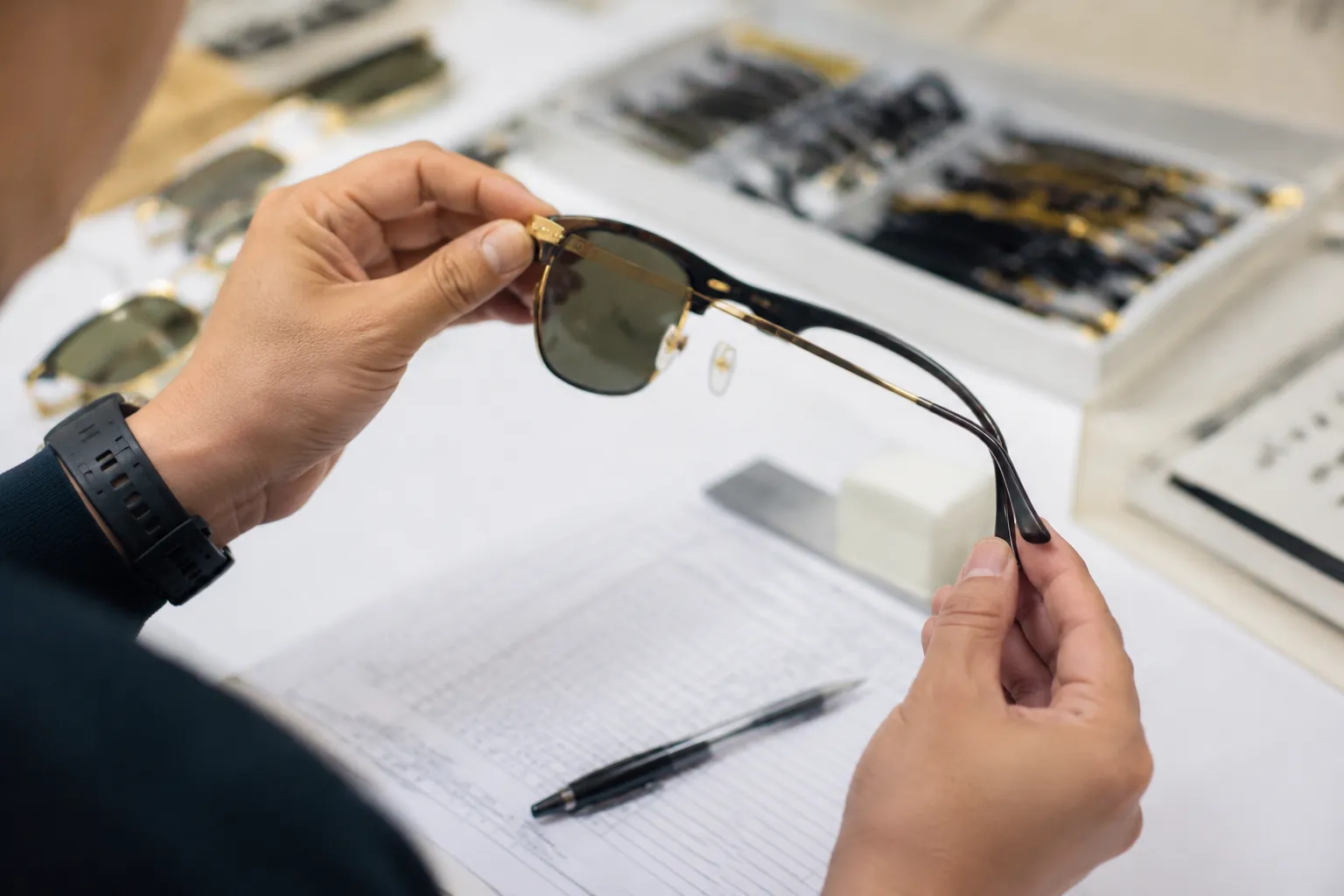
This guide is for brand owners, importers, distributors, and retailers buying custom sunglasses in volume. The goal is not to approve a sample that looks good in a meeting. The goal is to approve one controlled reference the factory can repeat in bulk. That means the same construction, color, fit, branding, and compliance-relevant build. A disciplined golden sample process cuts remake risk, protects lead times, and gives both buyer and supplier one clear production standard.
What a golden sample must do
A golden sample is not the nicest sample on the table. It is the master reference that fixes the product standard before mass production starts. One question matters: if bulk starts tomorrow, what exactly must every pair match?
For custom sunglasses, the golden sample should lock five things at once: frame construction, color and finish, fit, branding, and workmanship. If any one of those points is still open, the sample is still a development sample. Not a production-release sample.
A solid approval process has two linked parts. First, the physical sample, labeled with style code, color code, revision number, and approval date. Second, a written approval record covering measured dimensions, tolerances, decoration position, approved materials, and pass-fail criteria. The sample shows intent. The paperwork makes it measurable.
That difference matters. Factories can only repeat what has been defined. A supplier may handle molding, acetate machining, polishing, lens tinting, printing, engraving, assembly, and in-house QC. None of that replaces a disciplined approval package. If the buyer approves a note like "dark green lens" without defining the approved look and material build, the supplier still has room to interpret it during production.
As a rule, the approved sample should be tied to the exact bill of materials used for production: frame resin or acetate sheet, lens material, hinge type, screws, coatings, inks, decorative metal parts, and packaging components if they affect labeling or compliance. If the approved sample and the production build are not materially the same, the approval no longer controls the order.
Approve the structure first
Many buyers start with logo size, Pantone callouts, or mirror lens effect while the frame platform is still unstable. Wrong order. First confirm the structure. Cosmetic approval matters only after the product is mechanically correct.
Start with the core dimensions: lens width, bridge width, temple length, overall front width, lens base curve where relevant, and temple opening angle. Then check left-right symmetry, hinge alignment, and how the frame sits when opened and folded. A sample can photograph well and still fail basic wear performance.
Tolerances should come from the approved drawing, tech pack, or written quality standard for that style. If you do not define a tolerance band, the factory will define one for you during production. The approval file should also state how measurements are taken, because a dimension is only useful if both buyer and supplier measure it from the same datum points.
- Injection molded frames: Check wall thickness consistency, gate and ejection mark visibility, hinge insert anchoring, stress whitening around screw points, and parting line cleanup.
- Acetate frames: Check lamination quality, CNC edge accuracy, polishing uniformity, and color harmony between front and temples. Pattern variation is normal, but the acceptable range should be written down.
- Metal trims and logo plates: Confirm whether parts are pinned, inlaid, screwed, or adhesive-fixed. Decoration fixed only by adhesive needs extra review for long-term attachment stability.
Also test hinge feel, not just hinge appearance. Open and close both temples repeatedly and compare resistance left to right. Hinges that are too loose create immediate retail complaints. Hinges that are too tight can stress acetate or molded material around the insert during use. If spring hinges are used, confirm return action, side play, and whether the spring box sits flush with the temple wall.
Color is where rework starts
Color causes many bulk disputes because buyers often approve it too casually. Solid black is usually simple. Tortoise acetate, translucent injection colors, rubber-touch coatings, mirrored lenses, and gradients are not. Each material behaves differently in production.
For injection frames, resin lot variation and processing conditions can shift both shade and gloss. For acetate, sheet lot variation is normal and pattern placement will never be identical pair to pair. For lenses, tint density depends on lens material and process control. Mirror coatings can look cooler or warmer depending on viewing angle and lighting.
Do not approve color from phone photos alone. Approve against a physical sample under defined lighting, ideally daylight-equivalent lighting plus natural daylight review. If brand color matters, state what matters most: nearest visual match, gloss level, translucency, or logo contrast against the frame surface.
| Item | What to Approve | Typical Risk | Buyer Control Step |
|---|---|---|---|
| Injection frame color | Master molded sample, gloss level, translucency | Shade shift caused by material or process variation | Approve a physical molded chip or frame and retain it on file |
| Acetate pattern | Base tone, pattern density, front-temple harmony | No two fronts are visually identical | Define acceptable variation in writing and approve more than one pair |
| Solid tinted lens | Darkness, hue, left-right uniformity | Lens pair mismatch or tint inconsistency | Approve lenses as a matched pair under consistent lighting |
| Gradient lens | Top density, fade position, bottom clarity | Fade line moves up or down in production | Mark visual start and end points on the approval sheet |
| Mirror coating | Reflective tone, coverage, abrasion sensitivity | Color reads differently by angle and light source | Review indoors and in daylight, then document the viewing condition |
If color consistency is commercially critical, ask the supplier to retain the approved sample, any approved color chips, and the signed color note in the production file. That gives the factory, QC team, and buyer one common reference during inline inspection and pre-shipment inspection.
Fit needs a written checklist
A sample can measure correctly and still fit badly. This is common with oversized fronts, heavy temples, low-bridge shapes, and wrapped lenses. Serious buyers should test the golden sample on more than one wearer before release, ideally including at least one person close to the intended user profile.
Basic wear testing does not need a lab. It does need structure. Check how the frame sits on the face after a short wear period, whether it tips forward, whether one temple grips harder than the other, and whether the nose area contacts evenly. Wrapped or oversized styles should also be checked for eyelash clearance and cheek touch during a smile test.
- Check front balance on the face and confirm the frame does not tilt or twist visibly.
- Check temple pressure left to right and note any asymmetry in grip.
- Check nose contact points for even support and no rocking.
- Check eyelash clearance and cheek contact, especially on large lenses and wrap styles.
- Open and close both sides repeatedly to catch hardware loosening, binding, or screw walk-out.
Write the results in measurable language. "Fit approved" is weak. Better wording is specific: no rocking on a flat surface, temples symmetrical when folded, no visible lens rattle, no cheek touch during smile test on the approved wearer profile, and no sharp edge at temple tip or nose area. If the style is for kids, sport, or unisex fashion, state that intended wearer profile during approval. Fit priorities differ across segments, and the factory should not guess them from the tech pack alone.
Approve branding by method and position
Branding errors are expensive because they can make otherwise usable stock unsellable. A logo that is off-position, printed too light, or attached crooked can turn a bulk run into dead inventory. So branding approval must cover both appearance and process method.
Common decoration methods for private label sunglasses include pad printing, laser engraving, hot stamping, screen printing on lenses in limited cases, and metal logo plates. Each method behaves differently in production. Pad print can create sharp graphics on curved temples, but opacity and rub resistance depend on ink selection, curing conditions, and substrate compatibility. Laser engraving is durable, but contrast can be low unless the base material shows a visible tonal change. Metal logo plates can look premium, but placement consistency and fixing method are critical.
- Pad print: Approve artwork size, Pantone reference if used, print position from a fixed datum point such as hinge center or temple end, and rub-resistance requirement.
- Laser engraving: Approve depth, contrast, burn tone, edge sharpness, and whether a slight texture change is acceptable on the surface.
- Metal logo plate: Approve exact placement, orientation, edge flushness, and attachment method such as pin plus adhesive versus adhesive only.
Inspect decoration from multiple angles and on both left and right temples. Mirror placement errors are common, especially when one side is set from a different fixture point. Also confirm process sequence. The approval should state not only what the logo looks like, but how it is made and where it is measured from.
Workmanship standards must read like QC rules
Many costly revisions happen because the approved sample looked acceptable, but the workmanship standard was never translated into inspection language. A buyer should define defects before bulk starts, not after a pre-shipment inspection finds a high rejection rate.
The golden sample record should list visual and functional points such as scratches, sink marks, streaks, bubbles in acetate, polishing haze, burrs, print defects, lens contamination, edge sharpness, screw torque, and hinge performance. Keep the wording practical. Inspectors and warehouse teams need simple rules they can apply consistently.
A workable standard usually separates defects into critical, major, and minor categories. Critical defects affect safety, compliance, or wearability. Major defects are obvious cosmetic or functional faults visible under normal viewing conditions in normal indoor light. Minor defects are small flaws outside the main visual zone that do not affect use.
For example, lens rattle, cracked hinges, sharp exposed metal, incorrect lens marking where required, or a missing country-of-origin mark where required can be treated as critical. A crooked logo, obvious front asymmetry, or a deep scratch in the visible front area is usually major. A small polish mark inside the temple may be minor if it does not affect use or brand presentation. If your defect standard cannot be explained clearly to an inspector on the line, it is still too vague.
This written standard aligns in-house QC, final assembly checks, and pre-shipment inspection. Without it, the factory may pass products that technically resemble the sample but still fail your warehouse or retail acceptance criteria.
Lock compliance and BOM before bulk starts
Compliance should run alongside golden sample approval, not after cartons are packed. For sunglasses, the approved frame and lens combination must match the target market requirements. Change the lens material, tint density, mirror coating, decorative metal content, or printing ink chemistry, and you may change testing status or chemical compliance.
Depending on the market, relevant references may include CE EN ISO 12312-1, ANSI Z80.3, AS/NZS 1067, REACH, and FDA registration or importer obligations where applicable. If the supplier claims ISO 9001 or BSCI status, verify that claim separately through current documentation. The useful question is not whether a supplier is "certified." The useful question is whether the exact approved build matches the documented and tested build for the market you are selling into.
At the approval stage, confirm the bill of materials tied to the sample: frame resin or acetate type, lens material such as TAC, PC, or nylon, coating specification, tint category, hinges, metal trims, plating, adhesive, and print inks where substance control matters. If the approved sample uses one material stack and the bulk order uses another, the approval is broken even if the frame looks similar.
Once the sample is approved, convert it into a production release package. That package should include the signed golden sample reference, revision-controlled artwork, approved color references, measured dimensions, tolerance notes, decoration positions, packaging requirements, compliance notes, and inspection criteria. It should also state which event starts the bulk lead time: deposit receipt, sample sign-off, packaging approval, or all approvals complete.
Before authorizing bulk, ask four final questions: is the approved sample labeled and retained by both buyer and factory; does the purchase order match the approved construction and decoration method; are packaging, barcode, and country-of-origin details confirmed; and is any issue still open after approval. If the last answer is yes, bulk should not start.
Have a custom sunglasses project in mind?
Send us your styles, target market and quantities and we will return a detailed quote with MOQ, lead time and a sample plan.
Get a QuoteWhy source this from Wenzhou with LumiShades
Wenzhou in Zhejiang Province is widely regarded as China’s eyewear manufacturing capital, producing a large share of the world’s sunglasses. That concentration matters to buyers: a deep local supply chain for acetate sheet, hinges, lens blanks, plating and packaging means shorter component lead times, easier color and material matching, and a workforce with decades of eyewear-specific skill. LumiShades has manufactured in this ecosystem since 2009, and our vertical integration — in-house injection molding, acetate cutting, CNC milling, lens tinting, decoration and quality control — means no part of your order is quietly subcontracted to a workshop you cannot audit.
For international buyers, that vertical control translates into accountability. When a single factory owns every step, defects are traced and fixed at source rather than bounced between vendors, and your specifications survive intact from first sample to bulk. For procurement review, buyers can request process records, approved samples, quality checkpoints and project-specific compliance files before placing a bulk order. Required testing and documentation are confirmed against the destination market and product specification rather than assumed from a generic certificate list. Explore our manufacturing capabilities and quality control process to see how this works in practice.
Frequently asked questions
How many sample rounds should a buyer expect before approving a golden sample? For a new custom sunglasses program, two to three rounds is common because fit, lens color, branding, and construction often need separate correction cycles. Set a rule for each round: send one consolidated comment sheet, mark every change by revision number, and do not approve the next sample until all previously requested points are closed. If changes continue beyond the third round, stop and review the tech pack, material selection, and approval chain before spending more time on sampling.
Can I approve a golden sample and still change packaging later? Yes, but only if the packaging change does not affect legal marking, barcode placement, packed dimensions, transit protection, or packing method. To control the risk, issue the packaging change as a separate revision, confirm whether labels or country-of-origin statements are affected, and require the supplier to send updated packaging artwork or a packaging sample before bulk packing starts. If the packaging carries compliance information, treat it as part of the production-release package, not a late change.
What is the biggest mistake buyers make at golden-sample stage? The biggest mistake is approving appearance without approving measurable standards. Do not sign off until the sample is linked to a written record covering dimensions, tolerances, color references, branding position, workmanship limits, bill of materials, and any compliance-related build details. If a point cannot be checked by the factory or inspector during production, it is not controlled yet.
Does a higher order quantity improve consistency? Often it does, but not automatically. Larger orders can make it easier for a factory to hold materials, maintain stable setup conditions, and use one approved standard across a longer run. The buyer should still confirm process control by asking for the retained color standard, the approved BOM, inline QC checkpoints, and the inspection standard that will be used for the bulk order. Quantity helps only when the approval package is already clear.
Should compliance testing be done on the prototype or the golden sample? Testing should be done on the configuration that matches the final approved production build. If the prototype differs from the final version in lens material, tint, coating, frame material, metal trim, adhesive, or ink, do not rely on prototype results as final evidence. The practical step is to freeze the BOM first, confirm which market standard applies, and make sure the test sample, golden sample, and production order all match the same approved build.
Ready to start?
Explore our cat-eye sunglasses or request a quote — our sales team replies within 12 hours.
Request a Quote