
Stop Production Drift in Custom Sunglasses Orders
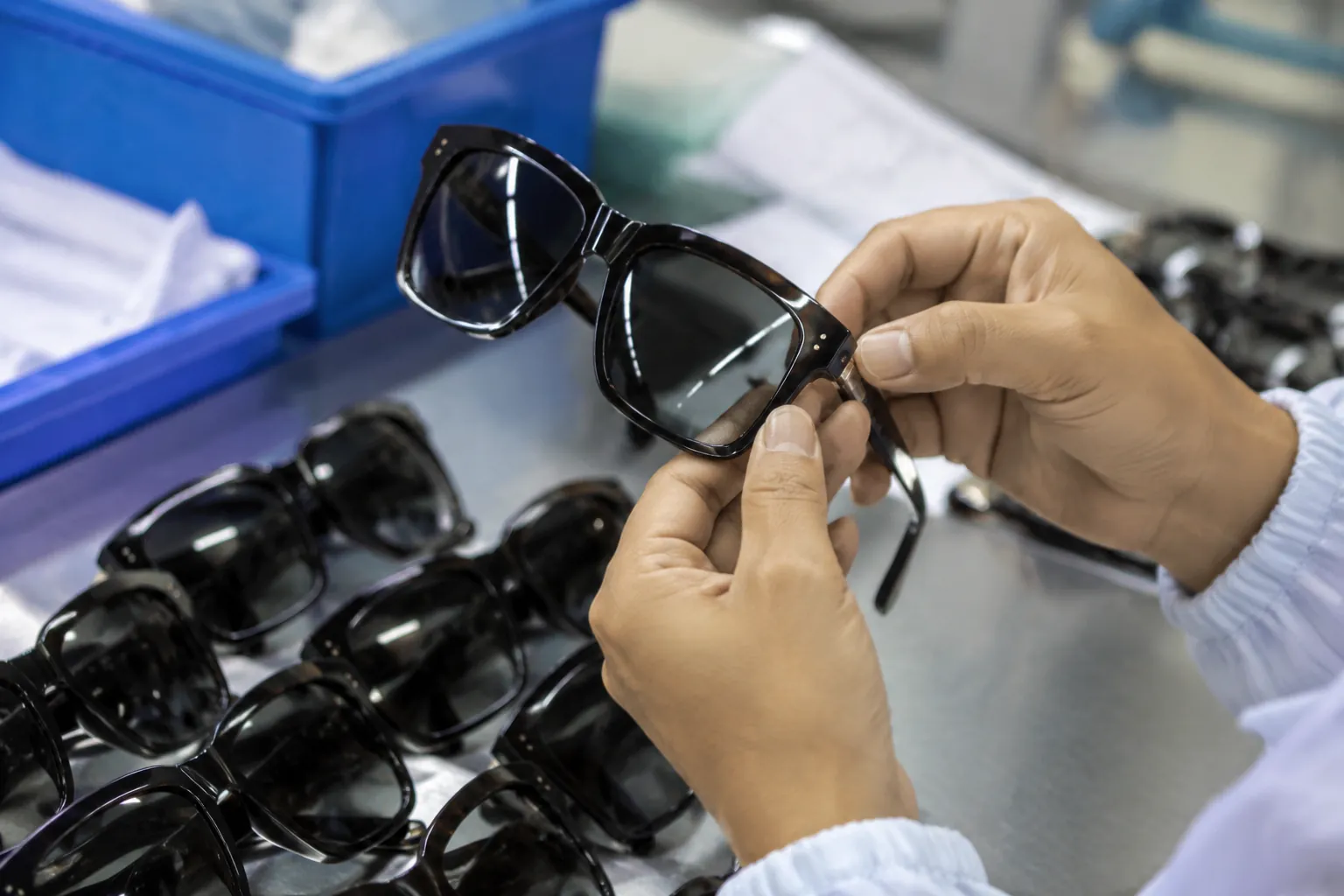
This guide is for brand owners, importers, distributors, and retail buyers sourcing custom sunglasses at volume. The job is not just to approve a good-looking sample. It is to make sure bulk production matches that reference on the first PO and every repeat order after it. In eyewear, small changes show up fast. A black frame can shift warmer or cooler. A lens tint can come out darker than the approved sample. A temple logo can move toward the hinge. Hinge tension can change the feel in hand. None of that is minor if the product sits on a retail shelf. Most of these problems can be reduced. Approve the right sample stage, define measurable tolerances, tie visual approval to compliance, and set inspection checkpoints before production starts.
Why production drift starts before final inspection
Most bulk inconsistencies do not start at packing. They start much earlier, when an approved sample is treated as a general visual reference instead of a controlled production standard.
A showroom sample may have been finished with extra care, assembled by a senior technician, or built from hand-selected materials. If the production team does not receive exact dimensions, material specifications, finish expectations, and pass-fail limits, the order will run to normal line settings, not to the buyer's intended standard.
In custom sunglasses, drift usually appears in five places: frame color, lens appearance, fit, decoration, and finishing. Frame color can shift because resin lots vary, acetate sheets differ in tone and pattern, or polishing changes final gloss. Lens appearance can change when tint concentration, coating sequence, or substrate changes. Fit can move when front curve, temple bend position, hinge setting, or lens seating is not controlled. Decoration drifts when a logo is approved by eye instead of by measurement from a fixed datum. Finishing varies when buyers use vague terms such as "good polish" or "clean edges" without defining what passes and what fails.
That is the core problem. The sample is clear in your head, but not on paper.
Real control starts when the approved sample is converted into a production control file. That file should include the bill of materials, critical dimensions, appearance standards, approved artwork, compliance basis, and inspection checkpoints. In-house production can help speed corrective action, but only if the no-change points are identified and locked before bulk starts.
Approve the right sample stage
Not every sample should carry approval authority. Buyers often approve too early because the timeline is tight. That creates avoidable risk.
A CAD rendering confirms design intent. A prototype checks shape, proportions, and basic wearability. A pre-production sample is the version that should govern final bulk approval because it shows whether the supplier can reproduce the product with the actual material, lens specification, logo method, assembly route, and packaging planned for shipment.
A prototype may look close to target but still differ from bulk in material, logo process, hinge, lens structure, or finish. If those details are still open, the sample is not a reliable production standard.
- Prototype sample: Use for shape, basic fit, and style review. Do not use it for final color, lens category, or logo placement approval.
- Color or material sample: Use to approve acetate pattern, molded frame shade, paint finish, or lens tint target under controlled lighting.
- Pre-production sample: Require the actual hinge, final lens material, approved logo method, standard assembly route, and intended packaging components.
- Golden sample: Retain one signed sample with revision code, approval date, and linked PO or style code. The supplier should retain a matching reference sample.
If logo appearance, lens shade, or fit affects sell-through, do not skip the pre-production stage. Saving a few days up front can cost weeks later in rework, replacements, or claim handling.
Build a spec pack with measurable tolerances
A sample alone invites interpretation. A concise spec pack reduces it.
The best spec packs are not long. They are specific. They define what matters commercially and where variation is allowed.
For fit, list eye size, bridge, temple length, overall front width, front height, base curve if applicable, and critical symmetry points. Set tolerances jointly with the supplier based on construction, logo method, and feature function. Dimensions that affect lens seating, hinge alignment, or logo position usually need tighter control than non-critical overall dimensions. If hinge tension matters, ask the supplier how it is checked on the line and record that internal control method in the specification.
For appearance, define acceptable scratch level, seam visibility, polish uniformity, lens cleanliness, and any material-specific marks that are or are not acceptable. For logos, specify artwork size, method, color, orientation, and exact location from a fixed point such as the hinge centerline or temple tip. "Same as sample" is weak language. "Logo centerline measured from hinge centerline with a stated tolerance in millimeters" is enforceable.
| Control point | What to specify | Common drift risk | Practical buyer rule |
|---|---|---|---|
| Frame color | Material type, finish, approved sheet or signed reference pair | Lot-to-lot shade shift or gloss variation | Approve under consistent lighting and retain one coded color reference |
| Lens tint | Tint target, category range if required, visual swatch, coating sequence | Bulk lenses darker, lighter, or less uniform than sample | Keep one signed lens swatch and confirm tint on first-off units before full assembly |
| Logo position | Artwork size, distance from hinge, method, color | Pad print or plate placement moving on the temple | State location in millimeters from a fixed datum with a clear tolerance |
| Fit and alignment | Front width, symmetry points, lens flushness, temple levelness | Warped fronts, loose hinges, uneven temple spread | Require first-off and inline checks before packing |
If you are buying acetate, note that pattern density and contrast can vary from sheet to sheet, even within the same color code. If you are buying injection-molded frames, define whether minor witness marks or faint flow lines are acceptable in non-cosmetic areas. Different materials need different appearance rules.
Know where variation enters the process
Better control starts with better process questions. Buyers do not need to run the factory, but they do need to know where variation enters the product.
Injection-molded sunglasses can deliver good repeatability on geometry, but color consistency still depends on stable resin preparation, pigment control, and process settings. If a black frame appears warmer, cooler, or glossier between lots, the cause may be resin, pigment, or processing conditions rather than polishing alone.
Acetate frames behave differently. They involve sheet cutting, CNC milling, tumbling, hand polishing, heat bending, hinge setting, and assembly. Acetate can create strong visual depth, but sheet pattern placement can vary visibly from pair to pair. If your brand expects a specific tortoise balance or pattern concentration, write that expectation into the approval standard. Yield optimization will not protect it.
Lenses add another layer of risk. CR-39, nylon, TAC polarized, and PC lenses do not all tint, coat, or perform the same way in production. Dip tinting can shift with bath condition and time. Mirror coatings depend on process stability and substrate cleanliness. Gradient lenses add alignment risk because fade height must match left to right. Decoration has its own failure modes. Pad print can shift or wear if surface preparation is poor. Laser marking can appear lighter or darker depending on material and finish. Metal logo plates depend on cavity accuracy, adhesive control, and seating consistency.
| Process | Main advantage | Typical variation risk | Buyer checkpoint |
|---|---|---|---|
| Injection molding | Consistent geometry at volume | Shade shift, surface flow marks, gloss difference | Approve color standard clearly and confirm first-off parts against it |
| Acetate CNC + polish | Premium look and depth | Pattern placement, hand-polish variation, bend inconsistency | Define pattern expectations and polish standard visually and in writing |
| Lens tinting/coating | Wide styling flexibility | Dark-light mismatch, uneven gradient, coating inconsistency | Approve lens swatch and verify first-off lenses before full output |
| Pad print / laser / plate logo | Branding flexibility | Position drift, appearance inconsistency, adhesion issues | Set datum-based measurements and include an adhesion or rub check where relevant |
Separate compliance from visual approval
One costly mistake is assuming the best-looking showroom sample is also the tested and compliant production version. It may not be.
For regulated markets, the sample tied to compliance should match the lens and frame construction that will actually ship. Depending on destination, buyers may need alignment with standards such as CE EN ISO 12312-1, ANSI Z80.3, or AS/NZS 1067. Chemical compliance may also matter where REACH-related requirements apply. Some buyers also ask for supplier documentation tied to FDA registration status or importer file requirements.
The principle is simple: if the sample linked to reports is built differently from bulk, the paperwork may not represent the goods.
Ask the supplier to identify exactly which sample version was tested, which bill of materials it represents, and which elements cannot change without review. Lens transmittance category, UV performance, polarized construction, base material, hinge type, and frame construction should stay aligned with the tested configuration. A change in lens supplier, coating source, or material grade can preserve appearance while changing the technical basis of the product.
Good practice: keep three linked records in one PO file—a compliance sample, a golden visual sample, and a signed production specification sheet. If those three do not match, stop. Clarify the gap before mass production starts.
Set checkpoints before goods reach cartons
Final random inspection is useful, but it is a late-stage filter, not a control system. If a logo is misplaced across a large share of the order, finding it after packing saves very little.
Effective buyers create checkpoints during production, not just at the end.
- Incoming material check: Confirm frame material, lens shade, hinges, screws, logo components, and packaging items against the approved bill of materials.
- First-off approval: Review the first assembled units before the line moves into full output. Ask for photos and actual measurements against the specification.
- Inline inspection: Check color, logo position, alignment, lens fit, and finishing at agreed intervals during production.
- Pre-pack audit: Verify assortment, labels, carton marks, barcode placement, and final cosmetic condition before sealing cartons.
Require defect recording by category, not just a total reject number. Useful categories include scratch, lens contamination, color mismatch, logo deviation, temple alignment, hinge tension, loose lens, coating defect, and polish issue. This record matters on repeat orders because it shows where drift begins. If most defects on the first run come from logo placement, the next run should include a tighter first-off check at the decoration stage and a clearer acceptance standard.
Schedule pressure matters too. When approvals are late, or the buyer changes lens color, artwork, or packaging after production starts, variation risk rises. Release bulk only after first-off confirmation. Do not approve mid-run changes without written confirmation of the impact on lead time, cost, and quality control.
Control repeat orders with a locked master file
The first order shows where the style is fragile. The repeat order is where disciplined buyers protect margin.
If you reorder from memory instead of from a locked control file, the same disputes return.
Create one master file for each SKU or style family. It should contain golden sample photos, bill of materials, approved artwork, lens specification, packaging layout, carton marks, compliance documents, and defect history from previous runs. Add practical notes from actual production: logo sat too close to the hinge on the prior run, lens tint appeared darker after coating, black frame gloss exceeded the approved sample, or acetate pattern looked too light in the brow area. Those notes turn experience into prevention.
Keep the original signed sample at your office and require the factory to retain its own matching reference. Record revision numbers clearly. If only one side holds the golden sample, disputes become subjective. If both sides hold the same coded reference and revision history, repeat-order control becomes much stronger.
What the PO must say
A purchase order should do more than list quantity and price. It should summarize the technical and commercial rules that matter if a dispute appears later.
- Reference sample: State sample code, revision, approval date, and linked golden sample ID.
- Bill of materials: Lock frame material, lens type, hinge specification, logo method, and packaging components.
- Tolerances: Include commercially important dimensional, placement, and appearance limits.
- Compliance basis: State which standard, report set, or controlled material basis the goods must match.
- Inspection timing: Require first-off approval, inline checks, and pre-shipment inspection stages.
- Change control: State that no substitution or process change is allowed without written buyer approval.
Plain language is best. Use short sentences and hard numbers. If logo position affects branding, write the measurement. If lens category affects compliance, write the requirement. If a specific sample version governs the order, identify it by code and revision. Production drift is rarely mysterious. Something important was left open to interpretation.
Have a custom sunglasses project in mind?
Send us your styles, target market and quantities and we will return a detailed quote with MOQ, lead time and a sample plan.
Get a QuoteWhy source this from Wenzhou with LumiShades
Wenzhou in Zhejiang Province is widely regarded as China’s eyewear manufacturing capital, producing a large share of the world’s sunglasses. That concentration matters to buyers: a deep local supply chain for acetate sheet, hinges, lens blanks, plating and packaging means shorter component lead times, easier color and material matching, and a workforce with decades of eyewear-specific skill. LumiShades has manufactured in this ecosystem since 2009, and our vertical integration — in-house injection molding, acetate cutting, CNC milling, lens tinting, decoration and quality control — means no part of your order is quietly subcontracted to a workshop you cannot audit.
For international buyers, that vertical control translates into accountability. When a single factory owns every step, defects are traced and fixed at source rather than bounced between vendors, and your specifications survive intact from first sample to bulk. For procurement review, buyers can request process records, approved samples, quality checkpoints and project-specific compliance files before placing a bulk order. Required testing and documentation are confirmed against the destination market and product specification rather than assumed from a generic certificate list. Explore our manufacturing capabilities and quality control process to see how this works in practice.
Frequently asked questions
How many approved samples should a buyer keep? Keep at least two physical references: one signed golden sample in your own office and one matching reference sample at the factory. If compliance testing applies, keep a separate compliance-linked sample tied to the tested bill of materials and the relevant report set. Label each sample with the style code, revision, approval date, and intended market so your team can match future orders to the correct standard.
What is the most common reason bulk sunglasses do not match the sample? The most common cause is an incomplete specification package. A buyer approves overall appearance, but does not lock the bill of materials, lens shade, logo dimensions, placement tolerances, finish standard, and inspection method in writing. To prevent this, issue a spec pack with measurable requirements, link it to the approved sample revision, and require the supplier to confirm that bulk production will follow that exact standard.
Can a prototype be used for final bulk approval? No. A prototype is suitable for checking shape, wearability, and broad dimensions, but it is not reliable for final production approval unless it already uses the exact material, lens construction, decoration method, and assembly route planned for bulk. Final approval should be based on a pre-production sample that represents the actual shipment standard. If any key component is still provisional, the sample should not be treated as final.
How should logo placement on sunglasses be controlled? Define the artwork size, application method, orientation, and exact measurement from a fixed datum such as hinge centerline or temple tip. State the tolerance in millimeters and include a drawing or marked photo in the spec pack. Ask the supplier to measure first-off pieces and report the result before full production starts. If the logo method is pad print, laser, or a metal plate, also define the appearance and durability check that applies to that method.
What should be reviewed before releasing a repeat order? Review the prior order's defect history, confirm that the bill of materials has not changed, compare the new production plan against the retained golden sample, and verify that the compliance basis still matches the goods to be shipped. Reconfirm known risk points such as lens tint, gloss level, hinge feel, polish consistency, and logo position in writing. If the supplier proposes any substitution in material, coating source, hinge, or logo process, require a new approval sample before releasing bulk.
Ready to start?
Explore our aviator sunglasses or request a quote — our sales team replies within 12 hours.
Request a Quote