
Sunglass Color Planning for Seasonal Orders
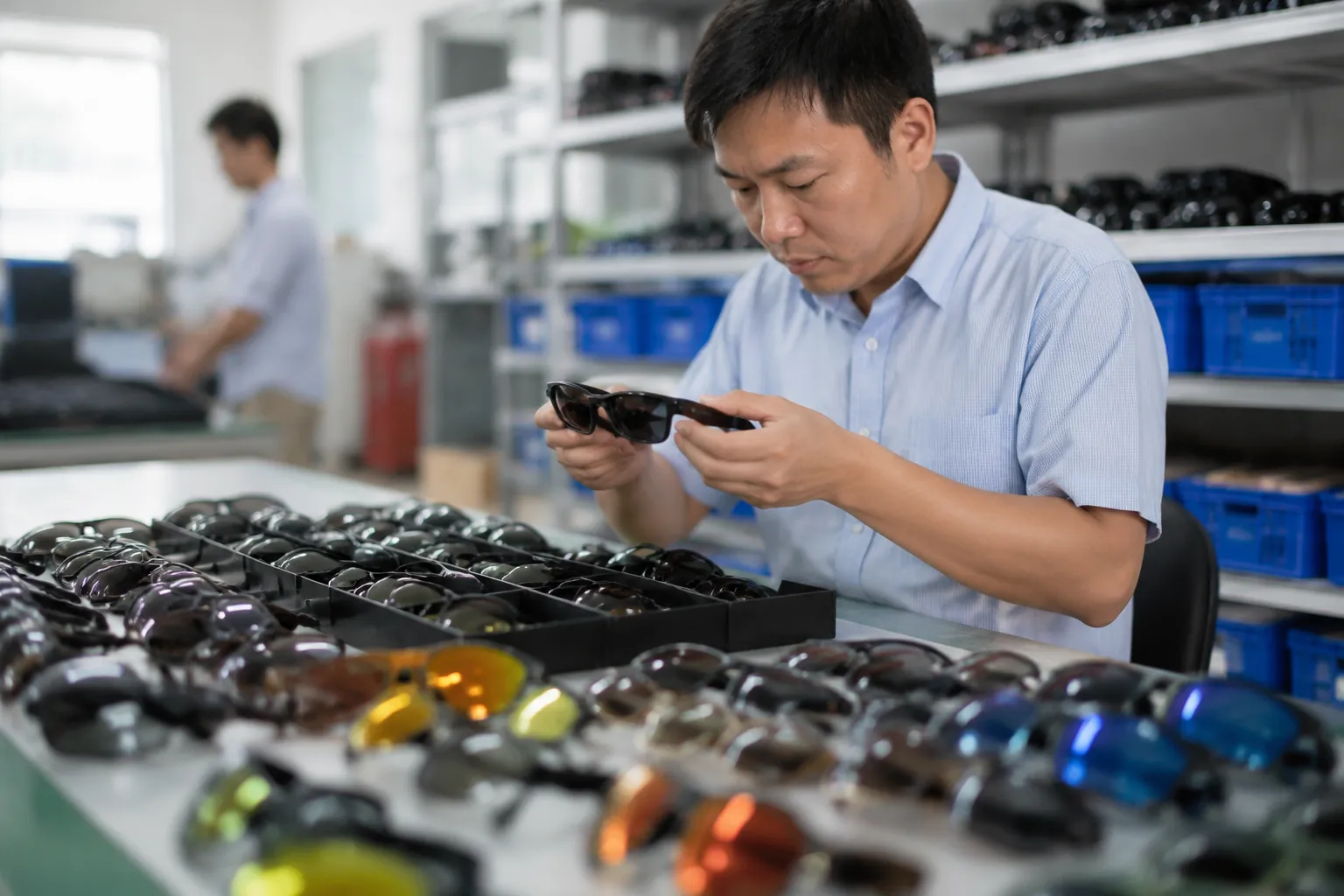
If you buy sunglasses for a brand, chain, or distribution business, color can help margin or leave you with dead stock. The mistake is simple: treating every shade as if it should sell like black or tortoise. It will not. A better plan separates steady commercial colors from short-run fashion shades and orders each at the right depth. This guide gives importers, distributors, retailers, and private-label buyers a practical way to plan color around demand, MOQ, lead time, and sell-through. No theory for its own sake. Just a cleaner buying process and fewer write-offs.
Start with the role of each color, not the trend report
A color line has three jobs. It can drive volume. It can test demand. It can create a short-lived novelty effect. If you mix those jobs, the buy gets messy fast.
For sunglasses, it helps to split colors into three buckets: core commercial, seasonal commercial, and experimental. Core colors are black, tortoise, dark navy, smoke gray, crystal clear, and basic metallics. These are the workhorses. Seasonal commercial colors are the stronger fashion plays: translucent amber, soft green, sand, ice blue, cherry, olive, mirror tints, and matte finishes. Experimental colors are small bets tied to a moment, a capsule, or a local market.
Keep the roles separate. Core colors protect sell-through. Seasonal colors show what the market will accept right now. Experimental colors are not volume colors. Do not plan them that way.
| Color group | Role in the assortment | Typical order depth | Risk level |
|---|---|---|---|
| Core commercial | Volume, repeat orders, base assortment | 300-5000+ pairs per design | Low |
| Seasonal commercial | Trend testing with some sell-through protection | 50-300 pairs per color | Medium |
| Experimental | Capsule drops, influencer tests, regional fashion bets | 50-100 pairs per color | High |
If your supplier offers low entry quantities, use them for test colors. That lowers exposure before demand is proven. The bigger point is not MOQ alone. It is whether the supplier can move from test order to repeat order without changing the approved specification.
Build the assortment around a sales ratio, not gut feel
A practical starting ratio for many B2B buyers is 70/20/10. That means 70% of units in core colors, 20% in seasonal commercial colors, and 10% in experimental shades. Fashion-heavy accounts may move to 60/30/10. Conservative distributors often do better at 80/15/5.
This is not a theory exercise. It is stock control. A retailer with 12 frame colors in one style does not need 12 equal buys. Equal buys are often wasteful. Black and tortoise usually deserve the deepest coverage. Trend shades should stay lighter. They are harder to replenish quickly and more likely to be discounted if demand softens.
One blunt rule helps: if a color is new to your line, do not buy more than you can realistically sell at full price within one buying cycle. For many buyers, that is a short test window, not a full season.
- List your top-selling colors from the last 12 months.
- Separate repeat colors from one-season performers.
- Put repeat colors into the core volume group.
- Use the one-season performers as your trend test group.
- Cap the test group so a weak result can be cleared without major damage.
If your team cannot explain why a color exists in the line, it probably does not need a deep order.
Know which finishes create demand and which create problems
Color is not just pigment. Finish matters too. A translucent frame in acetate behaves differently from a matte injected frame. Mirror lens tint can change the look more than many buyers expect. If you do not control finish, your seasonal color plan will be inconsistent.
Injection-molded frames are usually better for sharp, repeatable solid colors and for color matching once the resin formula is fixed. Acetate is often better for depth and layering in tortoise, crystal, transparent, and marbled effects. For lens tinting, small changes in density can shift the commercial feel of the same frame color.
When you brief a supplier, ask for the exact material route: color in the resin, sprayed finish, acetate sheet color, or lens tint only. Do not assume "blue" means the same thing across those four methods.
One common failure is approving a sample that looks correct, then seeing the bulk run come back visually different because the material route, color concentration, or process control changed. That is a production-control issue, not a design issue.
If a color is critical, lock the material route and the approved reference before production starts. That is the safest way to reduce surprises in bulk.
Use MOQ and price breaks to separate tests from volume
Seasonal color planning should follow factory economics. Otherwise you either pay volume pricing for colors that may not repeat, or you underorder a strong color and lose margin through avoidable re-runs.
The practical question is not just the minimum order quantity. It is how the supplier prices different order levels and whether that structure supports testing before scaling. A workable buying ladder is:
| Order level | Best use | What you get | Main trade-off |
|---|---|---|---|
| 50 pairs/design | Color test, small retail drop, buyer approval | Low entry cost, quick test | Highest unit price |
| 300 pairs/design | Initial commercial launch | Better unit economics | Still limited coverage |
| 1000 pairs/design | Validated seasonal color | Stronger pricing and supply balance | More inventory exposure |
| 5000+ pairs/design | Core color or proven repeat seller | Best unit cost | Higher working capital use |
The right threshold depends on your sell-through data, not a generic benchmark. If a color has not earned repeat demand, keep the order shallow. If it already repeats, move it into a deeper buying tier and lock the specification.
A useful pattern is to reserve 50-300 pairs for trend shades and push only proven colors into higher quantities. That keeps test colors from distorting the average cost and inventory risk of the assortment.
Plan your palette around channel behavior
Not every sales channel wants the same color mix. A fashion retailer can absorb more translucent and seasonal tones than a pharmacy chain, a beach resort shop, or a distributor serving mass-market stores. If you sell into multiple channels, do not build one universal color line and expect it to perform everywhere.
Use channel-specific weighting. A distributor may need a broader master line with conservative replenishment. A retailer may run a tighter range with more frequent refreshes. An e-commerce buyer may use seasonal colors to support newness, but still needs core colors to protect conversion and reduce returns.
For each channel, ask three questions:
- Does this channel reward novelty or consistency?
- How long can stock sit before it becomes stale?
- Can the channel reorder fast enough if one shade takes off?
If the answer to the third question is no, keep seasonal colors shallow. Short-run fashion only works if the replenishment window is realistic. With a standard bulk lead time, do not plan on same-week trend response. Plan around the actual production cycle.
Tie color planning to decoration and lens choices
Many buyers focus on frame color and forget that decoration and lenses can carry or weaken the final look. A black frame with weak logo treatment can feel generic. A seasonal frame with the wrong lens tint can look off. Decoration should support the color story, not fight it.
Different decoration methods suit different color families. Laser engraving generally works well on some matte and darker surfaces. Pad printing is often better for color logos and budget-conscious runs. Metal logo plates can add perceived value, but they need a frame color strong enough to support them.
Lens tinting also affects inventory risk. Smoke, brown, and gray are usually safer commercial choices. Fashion tints such as pink, yellow, or light blue can perform well in a seasonal drop, but they should stay shallow unless the channel has already shown demand. If you are testing color, keep one variable controlled. Do not test a new frame color, new lens tint, and new logo method all at once unless you are fine not knowing what drove the result.
That sounds obvious. Buyers still do it.
Use a simple test-and-repeat playbook
A safer way to buy sunglasses is to run color in stages. First sample. Then a limited order. Then a repeat order only if the data supports it. Do not guess at scale.
- Request samples for the base style and the seasonal color variants.
- Approve the exact color reference, finish, lens tint, and logo method.
- Launch the first buy at 50-300 pairs for the new shades.
- Track sell-through by color, not just by style.
- Repeat only the shades that meet your target within the planned sales window.
This process works best when the supplier keeps the approved sample, the production method, and the repeat order aligned. Before moving from test to repeat, compare the bulk sample against the approved sample under daylight and indoor light. Some colors, especially translucent acetate and mirrored lenses, shift in different lighting.
Keep the decision rule simple: if a color has not proven itself in the first run, do not deepen it. If it has, repeat with the approved specification and do not reopen the design unless you want a new version.
The buyer checklist before you commit to a seasonal color run
Before you issue the PO, the team should be able to answer these points in writing. If not, stop and fix the order.
- Which colors are core, which are seasonal, and which are experimental?
- What is the exact pair count per color and per channel?
- What is the minimum sell-through needed before a repeat order?
- Are the frame color, lens tint, and logo finish approved together?
- Do the selected materials and packaging meet your market requirements?
- Have you checked the relevant compliance set for the destination market: CE EN ISO 12312-1, FDA registration, ANSI Z80.3, AS/NZS 1067, REACH, ISO 9001, and BSCI as applicable to the supplier?
Do not treat compliance as a late-stage formality. For export sunglasses, it affects labeling, lens claims, materials, and sometimes decorations or coatings. REACH issues can come from coatings, plastics, and decorative components. CE EN ISO 12312-1, ANSI Z80.3, and AS/NZS 1067 are different standards and are not interchangeable. Buyers selling into multiple regions need the right document set for each market, not a generic file.
The cleanest seasonal color program is usually the most disciplined one. A few strong cores. A few controlled trend bets. A repeat process that protects cash. That is how you test fashion demand without filling the warehouse with it.
Have a custom sunglasses project in mind?
Send us your styles, target market and quantities and we will return a detailed quote with MOQ, lead time and a sample plan.
Get a QuoteWhy source this from Wenzhou with LumiShades
Wenzhou in Zhejiang Province is widely regarded as China’s eyewear manufacturing capital, producing a large share of the world’s sunglasses. That concentration matters to buyers: a deep local supply chain for acetate sheet, hinges, lens blanks, plating and packaging means shorter component lead times, easier color and material matching, and a workforce with decades of eyewear-specific skill. LumiShades has manufactured in this ecosystem since 2009, and our vertical integration — in-house injection molding, acetate cutting, CNC milling, lens tinting, decoration and quality control — means no part of your order is quietly subcontracted to a workshop you cannot audit.
For international buyers, that vertical control translates into accountability. When a single factory owns every step, defects are traced and fixed at source rather than bounced between vendors, and your specifications survive intact from first sample to bulk. We back this with 15+ years of experience, shipments to 60+ countries, more than 5 million pairs produced per year and a 98.5% on-time delivery rate. Our certifications — CE EN ISO 12312-1, FDA registration, ANSI Z80.3, AS/NZS 1067, REACH, ISO 9001 and BSCI audit — mean the compliance documentation your market requires already exists. Explore our manufacturing capabilities and quality control process to see how this works in practice.
Frequently asked questions
How many colors should a sunglasses style launch with? For most B2B buyers, 3 to 6 colors is manageable. A practical starting point is 1 to 2 core colors in deeper quantity and 1 to 3 seasonal shades in shallow test depth. If your channel is conservative, start tighter and expand only after the first sell-through review.
What is the safest MOQ strategy for a trend color? Start with the smallest order size that still gives you a usable market read, then repeat only after sell-through proves demand. In many buying programs, that means a limited test run rather than a full seasonal commitment. The goal is to confirm demand before moving the color into a larger production tier.
Should frame color and lens tint be tested separately? Yes, whenever possible. If you change both at once, you will not know which element affected the result. Test the frame color first, then confirm lens tint and logo method on the same approved base style. Only combine variables when you are testing a full concept on purpose.
How do I reduce the risk of color mismatch in bulk? Approve a physical sample, lock the exact material route, and confirm the final color reference before production. Then check the bulk sample against the approved sample under both daylight and indoor light. If the shade is critical, ask the supplier to confirm that the production method will match the approved sample method without substitution.
Do seasonal colors need the same compliance checks as core colors? Yes. A color change does not change the compliance burden. The product still needs the correct destination-market requirements, such as CE EN ISO 12312-1, ANSI Z80.3, AS/NZS 1067, REACH, FDA registration where applicable, and any supplier quality documentation you require, such as ISO 9001 or BSCI.
Ready to start?
Explore our aviator sunglasses or request a quote — our sales team replies within 12 hours.
Request a Quote