
Private Label Sunglasses: Custom Details That Sell
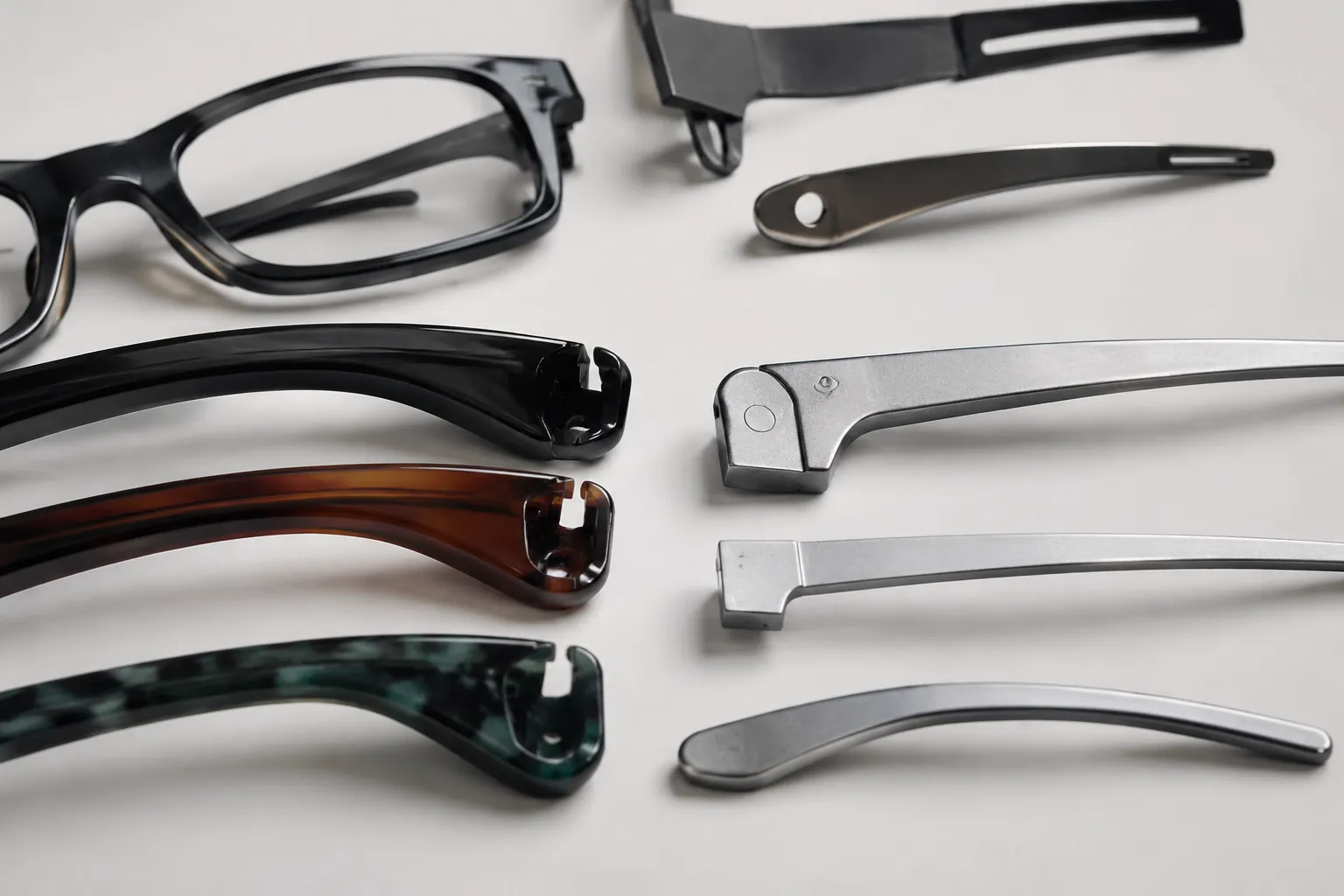
This guide is for brand owners, importers, distributors, and retail buyers sourcing private label sunglasses in volume. The aim is simple: spend customization budget on details shoppers notice first, and skip upgrades that add cost without helping sell-through. Below is a practical ranking of private label sunglasses upgrades by perceived value, with clear notes on MOQ, process limits, decoration methods, lead times, and compliance checks to confirm before placing a purchase order.
Start with the shopper, not the factory option list
Private label sunglasses programs often go off budget for one reason: the supplier offers a long list of logo, hardware, and packaging options, and the buyer assumes more customization means more value. In retail, that is rarely true.
Shoppers usually notice shape first. Then color. Then lens look. Then whether the branding feels deliberate. Small technical details hidden inside the temple do not do much on shelf.
A better sourcing method is to rank upgrades in the same order a shopper sees them. In most mid-market programs, that order looks like this:
- Frame shape and fit - the main driver of style, comfort, and overall appeal.
- Frame color and surface finish - matte, polished, crystal, translucent, rubberized, or tortoise can shift the style position fast.
- Lens color, category, and finish - solid tint, gradient, mirror, flash, or polarized lenses are visible at once.
- External logo execution - useful when placement, scale, and contrast are controlled.
- Packaging - important for gifting, e-commerce, or premium presentation, but still secondary to the product.
- Internal markings and minor trim - necessary for compliance and consistency, but weak retail drivers on their own.
If the budget only covers a few meaningful upgrades, put it into the frame and lens first. Not decorative metalwork. Not oversized boxes. Ask one blunt question: will the customer notice this without being told? If not, it belongs lower on the list.
High-impact upgrades vs. low-ROI extras
Not all custom touches earn their keep. Some are obvious in the first few seconds of shopping. Others mostly matter to the product team.
| Customization | What consumers notice | Cost and production effect | ROI for retail perception |
|---|---|---|---|
| Custom frame color or finish | Immediate. Often the strongest style signal after shape. | Usually adds limited to moderate complexity; color matching may require extra sample review. | High |
| Lens tint, gradient, mirror, or polarized upgrade | Immediate. Changes both look and function. | Can increase validation, handling, and quality-control requirements. | High |
| Metal logo plate on temple | Visible and premium when proportioned well. | Adds tooling coordination, assembly control, and cosmetic rejection risk. | Medium to high |
| Laser engraving or pad print logo | Useful if contrast and placement are strong. | Relatively efficient to apply; durability depends on substrate and process control. | Medium |
| Custom acetate lamination detail | Noticeable to fashion buyers, less obvious in broad mass retail. | Adds material planning and machining complexity. | Medium |
| Patterned core wire inside temple | Usually missed by the end customer unless shown up close. | Adds sourcing complexity and may narrow material options. | Low |
| Large rigid gift box with inserts | Seen mainly during unboxing, not from normal shelf distance. | Adds freight volume, packing labor, and storage requirements. | Low to medium |
The takeaway is simple. A strong silhouette with the right lens tone usually does more for sell-through than a basic frame loaded with branding tricks. Decorative complexity is easy to approve in artwork. It is rarely what closes the sale.
- Good budget use: shape revision, better surface finish, cleaner lens execution, one controlled logo method.
- Weak budget use: multiple logo locations, decorative internal details, premium box spend before the product has proven demand.
- Best pilot strategy: prove the silhouette, fit, finish, and lens direction first, then add higher-cost trim only after the style shows reorder potential.
Where perceived value comes from: shape, finish, lens
Three choices do most of the work in private label sunglasses. Shape. Finish. Lens execution.
Shape and fit. A frame that suits the target wearer often looks more expensive before any branding is added. Confirm front width, lens width, bridge, temple length, and base curve on the approved sample. Then check how the frame actually sits on the intended face size. Dimensions matter, but function matters more: even temple pressure, smooth hinge movement, stable fit, and level lens seating. A style can photograph well and still fail in repeat orders if the bridge pinches, the temple spread is uneven, or the wrap misses the target fit.
Finish quality. Surface finish has a big effect on price impression. On injection frames, a controlled matte can hide minor molding marks better than a weak gloss. On acetate, deep polishing can look premium, but only if edge radii stay consistent and the finish is complete around the eyewire, hinge area, and temple edges. Waviness, sharp transitions, or patchy polishing lower perceived value fast.
Lens look. Lens color is one of the quickest visual cues in sunglasses. Smoke, brown, green, fashion tints, and gradients each signal a different style position. Mirror coatings can increase shelf impact, but they also require tighter handling because scratches and rub marks show easily under store lighting. Polarization adds functional value, but only if the retail channel can explain it and the final build stays compliant for the destination market.
If the supplier tints lenses in-house, do not assume bulk will match the sample by default. Confirm how shade consistency is approved and checked. Lock an approved reference. Verify visible light transmission category where required. Make sure the final lens-frame combination still matches the compliance file after any change.
Branding methods that look premium without wasting budget
Decoration should support the product, not rescue it. In most programs, one strong branding method is enough.
Pad printing is common for inside temple logos, model codes, size marks, and lower-cost external branding. Artwork needs enough line weight and contrast to stay readable on curved surfaces. It is efficient. But abrasion resistance still depends on ink selection, curing, and substrate compatibility.
Laser engraving creates a clean, usually more durable mark on suitable surfaces. It works well for understated branding and technical markings when the buyer wants a lower-profile look. The main limit is contrast. Some dark-on-dark combinations look refined in hand and disappear on shelf.
Metal logo plates usually create more perceived value than print if the plate size fits the temple geometry and the insertion is clean. Small alignment issues are easy to spot on eyewear. Ask how the plate is fixed, what finish is specified, and what cosmetic acceptance standard applies around the insertion point.
| Branding method | Best use | Typical MOQ logic | Main QC risk |
|---|---|---|---|
| Pad print | Inside temple marks, budget external logos | Suitable for lower-volume and higher-volume programs | Ink adhesion, contrast, position drift |
| Laser engraving | Subtle premium branding, durable markings | Practical when the material and surface respond well | Low contrast on dark or glossy surfaces |
| Metal logo plate | Premium temple branding | Usually more efficient when volume is stable enough to justify added control | Alignment, finish quality, insertion gaps |
| Lens logo print | Sport or fashion programs needing visible branding | More suitable for repeat programs with clear brand standards | Visual clutter, scratch sensitivity |
For retail perception, external temple branding usually matters more than oversized inside print. Keep it restrained. If the logo is readable at normal viewing distance and still looks balanced, it is probably enough. Logos on the lens, tip, pouch, cloth, case, and hangtag can make the product feel crowded rather than premium.
Material choice changes what customization works
Customization is not material-neutral. What looks right on acetate can look forced on injection, and the reverse is true.
Injection-molded frames are usually the more efficient route for price-sensitive volume programs. They support repeatability, scalable color execution, and cleaner volume planning. If the target unit price needs to stay aggressive, be careful about stacking too many secondary operations onto injection frames. Each added step chips away at the base-cost advantage.
Acetate frames often carry higher perceived value because of depth, translucency, layered pattern, and polish potential. But acetate is less forgiving. Sheet variation, cutting orientation, CNC milling, tumbling, manual polishing, and hinge insertion all affect the final result. Pattern inconsistency is not automatically a defect in tortoise or laminated acetate, but the acceptable range should be defined before sample approval.
Material also affects which branding method works best. Metal plates can work on both materials, but the fixation method differs, and polishing around acetate inserts usually needs tighter control because small edge gaps show more easily. Pad print performance changes with texture and curvature. Laser results depend heavily on base color and surface response.
- Use injection when cost discipline, repeatability, and scalable volume matter most.
- Use acetate when visual depth, pattern richness, and premium hand-feel justify tighter process control.
- Ask for side-by-side samples if choosing between polished acetate and soft-matte injection for the same style direction.
If the budget is tight, spend first on better surface quality or stronger material expression before paying for extra hardware that adds complexity but little visible value.
Compliance and retail readiness: details buyers cannot skip
Perceived value helps a product sell once. Compliance helps it keep selling.
For sunglasses entering major markets, confirm which standard or regulatory requirement applies and whether the final lens-frame combination still passes after customization. Depending on destination and product type, relevant requirements may include CE EN ISO 12312-1, ANSI Z80.3, AS/NZS 1067, REACH, and FDA registration. If the supplier promotes broader quality or social compliance credentials, verify whether the factory holds certifications or audit status such as ISO 9001 or BSCI. These are not substitutes for product testing.
Two common buyer mistakes create avoidable delays. First, changing the lens tint after sample approval without checking whether lens category, labeling, or test status changes. Second, switching paint, plating, or ink late in the process while assuming the earlier chemical-compliance file still applies. It may not. Recheck both.
A practical retail-ready checklist should include:
- Lens category and tint confirmed against destination-market rules.
- Final approved build tied to the compliance file, not to an earlier prototype.
- Durable model, size, and compliance markings planned on the product or packaging where required.
- Packaging labels matched to destination language and legal format.
- QC limits defined for logo placement, hinge feel, lens cleanliness, cosmetic defects, and carton packing.
Also ask what is checked during outgoing quality control and whether the inspection standard is linked to the final approved sample and bill of materials. At minimum, that should cover left-right symmetry, hinge function, lens cleanliness, visible scratches, logo position, and packing accuracy.
How MOQ, price breaks, and lead time should shape the plan
Custom work is never only a design decision. It is also a quantity decision, a schedule decision, and often a scrap-risk decision.
Lower MOQs are useful for testing a concept, building a capsule line, or checking retail reaction. Larger volumes usually create more room for process efficiency and more stable execution of customized details. So decide early which upgrades belong in pilot runs and which should wait until demand is proven and the specification is stable.
| Order stage | Best use of customization budget | What to avoid | Typical timing |
|---|---|---|---|
| Pilot or low-MOQ run | Validate shape, fit, color direction, and one logo method | Complex hardware, too many colorways, heavy packaging spend | Timing depends on sampling, approvals, and material availability |
| Early bulk stage | Add one stronger branding element or refine packaging | Multiple secondary decorations on a low-price frame | Lead time depends on the final specification and factory capacity |
| Scaled repeat order | Lock stronger lens options, better finish consistency, and cleaner branding execution | Late spec changes after color or material confirmation | More predictable when the BOM and approval standards are frozen |
| Large ongoing volume | Optimize repeatability, standardize components, and improve process control | Frequent small changes between batches | Scheduling and raw-material planning become the main control points |
Short version: small MOQs are for learning, not for adding every possible upgrade. Use the first run to prove the product. Use later runs to refine finish, presentation, and cost control. If internal approvals move slowly, remember that late color or decoration changes often affect the production schedule more than the original sample stage.
A practical buying framework: where to spend the next dollar
If you need a simple rule, use this order:
- Approve the frame shape and fit on the actual target wearer profile.
- Approve frame color and finish under normal retail lighting, not only in studio light.
- Approve lens color, lens category, and any functional upgrade such as polarization or mirror coating.
- Add one primary branding method that matches the material and price point.
- Set packaging only after the product itself looks right.
- Freeze compliance-related details before bulk production starts.
For most mid-market retail programs, the strongest value stack is simple: a commercially strong frame shape, a disciplined finish, a lens tone that suits the target customer, and one clean logo execution. That is what shoppers notice. It is also what tends to scale cleanly in production.
The weak value stack is the opposite: ordinary frame, ordinary lens, too many logos, expensive box. Easy to overbuild. Harder to sell.
If you are sourcing from a supplier with in-house capabilities such as injection molding, acetate processing, CNC milling, lens tinting, decoration, and QC, use those capabilities for control, not for unnecessary complexity. Ask for side-by-side comparisons of the standard build and the upgraded build before approving add-ons. That usually makes the budget decision easier.
Have a custom sunglasses project in mind?
Send us your styles, target market and quantities and we will return a detailed quote with MOQ, lead time and a sample plan.
Get a QuoteWhy source this from Wenzhou with LumiShades
Wenzhou in Zhejiang Province is widely regarded as China’s eyewear manufacturing capital, producing a large share of the world’s sunglasses. That concentration matters to buyers: a deep local supply chain for acetate sheet, hinges, lens blanks, plating and packaging means shorter component lead times, easier color and material matching, and a workforce with decades of eyewear-specific skill. LumiShades has manufactured in this ecosystem since 2009, and our vertical integration — in-house injection molding, acetate cutting, CNC milling, lens tinting, decoration and quality control — means no part of your order is quietly subcontracted to a workshop you cannot audit.
For international buyers, that vertical control translates into accountability. When a single factory owns every step, defects are traced and fixed at source rather than bounced between vendors, and your specifications survive intact from first sample to bulk. We back this with 15+ years of experience, shipments to 60+ countries, more than 5 million pairs produced per year and a 98.5% on-time delivery rate. Our certifications — CE EN ISO 12312-1, FDA registration, ANSI Z80.3, AS/NZS 1067, REACH, ISO 9001 and BSCI audit — mean the compliance documentation your market requires already exists. Explore our manufacturing capabilities and quality control process to see how this works in practice.
Frequently asked questions
At what order size does it make sense to add a metal logo plate? It usually makes sense when the program has enough volume and price support to justify added assembly control and cosmetic inspection. For a pilot run, start by asking the supplier four questions: whether the plate requires separate tooling, how it is fixed to the temple, what cosmetic standard applies to alignment and edge gaps, and whether the same standard can be maintained in bulk. If the order is low volume or still in the test phase, a clean pad print or laser mark is often easier to control and faster to approve.
What customization has the biggest effect on sell-through in most retail channels? Frame shape, frame color or finish, and lens look usually have the biggest visible effect because customers notice them first. Review samples in that order: fit on the target wearer, frame finish under store lighting, then lens color and lens category. Approve the basics first. Then consider secondary details such as extra logo placements or upgraded gift packaging.
Can I change the lens tint after the sample is approved? Yes, but treat it as a specification change, not a small cosmetic tweak. Before bulk production, ask the supplier or test partner to reconfirm the applicable lens category, required labeling, and whether the revised lens still aligns with the destination-market standard, such as CE EN ISO 12312-1, ANSI Z80.3, or AS/NZS 1067. Also update the approved sample reference, BOM, and compliance file so the bulk build matches the tested configuration.
Is acetate always the better choice for premium private label sunglasses? No. Acetate often looks richer because of depth, polish, and layered pattern, but it also requires tighter control in machining and finishing. A well-executed injection frame with a disciplined finish can look better than a poorly finished acetate frame. The best next step is to compare side-by-side samples of the same style direction in both materials and assess appearance, consistency, target price, and acceptable variation before locking the material.
How should I use a low MOQ if I am testing a new line? Keep the build simple and use the run to answer core commercial questions. Confirm whether the shape fits the target customer, whether the chosen finish and lens color look right in real retail conditions, and whether one branding method is enough for the price point. Avoid multiple logo locations, complex hardware, or packaging upgrades until the style shows reorder potential and the specification is stable enough for efficient bulk production.
Ready to start?
Explore our wayfarer sunglasses or request a quote — our sales team replies within 12 hours.
Request a Quote