
Private vs Open Mold Sunglasses: ROI Guide
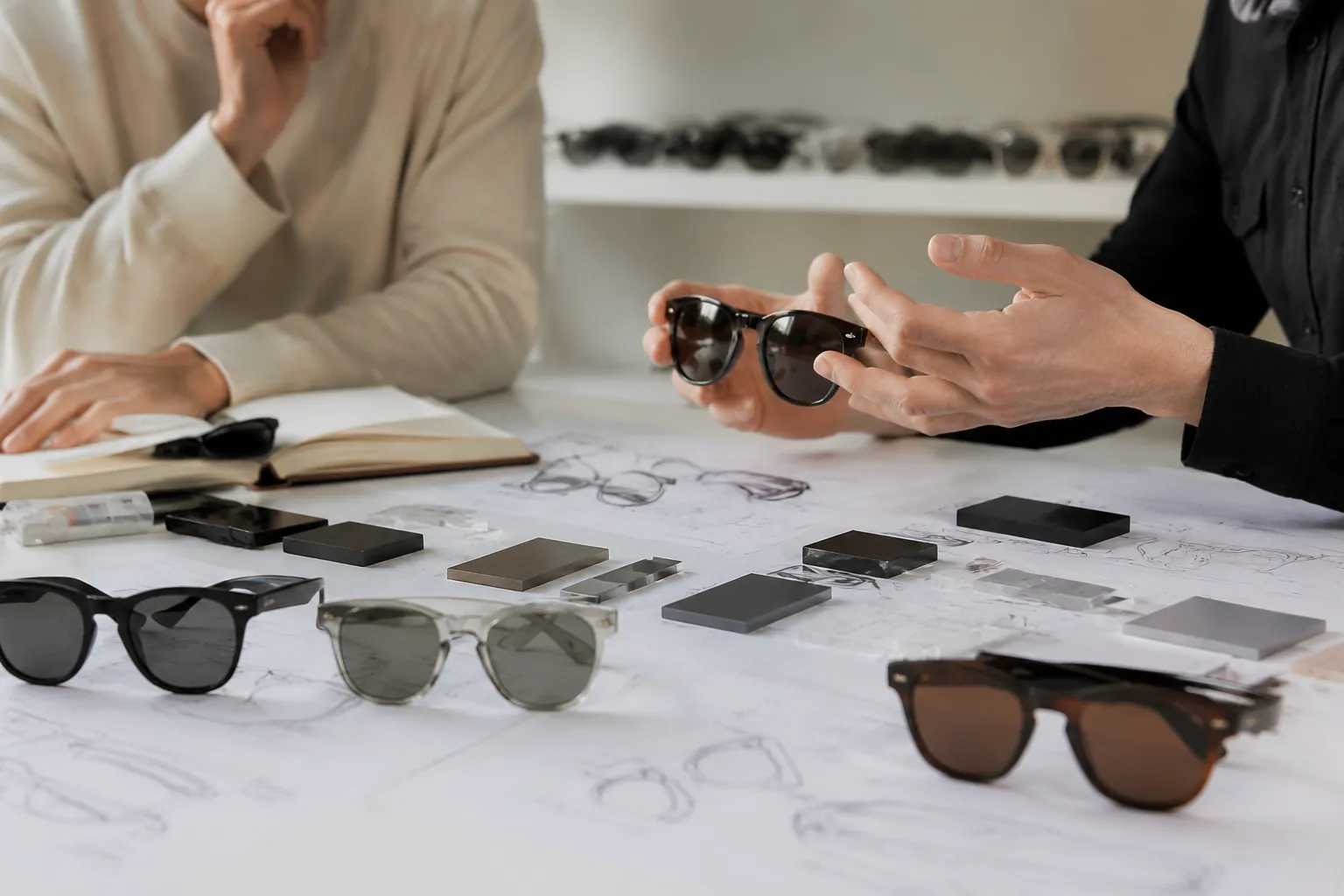
This article is for brand owners, importers, distributors, and retail buyers deciding whether to fund exclusive sunglass tooling or launch from an existing factory mold. The wrong choice rarely shows up on the first sample invoice. It shows up later in weaker margins, slower reorders, engineering fixes, and products that are hard to distinguish at retail. The right choice depends on lifetime volume, target margin, required differentiation, compliance needs, and how long the style is expected to stay in line. Use the framework below before approving samples, tooling, or a launch PO.
Start With the Real Decision: Reorder Economics
Private mold is usually not a design decision first. It is a capital decision tied to reorder probability. If a style is unlikely to reorder, exclusive tooling is often hard to recover. If the frame is planned as a carryover SKU for 12 to 24 months, or as a brand-signature shape that will be replenished, the economics change fast.
Open mold means the factory already owns the base frame tooling and has produced that structure before. You customize around that platform through color, lens tint, logo application, finish, and packaging. Private mold means paying for new frame geometry, usually including new tooling for the front and temples and, depending on the design, extra development for temple tips, metal trims, inserts, or logo recesses.
For most buyers, the decision comes down to four measurable questions:
- Expected lifetime volume: not the first PO, but the total units likely to ship over the life of the style.
- Margin lift from exclusivity: whether a unique shape can support a higher sell-in price, stronger retail positioning, or lower markdown risk.
- Speed to market: whether the program needs a fast sample cycle and short production window, or whether the calendar can absorb development time.
- Technical tolerance for risk: whether the launch is based on a proven construction or requires a new frame, lens seating profile, and decoration method to be stabilized together.
If you are testing a seasonal trend, an influencer drop, or a retail program with uncertain sell-through, open mold is usually the disciplined choice. If you are building a hero shape expected to anchor the line across reorders, private mold can make sense. Tie the decision to forecast, margin, and reorder odds. Not visual preference alone.
A Side-by-Side Decision Table
| Factor | Open Mold | Private Mold |
|---|---|---|
| Upfront cost | Lower. Usually limited to sampling, color matching, lens setup, decoration setup, and packaging development. | Higher. Tooling, CAD development, prototype sampling, fit correction, and first-run validation create a meaningful pre-bulk cash requirement. |
| MOQ logic | Often more flexible because the base frame already exists. Minimums still depend on material, lens, decoration, and packaging choices. | Usually requires stronger confidence in repeat volume because development cost must be absorbed across future units, not just the launch order. |
| Sample lead time | Typically shorter when colors, logo placement, and lens treatments are straightforward and the frame already exists. | Usually longer because CAD approval, prototype iteration, tooling, and engineering corrections may be required before approval. |
| Bulk lead time | Often shorter after sample approval for standard materials and packaging. | Commonly longer on first production because tooling validation, process tuning, and yield stabilization happen before the first finished lot. |
| Design exclusivity | Low to moderate. You may own the branding and visual treatment, but not the core frame silhouette. | Higher, provided the tooling agreement clearly defines ownership or exclusivity by market, channel, or style. |
| Technical risk | Lower. The frame has already been molded, assembled, glazed, and packed before. | Higher. Warpage, hinge alignment, lens fit, temple balance, and decoration consistency may require multiple engineering corrections. |
| Best fit | Trend tests, fast retailer programs, promotional runs, line extensions, and early-stage brand launches. | Core carryover styles, higher-margin branded collections, protected channels, and long-life SKUs where sameness is a pricing problem. |
The table gives the outline. The real call sits in the cost structure underneath it, especially how quickly development cost can be recovered across planned reorders.
Where the Money Goes: MOQ, Unit Price, and Tooling Recovery
Many buyers compare quoted unit prices and stop there. That is not enough. The bigger issue is funding tooling for a style that never reaches a second or third order. Open mold reduces that risk because more of the spend stays tied to materials and execution rather than sunk development.
Private mold adds a separate pre-production cost bucket that open mold programs usually do not carry in the same way:
- CAD engineering: converting a sketch, tech pack, or reference sample into production geometry with workable wall thickness, draft, hinge placement, and lens fit.
- Tooling: molds for injected fronts and temples, or machining programs, fixtures, and finishing references for acetate construction.
- Prototype correction: trial parts, fit reviews, dimensional checks, and modifications before pre-production sample approval.
- Validation cost: checking hinge torque, lens insertion force, cosmetic yield, assembly consistency, and packaging fit before the first bulk lot is released.
There is also hidden cost in yield loss. A mature open mold shape may already be producing with predictable reject rates. A new private mold shape usually is not. On injection frames, resin shrinkage, gate location, cooling balance, and ejection force can contribute to temple twist or front warpage. On acetate, CNC pathing, polishing loss, and sheet-thickness variation can push dimensions outside target if the design is too tight for the material. Scrap costs money. Even when it is not listed separately on the initial quote.
The takeaway is simple. If projected total volume is limited and reorder odds are weak, private tooling usually needs a clear margin benefit to justify itself.
Use a Basic ROI Test Before You Approve Tooling
You do not need a full finance model to make the first call. A simple three-step test is often enough.
Step 1: Estimate total unit volume over the expected life of the style. Use conservative units, not the internal best case.
Step 2: Estimate the gross-margin difference between the private mold version and the best available open mold alternative.
Step 3: Compare that added gross margin to total development spend, including tooling, prototype rounds, validation cost, and likely first-run inefficiency.
The logic is plain. If the private mold version costs more to develop and produces only a small margin improvement, you need enough lifetime volume to recover that gap. If the style is expected to reorder and exclusivity supports better pricing or stronger channel protection, the economics may work. If the style is unlikely to reorder, the same tooling spend may stay unrecovered.
A practical rule for buyers:
- Low projected lifetime volume: open mold is usually the default starting point.
- Mid-range projected lifetime volume: the decision depends on brand price power, channel strategy, and confidence in reorder.
- High projected lifetime volume with credible replenishment: private mold becomes easier to justify if the design supports stronger pricing or meaningful differentiation.
If you cannot explain how tooling cost will be recovered across planned units, the private mold decision is not ready for approval.
How Far Open Mold Can Go Before You Need New Tooling
Many buyers move to private mold too early because they underestimate how much differentiation an existing frame platform can still deliver. In eyewear, silhouette matters. So do finish quality, lens appearance, branding execution, and packaging.
On an open mold program, customization often includes the following details:
- Frame material and finish: for example, standard injected plastics or acetate, with matte, gloss, transparent, crystal, or frosted finishes where the construction supports them.
- Lens treatment: such as smoke, brown, green, solid fashion tints, gradient, or mirror effects, provided the lens specification remains appropriate for the destination market.
- Branding method: pad print, laser engraving, hot stamping, inner temple markings, or fitted metal logo components where the structure allows consistent application.
- Packaging set: microfiber pouch, cleaning cloth, folding box, barcode label, warning insert, and export carton marking.
What usually cannot be changed without new tooling is the core frame architecture: lens eye shape, bridge geometry, brow line, temple cross-section, hinge position, and overall visual signature. If those features sit at the center of the brand proposition, private mold is usually the right path.
Decoration method affects both cost and durability. Pad printing is efficient for logos and temple text but depends heavily on surface preparation and wear conditions. Laser engraving is more permanent on suitable substrates but creates a different visual result. Metal logo components can signal a more premium product, yet they require consistent recess dimensions and tighter assembly control. Even on an open mold frame, these choices can change the commercial feel of the SKU in a real way.
Private Mold Failure Modes: The Problems That Burn Time
Private mold is where expensive surprises usually show up. Most are not dramatic. They are small engineering misses that become obvious only when the frame is produced repeatedly, assembled at speed, and worn on face instead of reviewed in CAD.
Typical failure modes include:
- Pantoscopic balance issues: the frame looks correct on screen but sits poorly because front angle, temple bend, and weight distribution were not resolved during prototyping.
- Lens retention problems: groove depth, lens curve, or front opening tolerance is off, so insertion is either too loose or so tight that it causes stress marks or cracking.
- Hinge alignment drift: left and right temples close unevenly because shrinkage, insert positioning, or assembly fixtures were not fully tuned.
- Decoration yield loss: a metal logo recess varies in depth, or pad-print registration shifts because the print area is too small or too curved.
- Material-behavior mismatch: a thin acetate concept may lose strength after polishing, while an injected shape may require thicker sections to control twist or sink.
This is where process control matters. When molding, machining, lens processing, decoration, and QC are coordinated closely, debugging is faster because the issue can be traced more directly. Risk does not disappear. The correction loop just gets shorter and accountability gets clearer.
Ask for measurable first-article checkpoints before bulk approval. Front width, bridge opening, temple length, left-right symmetry, lens thickness, and hinge function should be checked against target values. Review critical dimensions in millimeters, not by appearance alone. Small drift in the wrong area can affect fit, alignment, or lens seating.
Compliance and Lead Time: Why the Safer Route Can Be Faster
A unique frame shape has limited value if it does not fit the compliance path for the market you are shipping into. Sunglasses sold into different countries may require different test references, labeling, and document handling even when the product looks similar.
The key point is not to list standards in a deck. It is to confirm that the exact SKU configuration, especially the lens, labeling, and materials, matches the destination market before the style is locked.
- CE EN ISO 12312-1: commonly relevant for Europe. Lens category, UV performance, and product labeling should match the actual lens fitted in production.
- ANSI Z80.3: a key US reference for non-prescription sunglass performance and labeling.
- AS/NZS 1067: relevant where Australia or New Zealand requirements apply.
- REACH: relevant for chemical compliance of applicable materials, coatings, and finishes for the EU market.
- FDA registration: sometimes referenced in US importer documentation, but it does not replace product-specific compliance review.
- ISO 9001: indicates a quality-management system, not product certification.
- BSCI: relates to social compliance auditing, not product certification.
This affects the mold decision more than many buyers expect. An open mold frame with a proven lens size, thickness, and assembly method usually offers a more predictable validation path. A private mold with a new eye shape, deeper wrap, or different lens thickness may require extra testing, sample revision, or labeling review. That adds time before bulk production starts.
The practical buying sequence is simple:
- Define the role of the style: trend test, promotion, or long-life carryover.
- Map conservative demand: use likely reorder volume, not best-case ambition.
- Price the open mold option first: if it reaches most of the commercial target, it may be the stronger business decision.
- Request stage-based timing for private mold: CAD, prototype, correction, PP sample, and bulk, not one vague delivery date.
- Confirm compliance path early: market standard, lens category, labeling, and documentation requirements before production approval.
- Pressure-test the reorder plan: if there is no credible second order, private tooling is often premature.
Many profitable sunglass programs stay on open molds longer than internal teams first expect. Private mold earns its place when it protects pricing, reduces direct comparability, and has enough reorder life to recover the upfront spend. Otherwise, preserve cash and move faster.
Have a custom sunglasses project in mind?
Send us your styles, target market and quantities and we will return a detailed quote with MOQ, lead time and a sample plan.
Get a QuoteWhy source this from Wenzhou with LumiShades
Wenzhou in Zhejiang Province is widely regarded as China’s eyewear manufacturing capital, producing a large share of the world’s sunglasses. That concentration matters to buyers: a deep local supply chain for acetate sheet, hinges, lens blanks, plating and packaging means shorter component lead times, easier color and material matching, and a workforce with decades of eyewear-specific skill. LumiShades has manufactured in this ecosystem since 2009, and our vertical integration — in-house injection molding, acetate cutting, CNC milling, lens tinting, decoration and quality control — means no part of your order is quietly subcontracted to a workshop you cannot audit.
For international buyers, that vertical control translates into accountability. When a single factory owns every step, defects are traced and fixed at source rather than bounced between vendors, and your specifications survive intact from first sample to bulk. We back this with 15+ years of experience, shipments to 60+ countries, more than 5 million pairs produced per year and a 98.5% on-time delivery rate. Our certifications — CE EN ISO 12312-1, FDA registration, ANSI Z80.3, AS/NZS 1067, REACH, ISO 9001 and BSCI audit — mean the compliance documentation your market requires already exists. Explore our manufacturing capabilities and quality control process to see how this works in practice.
Frequently asked questions
At what volume does private mold usually start to make sense? There is no universal number because tooling cost, target margin, and reorder certainty vary by construction and market. In practice, private mold makes more sense when you can forecast repeat orders with enough confidence to spread development cost across the full life of the style, not just the launch PO. Before approving tooling, ask the supplier for a clear breakdown of development cost, estimate conservative lifetime volume, and calculate how many units are required to recover that spend at your expected gross-margin uplift.
Can I still make an open mold product look exclusive? Yes, within limits. You can differentiate an open mold program through color development, lens tint, surface finish, logo method, metal logo components where structurally feasible, and custom packaging. Those choices can materially change perceived quality and market position. What remains shared is the underlying frame geometry, so ask the supplier to confirm exactly which elements are customizable and whether any visual treatments are reserved for other customers in your target market.
How much faster is open mold than private mold? Open mold is typically faster because the base frame already exists and has been produced before. Private mold usually adds time for CAD review, prototype sampling, corrections, tooling, and first-run validation. Do not rely on a generic promise. Request a stage-by-stage timeline for both options: sample development, approval, pre-production sample, compliance testing if needed, and bulk production. That gives you a usable calendar for retailer commitments and seasonal delivery.
What should I ask for before approving a private mold for bulk? Ask for a pre-production approval package that includes first-article measurements, fit photos, hinge alignment review, lens retention confirmation, decoration position approval, packaging confirmation, and the compliance path for the destination market. The measurement sheet should cover at least front width, bridge opening, temple length, lens dimensions where relevant, and left-right symmetry. Also ask which issues were corrected between prototype and PP sample so you know what risks may still remain in first bulk production.
Do certifications carry over automatically from one frame to another? No. Compliance depends on the actual SKU configuration, especially lens specification, labeling, and sometimes material or coating choices. A report or declaration tied to one sunglass configuration should not be assumed to cover another without review. Buyers should ask which standard applies to the destination market, whether the exact lens category and labeling have been verified for the production SKU, and what documentation will be available before shipment.
Ready to start?
Explore our rimless sunglasses or request a quote — our sales team replies within 12 hours.
Request a Quote