
Private-Label Sunglasses Packaging That Sells
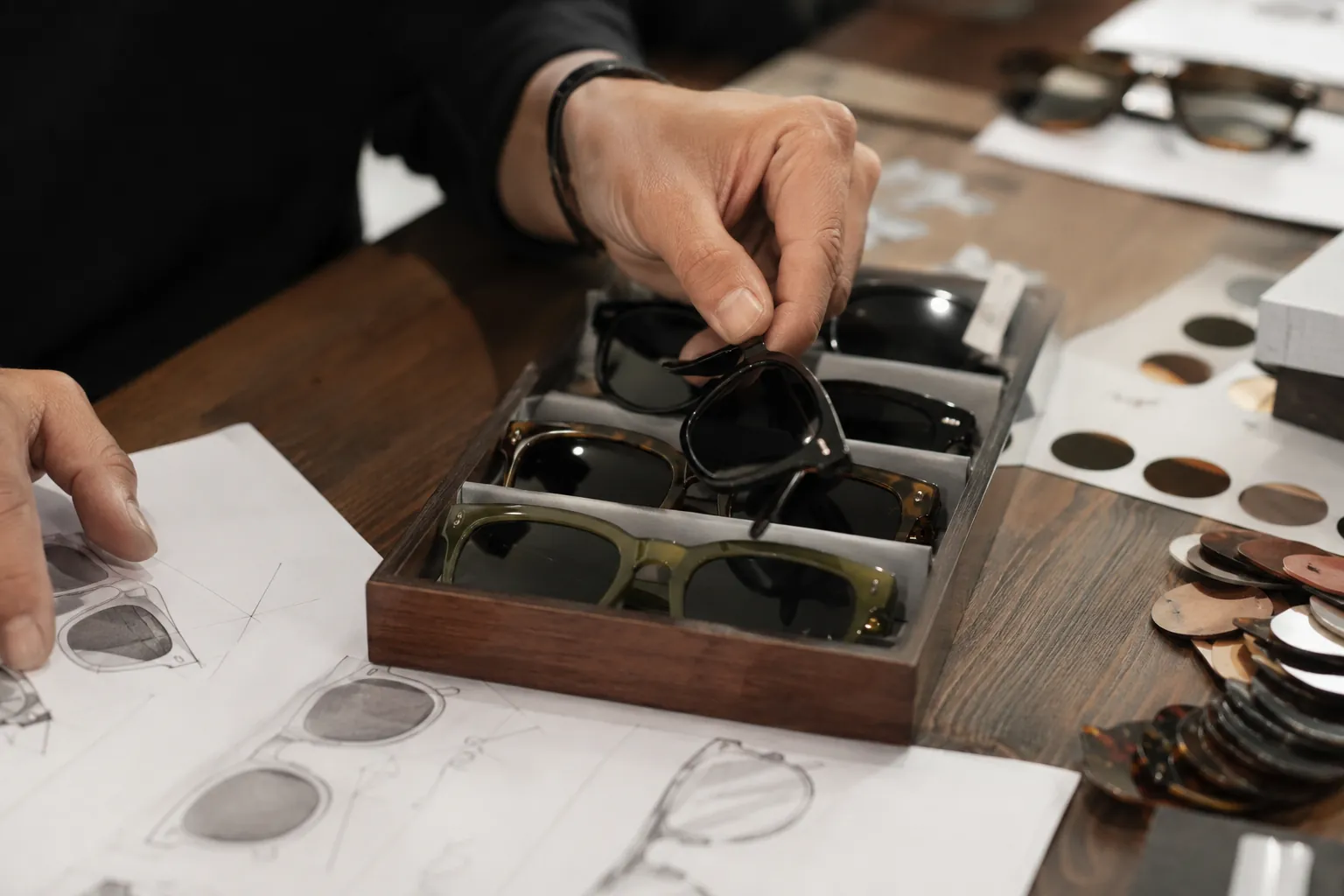
For brands, importers, distributors, and retailers buying private-label sunglasses, packaging is a product decision, not decoration. It affects shelf impact, transit damage, checkout speed, carton efficiency, and whether a reorder matches the first run. Cheap is not always cheap once you count returns, repacking, and missed sell-through. This guide covers what to specify, what to avoid, and how to keep packaging consistent from sample to repeat order.
Start with the job the package must do
Sunglasses packaging has four basic jobs: protect the frame and lenses, help the product sell in a display or gift setting, carry the correct barcode and product information, and repeat cleanly on reorders. Miss one of those, and the costs show up later. Crushed corners. Scratched lenses. Slow scans. Mismatched labels.
The right package depends on the channel. Mass retail needs fast scanability, compact size, and efficient carton use. Gift and promo programs care more about presentation. E-commerce needs drop resistance, strong closure, and manageable dimensional weight. Distributors care about master carton efficiency, count accuracy, and whether mixed SKUs can be packed without confusion. The channel should drive the spec. Not the other way around.
As a practical target, many buyers want packaging that keeps the frame stable, prevents lens-to-frame contact, and avoids visible abrasion on coated surfaces. That is not a universal rule. It is a useful baseline when comparing options.
LumiShades can coordinate packaging with frame production because the factory handles injection molding, acetate cutting, CNC milling, lens tinting, decoration, and final QC in-house. That makes it easier to control box size, insert fit, and barcode placement in one production flow instead of splitting them across multiple suppliers.
Choose the right packaging stack
Think in layers. Each layer solves a different problem, and you do not always need every layer. The goal is to build the lightest stack that still protects the product and supports the channel.
| Component | Main function | Typical spec detail | Best use case | Trade-off |
|---|---|---|---|---|
| Retail box | Shelf presence and primary protection | 300–400 gsm paperboard, matte or gloss lamination, 1–2 mm dimensional tolerance | Mass retail, club, gift sets | Higher unit cost and more carton volume |
| Microfiber pouch | Lens protection and perceived value | 180–220 gsm microfiber, overlock or heat-cut edge, 1-color to 4-color print | DTC, fashion brands, promotion | Weak crush protection by itself |
| EVA or molded insert | Prevents movement in transit | Die-cut EVA, flocked EVA, pulp tray, or thermoformed tray; cavity clearance typically 1.5–3.0 mm | Premium sets, export shipping | Tooling or setup cost |
| Hang tag and barcode label | Retail scanning and SKU control | UPC, EAN-13, or Code 128 on matte white stock with dark ink, quiet zone preserved | Chain retail, distributors | Requires clean data and artwork control |
A bare pouch can work for low-cost giveaways or short transit. It is usually not enough for retail shelf display if the frame can move and arrive scuffed. A carton with a proper insert is better for long-distance shipping, stacked master cartons, or multi-unit shippers. For acetate frames, a snug insert matters because thicker temples can create pressure points at the hinge and temple tip. For injection frames, the package needs to stop temple spring from deforming the lid or pushing the frame out of alignment.
Most suppliers work best when you define a simple stack by channel. For example: retail box plus microfiber pouch plus paper insert for shelf programs; rigid box plus molded tray for premium gifting; pouch plus mailer plus internal pad for direct-to-consumer. More layers mean more chances for mismatch between artwork, dimensions, and barcode placement.
Use the stack to match margin. If the pair sells at $12 to $25 retail, a better box and insert can often pay off because the package supports presentation and lowers damage. If your landed target is tight, keep the structure simple. Do not cut barcode quality, pouch quality, or inner protection just to save a small amount per unit.
Specify the box artwork clearly
Private-label packaging fails most often because artwork files are vague. Say exactly what must appear on the box and where it goes. Do not assume the printer will choose the right hierarchy. Do not assume a sales mockup is enough for production.
A practical box copy spec usually includes the brand name, logo, model name or style code, color code, lens tint description, barcode type, country-of-origin line if required, and any retailer-requested material or care notes. If the buyer expects a hang tag, outer box, and master carton to share a common code structure, define that before artwork is released.
Keep the layout stable across colorways. The elements that should change from variant to variant are the style code, color code, and barcode. If every color has a different box layout, reorders get messy quickly. Warehouse staff are more likely to mis-pick, especially on smaller orders.
For barcode work, ask for a clean print zone with enough contrast and a quiet zone around the bars. Black on matte white is the safest choice. Glossy dark artwork may look better in a concept render, but it can scan poorly under store lighting or on a worn box. If you need the barcode on the hang tag instead of the box, specify it early. Late changes waste printed stock and slow approval.
Decoration method matters too. Common methods in eyewear packaging include offset printing, hot stamping, spot UV, embossing, debossing, and soft-touch lamination. Offset printing is flexible for full-color graphics. Hot stamping works well for logos and premium cues, but it is less forgiving on very fine type. Spot UV can help a mark stand out, but overuse looks busy on a small box. If the box has to stay within a tight retail facing width, restraint usually sells better than effects.
LumiShades handles laser engraving, pad printing, and metal logo plates in-house, so the packaging mark and frame mark can be aligned to the same brand standard. That helps when buyers want the temple logo, pouch print, lens print, and box artwork to use the same code language. It also cuts revision cycles because one branding decision can carry across all components instead of being reinterpreted by separate vendors.
Pick materials by channel, not habit
Material choice affects more than appearance. It affects scuff resistance, moisture behavior, folding quality, and freight cost. The right material is the one that performs in your shipping lane and still looks good at the point of sale.
| Material | Look and feel | Protection | Typical spec | Best use | Watch out for |
|---|---|---|---|---|---|
| Paperboard box | Clean, printable, low cost | Medium | 300–400 gsm, matte or gloss lamination | Mainstream retail | Corner crush if too thin or overfilled |
| Rigid setup box | Gift-like, heavier | High | 1200–1500 gsm greyboard wrap | Premium channels | Higher freight and unit cost |
| Microfiber pouch | Light, soft, reusable | Low to medium | 180–220 gsm, drawstring or envelope style | DTC and lifestyle brands | Not enough by itself for export transit |
| EVA insert | Functional, stable | High | Die-cut or flocked, 1.5–3.0 mm fit clearance | Long-haul shipping | More tooling and setup planning |
| Pulp tray | Simple, eco-leaning | Medium | Compression-molded or formed pulp | Value retail and export | Surface dust and a less premium feel |
Paperboard is usually enough if the sunglasses also sit inside a pouch and the master carton is packed properly. Rigid boxes are mainly a shelf and gifting decision. They are not automatically better for sell-through, and they can hurt shelf density. Retailers often dislike bulky packaging if facings are limited, especially in planograms where depth matters more than display height.
For acetate frames with polished surfaces, avoid rough inserts that can mark the temple tips or bridge area. For mirrored or coated lenses, use a lens film or pouch fabric that will not leave residue. If you use a flocked tray, verify that the flock does not shed onto the lens coating. If you use a paper insert, make sure the fold lines do not create pressure points on the hinge.
Humidity and storage matter too. Paperboard can warp in damp warehouses, and soft-touch lamination can show edge wear if cartons rub during export transit. If your route crosses hot, humid ports, test the pack in a small batch before you commit to volume. A package that looks right in a showroom can behave differently after storage or transit.
Lock the barcode and SKU logic early
Packaging is also a control system. If your box, label, and packing list do not use the same SKU logic, repeat orders can go wrong. The result is mixed cartons, mismatched colors, and store returns that cannot be traced back to a specific style or packaging version.
Use one master SKU structure. Keep style, color, lens, and packaging revision in the code. Example logic: style code first, then frame color, then lens color, then packaging revision. The exact format is your choice. The point is that every system downstream can decode it without guessing.
Before mass production, ask the supplier to confirm three things: barcode scan testing on the actual printed label, match between carton label and inner box label, and proof that the artwork version number is fixed for the full purchase order. Do not accept a PDF-only proof if the actual label stock, coating, or print process differs. A label that scans on screen can fail in production if the bars fill in or the quiet zone is too tight.
There is also a tolerance issue. If the label is placed too close to a fold, corner, or seam, it may wrinkle and become unreadable. Leave enough flat area for the scanner window and keep the print location consistent within a small tolerance, not just roughly centered. If your warehouse uses automated scanning, test the actual production label at the same distance and angle the warehouse will use.
This is where in-house QC helps. LumiShades runs QC in-house and ships to 60+ countries, so it is set up for export labeling discipline. That matters because different markets may need different label content, and the easiest place to catch errors is before cartons leave the line.
- Confirm barcode symbology before artwork release.
- Test the printed label on the real stock, not a mockup.
- Match the SKU on the box, master carton, and packing list.
- Lock one revision number for the full PO.
See how packaging affects shelf sell-through
Retail sell-through is not just about frame design. Packaging changes how long a buyer stops, what they assume about quality, and whether the product feels giftable or basic. A strong package can improve shelf confidence even when the frame itself is simple.
Three things matter most: front-of-pack clarity, physical confidence, and opening experience. Front-of-pack clarity means the brand name, model name, and lens type should be readable from arm's length. Physical confidence means the box should not look crushed, overfilled, or flimsy. Opening experience means the buyer should be able to open it without tearing the carton or pulling the temple out of shape.
Packaging dimensions matter more than many buyers expect. A box that is 3 to 5 mm too tall can look loose and cheap. A box that is 2 to 3 mm too tight can bow at the seam or pinch the hinge. When you sample, check the actual frame fit with the pouch included, because the pouch often changes the effective pack size more than the frame itself.
In a retail setting, a package that looks too small can read as low value. A package that is too large can waste shelf space and hurt facing count. The usual answer is a box just big enough to protect the frame, with a tidy insert and restrained artwork. Bright graphics can help in fashion channels. In premium channels, cleaner print, heavier stock, and fewer visual elements usually perform better.
Do not over-design the inside if the store never sees it. Retailers mainly see the front, spine, and stackability. Buyers often spend too much on an inner print treatment nobody notices. If the inner print does not support protection or scanning, that budget is often better spent on better board stock, better lamination, or a more stable insert.
Sample, approve, then freeze the version
Packaging should be sampled before bulk production, just like the frames. That is when you catch fit issues, barcode problems, and print mismatches while the cost of change is still low.
A practical approval flow is simple: approve the box dieline and dimensions, confirm print file and barcode references, review a physical sample with the actual frame inside, check carton closure and handling, then lock the revision number before bulk. If the package includes a molded insert or EVA tray, check cavity depth and retention force as part of the sample, not after mass production.
Do not approve from a digital mockup alone. Paper stock, coating, crease memory, and folding behavior change the final result. A matte finish can hide fingerprints better than gloss, but it may also mute the graphics. Soft-touch laminate feels good, yet it can show edge wear in transit if cartons rub against each other in master cartons or on pallets.
MOQ matters here too. If you are testing two packaging routes, test them at the sample stage. Changing boxes after the order is already in motion usually costs more than the packaging upgrade itself because it can trigger reprint, repacking, and revision delays.
If you expect recurring orders, write the sample signoff like a controlled document. Include box size, board weight, print process, barcode format, insert type, pouch material, and approved revision number. That one page saves a lot of back-and-forth when the reorder comes in six months later and someone wants to use the same box without remembering which version was approved.
Use this checklist before the PO
Use this before you sign off:
- Box size fits the actual frame, pouch, and insert with no squeeze or excess movement.
- Artwork includes the final SKU, barcode, and market-specific text.
- Material choice matches the channel: retail, gift, or e-commerce.
- Print quality is checked on a physical sample, not only a render.
- Packaging revision number is fixed for the entire order.
- Carton packing count and master carton label are confirmed.
- Compliance references are correct for the target market.
For compliance, keep the language precise. Use only the certifications and registrations that actually apply to the product and market, such as CE EN ISO 12312-1, ANSI Z80.3, AS/NZS 1067, REACH, FDA registration, ISO 9001, and BSCI. Do not add claims that are not documented. If you are selling into the EU, U.S., or Australia, the product file and label set need to match the relevant market requirements.
Also confirm the carton count and master carton dimensions before the PO is released. Freight costs can change materially if the final outer carton is larger than planned across multiple sides. A small dimensional shift can affect how many units fit on a pallet and whether the shipment crosses a freight bracket.
Good packaging does not rescue a weak product. It does reduce damage, confusion, and rework. That is enough reason to treat it as part of the product spec, not a last-minute print job.
Have a custom sunglasses project in mind?
Send us your styles, target market and quantities and we will return a detailed quote with MOQ, lead time and a sample plan.
Get a QuoteWhy source this from Wenzhou with LumiShades
Wenzhou in Zhejiang Province is widely regarded as China’s eyewear manufacturing capital, producing a large share of the world’s sunglasses. That concentration matters to buyers: a deep local supply chain for acetate sheet, hinges, lens blanks, plating and packaging means shorter component lead times, easier color and material matching, and a workforce with decades of eyewear-specific skill. LumiShades has manufactured in this ecosystem since 2009, and our vertical integration — in-house injection molding, acetate cutting, CNC milling, lens tinting, decoration and quality control — means no part of your order is quietly subcontracted to a workshop you cannot audit.
For international buyers, that vertical control translates into accountability. When a single factory owns every step, defects are traced and fixed at source rather than bounced between vendors, and your specifications survive intact from first sample to bulk. We back this with 15+ years of experience, shipments to 60+ countries, more than 5 million pairs produced per year and a 98.5% on-time delivery rate. Our certifications — CE EN ISO 12312-1, FDA registration, ANSI Z80.3, AS/NZS 1067, REACH, ISO 9001 and BSCI audit — mean the compliance documentation your market requires already exists. Explore our manufacturing capabilities and quality control process to see how this works in practice.
Frequently asked questions
Should I use a rigid box or paperboard box for private-label sunglasses? Use paperboard for mainstream retail, e-commerce, and tighter freight targets. Use a rigid box only if the channel pays for gifting value or premium presentation. If the product needs to ship long distance, a paperboard box with a well-fit insert is often the better balance of cost, protection, and carton efficiency.
Do I need a microfiber pouch if I already have a box? Usually yes. The pouch helps protect lens surfaces during handling and gives the customer a reusable accessory. It also improves perceived value in fashion, DTC, and gift-oriented programs. If you omit it, make sure the box insert and interior finish still protect the lenses from rubbing.
Where should the barcode go? Put it where warehouse staff and cashiers can scan it quickly, usually on the outer box or hang tag. Keep it high contrast, preserve the quiet zone, and test it on the actual label stock before bulk production. If a retailer specifies a barcode location, follow that spec exactly.
How many packaging versions should I run at once? Keep it to one locked version per purchase order if possible. Too many variants create pick errors, carton mix-ups, and slower reorders. If you need multiple versions, keep the code structure consistent and limit changes to the fields that truly need to vary.
Can I change packaging after sampling? Yes, but only before the bulk run is locked. After that, even small changes can trigger reprint, repacking, and schedule delays. If the change affects the barcode, insert, or dieline, treat it as a new approval and confirm the new sample before release.
What packaging details matter most for repeat orders? Box dimensions, revision number, barcode format, and SKU logic matter most. Those four items control whether the reorder matches the first shipment. Material and decoration specs matter too, but these four are the fastest way to prevent expensive mistakes on repeat production.
Ready to start?
Explore our aviator sunglasses or request a quote — our sales team replies within 12 hours.
Request a Quote