
Private Label Sunglasses for Resort Buyers
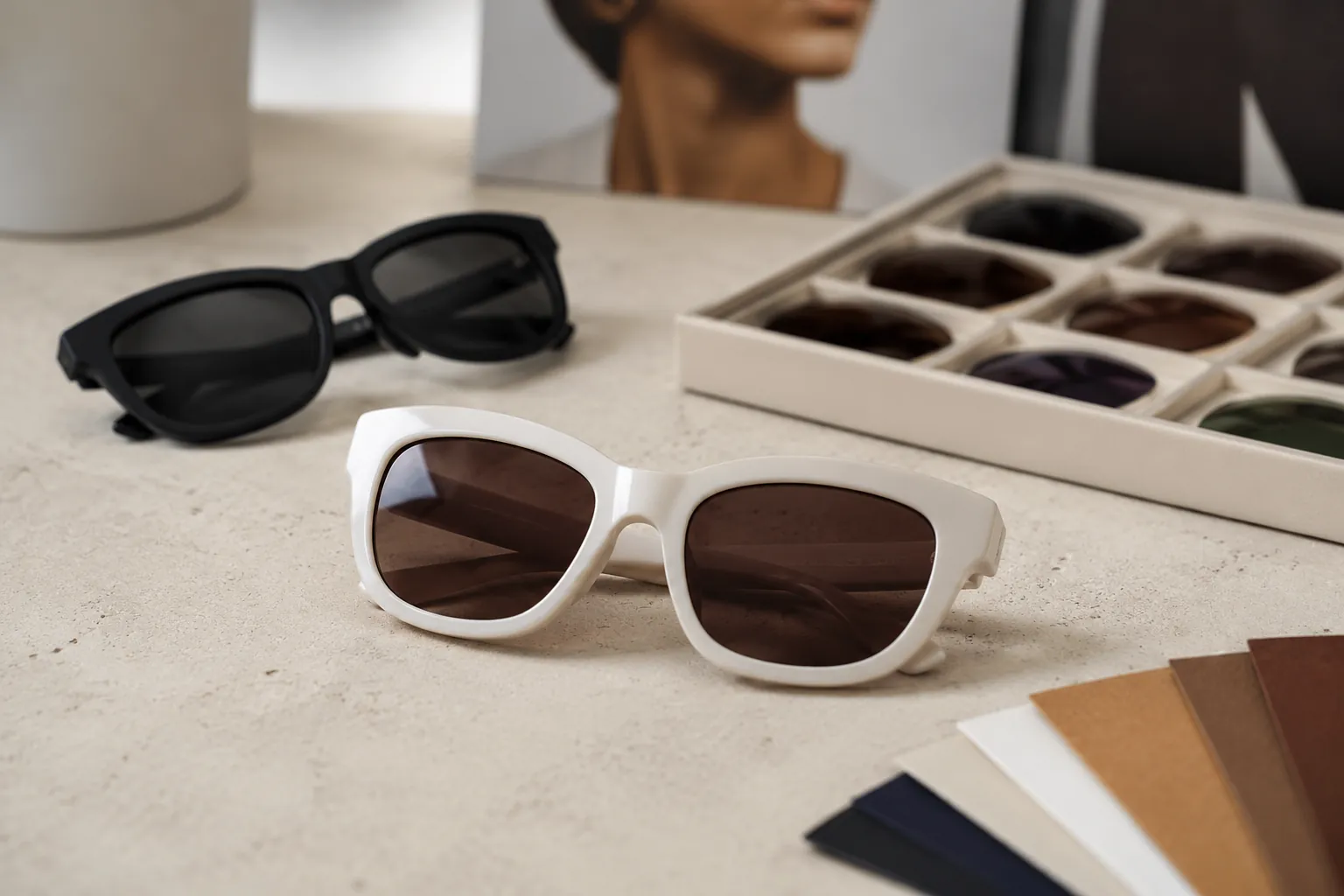
This guide is for resort buyers, duty-free operators, hotel retail teams, distributors, cruise retail planners, and beach shop chains sourcing private label sunglasses in volume. It covers assortment planning, frame and lens specifications, branding, packaging, purchase orders, quality checks, compliance, and replenishment. The aim is simple: reduce dead stock, prevent avoidable quality disputes, and make repeat orders easier to place from real sell-through data.
Start with the sales environment, not the catalog
Destination retail does not behave like regular fashion retail. Guests often buy sunglasses because a pair was forgotten, broken, lost, or wrong for local glare. The purchase is quick. It may happen before a boat trip, beach day, tour, or hotel checkout.
That means the range must be easy to understand, easy to try on, and easy for staff to replenish. Start with four limits: target retail price, display capacity, season length, and reorder window. A compact spinner rack does not need a different frame mold in every slot. Too many similar SKUs blur the sales data and slow replenishment decisions.
A stronger structure uses fewer core styles, then controls color and lens variants. Hotel boutiques may need fewer frames, better finish, and stronger packaging. Duty-free stores may have more space and longer shopper dwell time, but the main volume should still sit in proven, wearable shapes.
For a first private label test, ask the supplier to confirm minimum order quantity by design, color, lens type, and packaging format. LumiShades supports low-MOQ development for selected programs. Final MOQ depends on mold status, material, decoration method, lens specification, packaging, and inspection requirements. Test new shapes, destination graphics, and fashion colors in smaller quantities. Put larger production runs behind styles that have already sold at the intended retail price.
Build the range around fit, use, and price
Many weak resort assortments fail for one reason: they contain too many versions of the same idea. Three oversized square frames in black, smoke, and tortoise may look different on a line sheet. On the shop floor, they fight for the same buyer.
Cover the actual need instead. Plan by face size, gender presentation, activity level, and price tier.
| Style group | Best use in destination retail | Specification notes | Typical first-order logic |
|---|---|---|---|
| Wayfarer-style injected frame | Beach shops, family resorts, resort convenience retail | Broad fit appeal; common in PC or TR90; confirm lens width, bridge, temple length, and hinge quality on sample | Suitable for a larger first order when the target customer and fixture are broad |
| Round or panto frame | Hotel boutiques, lifestyle resorts, cruise retail | More fashion-led; avoid overly narrow bridges; test on several face sizes before bulk approval | Best introduced in controlled quantities until sell-through is proven |
| Aviator or metal-look frame | Duty-free, marina shops, adult resort retail | Check nose pads, lens retention, screw torque, plating quality, and corrosion resistance for humid or salt-air locations | Approve QC samples before committing to depth |
| Sport wrap or semi-wrap | Fishing, boating, cycling, water sports counters | Needs grip, stable hinges, controlled lens curve, and often polarized lenses | Buy deeper only where glare reduction or active use is a clear selling point |
| Kids or junior frame | Family resorts, theme hotels, beach shops | Smooth edges, age-appropriate fit, impact-aware design, and clear compliance information | Order by color and age fit, using family traffic as the planning base |
A practical first assortment gives most space to core classics. Sport, fashion, kids, and destination-specific items get smaller allocations until sales data proves demand.
Material choice changes cost, weight, feel, durability, and lead time. PC is common for cost-controlled entry retail. TR90 is lighter and more flexible, which helps in active and family settings. Acetate gives richer color and a more premium feel, but it needs cutting, tumbling, polishing, hinge fitting, and more labor. LumiShades has in-house capacity for injection molding, acetate processing, and CNC milling, so buyers can combine volume injected frames with a smaller acetate capsule when the price architecture supports both.
Choose lenses by sunlight, activity, and market rules
Lens selection is not just a color choice. It affects comfort, compliance documents, returns, staff selling points, and unit cost. A marina counter, desert resort, beach shop, ski destination, and hotel boutique may need different lens plans.
- UV400 tinted lenses: A common baseline for sunwear programs. Specify UV performance in writing. A dark tint does not automatically mean UV protection.
- Polarized lenses: Useful for water, sand, boating, driving, and fishing because they reduce certain reflected glare. Confirm polarization performance on the approved sample.
- Gradient lenses: Good for lifestyle and boutique looks. Less useful where strong overhead and reflected glare are the main problem.
- Mirror coatings: Strong visual impact for sport and beach styles. Inspect coating uniformity, edge defects, adhesion, and abrasion resistance.
- Category 3 sun lenses: Often used for bright conditions, subject to the relevant standard and destination-market labeling rules. Confirm visible light transmission and required warnings before production.
Put the lens specification on the purchase order. Include UV400 requirement, polarized or non-polarized construction, lens category, tint color, visible light transmission target when required, mirror coating, and applicable standard. For mixed shipments, state the destination market for each SKU. Markings, warnings, test reports, and user information can differ by country.
LumiShades can work to recognized eyewear and supply-chain requirements, including CE EN ISO 12312-1, ANSI Z80.3, AS/NZS 1067, REACH, FDA registration, ISO 9001, and BSCI. Request current documents for the destination market before bulk shipment. For U.S. programs, clarify FDA-related importer and product requirements. For EU programs, confirm CE documentation, REACH expectations, and user information language. For Australia and New Zealand, confirm AS/NZS 1067 classification, labeling, and warnings.
Use branding that can survive resort handling
Private label sunglasses need branding. They also need to survive real use. Frames may meet sunscreen, salt air, wet towels, sand, heat, and constant handling. A cheap logo method becomes expensive if it rubs off, corrodes, shifts, or looks uneven across the display.
LumiShades offers laser engraving, pad printing, and metal logo plates. Laser engraving works well for understated temple branding because it does not rely on surface ink adhesion. It can look too subtle on matte, dark, or translucent materials, so approve the exact position, size, and depth on a physical sample.
Pad printing is flexible for colored logos and inside-temple data. Test ink adhesion on the actual frame material and finish, especially rubberized, matte, or high-gloss surfaces. Metal logo plates can make a frame look more premium, but they add assembly steps. Check plating consistency, attachment strength, sharp edges, and corrosion resistance.
| Decoration method | Best use | Process detail to confirm | Main risk |
|---|---|---|---|
| Laser engraving | Small temple logos, inside-arm branding, subtle hotel marks | Logo depth, contrast, temple position, left/right consistency | Logo may be too subtle on dark or transparent frames |
| Pad printing | Colored logos, event collections, inside temple data | Ink formula, curing time, rub test, alcohol or sunscreen exposure check | Peeling, smearing, or uneven coverage on unsuitable surfaces |
| Metal logo plate | Duty-free, hotel boutiques, premium capsule styles | Plate material, plating thickness, adhesive or rivet method, corrosion check | Loose parts, tarnish, or sharp edges if assembly is poor |
| Hangtag or lens sticker | Entry programs, seasonal promotions, destination graphics | Sticker adhesive, residue check, barcode placement, removability | Cheap appearance or lens residue after removal |
Match visible branding to shopper intent. A hotel group may need only a small temple mark and branded pouch. A beach shop in a known destination may sell more with a tasteful location graphic. Decide based on retail context, price point, and whether the guest is buying function, fashion, or a souvenir.
Pick packaging that protects without wasting space
Packaging has three jobs: protect the lenses and frame, carry required product information, and fit the retail fixture. Too much packaging raises freight, storage, and handling cost. Too little packaging leads to scratched lenses and distorted frames before the customer even tries them on.
A polybag with a cleaning cloth or simple pouch can work for high-volume beach retail if the fixture allows easy try-on and staff handling is controlled. A microfiber pouch is often the most practical middle option. It is useful after purchase, light, printable, and easy to standardize across styles. A semi-hard case suits polarized styles, duty-free assortments, and hotel boutique price points. Rigid boxes can look premium, but they take shelf space and increase carton volume.
Before approving packaging, request packed carton dimensions, pairs per carton, gross weight, barcode layout, and product information placement. A unit that looks profitable at product-cost level can lose margin if packaging increases freight volume. This matters for island resorts, cruise supply chains, and remote tourist areas.
Use one common pouch or case size across several frames where possible. It simplifies packing, staff training, and replenishment.
- Confirm the retail fixture: spinner rack, peg hook, counter tray, locked cabinet, boxed shelf, or drawer stock.
- Choose packaging that works with that fixture and still lets customers see the frame shape.
- Approve barcode placement, country of origin, lens category wording, warning text, and destination-market language.
- Review a physical packaging sample before bulk printing.
- Run carton handling and lens scratch checks when the route includes multiple transfers or remote delivery points.
Make samples represent bulk production
Sampling is where vague instructions become expensive. Be specific. LumiShades confirms sample timing by project because mold status, material, lens type, decoration, and packaging all affect the schedule.
The sample should let the buyer check fit, color, lens performance, logo placement, packaging, and display compatibility before bulk production is released. It should include the actual frame material, actual lens category, actual decoration, and proposed packaging. A black injected frame with a clear demo lens does not represent a tortoise polarized model with blue mirror coating.
If the sampling budget is tight, sample fewer colors. Do not remove the components that affect quality, compliance, or customer experience.
Check the physical sample by hand. Open and close each temple repeatedly. Look for hinge wobble, uneven resistance, and loose screws. Place the frame on a flat surface to check rocking. Inspect lens edges for gaps, chips, stress marks, and uneven bevels. Wear the sample outdoors in conditions close to the selling location. For polarized lenses, check glare reduction and screen interaction. Some customers notice LCD darkening or rainbow effects.
Confirm dimensions and tolerances before production. Lens width, bridge, temple length, lens retention, hinge alignment, and frame symmetry should be listed on the QC sheet. Approve color against a physical master sample, not a screen image. If you accept a sample with a visible logo, tint, or color deviation, production may follow that deviation unless the purchase order states the correction clearly.
Plan replenishment before the season starts
Seasonal eyewear has a hard timing problem. By the time a resort knows which color is moving fastest, the season may already be in progress. Do not overbuy every SKU to solve that. Split the program into proven core volume and test volume, then set reorder triggers before the season starts.
Confirm bulk production timing at order stage. It depends on order complexity, material, lens specification, packaging, decoration, factory load, inspection, export handling, and freight route. For a new program, start early enough to allow sampling, document review, packaging approval, production, inspection, and transport. Repeat programs using existing molds, approved artwork, and existing packaging may move faster. Still, peak-season capacity and shipping congestion can cut into the calendar.
| Program type | Suggested first action | Reorder trigger | Quantity logic |
|---|---|---|---|
| New resort private label range | Start development early enough to allow sampling, approvals, production, inspection, and freight | When core styles approach the minimum cover needed for the supplier lead time plus freight time | Use small tests for new styles; buy deeper only on proven basics |
| Repeat beach shop order | Confirm colors, lens mix, packaging, and quantities before peak demand | When sell-through confirms demand and enough season remains to receive and sell replenishment | Increase proven colors, classic shapes, and polarized sport styles first |
| Duty-free promotion | Lock packaging, barcodes, compliance text, and delivery window early | Use fixed campaign quantity unless replenishment space and timing are confirmed | Buy deeper on display-backed SKUs, not on every color |
| Hotel boutique capsule | Sample fewer styles with stronger finish and packaging | Reorder only styles with clear sell-through at the intended margin | Keep fashion colors controlled unless repeat demand is proven |
A practical first buy gives more depth to predictable sellers and less depth to unproven colors or fashion shapes. For example, put the strongest volume behind a black or tortoise core frame, use a moderate quantity for a polarized sport option, and keep destination colors or seasonal graphics limited until store-level sales data supports more.
Put factory and QC checks on the purchase order
A strong sunglasses purchase order does more than list style codes and quantities. It defines the product so factory QC or a third-party inspector can identify incorrect goods without relying on memory, chat messages, or assumptions. Write it down.
Because LumiShades has in-house capabilities across frame production, lens work, decoration, and QC, buyers can tie control points to actual production stages.
- Frame material and finish: Specify PC, TR90, acetate, or other agreed material, plus surface finish, color master, coating, and approved sample reference.
- Lens specification: State UV400, polarized or non-polarized construction, lens category, tint color, mirror coating, visible light transmission target where applicable, and standard such as CE EN ISO 12312-1, ANSI Z80.3, or AS/NZS 1067.
- Decoration: Attach artwork with logo size, position, color, method, and approved sample reference.
- Compliance and documents: State the destination market and required documents, including REACH where relevant, FDA registration considerations for U.S. shipments, user information, country of origin, barcodes, and packaging language.
- Inspection points: Check hinge function, screw security, lens retention, frame symmetry, lens scratches, logo placement, packaging count, carton labeling, barcode scanability, and mixed-SKU accuracy.
- Defect classification: Define critical, major, and minor defects before inspection. A lens scratch in the wearer's field of view should be treated as a functional defect, not a minor cosmetic issue.
If your company uses AQL inspection, state the inspection level and acceptable quality limits on the PO. Add heat, humidity, and handling checks when the selling environment requires them. Sunglasses may sit in sunny windows, hot stockrooms, humid beach counters, or cruise supply chains with repeated handling. Coatings, pad prints, adhesives, and rubberized finishes should be checked before shipment. Find problems before peak season, not during it.
Have a custom sunglasses project in mind?
Send us your styles, target market and quantities and we will return a detailed quote with MOQ, lead time and a sample plan.
Get a QuoteWhy source this from Wenzhou with LumiShades
Wenzhou in Zhejiang Province is widely regarded as China’s eyewear manufacturing capital, producing a large share of the world’s sunglasses. That concentration matters to buyers: a deep local supply chain for acetate sheet, hinges, lens blanks, plating and packaging means shorter component lead times, easier color and material matching, and a workforce with decades of eyewear-specific skill. LumiShades has manufactured in this ecosystem since 2009, and our vertical integration — in-house injection molding, acetate cutting, CNC milling, lens tinting, decoration and quality control — means no part of your order is quietly subcontracted to a workshop you cannot audit.
For international buyers, that vertical control translates into accountability. When a single factory owns every step, defects are traced and fixed at source rather than bounced between vendors, and your specifications survive intact from first sample to bulk. We back this with 15+ years of experience, shipments to 60+ countries, more than 5 million pairs produced per year and a 98.5% on-time delivery rate. Our certifications — CE EN ISO 12312-1, FDA registration, ANSI Z80.3, AS/NZS 1067, REACH, ISO 9001 and BSCI audit — mean the compliance documentation your market requires already exists. Explore our manufacturing capabilities and quality control process to see how this works in practice.
Frequently asked questions
What MOQ should a resort buyer use for a first private label sunglasses test? Ask for MOQ by SKU, not only by total order. Separate proven core frames from new colors, destination graphics, and fashion shapes. Keep first quantities smaller for unproven SKUs, then increase only after you can see sell-through by style, color, lens type, and retail price. Confirm whether MOQ changes when you add custom lenses, logo decoration, special packaging, or mixed cartons.
Are polarized lenses worth it for beach and travel retail? Polarized lenses are worth evaluating for water, sand, marina, driving, fishing, and high-glare locations because the benefit is easy for staff to demonstrate. They are not necessary for every fashion or hotel boutique SKU. Use them where the customer can understand the value, where the higher retail price is realistic, and where the approved sample confirms good optical comfort, tint, and glare reduction.
How long should we allow from sample request to bulk shipment? Build the calendar backward from the required in-store date. Allow time for sample production, physical review, corrections, compliance document review, packaging approval, bulk production, inspection, export handling, and freight. New private label programs need more buffer than repeat orders because artwork, packaging, labeling, and lens specifications may change during approval. Ask the supplier to confirm the current lead time in writing before issuing the PO.
Which compliance standards should we mention on the PO? State the destination market for each SKU and list the applicable standard or requirement. Common references include CE EN ISO 12312-1 for many EU sunwear programs, ANSI Z80.3 for the U.S., AS/NZS 1067 for Australia/New Zealand, REACH where relevant, and FDA registration considerations for U.S. shipments. Also specify required markings, user information, language, country of origin, and any test report or declaration needed before shipment.
What packaging is best for hotel boutiques versus beach shops? Hotel boutiques usually need packaging that supports a higher perceived value, such as a branded microfiber pouch or semi-hard case, while still fitting the display and protecting the lenses. Beach shops often need lighter packaging that is fast to handle, works on spinner racks or trays, and controls scratches. For either channel, approve carton dimensions, barcode placement, product warnings, and a physical packaging sample before bulk printing.
Can we mix acetate and injection frames in one private label program? Yes, but treat them as different production and price tiers. Injection frames are often better for durable, cost-controlled volume styles. Acetate can support a more premium capsule, but it usually requires more processing steps, including cutting, tumbling, polishing, and hinge work. Confirm MOQ, lead time, color approval method, tolerance, and QC criteria separately for each material.
Ready to start?
Explore our shield & oversized sunglasses or request a quote — our sales team replies within 12 hours.
Request a Quote