
Wholesale Sunglasses Sourcing for Beach Retailers
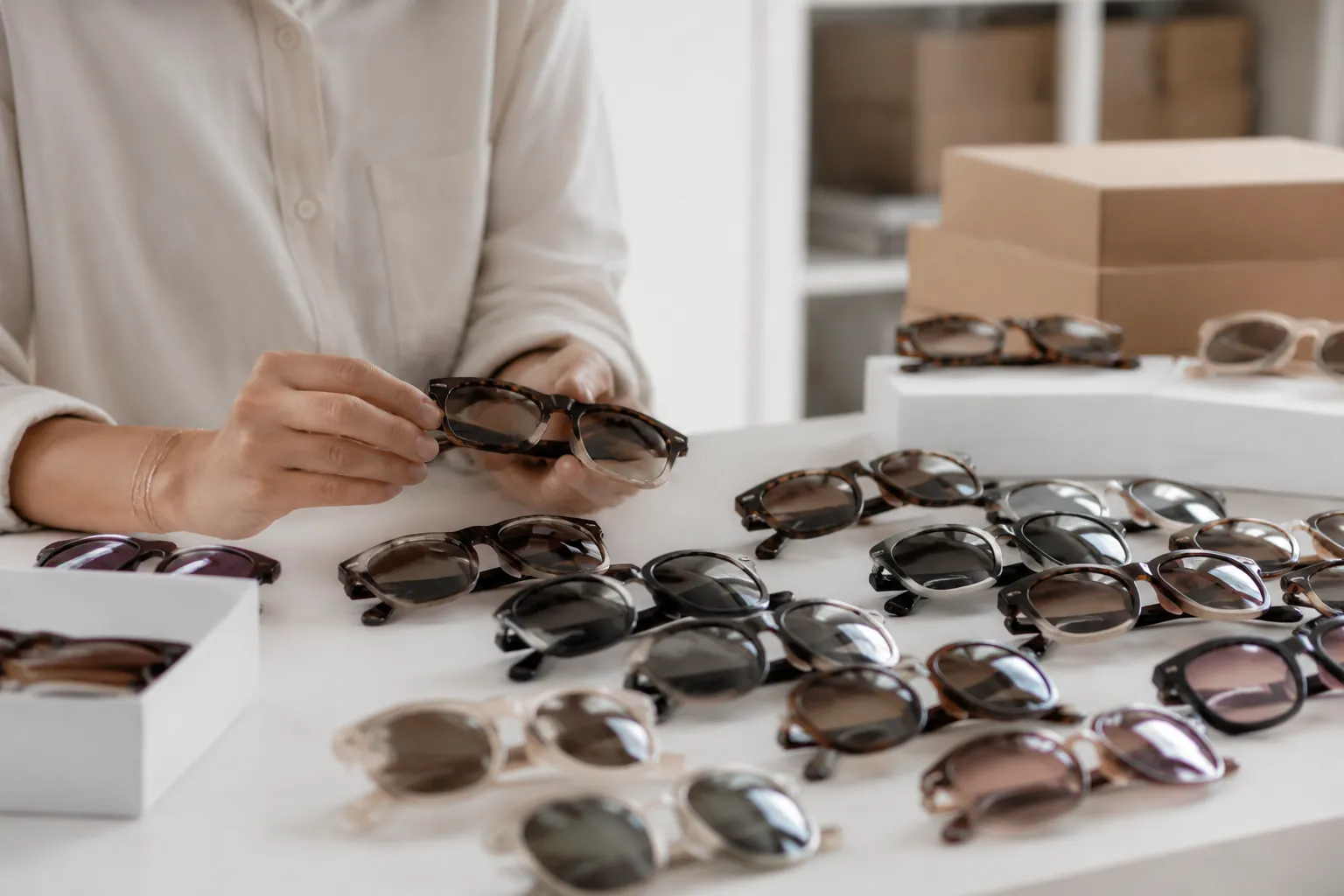
This guide is for distributors, resort retailers, beach shops, outdoor chains, and private-label buyers planning a wholesale sunglasses program. The job is not just to buy frames that look good. You need a controlled range with workable margins, durable materials, compliant lenses, traceable specs, and repeatable production. Use this plan to set lens category, frame material, decoration method, MOQ strategy, price breaks, inspection standards, compliance documents, packaging, and lead-time assumptions before you place a bulk order.
Start With the Selling Environment
Beach and outdoor retail can look simple from the shelf: black frames, mirror lenses, tortoise options, and a seasonal color story. The sourcing work is more demanding. Sunglasses sold in a humid surf shop face salt air, sunscreen, sand abrasion, heat inside parked cars, and repeated drops onto tile or concrete. A pair sold near a hiking trail faces sweat, dust, backpack pressure, and customers who expect better optical comfort.
Start with climate and use. Not frame shape. For coastal retail, common failures include loose hinges, scratched lenses, logo rub-off, screw corrosion, and stress whitening on bridges or temples. For outdoor stores, also check temple grip, frame stability, wrap angle, lens retention, and comfort during movement. For resort gift counters, sport performance may not matter. Clean presentation, scannable barcodes, accurate labels, and low complaint risk still do.
A practical wholesale program usually has three layers: a core commercial range, a climate-specific performance range, and a seasonal color or event range. The core range should carry most of the volume. Keep it stable: black, matte black, tortoise, smoke lens, brown lens, and one or two polarized options. Seasonal styles can be louder, but they should not drive the buying plan.
Before requesting samples, write a short selling-environment brief for each channel. Include target retail price, display method, climate exposure, customer type, lens preference, packaging format, barcode needs, and compliance market. A clear brief gives the manufacturer a real target. It also reduces the chance of approving a good-looking sample that fails in the store.
Segment by Use Case and Retail Price
Do not build one mixed order and expect every store to sort it out. Give each SKU a job. A beach retailer may need impulse sunglasses, everyday polarized pairs, and a tougher outdoor option. A distributor may need separate programs for gas stations, resorts, surf shops, marinas, fishing stores, tourist stores, and promotional buyers.
| Assortment tier | Typical use | Recommended build | Suggested first-order depth |
|---|---|---|---|
| Impulse beach | Boardwalk, resort gift shop, event retail | PC injection frame, UV400 lens claim supported by testing, simple pad print or laser logo | Small test quantity for new styles; deeper order only after sell-through is proven |
| Everyday polarized | Beach shops, marinas, outdoor retailers | Stable hinge, polarized TAC lens, smoke or brown tint, microfiber pouch option | Moderate depth per core color; prioritize replenishable black, tortoise, smoke, and brown combinations |
| Sport outdoor | Fishing, hiking, cycling, active travel | Flexible frame material, wrap or semi-wrap shape, secure lens fit, grippy temple detail | Test one or two shapes before expanding lens and frame colors |
| Fashion seasonal | Tourist retail, festival, lifestyle stores | Acetate, color injection, gradient or mirror lens, optional metal logo detail | Limit depth until the channel proves demand for the color story |
The common mistake is overloading the seasonal tier. Bright frames and mirror lenses look strong on a sample board. They can also split purchasing into too many small bets and leave slow stock behind. If a retailer has 12 hooks, a disciplined starting point is six core commercial styles, three polarized or outdoor styles, and three seasonal styles. For distributors serving many accounts, the ratio is often even more conservative.
Retail price affects packaging and decoration. An impulse item can work with a hang tag, printed logo, and polybag or simple pouch. A mid-price polarized item usually needs clearer lens marking, a microfiber pouch, better barcode placement, and tighter cosmetic standards. Decide this before sampling. Logo method, packaging size, labeling, and inspection criteria can all change unit cost, MOQ, and lead time.
Specify Lens Category, Tint, and Coatings
Lens darkness is not only a style choice. It affects wearer comfort, compliance labeling, return rates, and where the sunglasses can be used. For bright beach and outdoor conditions, core SKUs should use lens categories suitable for strong sunlight in the target market. Very light fashion tints should not carry the main volume unless the product is clearly positioned and labeled for limited use.
Smoke gray keeps color perception neutral and is the safest general-purpose tint. Brown or amber can increase contrast and is common for driving, fishing, and trail use. Green sits between neutral and contrast-enhancing. Mirror coating can reduce perceived glare in high-light settings, but it shows scratches more easily if customers handle the product without a pouch or case. If you use mirror lenses, define acceptable coating defects before production.
Approve physical tint samples and keep them as signed control samples. On repeat orders, compare bulk lenses against those controls under the same light source. Keep the standard simple: reject obvious tint mismatch between left and right lenses and visible color drift across a displayed batch. For cosmetic inspection, define the viewing distance, usually about 30-40 cm under normal light, so inspectors have a measurable rule.
Compliance depends on the target market. CE EN ISO 12312-1 applies to sunglasses sold in many European channels. ANSI Z80.3 is relevant for non-prescription sunglasses in the United States. AS/NZS 1067 applies to Australia and New Zealand. REACH addresses restricted substances for products placed on the EU market. FDA registration may be relevant for U.S. medical-device import handling, but it does not replace lens performance testing. These are separate requirements.
Ask the manufacturer to link test reports to the specific model, lens material, lens category, tint, coating, and production period where applicable. A report for one lens color, frame construction, or supplier batch may not cover every variation in a mixed program.
Match Material to Heat, Salt, and Handling
Frames fail in predictable ways. Temples loosen. Hinges crack. Bridges whiten under stress. Printed logos rub off after sunscreen exposure. Lenses pop out under flex. Metal parts corrode near salt water. The fix starts with matching material, structure, and decoration to the retail environment.
Injection-molded PC is often a practical starting point for high-turn beach programs because it controls cost, supports color matching, and can be durable enough when the frame design is sound. TR90-style materials are often used for sport-oriented frames because they are light and flexible. Acetate gives richer color depth and a higher-price feel, but it requires cutting, tumbling, polishing, adjustment, and tighter dimensional control. Metal frames and metal logo plates can work near the ocean only when plating quality and corrosion resistance are specified clearly.
- PC frames: cost-effective and lightweight for impulse programs; check stress whitening at the bridge, screw boss strength, hinge cracking, and lens retention after repeated opening and closing.
- TR90-style materials: flexible and comfortable for active use; suitable for wrap and semi-wrap frames, but color matching and surface finish should be approved on actual production material.
- Acetate: suitable for boutique or higher-price fashion channels; allow more time for cutting, tumbling, polishing, adjustment, and final inspection.
- Metal components: useful for hinges, logo plates, and premium details; specify plating, salt-spray expectations if required by the buyer, nickel or restricted-substance requirements where relevant, and sharp-edge limits for coastal retail.
Each material needs its own approval sample. Do not approve a black PC frame and assume the same hinge behavior, cosmetic result, or stress performance on a translucent frame. Clear and light-colored plastics often show stress marks faster. High-gloss surfaces reveal scratches and molding marks more easily than matte finishes.
Plan MOQ, Price Breaks, and SKU Count Together
MOQ is not only a factory constraint. It is a merchandising decision. Low MOQs can help buyers test new shapes, lens colors, logo placements, or retail channels. But low MOQ does not mean low complexity. Ten designs at small quantities create more artwork, packaging, inspection, barcode setup, forecasting, and replenishment work than two designs ordered deeper.
Use smaller test quantities for unknowns: new frame shapes, new lens colors, event programs, and unproven store types. Use larger quantities for proven black, tortoise, smoke, brown, and polarized combinations. Build price breaks into the reorder plan instead of treating them as a last-minute negotiation. If a style is likely to repeat, define it as a long-life SKU with stable color codes, packaging dimensions, barcode placement, compliance files, and approved sample references.
A clean first program might include several core designs, one or two polarized outdoor designs, and a limited number of seasonal color tests. That gives stores variety without filling the warehouse with slow-moving colors. For a distributor serving many accounts, increase depth on proven SKUs before increasing style count. A stockout on a proven black polarized frame usually costs more than missing one experimental blue mirror SKU.
Ask for landed cost calculations by tier. Factory unit price is only one line in the model. Add packaging, labeling, inspection, freight, duties, inland delivery, payment terms, returns allowance, retailer margin, and markdown risk. Put the full cost model beside the assortment plan before approving samples.
Use Sampling to Find Real Failures
Treat samples as a small inspection, not a photo approval. Open and close the temples repeatedly. Check whether the frame sits flat. Look for lens gaps. Compare left and right lens tint. Scan barcodes if packaging is included. Confirm logo position with calipers if the brand has placement rules.
Choose decoration based on material and retail environment. Laser engraving is durable and low-risk for many beach retail programs, though it may be less visible on dark or textured frames. Pad printing is economical and can be sharp, but it needs adhesion testing on the selected material and coating. Metal logo plates can look more premium, but they add assembly steps and can create corrosion, adhesive, or edge issues if poorly specified for coastal use.
Use practical tolerances in the approval sheet. For visible logo placement, many buyers specify a tight tolerance such as +/-0.5 mm when the design requires precision. For non-critical frame dimensions, +/-1 mm may be more realistic depending on material and construction. For lens seating, define whether any visible gap is unacceptable or whether a small non-functional gap is allowed on certain frame shapes. Confirm what the manufacturer can hold before writing the tolerance into the purchase order.
Count lead time from complete approval, not from the first inquiry. Artwork revisions, lens tint changes, packaging copy changes, barcode changes, test-report requests, and payment delays can all move the production date. Freeze the spec sheet before deposit. Treat later changes as controlled revisions with date, version number, and buyer signoff.
Set QC and Compliance Before Production
Quality control must be measurable. Saying "good quality" gives the manufacturer nothing useful. Define acceptable and unacceptable defects, measurement tolerance, inspection method, sample size, and documentation requirements before bulk work starts. If the manufacturer provides ISO 9001 or BSCI documentation, verify that the certificate or audit is current and issued to the relevant facility. ISO 9001 is a quality-management system certification. BSCI is a social-compliance audit framework. Neither replaces product testing for sunglasses.
Common checks include frame symmetry, hinge tension, screw tightness, lens retention, lens surface defects, tint consistency, logo alignment, temple opening angle, packaging accuracy, barcode scan, carton marking, and country-of-origin labeling. Cosmetic standards should state inspection distance and lighting. Functional checks should include repeated open-close handling, gentle temple flex, lens push-out review, and packaging drop or compression checks when retail cartons are involved.
Define defect examples before production. Critical defects include safety issues, wrong compliance marking, broken lenses, sharp edges, and incorrect product. Major defects include loose hinges, obvious lens scratches, wrong logo position, severe tint mismatch, missing barcode, or packaging that cannot scan at receiving. Minor defects include small cosmetic marks that are not obvious at normal retail viewing distance. The exact AQL level depends on buyer policy, but defect definitions must be clear before cartons are packed.
Match the compliance package to the sales region. CE EN ISO 12312-1, ANSI Z80.3, AS/NZS 1067, REACH, and FDA registration cover different requirements and markets. Keep reports tied to the specific model, lens type, lens category, tint, coating, and production period where required. Do not assume a report for one lens color or construction covers every variation in a mixed program unless the test lab or compliance adviser confirms it.
Build the Reorder System Early
A wholesale sunglasses program succeeds on reorders, not on the first sample board. Set up the reorder file while the first bulk order is being made. Each SKU should have a stable item number, frame color code, lens color code, lens category, logo method, packaging spec, barcode, carton quantity, compliance file, approved sample reference, and revision history.
Repeat production depends on clean inputs. Confirm artwork, approved samples, fixed packaging, complete labeling, compliance documents, inspection criteria, and realistic shipping windows before the purchase order is released. Add inspection, freight, customs, and inland delivery to the bulk production schedule. Retailers selling into summer should not place final approval in late spring and expect a low-risk launch.
Track sell-through by climate and channel. Polarized brown lenses may outperform in fishing and driving accounts. Smoke lenses may move faster in general beach retail. Clear, pastel, or mirror-heavy frames may sell well in resort stores and stall in outdoor chains. Use that data to move winning SKUs into deeper repeat orders. Keep experimental colors at lower quantities.
The commercial goal is plain: enough variety to make the display work, enough discipline to keep inventory moving, and enough specification control for the second order to match the first.
Have a custom sunglasses project in mind?
Send us your styles, target market and quantities and we will return a detailed quote with MOQ, lead time and a sample plan.
Get a QuoteWhy source this from Wenzhou with LumiShades
Wenzhou in Zhejiang Province is widely regarded as China’s eyewear manufacturing capital, producing a large share of the world’s sunglasses. That concentration matters to buyers: a deep local supply chain for acetate sheet, hinges, lens blanks, plating and packaging means shorter component lead times, easier color and material matching, and a workforce with decades of eyewear-specific skill. LumiShades has manufactured in this ecosystem since 2009, and our vertical integration — in-house injection molding, acetate cutting, CNC milling, lens tinting, decoration and quality control — means no part of your order is quietly subcontracted to a workshop you cannot audit.
For international buyers, that vertical control translates into accountability. When a single factory owns every step, defects are traced and fixed at source rather than bounced between vendors, and your specifications survive intact from first sample to bulk. We back this with 15+ years of experience, shipments to 60+ countries, more than 5 million pairs produced per year and a 98.5% on-time delivery rate. Our certifications — CE EN ISO 12312-1, FDA registration, ANSI Z80.3, AS/NZS 1067, REACH, ISO 9001 and BSCI audit — mean the compliance documentation your market requires already exists. Explore our manufacturing capabilities and quality control process to see how this works in practice.
Frequently asked questions
What MOQ should I use for a first beach sunglasses program? Use the supplier's minimum only for untested colors, shapes, logo placements, or channels. For core commercial SKUs, order enough units to support a meaningful sell-through test across the intended stores. Keep the first program narrow. Prioritize black, tortoise, smoke, brown, and one or two polarized options before adding seasonal colors. Ask the manufacturer for price breaks by quantity and compare them against landed cost, not factory price alone.
Which certifications and compliance documents should I ask for by market? For Europe, ask for CE EN ISO 12312-1 documentation and REACH substance-compliance support. For the United States, ask about ANSI Z80.3 testing for non-prescription sunglasses and FDA registration where applicable to the manufacturer, importer, or device listing process. For Australia and New Zealand, ask for AS/NZS 1067 documentation. Request current ISO 9001 or BSCI documents only if the supplier claims them, and verify the facility name, validity date, and issuing body. Match product test reports to the exact model, lens material, lens category, tint, coating, and production period where required.
Are polarized lenses necessary for beach retail? No. Use polarized lenses where glare reduction supports the retail promise, such as marina, fishing, driving, beach, and outdoor accounts. Keep non-polarized styles for lower price points, promotional orders, youth fashion, event retail, and color-led seasonal programs. If you sell polarized and non-polarized styles together, label them clearly so store staff and customers do not confuse the price tiers.
How long should I allow from sample to bulk shipment? Ask the manufacturer for a written timeline that separates sample production, sample review, artwork approval, packaging approval, bulk production, inspection, freight, customs clearance, and inland delivery. Do not count bulk lead time until the approved sample, spec sheet, packaging files, compliance requirements, and payment terms are complete. Build in extra time for new lens colors, mirror coatings, custom packaging, test reports, and revisions after sample review.
Which logo method is best for sunglasses sold near salt water? Laser engraving is often the lowest-risk option because it does not rely on ink adhesion, but visibility depends on frame color and surface texture. Pad printing can work well when the ink system is tested on the actual production material and coating; request an adhesion or rub check if sunscreen, sweat, or salt exposure is likely. Metal logo plates can look premium, but specify plating, edge finish, attachment method, and corrosion expectations before approval.
Ready to start?
Explore our cat-eye sunglasses or request a quote — our sales team replies within 12 hours.
Request a Quote