
Custom Sunglasses for Hospitality: A Sourcing Framework
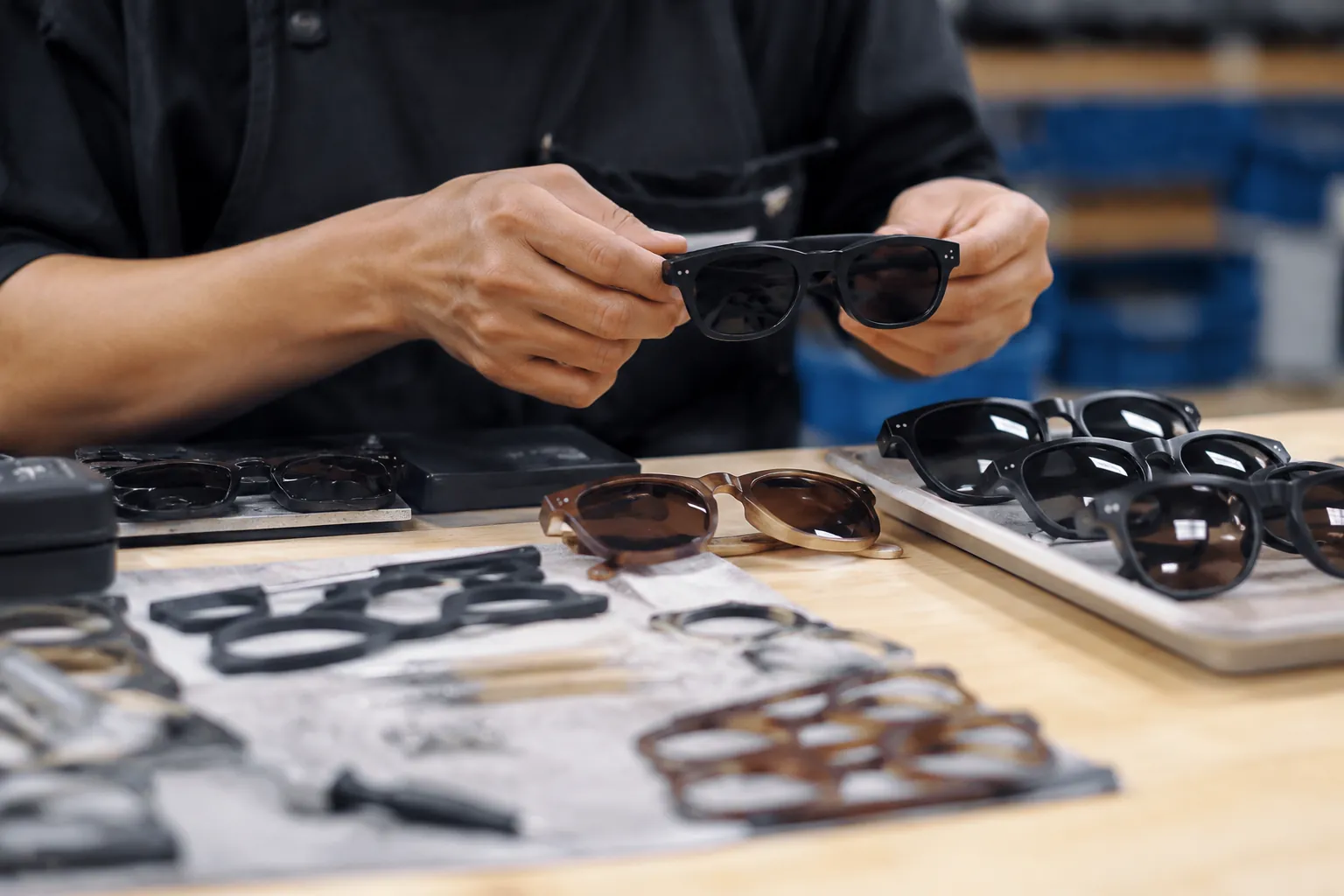
This guide is for hotel groups, resort operators, beach clubs, and hospitality distributors buying custom sunglasses at commercial volume. The criteria are different from retail. In hospitality, sunglasses are usually bought as an operating item, a resale SKU, or a branded giveaway. Start there. Buyers need to assess durability, broad-fit usability, branding method, compliance, replenishment, and repeatability before they assess style. The framework below stays focused on sourcing decisions that can be specified clearly, checked in production, and reordered without confusion.
Start with the use case, not the mood board
Retail eyewear projects often start with trend references and silhouette direction. Hospitality projects should start with operating intent. Before shape, color, or logo size, define how the sunglasses will be used, how long they need to stay presentable, and how they will be replenished.
A pair handed out at a beach-club entrance has a different budget, shrinkage profile, and packaging need from a pair sold in a resort boutique. A room-drop amenity may only need to last through a short guest stay. A retail SKU may need to hold its finish and branding through repeated handling on display. If one specification is used across every channel, buyers often pay for features the giveaway item does not need while underspecifying the resale item.
Build a short buyer brief before sampling starts. At minimum, define these five variables:
- Channel: pool amenity, guest-room placement, retail sale, event giveaway, staff use, or VIP gift.
- Target service life: short-term event use, single stay, seasonal use, or ongoing carryover.
- Loss tolerance: low, moderate, or high expected replacement frequency.
- Brand visibility: subtle branding, visible logo, or sponsor-led promotion.
- Reorder horizon: one-time activation or repeatable multi-property program.
Those five decisions drive the rest of the specification: frame material, lens category, logo method, packaging, carton packing, and whether a stock platform or a more customized private-label route makes commercial sense.
As a practical rule, hospitality buyers usually benefit from splitting projects into three buckets: amenity/distribution, retail resale, and premium gifting. That keeps sourcing tied to operating reality. Not presentation.
Fit means broad usability and consistent production
In retail, the customer usually tries the frame on before purchase. In hospitality, many end users do not. That makes broad usability more important than trend-led sizing. Frames that are very narrow, very flat, or strongly wrapped can create avoidable complaints across a mixed guest population.
For general hospitality use, buyers should usually prioritize medium, unisex frame geometries and ask suppliers for actual production measurements rather than relying on rendered visuals. Review eye size, bridge width, temple length, and front width together with hinge alignment, temple opening balance, and lens seating. A frame can match nominal dimensions on paper and still feel unstable or uneven in hand.
Useful fit and assembly checkpoints include:
- Production dimensions: confirm the approved frame measurements on the sample and during bulk pre-shipment checks.
- Lens fitting consistency: no visible rattling, edge lift, or stress marks after assembly.
- Hinge feel: both temples should open smoothly and with comparable resistance.
- Frame symmetry: front alignment and temple angle should look even when the pair is placed on a flat surface.
- Weight and comfort: confirm that the material and build suit the intended channel.
Material choice affects fit behavior too. Injection-molded frames are common in hospitality because they are lightweight, efficient for volume production, and practical to replenish. Acetate usually gives a more premium feel and richer finish, but it is heavier, more labor-intensive, and often better suited to retail sale or gift-oriented programs than to high-loss distribution environments.
If you manage several channels, it often helps to keep one broadly wearable frame family and vary the specification by use case. For example: a simpler version for amenity distribution and a more premium version for retail sale. Same visual language. Better cost control.
Choose the logo method by wear environment
Branding on hospitality eyewear should be chosen based on real use. A logo treatment that looks strong on an approval sample may not stay clean after contact with sunscreen, salt, repeated wiping, stacking, or open-basket storage. Bigger is not better. Durable is better.
The table below outlines the main logo methods used in volume hospitality programs.
| Logo method | Typical setup/use case | Durability level | Unit cost effect | Best for |
|---|---|---|---|---|
| Pad printing | Single-color or two-color logo on temple | Moderate; surface decoration can wear with abrasion and heavy handling | Low | Events, giveaways, short-life amenity programs |
| Laser engraving | Engraved temple or lens mark on suitable materials | High; permanent marking when compatible with the base material | Low to medium | Repeat programs, understated branding, beach/pool use |
| Metal logo plate | Applied badge or inset plate | High when properly fixed, but adds parts and assembly complexity | Medium to high | Retail sale, gift-shop programs, premium perceived value |
| Molded-in branding | Tool-integrated logo or raised/debossed mark | Very high | Higher upfront tooling cost, lower marginal effect at volume | Long-run carryover programs with stable repeat demand |
For beach and pool environments, smaller branding is often more durable and easier to keep looking clean over time. Outer-temple logos are common. Inner-temple branding works well for discreet identification and specification markings. Lens logos need careful review so they do not interfere with vision or create inconsistent placement.
Ask how decoration is controlled in production. Relevant questions include the ink adhesion process, curing method, engraving consistency, fixation method for metal parts, and whether the approved sample uses the same material and surface finish as bulk production. Those details matter more than a studio photo if the goal is repeatable output.
Plan materials, packaging, and shrinkage together
Hospitality buyers often separate frame decisions from packaging decisions. In practice, they affect each other. Packaging changes freight volume, storage needs, presentation level, and, in some settings, the chance that the item will disappear from service points or open displays.
For many high-volume amenity programs, injection plastic paired with a microfiber pouch or simple printed bag is the most efficient combination. A rigid gift box adds volume, storage complexity, and cost. It can also become the longest-lead packaging component in the project.
Recommended packaging by channel:
- Room amenity: microfiber pouch or simple printed bag, care card, compact master-carton packing.
- Beach club giveaway: bulk-packed by color or event code for fast staff distribution.
- Gift shop sale: hang tag or barcode sticker, pouch, cleaner presentation, optional display tray.
- VIP welcome kit: upgraded pouch or folding paper box if the overall kit presentation supports it.
Shrinkage is part of sourcing. Products that look more like retail merchandise can be harder to control in open-access environments. Where replacement rates are expected to be high, buyers often benefit from keeping presentation simple and standardizing the frame platform so replenishment is easier.
Packaging affects timeline as well as cost. A custom pouch may be straightforward. A rigid box with custom print, insert, and shipping mark usually requires separate approvals and can slow the full program even when frame production is on schedule. Ask for packaging timing separately. Do not assume it sits inside the same production window as the eyewear.
Compliance depends on market and product build
Sunglasses supplied for hospitality use are still eyewear products. Low unit cost does not reduce the need for documentation. Buyers should confirm which standards and records are relevant to the destination market and to the exact product being shipped.
Common documents and frameworks referenced in international sourcing include CE EN ISO 12312-1, ANSI Z80.3, AS/NZS 1067 where relevant, and REACH for restricted substances. FDA registration may also appear in supplier documentation for U.S.-related business, but it should not be treated as a substitute for performance testing or product conformity. ISO 9001 and BSCI relate to management systems and social compliance rather than sunglass performance, so buyers should categorize those records correctly in the vendor file.
Lens category and visible light transmission matter too. Specify the intended use clearly, especially if the sunglasses may move between outdoor and mixed indoor-outdoor settings. Darker lenses are not automatically better. Review lens appearance alongside compliance and guest usability.
Ask the supplier four specific questions:
- Was the test performed on the same material and product family as the item being ordered?
- Are the approved lens color, coatings, and decoration covered by the controlled production specification?
- Can shipment-linked records or batch documentation be provided if required by the buyer or importer?
- Do product markings, labels, and carton marks match destination-market requirements?
These checks do not remove the importer's responsibility. They do make document control stronger and reduce the risk of treating generic supplier paperwork as product-specific evidence.
Standardize the platform before you customize
The biggest long-term savings in hospitality eyewear often come from easier reordering, not from squeezing the first-order unit price. Once a buyer finds a frame platform that fits broadly, presents well, and is practical to replenish, the next step is to document it carefully and avoid unnecessary redesign.
A workable carryover model is usually one or two approved frame shapes, one lens construction, and a short menu of approved branding options. Property-level changes can then be limited to frame color, event naming, sponsor identification, or packaging code rather than reopening the full development process.
MOQ and pricing logic should be understood early. Some manufacturers offer starting MOQs from 50 pairs per design, which can be useful for a pilot order, a single event, or one property launch. Larger order tiers generally produce better commercial efficiency, especially when several properties can share the same base components. Typical buying logic looks like this:
- 50-299 pairs: suitable for trials, but often the least efficient unit-cost tier.
- 300-999 pairs: more practical for a single-property season or a controlled rollout.
- 1000-4999 pairs: often a more efficient range for multi-property consolidation.
- 5000+ pairs: stronger case for tooling recovery, molded branding, or other committed specifications.
Do not treat every order as a fresh design project. Keep a digital approval pack for each carryover program: frame code, color reference, lens specification, artwork version, logo position, packaging format, carton mark, and photos of the approved reference sample. That turns repeat purchasing into controlled execution.
What changes the quote and timeline fastest
Not every design choice changes cost or lead time equally. Buyers often spend too much time on minor visual changes and not enough on the variables that add production steps, increase rejection risk, or create packaging bottlenecks.
| Decision area | Lower-cost / faster route | Higher-cost / slower route | What it changes |
|---|---|---|---|
| Frame material | Injection molded plastic | Acetate with CNC detail and polishing | Acetate usually adds material cost, labor, and process time |
| Branding | Single pad print or simple laser mark | Metal plate, multiple print hits, mixed techniques | More process steps, more QC points, more assembly complexity |
| Packaging | Polybag or pouch | Custom rigid box with insert | Packaging can become the critical-path component |
| Order size | Small pilot run | Large consolidated order | Larger runs usually require more planning but can improve unit economics |
Lead-time planning should reflect the actual project stages. A standard commercial flow often includes:
- Artwork and specification confirmation: depends on how complete the buyer files are.
- Sample making: timing varies by material, logo method, and packaging complexity.
- Sample approval and revisions: often driven as much by buyer response time as by factory production time.
- Bulk production: should begin only after the specification is fully locked.
- Freight: depends on shipping mode, route, and destination-market procedures.
The most common delays sit outside basic frame production: packaging revisions, updated artwork, unresolved color references, and mismatches between the approved sample and the final order file. Lock the specification early. Then make sure the commercial invoice, packing details, and artwork approvals all reflect the same build.
Sourcing checklist for hotels, resorts, and beach clubs
Use this checklist before placing production. It captures the controls that prevent many avoidable cost overruns, quality disputes, and reorder problems.
- Define the channel clearly: amenity, retail, event, staff, or VIP.
- Set the target life span: short-term use, single stay, seasonal use, or carryover.
- Choose one broad-fit frame platform: medium unisex geometry is usually the safest starting point.
- Confirm material by operating need: injection for high-volume amenity use, acetate for higher-value retail or gifting.
- Select logo method by wear environment: laser for durability, pad print for lower-cost promotion, metal plate only where the presentation level justifies it.
- Keep packaging aligned with shrinkage risk: simple for distribution, upgraded only where merchandising requires it.
- Verify compliance documents: request the standards and records relevant to the destination market and exact product build, such as CE EN ISO 12312-1, ANSI Z80.3, AS/NZS 1067 where relevant, REACH, FDA registration, ISO 9001, and BSCI where applicable to the supplier file.
- Approve a reference sample: final color, lens, logo placement, hinge feel, and packaging in one signed set.
- Use volume tiers intelligently: pilot where necessary, then consolidate where possible.
- Create a reorder sheet: frame code, lens specification, artwork version, packing method, carton mark, and property allocation.
Hospitality sourcing is not just retail eyewear with a larger logo. It is an operating purchase with brand, compliance, and replenishment implications. Buyers who treat it that way usually get cleaner repeat orders and fewer preventable disputes.
Have a custom sunglasses project in mind?
Send us your styles, target market and quantities and we will return a detailed quote with MOQ, lead time and a sample plan.
Get a QuoteWhy source this from Wenzhou with LumiShades
Wenzhou in Zhejiang Province is widely regarded as China’s eyewear manufacturing capital, producing a large share of the world’s sunglasses. That concentration matters to buyers: a deep local supply chain for acetate sheet, hinges, lens blanks, plating and packaging means shorter component lead times, easier color and material matching, and a workforce with decades of eyewear-specific skill. LumiShades has manufactured in this ecosystem since 2009, and our vertical integration — in-house injection molding, acetate cutting, CNC milling, lens tinting, decoration and quality control — means no part of your order is quietly subcontracted to a workshop you cannot audit.
For international buyers, that vertical control translates into accountability. When a single factory owns every step, defects are traced and fixed at source rather than bounced between vendors, and your specifications survive intact from first sample to bulk. We back this with 15+ years of experience, shipments to 60+ countries, more than 5 million pairs produced per year and a 98.5% on-time delivery rate. Our certifications — CE EN ISO 12312-1, FDA registration, ANSI Z80.3, AS/NZS 1067, REACH, ISO 9001 and BSCI audit — mean the compliance documentation your market requires already exists. Explore our manufacturing capabilities and quality control process to see how this works in practice.
Frequently asked questions
What frame material is better for hotel amenity sunglasses: injection or acetate? For most amenity, room-drop, and giveaway programs, injection-molded frames are the practical starting point because they are generally lighter, more efficient for volume production, and easier to replace. Acetate is usually a better fit for resort boutiques, gift-shop resale, or premium welcome kits where surface finish and perceived value matter more. Ask the supplier to quote both materials against the same frame concept, then compare weight, finish, sample feel, lead time, and replacement cost before approval.
How should we handle logos if sunglasses will be used around pools and beaches? Choose the logo method based on exposure, not just appearance. For beach and pool use, ask for a comparison between pad print and laser engraving on the actual production material. Review abrasion resistance, logo placement consistency, and how the decoration looks after repeated wiping. If the program is high-loss or high-handling, keep the branding small and straightforward. Reserve metal logo plates for retail or gifting programs where the added parts and assembly complexity are commercially justified.
Is 50 pairs enough for a first order? Yes, if the goal is to test one property, one event, or one design direction. But before approving a small run, confirm whether the supplier treats it as a true production order or a pilot with limited customization options. Ask what changes at higher quantity tiers, including logo method, packaging, color options, and unit price. If multiple properties can use the same frame platform, it is usually more efficient to standardize the base style first and consolidate later orders.
What documents should we ask for before shipment? Request documents that match the destination market and the exact build being shipped. Common requests include CE EN ISO 12312-1, ANSI Z80.3, AS/NZS 1067 where relevant, and REACH-related documentation. If the supplier provides FDA registration, keep it as a separate record rather than treating it as a performance certificate. Also request the final approved artwork, packaging specification, carton marks, and reference-sample record. If your internal process requires it, ask whether shipment-linked or batch-linked production records can be supplied.
What usually delays bulk production on custom sunglasses? The most common delays are packaging changes, revised artwork, unresolved color approvals, and differences between the approved sample and the final production file. To reduce risk, make sure the purchase order, approved artwork, packaging approval, and shipping marks all describe the same specification. Before bulk production starts, ask the supplier to confirm in writing that the frame material, lens color, branding method, and packaging match the approved sample.
Ready to start?
Explore our square sunglasses or request a quote — our sales team replies within 12 hours.
Request a Quote