
Hotel & Travel Retail Sunglasses Sourcing Guide
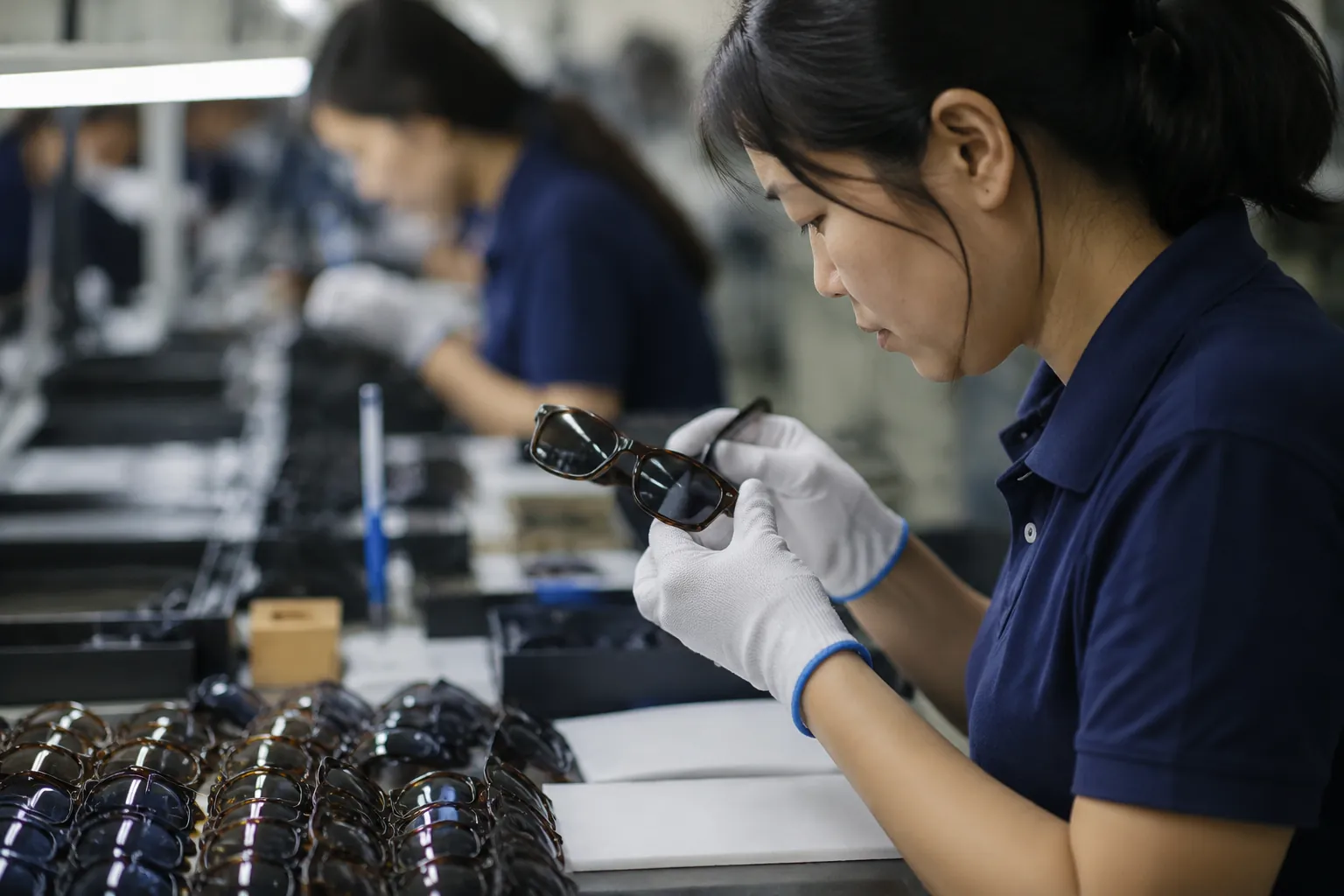
This guide is for hotel groups, resorts, cruise operators, airport retailers, destination shops, and distributors buying sunglasses in volume. It explains how to specify frame materials, guest-friendly sizing, lens categories, decoration methods, packaging, compliance documents, MOQ rules, and replenishment terms before issuing a factory purchase order. The aim is practical: fewer returns, cleaner stock control, better margins, and sunglasses that can handle real hospitality and travel use.
Start with the use case before choosing frames
Hotel and travel retail sunglasses tend to fail in familiar ways. Hinges loosen. Oversized frames slide down smaller faces. Mirror lenses scratch because the pouch is treated as decoration, not protection. Temple logos wear off when the decoration method does not suit the frame material or the contact area.
Start with the use case. Where will the eyewear be used? Who will buy it or receive it? How will staff store, hand out, and replenish it? What proof must the supplier provide before production starts? These answers should shape the sourcing brief before anyone chooses a frame shape.
For a resort gift shop, a sensible first range is often 3 to 5 frame shapes, 2 core colors, and 1 seasonal color tied to the property identity. For poolside amenities, go tighter. One adult unisex model and one youth model are easier for staff to manage than several fashion SKUs that create stockouts in the wrong color or size.
Airport and cruise retail are different. The product has to pass a fast customer check. The shopper opens the temples, checks the weight, looks for UV and lens-category information, compares the case or pouch, and decides within seconds whether the product feels worth the price.
If you are buying from LumiShades or any other Wenzhou sunglasses factory, ask for a written specification sheet before approving the order. It should state the frame material, lens material, lens category, UV claim, decoration method, packaging, marking requirements, inspection standard, and destination market. A 50-pair pilot and a larger repeat order should be controlled by the same signed sample and the same written specification. Photos are not enough.
Match frame material to abuse level and price point
The best frame material is not always the most expensive one. It is the material that fits the selling price, expected handling, climate, and replenishment plan. Beach and resort products face sand, sunscreen, salt water, heat, luggage pressure, and careless handling. Travel retail products face heavy try-on traffic, bright shop lighting, and direct comparison with branded eyewear.
| Frame option | Best use | Typical behavior | Buyer specification points |
|---|---|---|---|
| PC injection frame | Pool, beach, events, kids, entry retail | Lightweight, impact resistant, cost-efficient, suitable for simpler designs | Check surface finish, gate marks, hinge fit, frame twist, and color consistency |
| TR90 frame | Active resorts, excursions, cruise retail | Flexible, comfortable, more forgiving across face sizes | Control temple alignment, lens seating, bridge geometry, and material grade |
| Acetate frame | Boutique hotels, premium resort shops | Better hand feel, richer color depth, polishable surface | Confirm polishing quality, hinge installation, warpage control, and storage guidance for heat exposure |
| Metal or combo frame | Duty-free, airport retail, fashion capsules | Slim profile, adjustable pads, higher perceived value | Inspect plating, screw retention, solder joints, nose pads, and corrosion resistance |
For hospitality buyers, the rule is simple. Do not buy fragile fashion frames for places where guests may sit on them, rinse them in salt water, or leave them in hot cars. A thicker PC or TR90 frame with a stable hinge can be a better commercial choice than a delicate fashion shape at the same retail price.
Ask the factory to confirm frame weight, hinge type, screw specification, lens thickness, and packing method before approving a sample. For bulk control, set realistic tolerances in the purchase order: front width within +/-2 mm of the signed sample, temple length within +/-2 mm, bridge within +/-1 mm, and lens fit with no visible gap or rattle. If the approved sample front twists easily by hand or the temples do not close evenly, bulk production should wait until the design, tooling, or assembly method is corrected.
Use sizing rules that reduce guest returns
Hospitality sunglasses are often bought without fitting help. A guest picks up a pair near reception, in a spa boutique, at a beach kiosk, or from an amenity kit. The fit has to forgive variation.
For many adult unisex styles, a workable target is a total frame width of about 140 to 145 mm, lens width of 50 to 55 mm, bridge of 18 to 22 mm, and temple length of 140 to 145 mm. For larger Western-fit styles, 145 to 148 mm can work. Go too wide, though, and the frame may slide on smaller faces. For low-bridge markets, nose geometry and lens angle often matter more than a small change in lens width.
For kids, avoid tiny fashion shapes that pinch. A flexible frame, shorter temple, rounded edges, and a UV-protective sunglass lens in a suitable filter category are usually more useful than decorative complexity. Family resorts should mark kids and adult inner cartons clearly so staff do not need to open boxes to identify the size.
- Hotel amenities: choose one adult unisex fit in black, tortoise, navy, or dark crystal. Keep the logo small and durable.
- Resort retail: add two commercial shapes, such as a wayfarer and rounded panto, then separate price tiers by lens, material, or case.
- Cruise and airport shops: include low-bridge or adjustable nose-pad options if the customer base is broad and international.
- Events and beach clubs: prioritize comfort, logo visibility, fast packing, and simple replenishment over complex frame construction.
Sample approval should include a fit check on at least three face types. Do not approve from product photos alone. Measure the sample and record the numbers on the approval sheet. Those numbers become the reference for repeat orders and pre-shipment inspection.
Specify lenses by category, not just color
Lens selection is where many hospitality orders get vague. Do not approve lenses by appearance alone. Confirm UV protection, visible light transmission category, lens material, lens thickness, tint consistency, and whether polarization is required.
For most beach resorts, outdoor pools, ski villages, and cruise decks, Category 3 is often the practical default because it is intended for bright sunlight. Category 2 can suit urban travel retail and mixed indoor-outdoor use, but it may feel too light in strong glare. Category 4 is very dark, is not suitable for driving, and should not be used as a general hospitality lens without clear warnings and a specific use case.
For non-prescription sunglasses, standard PC lenses are common, but the required thickness depends on the frame design, lens shape, target market, and applicable standard. Bulk inspection should check for scratches, waves, tint mismatch, poor seating, incorrect lens category marking, and mismatch between the approved sample and delivered goods. For polarized lenses, add a polarization check during QC. Do it again at bulk stage, not only at sample stage.
| Lens choice | Typical use | Commercial logic | QC point |
|---|---|---|---|
| Category 2 tinted | Urban travel retail, lifestyle shops | Comfortable for lighter sun but weaker for beach glare | Verify VLT range and label accuracy |
| Category 3 tinted | Resorts, cruise decks, pools, beaches | Strong default for bright sun exposure | Check UV claim, tint consistency, and lens category marking |
| Polarized Category 3 | Waterfront resorts, yacht clubs, fishing, driving retail | Higher perceived value and higher cost | Test polarization and explain possible screen-visibility effects where relevant |
| Mirror coating | Seasonal resort collections and fashion displays | Strong shelf impact but scratches are more visible | Use stronger pouch or EVA case and inspect coating defects |
For production, request a signed lens swatch or approved physical sample for each lens color and coating. If the order changes from standard grey Category 3 to mirrored polarized Category 3, confirm whether additional testing, label updates, warning text, or price changes are required before bulk production starts.
Choose decoration and packaging for real handling
Logo decoration should match the product tier and the operating environment. Pad printing is economical and visible, but the artwork should be simple because fine lines can fill in or wear faster on high-contact areas. Laser engraving is cleaner for small temple marks, although contrast depends on the frame color and material. Metal logo plates can look more premium, but they add parts, adhesive or rivet control, and more inspection points.
For acetate, an embedded or metal temple mark can support a higher retail price. For PC amenity sunglasses, pad printing or a small laser mark may be more practical. Do not decide from a mockup. Confirm logo size and position on a physical sample.
A 12 to 18 mm temple logo may work for event sunglasses. A luxury resort may prefer a 6 to 10 mm discreet mark. Inside-temple marking can carry style code, lens category, compliance text, or country-of-origin information where required, but it must remain legible after printing and assembly.
Packaging should be chosen for handling. Microfiber pouches are light, low-cost, and useful for many standard tinted lenses. They are not ideal for mirror lenses that will be tossed into luggage. EVA cases cost more and take more carton volume, but they can reduce lens and frame damage for higher-price retail. Kraft boxes can work for hotel gift shops if inner protection prevents lens rub.
- Approve logo artwork on the real frame material, not only a digital mockup.
- Test the pouch or case with the actual lens coating and assembled frame.
- Confirm barcode, SKU, lens category, warning text, and country-of-origin marking before printing.
- Require carton labels by model, color, lens, and destination property for multi-location shipments.
Small packaging decisions affect labor. If a resort group has multiple properties, mixed cartons become expensive to sort unless they are labeled correctly. The purchase order should state whether the factory should pack by SKU, destination, display set, or replenishment carton.
Verify compliance by market and lens setup
Sunglasses are eye protection products. They are not only accessories. Importers are responsible for the claims printed on hang tags, pouches, cartons, and online listings. For hospitality and travel retail, that matters because goods may move through duty-free, resort, distributor, and cross-border channels.
Relevant compliance references may include CE EN ISO 12312-1 for sunglasses sold in Europe, ANSI Z80.3 for non-prescription sunglasses in the United States, AS/NZS 1067 for Australia and New Zealand, REACH for restricted substances, FDA registration in the U.S. context, ISO 9001 for quality management systems, and BSCI for social compliance auditing. These references are not interchangeable. Ask for current documents that match the product, lens configuration, and destination market.
Do not ask any supplier to print claims outside the actual test basis. A report for one lens color, one model, or one product family may not automatically cover every mirror coating, polarized lens, children's model, or destination market. If the order changes after testing, confirm whether the existing report still applies.
Procurement rule: the artwork file, hang tag, pouch insert, product label, and carton mark should all match the actual compliance basis. Mixed claims create customs, retailer, and liability problems.
For each custom order, request the test report, declaration, or supplier compliance document that matches the lens type, category, and intended market. Keep those documents with the signed sample, purchase order, packing list, and inspection record. If a retailer, customs broker, or internal compliance team asks for evidence, the product file should already be complete.
Plan MOQ, pricing, and lead time for reorders
Hospitality buyers often start small, then need a repeat order after a holiday weekend, cruise rotation, or strong retail display. MOQ and replenishment terms matter as much as the first quoted unit price.
Before placing an order with LumiShades or any other supplier, confirm the MOQ per design, per color, per lens type, and per logo method. A supplier may support a small pilot, but the price, setup cost, packaging choice, and inspection scope usually change as order volume changes.
A basic PC frame with standard Category 3 lenses and microfiber pouch will not price like a TR90 polarized frame with EVA case, hang tag, barcode label, and custom carton split. Compare landed cost, not bare frame cost. Packaging volume can change freight cost. Split shipments can change warehouse labor.
| Order stage | Typical quantity | Lead time logic | Buyer action |
|---|---|---|---|
| Development sample | 1 to several samples | Timing depends on frame availability, artwork, lens choice, and packaging | Approve fit, lens, logo, packaging, labeling, and compliance basis |
| Small property run | Low-volume pilot or boutique order | Confirm whether the supplier can produce below standard MOQ and whether setup fees apply | Use for boutique hotels, events, and sell-through testing |
| Chain or distributor order | Larger repeat or multi-property order | More predictable if materials, packaging, and inspection rules are already approved | Lock SKU rules, carton labels, and replenishment forecast |
| Seasonal program | Pre-season bulk order | Plan earlier for packaging, inspections, split shipments, and peak-season capacity | Negotiate price breaks, spare packaging, and repeat-order windows |
Ask the supplier to quote sample timing, bulk production timing after sample approval, and the point at which artwork, packaging, or lens changes will reset the approval clock. For fast replenishment, keep the frame mold, lens color, logo file, packaging, and carton rules unchanged. Every change adds approval time and may affect testing, labeling, price, or delivery.
Put measurable QC points in the purchase order
A useful purchase order does more than state quantity and price. It defines what failure looks like. For sunglasses, the inspection checklist should cover appearance, dimensions, lens performance, hinge function, logo accuracy, packaging, labeling, and carton marking. Buyers should agree in advance whether inspection will be handled by the supplier, the buyer, or a third-party inspector.
For injection frames, check molding defects, gate marks, color consistency, frame twist, and temple alignment before lenses are fitted. For acetate, inspect cutting accuracy, polishing, warpage, and hinge installation. For lenses, check tint, scratches, waves, category, UV performance, and polarization where applicable. For decoration, inspect spelling, logo position, color, adhesion, engraving depth, and metal-plate alignment.
- Dimensions: compare bulk goods against the signed sample for front width, bridge, temple length, lens size, and frame symmetry.
- Hinges: temples should open and close smoothly without loose screws, uneven resistance, or side play.
- Lenses: inspect for scratches, tint mismatch, edge chips, waves, incorrect category, and poor seating.
- Branding: confirm logo position, color, spelling, durability, engraving depth, and alignment.
- Packing: verify pouch or case, hang tag, barcode, warning text, SKU labels, and carton marks.
If the order size justifies formal inspection, set an AQL level with the supplier or third-party inspector and define critical, major, and minor defects before production. At minimum, ask for pre-shipment photos, a packing list, and random inspection records. A good-looking sample is not a bulk standard. Write the standard down before production starts.
Have a custom sunglasses project in mind?
Send us your styles, target market and quantities and we will return a detailed quote with MOQ, lead time and a sample plan.
Get a QuoteWhy source this from Wenzhou with LumiShades
Wenzhou in Zhejiang Province is widely regarded as China’s eyewear manufacturing capital, producing a large share of the world’s sunglasses. That concentration matters to buyers: a deep local supply chain for acetate sheet, hinges, lens blanks, plating and packaging means shorter component lead times, easier color and material matching, and a workforce with decades of eyewear-specific skill. LumiShades has manufactured in this ecosystem since 2009, and our vertical integration — in-house injection molding, acetate cutting, CNC milling, lens tinting, decoration and quality control — means no part of your order is quietly subcontracted to a workshop you cannot audit.
For international buyers, that vertical control translates into accountability. When a single factory owns every step, defects are traced and fixed at source rather than bounced between vendors, and your specifications survive intact from first sample to bulk. We back this with 15+ years of experience, shipments to 60+ countries, more than 5 million pairs produced per year and a 98.5% on-time delivery rate. Our certifications — CE EN ISO 12312-1, FDA registration, ANSI Z80.3, AS/NZS 1067, REACH, ISO 9001 and BSCI audit — mean the compliance documentation your market requires already exists. Explore our manufacturing capabilities and quality control process to see how this works in practice.
Frequently asked questions
What is the best sunglasses style for hotel guest amenities? For most hotel amenity programs, choose a durable adult unisex PC or TR90 frame with UV-protective Category 3 lenses, a stable hinge, and a simple pouch. Target a frame width around 140 to 145 mm, use neutral colors, and keep the logo small enough that the glasses still feel wearable after the stay. Approve the final choice with a physical fit check and record the frame measurements on the approval sheet.
Can we start with a small custom order for one resort? Yes, but confirm the supplier's MOQ by design, color, lens type, and logo method before you budget the program. For a small pilot, keep the specification simple: one frame, one or two colors, one lens category, one logo position, and standard packaging. Ask for sample timing, bulk production timing after sample approval, setup charges, and whether the same specification can be repeated later without a new approval cycle.
Should resort sunglasses be polarized? Use polarized Category 3 lenses when glare reduction is part of the selling value, such as waterfront resorts, yacht clubs, fishing programs, driving-related retail, and premium travel shops. For basic guest amenities, standard Category 3 tinted lenses are often more cost-effective. If you choose polarized lenses, require a polarization check during QC and confirm that labels, hang tags, and online product descriptions match the actual lens.
Which compliance standards should we check for travel retail? Check the destination market and the exact lens configuration. Common references include CE EN ISO 12312-1 for Europe, ANSI Z80.3 for the United States, AS/NZS 1067 for Australia and New Zealand, REACH for restricted substances, and FDA registration where relevant in the U.S. context. Request documents that match the model, lens category, lens color or coating, and intended market rather than relying on a generic certificate.
How do we make replenishment faster after the first order? Keep the approved frame, lens, logo, packaging, and carton rules unchanged. Store the signed sample, artwork file, lens specification, carton label format, compliance documents, and inspection record under the same SKU. When reordering, reference the previous purchase order and signed sample so the supplier can confirm whether materials and tooling are unchanged before production starts.
What packaging is best for sunglasses sold in resorts? Use microfiber pouches for economical standard tinted sunglasses where low weight and low cost matter. Use EVA cases, stronger boxes, or reinforced retail packaging for mirror lenses, polarized styles, higher-price resort retail, and products likely to be carried in luggage. Test the actual assembled sunglasses in the chosen packaging before approving bulk production, especially if the lens has a mirror coating.
Ready to start?
Explore our shield & oversized sunglasses or request a quote — our sales team replies within 12 hours.
Request a Quote