
Private Label Sunglasses: Small-Batch Boutique Guide
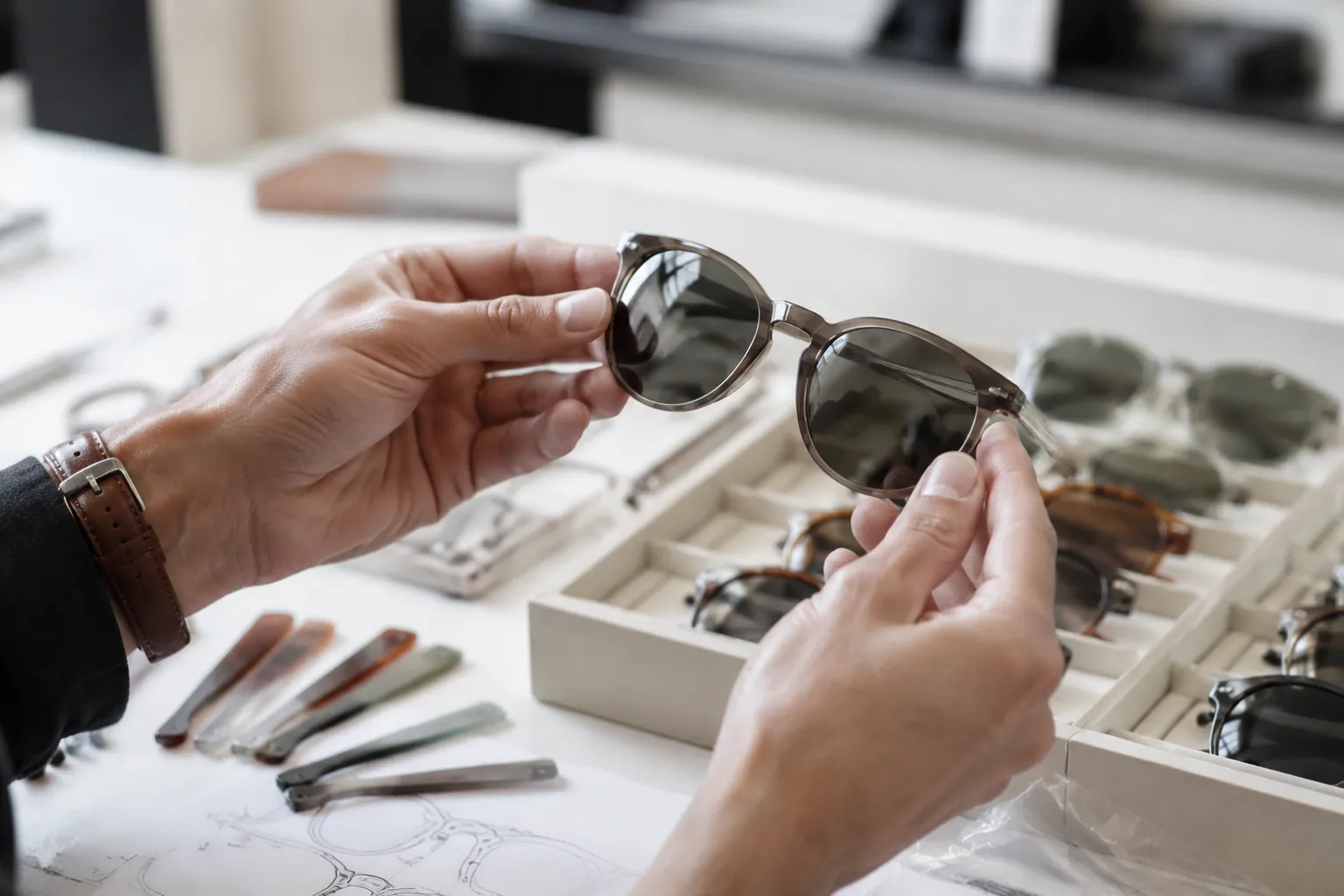
This guide is for boutique owners, buying teams, importers, and small retail chains planning a private label sunglasses line without tying up cash in unproven stock. Low MOQs are useful, but only if treated as a controlled product test. Keep the range tight. Specify fewer shapes, disciplined colorways, factory-ready details, documented sample approvals, compliance checks, and a reorder plan before the first shipment leaves the factory. The goal is sourcing discipline. A boutique can launch a credible small collection, protect margin, reduce dead stock, and still scale fast if one frame proves itself.
Start With The Buy, Not The Sketch
A boutique sunglasses launch should start with units, margin, retail price, sales channel, and display space. Not sketches. The common mistake is building a range that looks exciting on a sample board but performs badly in inventory. Too many colors split demand. Too many shapes make the story hard to sell. Too few units make the display look accidental.
A practical first buy is often built around 3 to 5 frame shapes, each in 2 to 3 colorways. If the supplier can support 50 pairs per design or colorway, that structure creates a real test order without mass-retail volume. For example, 4 shapes x 3 colors x 50 pairs creates a 600-pair opening order. That is enough for product photography, online stock, a compact retail display, and limited reserve stock. It is also still simple to manage.
Give every style a commercial job before sampling. One black or tortoise frame should be the safer daily seller. One softer seasonal color can keep the range current. One sharper silhouette, such as a narrow oval, geometric frame, or angular cat-eye, gives staff a reason to talk. Do not approve extra colors because the acetate sheet rack looks tempting. The buyer's standard is sell-through by SKU. Not sample-board drama.
Choose The Right Frame Platform For Small Runs
Private label sunglasses buyers usually choose between injection molded frames, acetate frames, metal frames, and combination frames. At low quantity, the best option is not always the lowest quoted unit price. Ask a better question: which platform gives repeatable quality, realistic setup cost, stable lead time, and the right look for the retail price?
| Frame Platform | Best Use | Small-Batch Behavior | Process Detail To Confirm |
|---|---|---|---|
| Injection molded PC, TR, or similar plastic | Entry price, bold colors, beach, festival, and promotional retail | Can be efficient for repeat volume, but new tooling, shrinkage, and color consistency need control | Confirm whether existing molds are used, resin type, color approval process, shrinkage control near hinges, and lens groove fit |
| Acetate | Premium boutique look, polished edges, and richer color depth | Often practical for small batches when existing shapes or standard cutting programs are available | Confirm acetate sheet reference, thickness, lamination direction, polishing level, hinge fitting, and retained approval sample |
| Metal | Aviator, geometric, thin-profile, and lightweight styles | Can offer strong perceived value, but plating, soldering, and alignment create quality-control risk | Confirm plating specification, solder strength, screw quality, nose pad material, nickel-related requirements, and symmetry checks |
| Combination frame | Higher perceived value with mixed acetate, metal, or plastic parts | More parts increase tolerance stack-up, assembly variation, and spare-part complexity | Confirm hinge fit, part alignment, screw loosening checks, temple balance, and replacement-part availability |
Ask whether the supplier is using existing models, existing molds, new tooling, or modified components. This affects cost, timing, ownership, and repeatability. Acetate can deliver a premium small-batch finish without the same tooling commitment as a new injection mold, but it still needs tight control of polishing, hinge setting, and lens fitting. Injection molded frames can become more cost-effective at higher repeat volume, but only if color, warpage, and fit stay stable. Metal frames can look refined. They also expose weak plating and loose assembly fast.
Build Colorways Like Inventory, Not Decoration
Color is where small collections often fail. A buyer sees twenty acetate sheets or molded color samples, approves too many, and later learns that one classic tortoise sells while a trend color sits. At small MOQ, color discipline matters more than trend instinct. Each color needs its own purchase order line, photos, barcode, storage slot, and reorder decision.
Use a three-tier color plan. Core colors usually include black, tortoise, dark green, smoke, champagne, clear brown, or other proven neutrals for the target customer. Seasonal colors may include olive, cream, wine, blue smoke, gray crystal, or pale amber. Accent colors carry the highest risk: bright orange, pink crystal, checkerboard effects, split laminations, heavy mirror combinations, or any color tied to a narrow trend.
- Core colors: Allocate the largest share of the opening buy to colors with the broadest customer base.
- Seasonal colors: Use them to refresh the range, but tie each one to a selling season or merchandising story.
- Accent colors: Keep them limited unless the boutique already has customer data proving demand.
- Reorder reserve: Record sheet codes, lens codes, coating details, and approved samples for every color that may repeat.
For acetate, ask for the exact sheet reference and approve a physical cut sample, not only a catalog image. Grain direction, transparency, sheet thickness, and polishing can change the final look. For injection frames, approve a physical color chip and, where possible, a molded part in the same material and surface finish. A Pantone reference helps communication, but it is not enough. Resin type, pigment load, part thickness, mold temperature, and surface texture all affect the final color.
Make Branding Look Premium Without Adding Risk
Boutique customers notice branding. They also notice cheap branding. Oversized outer temple logos, crowded packaging, and extra decoration can make a good frame feel like a giveaway item. For the first production run, branding should show ownership without adding avoidable quality risk or setup cost.
Common small-batch branding methods include inner temple pad printing, laser engraving where the material supports it, heat transfer or printing on a pouch, a printed lens sticker, a logo card, and simple retail labeling. Pad printing works well for fine text such as brand name, model code, lens category, or required markings when the artwork, ink, and surface are compatible. Laser engraving can create a cleaner tone-on-tone effect on some acetate and metal parts, but contrast depends on material color and finish. Metal logo plates can look premium, but they require accurate recess placement, controlled fixing, and more setup time.
For a small boutique launch, a sensible setup is inner temple branding, a microfiber pouch with a one-color logo, and a concise product card or label. Keep outside temple branding small. Confirm exact placement from the hinge, temple edge, and any curve. If a logo sits too close to a bend, hinge area, or high-contact zone, it may distort, rub, or look inconsistent in bulk. Require a branded pre-production sample before approving production.
Understand MOQ, Price, And Lead-Time Logic
Low MOQ does not mean low unit cost. It means the buyer can test demand with less inventory exposure. Unit price usually improves when setup, decoration, QC, packing, line changeover, and administration are spread across more pairs. Before accepting a quote, confirm whether the MOQ applies per model, per color, per lens option, per logo, or per total order.
| Order Level | Best Use | Price Logic | Lead-Time Expectation |
|---|---|---|---|
| 50 pairs per design or colorway | Boutique test, influencer capsule, color trial, or limited drop | Higher unit cost because setup, logo work, inspection, and packing are spread over fewer units | Use supplier-confirmed timing; samples and bulk timing depend on material stock, artwork approval, and production load |
| 300 pairs per design | First serious retail drop, online launch, or focused multi-color program | Decoration, lens fitting, inspection, and packing become easier to schedule efficiently | Confirm production slot after sample approval and deposit; lock packaging artwork before bulk production starts |
| 1000 pairs per design | Distributor reorder, multi-store rollout, or proven online seller | Material purchasing, line planning, and carton-level packing are usually more efficient | Confirm material availability and inspection plan before peak season or holiday cutoffs |
| 5000+ pairs per design | Program order, national retail, or long-running SKU | Can support stronger price negotiation if specifications are stable and production is repeatable | Use staged production, inline QC, final inspection, and shipment planning with documented milestones |
Do not compare only the naked frame price. Add lenses, pouch or case, barcode label, warning label, retail packaging, export carton, inspection, freight, duties, customs brokerage, and local delivery. A low-cost frame with a heavy case and complex color box can lose its advantage quickly. If the retail price is fixed, work backward from landed cost and required margin before choosing decoration, packaging, and lens upgrades.
Approve Samples With Measurable Specifications
A sample approval should read like a production instruction, not a mood board. The factory floor needs measurable references. If the temple angle changes, the logo moves, or the lens tint looks lighter in bulk, both sides need an agreed standard to check against.
- Confirm frame model, material, color reference, surface finish, and retained approval sample.
- Confirm lens category, tint color, UV400 claim if used, polarization if used, mirror or gradient coating, and base curve.
- Measure lens width, bridge, temple length, front width, hinge opening, temple spread, and pantoscopic angle where relevant.
- Approve logo size, location, color, method, artwork file, and acceptable position tolerance.
- Approve pouch, case, barcode placement, warning label if required, carton mark, carton quantity, and packing method.
- Sign one golden sample and require the factory to keep a duplicate for production comparison.
Ask the supplier to state the production tolerances they can actually hold for the chosen material and process. Acetate dimensions can shift during cutting, tumbling, polishing, heating, and assembly. Injection frames should be checked for shrinkage, warpage, hinge fit, and lens groove consistency. Metal frames should be checked for symmetry, solder strength, plating finish, screw tightness, and nose pad alignment. Fit issues may come from small changes in temple spread, hinge angle, bridge shape, or lens curve. Physical approval samples are not optional.
Handle Compliance Before Sales Materials
Sunglasses are not only fashion accessories. They sit on the face and are sold with sun-protection claims, so compliance must be planned before retail labels, product pages, and cartons are finalized. Late compliance changes can delay shipment more than a logo revision.
For Europe, request CE documentation and EN ISO 12312-1 test support for sunglasses. For the United States, confirm applicable FDA registration expectations and ANSI Z80.3 requirements. For Australia and New Zealand, check AS/NZS 1067. REACH may apply to chemical restrictions for materials and parts that contact skin, including coatings, plastics, nose pads, and temple tips. ISO 9001 and BSCI records can support supplier evaluation, but they do not replace product-specific sunglasses testing.
Match the report to the actual product being sold. A report for one smoke lens category may not cover a mirrored lens, gradient lens, polarized lens, fashion tint, different lens material, or different frame construction. Confirm lens category, visible light transmission, UV protection, warning language, product markings, and destination market before bulk production. If the buyer switches from a category 3 sun lens to a lighter fashion tint, the labeling and suitability statement may change.
Practical rule: finalize lens category, tint, coating, destination market, and required markings before bulk production. Compliance fixes after packing can mean relabeling, retesting, shipment delay, or unsellable stock.
Plan Reorders Before The First Carton Ships
A boutique launch should create usable data quickly. Track sell-through by frame, color, lens, retail price, location, and sales channel. Do not wait until the shelf is empty to reorder. Even a smooth repeat order still needs material confirmation, production scheduling, QC, packing, export booking, freight, customs clearance, and local delivery.
Ask the supplier which materials are standard stock and which are special order. Common black acetate, regular tortoise, smoke lenses, and standard gray or brown lenses are usually easier to repeat than unusual laminations, flash mirror lenses, custom plating, or limited sheet colors. If a color becomes the hero style, reserve material early for the next run. For repeat acetate, keep the sheet code and approved sample because sheet batches can vary in pattern, tone, and transparency.
Use a reorder trigger based on real movement, not panic. When a style has sold through most of its available stock and still has steady weekly sales, prepare the next purchase order while inventory remains on hand. For seasonal goods, approve the reorder while the first batch is still selling, not after the peak window has passed. Confirm current lead time with the supplier each time. Material availability, holidays, production load, inspection requirements, and shipping conditions can all change.
Have a custom sunglasses project in mind?
Send us your styles, target market and quantities and we will return a detailed quote with MOQ, lead time and a sample plan.
Get a QuoteWhy source this from Wenzhou with LumiShades
Wenzhou in Zhejiang Province is widely regarded as China’s eyewear manufacturing capital, producing a large share of the world’s sunglasses. That concentration matters to buyers: a deep local supply chain for acetate sheet, hinges, lens blanks, plating and packaging means shorter component lead times, easier color and material matching, and a workforce with decades of eyewear-specific skill. LumiShades has manufactured in this ecosystem since 2009, and our vertical integration — in-house injection molding, acetate cutting, CNC milling, lens tinting, decoration and quality control — means no part of your order is quietly subcontracted to a workshop you cannot audit.
For international buyers, that vertical control translates into accountability. When a single factory owns every step, defects are traced and fixed at source rather than bounced between vendors, and your specifications survive intact from first sample to bulk. For procurement review, buyers can request process records, approved samples, quality checkpoints and project-specific compliance files before placing a bulk order. Required testing and documentation are confirmed against the destination market and product specification rather than assumed from a generic certificate list. Explore our manufacturing capabilities and quality control process to see how this works in practice.
Frequently asked questions
What is a realistic first order for a fashion boutique? A practical first launch is usually 3 to 5 shapes in 2 to 3 colorways, with quantities set by the supplier's MOQ and the boutique's sales plan. If the MOQ is 50 pairs per design or colorway, a 300 to 750 pair opening order can cover photography, display, online stock, and a small reserve without creating oversized inventory risk.
Can I put my logo on sunglasses at 50 pairs per design? Often yes, but confirm the supplier's MOQ for each branding method. Lower-risk options usually include inner temple pad printing, compatible laser engraving, a branded microfiber pouch, lens sticker, logo card, or retail label. Before bulk production, approve a branded sample showing logo size, color, position, durability, and placement tolerance.
How long should I allow from sample to delivery? Ask the supplier for a written timeline covering sample production, sample shipping, buyer approval, material purchasing, bulk production, inspection, export booking, freight, customs clearance, and local delivery. Do not plan only around factory production days. International delivery and customs can add meaningful calendar time.
Which material is best for a premium boutique look? Acetate is often a strong small-batch choice for boutiques because it can offer depth, polish, and color variation without the same tooling commitment as a new injection mold. It still requires careful approval of sheet code, thickness, polishing, hinge fit, and lens fit. Injection molded frames may be better when price, repeat volume, and bold molded colors matter most.
What tolerances should I confirm before production? Confirm the supplier's stated tolerances for lens width, bridge, temple length, front width, hinge opening, temple spread, logo position, and lens fit. For acetate, also check how polishing and heating may affect final dimensions. The safest control is a signed golden sample kept by both buyer and factory for comparison during bulk production.
What compliance documents should I request? Request documents for the market where the sunglasses will be sold: CE and EN ISO 12312-1 for Europe, ANSI Z80.3 and applicable FDA registration expectations for the United States, AS/NZS 1067 for Australia and New Zealand, and REACH where chemical restrictions apply. Match reports to the exact lens category, tint, coating, frame material, and product version.
How do I avoid being stuck with weak colors? Limit the first launch to a disciplined color plan: core neutrals for the largest share, seasonal colors for freshness, and only a small number of accent colors unless you already have customer data. Track sell-through by SKU from the first week and reorder proven colors before inventory runs out.
Ready to start?
Explore our square sunglasses or request a quote — our sales team replies within 12 hours.
Request a Quote