
Private Label Sunglasses for Boutique Retail Chains
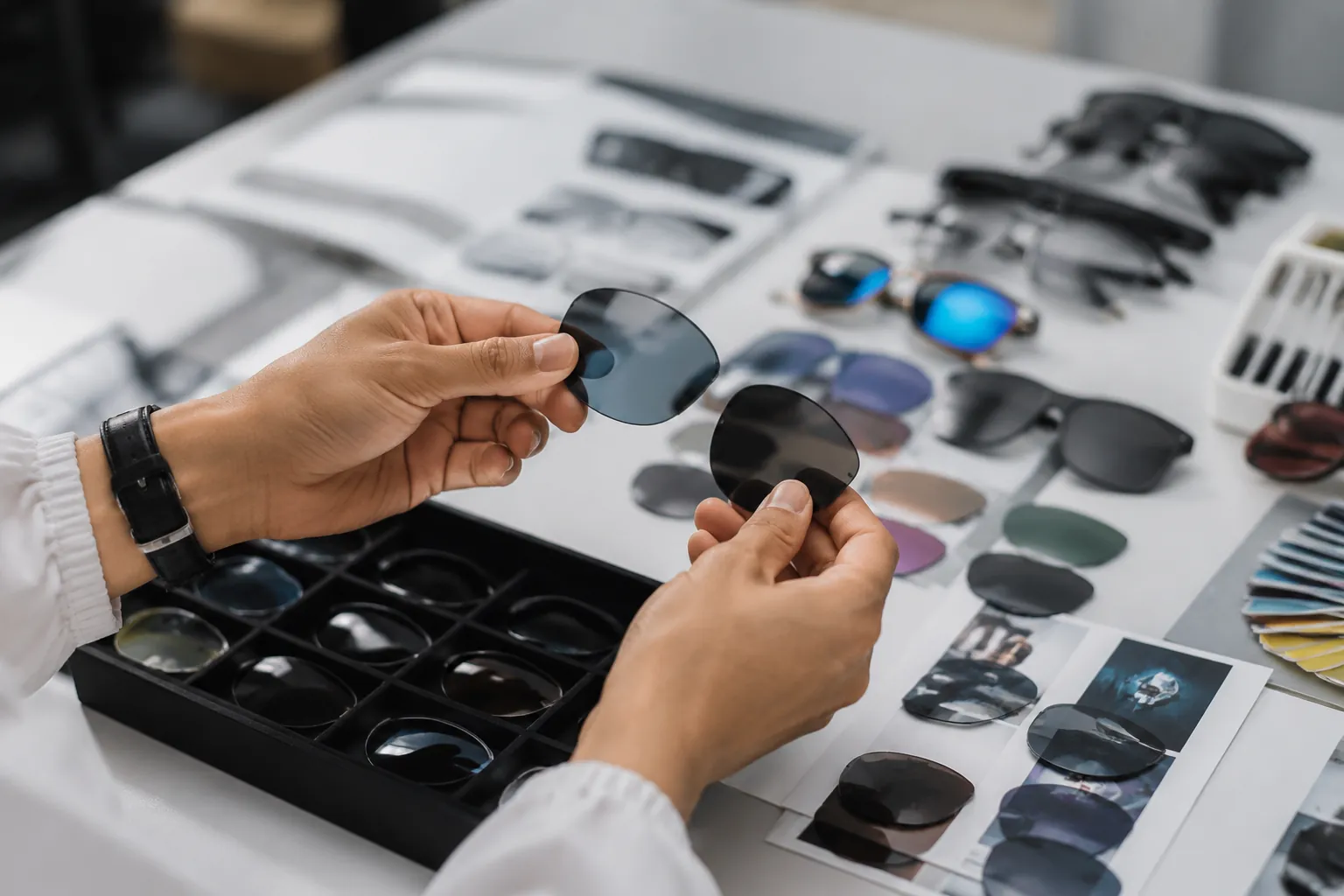
This guide is for regional retail chains, boutique groups, importers, and distributors building a private label sunglasses line without taking on unnecessary inventory risk. It shows how to define the assortment, set realistic MOQs, specify frames and lenses, control logos and packaging, prepare compliance files, and plan reorders around supplier lead times. The aim is simple: a sunglasses program that looks consistent on the rack, protects margin, and can be replenished before peak selling weeks are gone.
Start With the Retail Rack, Not the Factory Catalog
Start with the fixture. Not the factory catalog.
Count the actual selling positions first: pegs, trays, spinner slots, counter bins, wall space, or e-commerce bundles. A 24-slot spinner can support a wider range than a 6-style checkout display. If stores can only show 12 styles clearly, developing 40 frame ideas creates inventory noise before production even starts.
For a boutique retail chain, a controlled first buy often works best with 8 to 16 SKUs. That gives enough range to compare shapes, colors, lens types, and price points without spreading stock too thin. A practical launch can include everyday fashion frames, a few seasonal statement styles, one or two polarized options, and selected color extensions for likely core sellers.
MOQ should answer a buying question. A small test order can compare black against tortoise, square against aviator, polarized against non-polarized, or pouch packaging against a simple hangtag. Larger orders should wait until a style has clear sell-through or confirmed account demand. Confirm exactly how MOQ is counted: per design, color, lens type, logo version, or packaging version. That detail changes the real commitment.
- Test order: Use the supplier's lowest workable MOQ to check fit, color, logo quality, staff feedback, and early sell-through.
- Proven reorder: Increase quantity only after sales data shows the style can support replenishment.
- Core rollout: Consolidate around stable styles, approved packaging, fixed barcodes, and repeatable QC standards.
- Volume program: Negotiate better unit pricing only after material, lens, decoration, packaging, inspection, and freight assumptions are fixed.
Build the Assortment Like a Buyer
Each SKU needs a job. One frame may pull attention. Another may sell every week. Another may protect margin. Another may define the private label look. If every style is a trend piece, reorders become guesswork. If every style is a basic black frame, the display looks like commodity stock.
Use a planning matrix before artwork starts. Put frame shape on one axis and customer use on the other: everyday fashion, driving, beach, travel, gift purchase, and active wear. Then assign material and lens position. PC injection is often used for cost-sensitive fashion programs and repeatable colors when existing molds are available. TR90 suits lightweight comfort and flexibility. Acetate gives richer color depth and a more substantial hand feel, but cutting, tumbling, polishing, and hinge setting add cost and lead time.
Lens choice should match the retail claim. Grey lenses are a common general-purpose option because they keep color perception relatively neutral. Brown lenses can improve perceived contrast and feel warmer. Green lenses support a classic look. Gradient lenses are mainly a fashion choice and must be checked for consistent density. Polarized lenses need tighter inspection because customers notice axis errors, stress marks, distortion, and uneven tint quickly.
| Program Type | Typical SKU Plan | MOQ Logic | Lead-Time Risk |
|---|---|---|---|
| Store test | 8 to 12 SKUs in selected stores | Use the supplier's lowest practical MOQ per confirmed style | Too many colorways before sell-through is known |
| Seasonal capsule | 10 to 16 SKUs for summer, resort, or travel | Reorder only styles with early demand or account commitments | Late sample approval missing the planned shelf date |
| Core private label | 12 to 24 SKUs for spinner, wall, or online program | Build around stable molds, fixed colors, and repeatable packaging | Barcode, label, or packaging changes after production starts |
| Distributor range | 20+ SKUs across multiple accounts | Aggregate demand across confirmed accounts where specs are shared | Compliance files not matched to destination market and product claim |
Specify Materials Before Price Talks
Material choice drives cost, appearance, lead time, and defect risk. If a buyer asks only for a target price, the supplier may quote a lower-spec construction by default. Be specific.
A strong RFQ states frame material, hinge type, lens material, lens category, coating or tint, surface finish, logo method, packaging, destination market, target quantity, and inspection requirement. It gives the supplier less room to guess and the buyer fewer surprises later.
PC injection frames are widely used for entry and mid-tier private label sunglasses because they can be efficient when existing molds are used. They support consistent molded colors and repeat orders, but they may feel lighter and show parting lines or surface shine if finishing is weak. TR90 usually costs more than basic injection materials, but it can improve flexibility and comfort. Acetate is often chosen for boutique positioning because of its color depth and polished finish, especially in tortoise, crystal, and layered patterns. Acetate sheet patterns vary naturally, so approve a color range instead of expecting every pair to match exactly.
Hinge specification also affects returns. A basic metal hinge may suit fashion styles if screw tightness and opening tension are controlled. Spring hinges can improve comfort, but they add cost and another component to inspect. For bulk orders, define temple opening feel, screw retention, frame alignment, and whether thread-locking is required. Small details cause big complaints.
| Material | Best Use | Typical Behavior | Buyer Control Point |
|---|---|---|---|
| PC injection | Entry fashion, promo, and fast repeat programs | Consistent molded color with cost efficiency when molds exist | Check parting lines, surface marks, lens fit, and color consistency |
| TR90 | Travel, active, and lightweight comfort styles | Flexible frame feel with better recovery than many rigid plastics | Confirm temple rebound, hinge stability, and frame alignment |
| Acetate | Premium boutique and giftable styles | Rich color and polished finish with natural pattern variation | Approve polishing, thickness, hinge setting, and color tolerance range |
| Metal or combo | Aviator, navigator, and classic fashion styles | Clean profile but higher risk from plating, soldering, and nose-pad parts | Test plating adhesion, solder joints, screws, and nose-pad installation |
Control Logo Placement Before Bulk Production
Logo placement can make private label eyewear look controlled or cheap. There is not much middle ground.
The right method depends on frame material, surface area, logo size, contrast, durability requirement, and retail price. A small temple logo may look clean on glossy black plastic but disappear on translucent acetate. A lens mark can look premium, but it must sit outside the wearer's normal viewing area and should not create a product claim the test file cannot support.
Common logo methods include pad printing, laser engraving, hot stamping, lens marking, and attached metal plates. Pad printing is flexible and cost-efficient for many temple logos, but it needs a stable flat or gently curved surface. Laser engraving can be durable on suitable metal or coated parts, but the result must be tested on the actual production material. Metal plates look premium, but the frame needs a designed recess, pocket, or secure bonding area. A digital mockup is not approval.
Set measurable standards before mass production. Confirm artwork file format, logo size in millimeters, position from hinge or temple tip, print color reference, orientation, and acceptable offset. For many temple marks, a practical tolerance can be defined in millimeters, but the exact range should match the surface shape and supplier process. For lens logos, confirm whether the mark is printed, etched, or sticker-based and whether it survives normal cleaning without scratching the lens.
- Approve vector artwork, color reference, physical logo size, and placement before sampling.
- Review left temple, right temple, lens corner, pouch, case, hangtag, and barcode label as separate placements.
- Approve one physical decoration sample made with the intended material and logo process.
- Define acceptable limits for tilt, color shift, missing ink, scratches, poor adhesion, and off-position logos.
- Keep separate label artwork for markets with different language, importer, warning, or compliance text.
Packaging Must Protect Product and Margin
Packaging has three jobs: protect the sunglasses, support the retail price, and make store handling simple. A rigid case can raise perceived value, but it also increases unit cost, carton volume, and backroom handling. A microfiber pouch is compact and economical. EVA or hard cases suit polarized, sport, travel, or giftable styles. Paper sleeves or hangtags can work for promotional programs, but the sunglasses still need protection inside inner cartons and master cartons.
For chain retail, barcode control matters as much as appearance. Each frame color, lens type, and packaging configuration should have its own SKU unless the retailer deliberately treats them as one item. Cartons should show style number, color, lens type, quantity, PO number, destination, and carton sequence. If stores receive direct allocations, mixed cartons need a clear packing list. Store staff should not lose selling time sorting preventable confusion.
Packaging approval should include more than front artwork. Check pouch seam strength, zipper function, case odor, case hinge alignment, box crush resistance, barcode scan rate, label adhesive, and whether care instructions match the lens claim. If the pouch also functions as a cleaning cloth, specify microfiber weight and print method. Confirm that ink or coating does not transfer to lenses during storage or rubbing.
| Packaging Option | Best Fit | Cost and Freight Effect | Inspection Point |
|---|---|---|---|
| Microfiber pouch | Entry and mid-tier fashion styles | Low unit cost and low carton volume | Check seam strength, fabric feel, drawstring or closure, and print rub |
| EVA or hard case | Polarized, sport, travel, or giftable sets | Higher unit cost and larger cartons | Check odor, zipper strength, hinge function, and case alignment |
| Paper box | Retail display, gifting, or e-commerce fulfillment | Moderate cost with better shape protection | Check crush resistance, insert fit, barcode placement, and print accuracy |
| Hangtag and barcode | Spinner racks and counter bins | Lowest packing complexity | Control lens rub, tag attachment, warning text, and carton packing |
Compliance Files Must Match the Market
Private label makes compliance a buyer responsibility as well as a supplier responsibility. If the retailer's name appears on the product, packaging, receipt, or online listing, the product claims must match the destination market.
Europe requires attention to CE marking and EN ISO 12312-1 for sunglasses. The United States commonly references ANSI Z80.3, and non-prescription sunglasses are generally subject to FDA establishment registration and device listing requirements; FDA registration is not FDA approval. Australia and New Zealand buyers should review AS/NZS 1067. REACH is relevant for restricted substances in frame materials, coatings, and packaging components sold into the European market.
Ask for documents tied to the actual product type, not just a generic factory profile. A valid file should connect to the lens type, lens category, frame material, coating, and claim being sold. If the product changes from non-polarized to polarized, from one lens category to another, or from one material to another, confirm whether the existing report still applies. Factory-level documents such as ISO 9001 or BSCI can support supplier evaluation, but they do not replace product-specific compliance evidence.
Claim wording is a common source of trouble. A fashion tint, dark sun lens, polarized driving lens, mirror beach lens, and children's sunglass may need different warnings or evidence. If the hangtag says UV400, polarized, Category 3, impact resistant, suitable for driving, or not suitable for driving, the test file and product must support that statement. Keep claims conservative unless the report proves them.
Buyer check: Before production, match every SKU to destination market, lens category, UV claim, warning text, importer details, barcode, and packaging artwork. Fixing these items after packing can mean relabeling, repacking, or shipment delay.
Sampling and Approval: Where Delays Start
Sampling moves fastest when the buyer gives clear frame references, logo files, lens color direction, packaging notes, target price, destination market, and compliance expectations at the start. Delays begin when merchandising, design, compliance, and operations review samples separately without one final spec owner.
A private label sunglasses program needs one decision file. It should list frame model, material, color code or approved color range, lens color, lens category, logo method, logo size, hinge type, packaging, barcode, compliance text, carton marking, inspection standard, and approved sample photos. This file becomes the production reference and the reorder reference. If it is not in the file, do not assume the supplier will treat it as controlled.
For injection frames, approve color chips or physical frame samples under both indoor light and daylight. For acetate, approve a color range because sheet pattern variation is normal. For lenses, approve physical samples instead of screen images. Gradient depth, smoke density, brown warmth, and mirror intensity are hard to judge digitally. For polarized lenses, check axis alignment, distortion, and stress marks before bulk approval.
If the supplier has in-house molding, cutting, lens tinting, decoration, and QC, coordination risk may be lower than with a program split across several workshops. Still, late changes are expensive. Changing a temple logo after decoration approval can scrap parts. Changing lens color after assembly can require disassembly or remake. Changing carton artwork after printing creates waste and can delay packing.
- RFQ stage: Send frame references, logo files, target quantity, destination market, packaging requirement, and compliance expectations.
- Supplier confirmation: Confirm mold availability, material, lens type, decoration method, unit price basis, MOQ, and sample charge if any.
- Sample review: Check fit, color, logo, lens, packaging, barcode, and required warning or importer text on physical samples.
- Bulk release: Approve a written spec file, not only photos, before deposits, material purchase, printing, or decoration begin.
Write Reorder Planning and QC Into the Spec
Sunglasses sell seasonally. Production capacity, freight space, customs clearance, warehouse receiving, and store allocation do not move instantly. Plan backward from the required shelf date. If goods must be in stores before a spring or summer peak, sample approval, bulk production, shipping, and distribution need to start early enough to protect those selling weeks.
Use sell-through to trigger replenishment. Review any style that sells much faster than the rest of the assortment in the first few weeks. If the style sells well only in selected stores, transfer inventory before placing a chainwide reorder. Reorders should be boring: same frame, same lens, same logo, same packaging, same barcode, and same compliance text. Boring is good. It keeps lead time, cost, and QC under control.
QC standards should be written before production. Inspect frame dimensions, hinge movement, lens fit, tint consistency, logo placement, surface defects, screw tightness, packaging, barcode scanning, and carton marking. For polarized lenses, add polarization axis and lens stress checks. For acetate, add polishing quality, temple alignment, hinge setting, and thickness consistency.
Practical tolerances prevent disputes. Logo placement should be checked against an approved sample and a written tolerance sheet. Frame fronts should sit flat without obvious twist. Hinges should open smoothly without grinding or looseness. Lens tint should match the approved sample within an agreed visual range. Define AQL level, inspection timing, and critical, major, and minor defects before cartons are sealed.
| QC Item | What to Check | Typical Defect Category | Control Method |
|---|---|---|---|
| Logo placement | Tilt, offset, missing ink, poor adhesion, color mismatch | Major unless it affects vision or legal text | Compare to approved sample and written tolerance sheet |
| Lens quality | Scratches, tint variation, distortion, stress, polarization axis | Critical or major depending on severity and claim | Use visual check, lens standard, and polarization tester where applicable |
| Frame assembly | Hinge tension, screw tightness, lens fit, frame twist, temple alignment | Major | Use opening test, flatness check, wearing fit review, and dimensional check |
| Packaging and barcode | Wrong label, poor scan, damaged case, missing warning, carton error | Major | Run barcode scan test and carton audit before shipment release |
Have a custom sunglasses project in mind?
Send us your styles, target market and quantities and we will return a detailed quote with MOQ, lead time and a sample plan.
Get a QuoteWhy source this from Wenzhou with LumiShades
Wenzhou in Zhejiang Province is widely regarded as China’s eyewear manufacturing capital, producing a large share of the world’s sunglasses. That concentration matters to buyers: a deep local supply chain for acetate sheet, hinges, lens blanks, plating and packaging means shorter component lead times, easier color and material matching, and a workforce with decades of eyewear-specific skill. LumiShades has manufactured in this ecosystem since 2009, and our vertical integration — in-house injection molding, acetate cutting, CNC milling, lens tinting, decoration and quality control — means no part of your order is quietly subcontracted to a workshop you cannot audit.
For international buyers, that vertical control translates into accountability. When a single factory owns every step, defects are traced and fixed at source rather than bounced between vendors, and your specifications survive intact from first sample to bulk. For procurement review, buyers can request process records, approved samples, quality checkpoints and project-specific compliance files before placing a bulk order. Required testing and documentation are confirmed against the destination market and product specification rather than assumed from a generic certificate list. Explore our manufacturing capabilities and quality control process to see how this works in practice.
Frequently asked questions
What is a realistic first order for a boutique retail chain? Start with the number of SKUs your stores can display clearly. Then match order quantity to the supplier's MOQ and your test objective. A controlled launch often uses 8 to 16 SKUs, with enough units per style to measure sell-through by store. Before ordering, confirm whether MOQ applies per frame design, color, lens type, logo version, or packaging version.
Can we use different logos for different store banners? Yes, but treat each logo version as a separate controlled spec. Each banner needs approved artwork, logo size, placement, color reference, packaging text, barcode rules, and compliance language. Ask the supplier whether separate setup charges, MOQ splits, or production scheduling changes apply before sampling.
How long should we allow from sample request to bulk shipment? Ask the supplier for a written timeline covering sample production, buyer review, revisions, material purchase, bulk production, inspection, packing, and shipment booking. Do not count only factory production days. Add time for compliance review, freight, customs clearance, warehouse receiving, allocation, and store delivery.
Which compliance documents should we ask for? Match documents to the selling market and product claim. For Europe, request evidence supporting CE marking and EN ISO 12312-1. For the United States, review ANSI Z80.3 where applicable and confirm FDA establishment registration and device listing requirements; registration is not FDA approval. For Australia and New Zealand, review AS/NZS 1067. For Europe, also check REACH for restricted substances. ISO 9001 and BSCI support supplier evaluation but do not replace product-specific test evidence.
Is acetate better than injection plastic for private label sunglasses? Acetate is better when the retail story depends on richer color, polished edges, and a more substantial hand feel. Injection plastic is usually better for cost control, color consistency, lighter weight, and repeat orders using existing molds. Choose based on target retail price, expected reorder speed, acceptable color variation, and inspection requirements.
How do we keep reorders from arriving too late? Set a reorder trigger before launch, such as sell-through by SKU and store during the first few selling weeks. Keep replenishment specs unchanged: same frame, lens, logo, packaging, barcode, and compliance text. Place reorders before stores are empty, because production, inspection, freight, customs, warehouse receiving, and store allocation all add time.
Ready to start?
Explore our sport wrap sunglasses or request a quote — our sales team replies within 12 hours.
Request a Quote