
Sunglasses Exclusivity Terms Without Overpaying
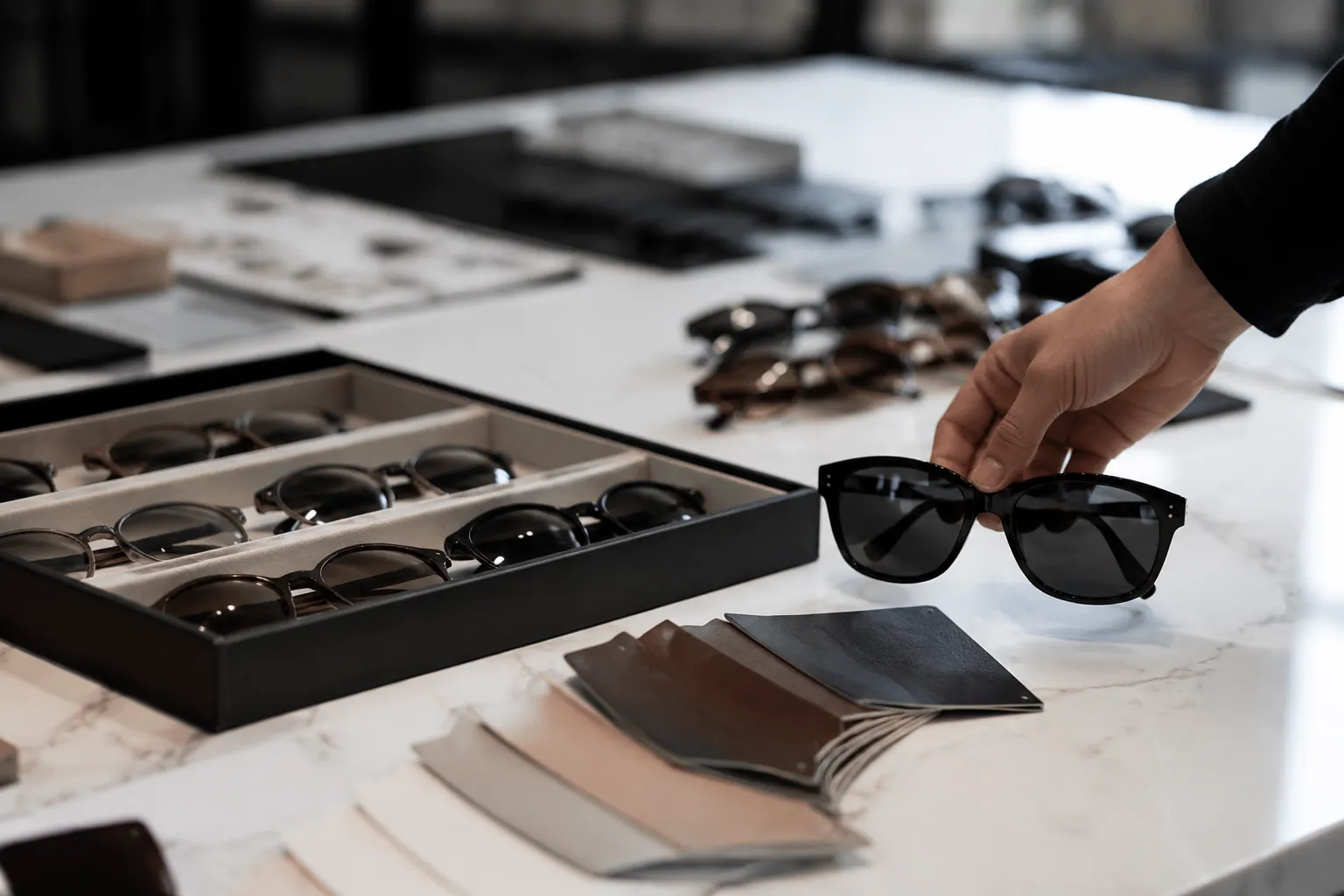
This guide is for brand owners, importers, distributors, and retail buyers sourcing private label sunglasses from OEM or ODM suppliers. The goal is not to demand the widest exclusivity clause possible. The goal is to protect the design detail, market position, tooling spend, and margin that actually matter. Good exclusivity terms are narrow, measurable, and written so purchasing, sampling, production, QC, and shipping teams can follow them without guessing.
Start with the real question: what are you protecting?
Many buyers ask for full exclusivity too early. It sounds strong. It is often expensive, vague, and hard to police.
Start with the feature that creates the commercial edge. In sunglasses sourcing, exclusivity usually sits in separate buckets: frame shape, temple construction, lens color, mirror coating, acetate pattern, decoration layout, packaging, tooling, sales region, and retail channel. Those are not the same thing. Blocking an injection mold from all other customers is very different from reserving one lens tint and one logo finish for six months.
Example: if you choose an existing frame and only change the lens tint, logo, and pouch, you may not need shape exclusivity. You may only need control over the exact colorway, logo placement, and a restriction against selling that same finished configuration to named competitors in your market.
If you fund a new acetate front, custom hinge, CNC temple profile, or injection mold, the issue shifts. Then tool ownership, CAD control, and duplicate-tool restrictions matter far more.
The rule is simple. Write exclusivity around the production step that creates the value. If the protected feature is a lens specification, define it by lens material, tint code, VLT range, and coating. If it is a molded frame geometry, define it by mold number, cavity number, drawing revision, and approved sample. Do not pay for broad promises no one can verify on the factory floor.
The four exclusivity models buyers use most
| Exclusivity type | What it protects | Best use case | Typical commercial condition |
|---|---|---|---|
| Regional exclusivity | Sales into named countries, territories, or channels | Distributors building a defined market | Usually tied to a volume target, reorder deadline, or annual MOQ |
| Colorway exclusivity | Frame color, lens tint, mirror, plating, trim, logo finish | Brands using an existing frame architecture | Lower-cost option, but must be defined by codes and approved samples |
| Tooling exclusivity | Molds, CNC programs, acetate patterns, dies, logo plates | Original frame development or proprietary construction | Requires a tooling record, storage terms, ownership terms, and duplicate-tool controls |
| Catalog-style restriction | Limits resale of an existing design to named competitors or channels | Retailers needing short seasonal differentiation | Usually limited in time and tied to specific SKUs or finished configurations |
Regional exclusivity is common for distributors. A supplier may agree not to sell the same approved SKU into named countries or channels, but usually only if the buyer commits to realistic volume. No reorder, no protection. That is often how it works.
Colorway exclusivity is often the most efficient option. An existing frame can still look distinct if the frame color, lens tint, mirror treatment, and hardware finish are controlled tightly. To make this enforceable, specify the frame material, resin or acetate code, lens tint code, mirror treatment, VLT range, plating color, and approved sample date.
Tooling exclusivity is the strongest form of protection. It applies when the buyer funds an injection mold, logo die, CNC fixture, acetate cutting pattern, or custom metal part. The agreement should state who paid for the tool, who owns it, where it is stored, who maintains it, and whether the supplier may create duplicate cavities or replacement tools without written approval.
Catalog-style restriction is narrower than ownership. A retailer may select an existing style, add private packaging and custom lens colors, then ask the supplier not to sell that same finished configuration to named competitors for a fixed period. That is usually more realistic than demanding global design exclusivity on a public style.
What exclusivity costs and where buyers overpay
Exclusivity costs money because it limits what the supplier can sell, how it can use a tool, or how it can allocate capacity. Overpaying starts when the restriction is wider than the buyer's contribution.
A small trial order rarely justifies global exclusivity on a catalog frame. A custom mold or steady repeat volume may justify stronger protection. Match the ask to the program.
The practical level of exclusivity should reflect order size, forecast quality, and whether the buyer is paying separately for development or tooling. In smaller programs, the most realistic asks are logo protection, a reserved colorway, and a short market or channel restriction. As volume and reorder confidence improve, buyers may be able to negotiate named-country rights, named-competitor restrictions, internal SKU blocking, or tooling controls.
- Small trial orders: ask for exact colorway reservation, logo-use protection, and no sale of the identical finished configuration to named competitors for a short period.
- Repeat orders with a clear forecast: ask for named-country or channel exclusivity tied to a reorder deadline or minimum annual volume.
- Larger continuing programs: ask for regional protection, no-sell clauses for named accounts, and internal SKU blocking.
- Projects with paid tooling: ask for tool ownership terms, drawing revision control, duplicate-tool approval, and written disposal or transfer rules.
Watch for double charging. Some suppliers collect an exclusivity fee and also raise unit price, sample fees, and packaging charges. A cleaner structure is usually one of three models: a one-time exclusivity fee, a separate tooling agreement, or exclusivity tied to ongoing volume commitments. If the product is based on an existing public design, ask the supplier to explain exactly what loss the exclusivity payment is meant to cover.
Define the product in factory language
Most exclusivity disputes start with vague wording. Phrases like similar style, same look, or our design are not useful. Production teams work from style codes, drawings, BOMs, color chips, lens specifications, mold numbers, hinge types, decoration files, and approved samples. Your clause should use the same language.
For frame dimensions, include eye size, bridge, temple length, front width, lens base curve, hinge type, and material thickness where relevant. If the silhouette is the protected feature, attach the drawing or CAD revision and state that changes beyond agreed tolerances need approval.
Record tolerances too. But use the approved technical file or supplier capability review, not guesswork. Lens color should be controlled by tint code and VLT range, not by a photo alone. A dark category 3 lens and a lighter fashion lens are not interchangeable because both look gray in a render.
For decoration, state the method and the position. Common options include pad printing, screen printing, laser engraving, hot stamping, metal logo inlay, and temple plaque assembly. Record the logo location with a drawing, dimensions, and orientation. A visual mockup is not enough.
For tooling, identify mold number, cavity count, insert number, CNC file name, logo die, and storage location. If a replacement tool is made because of wear or damage, the agreement should say whether that replacement stays under the same exclusivity terms and whether the buyer must approve it before production use.
Material behavior changes the risk
Different frame materials create different exclusivity risks. A buyer sourcing injection-molded PC, TR90, or nylon should negotiate differently from a buyer developing acetate, metal, or mixed-material frames.
| Material or process | What can vary in production | What to specify for exclusivity | Practical risk |
|---|---|---|---|
| Injection PC / TR90 / nylon | Color batch, surface gloss, minor molding variation | Mold number, resin color code, finish, approved sample | Shape can be reproduced if tooling control is weak |
| Acetate | Pattern placement, lamination, polishing, thickness | Acetate sheet code, supplier, lamination layout, CNC file | Natural sheet variation can make exact visual matching difficult |
| Metal frames | Plating tone, solder quality, rim alignment, nose pad fit | Plating standard, component drawing, logo die | Small finish changes can alter perceived quality |
| Lenses | VLT, UV performance, tint drift, mirror consistency | Lens material, tint code, coating, thickness, test standard | Lens changes may affect both appearance and compliance status |
Injection frames are efficient and cost-effective, but the protection usually sits in the mold and color specification. If you do not own or control the mold, do not assume you control the shape. In that case, exact finished-configuration protection is often more realistic than broad geometry exclusivity.
Acetate creates a different problem. Even with the same sheet code, pattern distribution can vary from sheet to sheet. If the protected feature is a specific havana, crystal, striped, or laminated appearance, attach approved production photos and define acceptable visual variation.
Lens protection needs extra precision. A lens is not just a color. It includes material, thickness, base curve, tint, UV performance, polarization where applicable, mirror treatment, hard coat, and category. Change one of those elements and the product may no longer be commercially or technically equivalent to the approved version.
Tie exclusivity to samples, compliance, and change control
Exclusivity is easier to enforce when it is tied to an approved sample and a locked BOM. Do not jump from a rendering straight to a purchase order. Use staged approvals and record what was accepted at each step.
- Approve the first design sample for shape, fit, front curve, hinge function, and general finish.
- Approve the color sample with the actual frame material, lens tint, logo finish, and packaging elements.
- Approve the pre-production sample with final BOM, artwork, barcode, warning label, and carton marks.
- Lock the BOM, including material supplier, lens code, hinge, screw, nose pad, decoration method, pouch, case, and retail box.
- Attach compliance references for the target market, such as CE EN ISO 12312-1, ANSI Z80.3, AS/NZS 1067, REACH, and FDA registration where relevant.
- State that changes to lens supplier, tint batch, coating, hinge, plating, acetate sheet, resin color, or logo method require written approval while exclusivity is active.
This is not paperwork for its own sake. It reduces silent substitution. Under time pressure or cost pressure, a supplier may switch to a technically usable lens, plating batch, hinge, or decoration method that still changes the commercial result.
Compliance belongs in the exclusivity file because sunglass conformity applies to the finished specification. If lens material, tint, VLT, UV performance, polarization, or coating changes, the compliance position may change too. ISO 9001 and BSCI can help indicate management systems or social audit status, but they do not replace product-specific approval and change control.
A practical negotiation framework by order size
Your leverage depends on volume, forecast quality, tooling investment, and how much capacity you expect the supplier to hold. Ask for the protection your program can support. Not more.
| Buyer profile | Best exclusivity ask | What to avoid | Release mechanism |
|---|---|---|---|
| Small order per design | Logo protection, exact colorway reservation, short channel restriction | Global shape exclusivity on a catalog frame | Expires after a defined period without reorder |
| Repeat order program | Named-country protection and no sale to named competitors | Open-ended territory rights | Renewal after agreed reorder quantity or annual target |
| Larger ongoing program | Regional rights, SKU blocking, partial tooling control | Loose language around similar products | Annual MOQ or quarterly purchase plan |
| Custom tooled project | Tool ownership, duplicate-tool ban, CAD control | Assuming payment alone proves ownership | Tool remains restricted while buyer meets agreed program terms |
Do not negotiate exclusivity in isolation. Lead time and replenishment matter too. If you want a protected territory and fast repeat supply, the supplier needs a realistic production window and a clear purchase plan. For launch programs, define sample approval deadlines, order cut-off dates, bulk production windows, and the consequences of late changes.
Also ask how restricted items are controlled internally. A workable system may include separate SKU codes, BOM flags, mold tags, color-reference records, QC checkpoints, and sales-order blocks. If the sales team, sampling room, and production line cannot identify a restricted style, enforcement will be weak.
Buyer checklist before you sign the PO
Before approving the purchase order, make sure the exclusivity terms are clear enough for production and enforcement.
- Have you identified the protected feature: shape, tooling, colorway, decoration, packaging, channel, or territory?
- Does the agreement identify the product by style code, sample date, drawing or CAD revision, BOM, mold number, and approved color references?
- Are MOQ, annual volume, and reorder deadlines realistic for your sell-through plan?
- Is the exclusivity period fixed, such as 6 or 12 months, or does it renew only after a defined reorder?
- Who owns molds, logo dies, CNC files, acetate patterns, packaging artwork, and any replacement tools?
- Are duplicate tools, derivative colorways, and sales to named competitors prohibited without written approval?
- Are lens specifications locked by material, tint code, VLT range, UV performance, coating, and category?
- Is the compliance file tied to the final market build, including CE EN ISO 12312-1, ANSI Z80.3, AS/NZS 1067, REACH, and FDA registration where relevant?
- Are sample approval, pre-production approval, and bulk production timing aligned with the launch plan?
- Can the supplier show how restricted SKUs are flagged in sales, sampling, production, QC, and shipping?
Good exclusivity is operational, not emotional. If it cannot be tracked by style code, tool number, color reference, territory list, competitor list, and release date, it will be hard to enforce. The best agreements are narrow, measurable, and built around how sunglasses are actually designed, approved, and made.
Have a custom sunglasses project in mind?
Send us your styles, target market and quantities and we will return a detailed quote with MOQ, lead time and a sample plan.
Get a QuoteWhy source this from Wenzhou with LumiShades
Wenzhou in Zhejiang Province is widely regarded as China’s eyewear manufacturing capital, producing a large share of the world’s sunglasses. That concentration matters to buyers: a deep local supply chain for acetate sheet, hinges, lens blanks, plating and packaging means shorter component lead times, easier color and material matching, and a workforce with decades of eyewear-specific skill. LumiShades has manufactured in this ecosystem since 2009, and our vertical integration — in-house injection molding, acetate cutting, CNC milling, lens tinting, decoration and quality control — means no part of your order is quietly subcontracted to a workshop you cannot audit.
For international buyers, that vertical control translates into accountability. When a single factory owns every step, defects are traced and fixed at source rather than bounced between vendors, and your specifications survive intact from first sample to bulk. We back this with 15+ years of experience, shipments to 60+ countries, more than 5 million pairs produced per year and a 98.5% on-time delivery rate. Our certifications — CE EN ISO 12312-1, FDA registration, ANSI Z80.3, AS/NZS 1067, REACH, ISO 9001 and BSCI audit — mean the compliance documentation your market requires already exists. Explore our manufacturing capabilities and quality control process to see how this works in practice.
Frequently asked questions
Can I get exclusivity on a catalog frame if I only order a small quantity? Usually not for the full frame shape. On a small order, the more realistic request is protection for your exact finished configuration: frame color, lens tint, logo application, packaging, and a short restriction against selling that same SKU or approved sample configuration to named competitors or named channels. Ask the supplier to list the restricted SKU, competitor names, territory, and end date in writing.
Who should own the mold if I pay a tooling charge? Do not assume a tooling payment automatically transfers ownership. The agreement should state the tool name or number, cavity count, insert details if relevant, storage location, maintenance responsibility, ownership status, and whether duplicate or replacement tooling requires your written approval. If ownership matters commercially, make the contract say clearly whether the tool is buyer-owned, supplier-owned but dedicated, or supplier-owned with restricted use.
How long should regional exclusivity last? A workable term is usually a fixed period linked to performance, such as a season, 6 months, or 12 months, with renewal tied to annual MOQ, quarterly purchase targets, or confirmed reorder schedules. Ask for a clear release clause: what happens if you miss the target, how much notice the supplier must give, and whether any sell-off period applies to existing inventory or confirmed production.
Does changing the lens color affect compliance? It can. Sunglass compliance depends on the finished lens specification, not only the frame. A change in tint, VLT, lens material, polarization, coating, or UV performance can change the product category or its compliance status for CE EN ISO 12312-1, ANSI Z80.3, or AS/NZS 1067. Treat any meaningful lens change as a new approval point and ask whether updated test reports or compliance review are required for the destination market.
What is the safest way to define colorway exclusivity? Use a full technical definition, not a marketing description. List the frame material, resin or acetate code, lens material, tint code, VLT range, mirror or coating treatment, plating color, logo finish, decoration method, and approved sample date. Attach photos and, where possible, color chips or supplier references. Also state whether minor finish variations within approved tolerance are allowed and whether derivative shades count as separate colorways or restricted variants.
Ready to start?
Explore our aviator sunglasses or request a quote — our sales team replies within 12 hours.
Request a Quote