
Reduce Sunglasses Sample Rounds Without Costly Misses
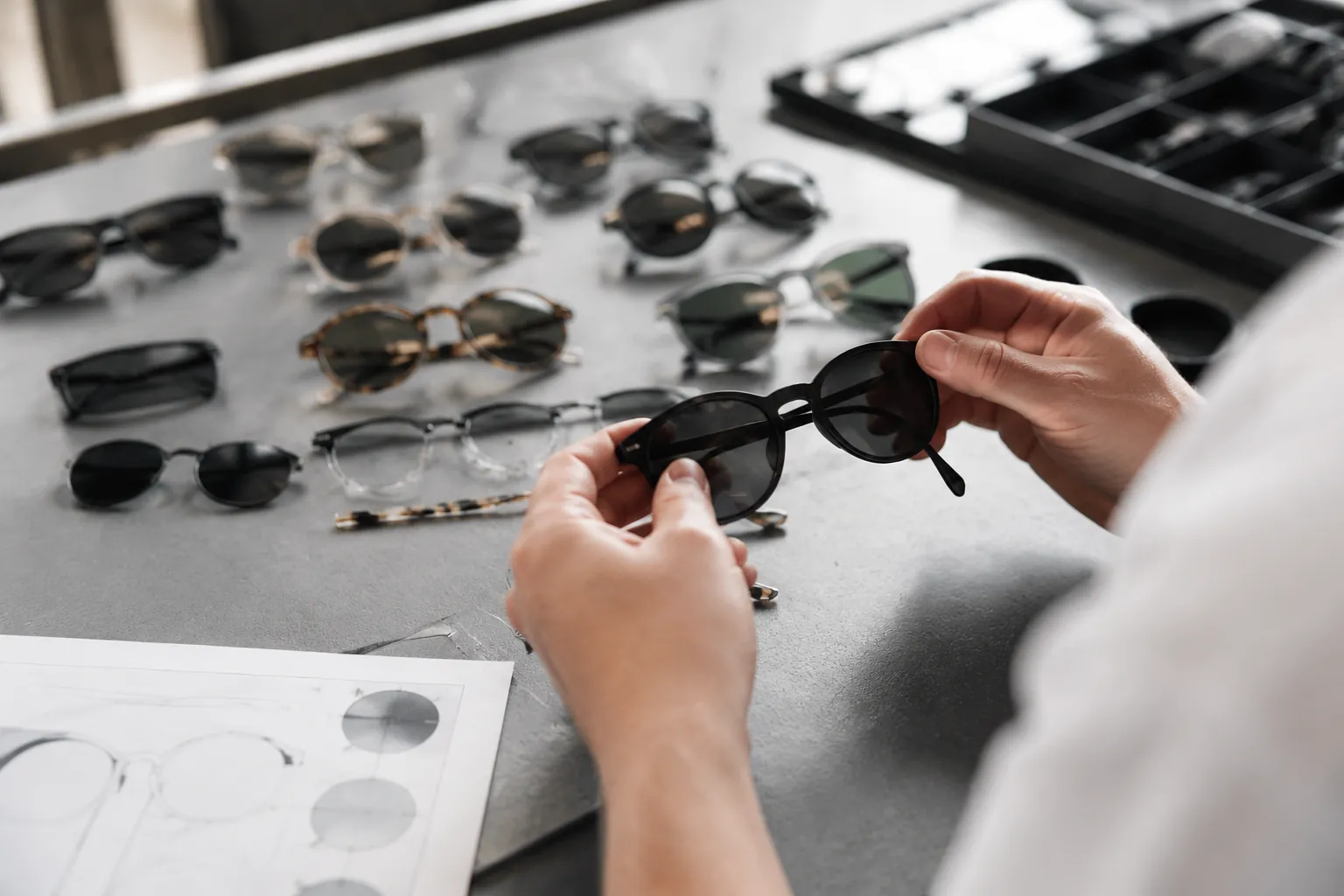
This guide is for buyers developing custom sunglasses with OEM factories who want fewer avoidable resamples. The goal is not speed at any cost. It is control. Give the factory measurable inputs, separate prototype decisions from pre-production decisions, and use approval gates that catch fit, finish, branding, and compliance issues before bulk. Clear briefs and disciplined comments cut wasted rounds.
Why sample rounds multiply
Most sampling delays do not start with one major failure. They build from small gaps: no approved reference style, no tolerance table, logo files sent late, comments coming from three departments, or priorities changing after the first review.
A custom sunglasses project can move well when the first brief is complete and the review process is controlled. It slows down when the brief relies on vague phrases such as more premium, a bit wider, or make the logo pop. Those are opinions, not instructions.
Factories can execute clear directions. They cannot execute intent alone. If the bridge fit is off, the opening force is too stiff, or the outer temple logo sits off center, the fix should come through a marked drawing, a numbered issue sheet, and a clear decision on what changes now versus what waits until PP or bulk.
Small dimensional shifts matter in sunglasses. A front width change of 1 to 2 mm can affect coverage and stability. A bridge change of 1 mm can alter nose contact. A logo shift of 0.5 mm may look obviously wrong on a slim temple.
Lead time helps. A weak approval process still kills it.
Build a brief that answers the factory's real questions
A usable brief should let the sample team start without chasing basic clarifications. If they still need to ask about hinge type, lens category, print color, logo size, or finish level, the brief is not ready.
At minimum, the brief should cover six decision blocks:
- Commercial target: target quantity, target price range, launch date, and any MOQ limits. If the project has a hard cost ceiling, say so early so the factory can propose a realistic construction route.
- Construction: injection or acetate, full-rim or semi-rimless, base curve if relevant, hinge type, lens material, and any metal trim. If the style is based on an existing sample, state exactly what should be copied and what should change.
- Critical dimensions: lens width, bridge, temple length, front width, frame height, and fit notes. Add tolerances. For example: front width 146.0 mm +/-0.8 mm, lens width 54.0 mm +/-0.3 mm, bridge 18.0 mm +/-0.3 mm, temple length 145.0 mm +/-1.0 mm.
- Color and finish: Pantone references where practical, gloss or matte target, transparency level, lens tint direction, mirror yes or no, and inside temple print color. If acetate is used, note whether natural sheet variation is acceptable.
- Branding: AI or other vector logo files, exact placement, decoration method, size in mm, and finish expectations. A metal logo plate, for example, needs length, height, corner radius, plating color, recess depth if inset, and placement from the hinge edge.
- Compliance: destination market, labeling language, lens category direction, and the standards or testing plan expected for the program.
Use one master document set. Do not scatter specifications across emails, chat threads, and random photos. The file package should include:
- spec sheet with dimensions and tolerances
- reference photos or existing sample images
- logo artwork in vector format
- color references or approved swatches
- packaging and marking requirements
- pass-fail checklist for the sample review
The first package sets the pace. If it is incomplete, the factory will fill gaps with assumptions. That is how avoidable resamples start.
Separate prototype decisions from pre-production decisions
A common reason for extra rounds is trying to finalize everything in the first hand sample. That is a mistake. A prototype should answer structural questions first. The PP sample should confirm the locked bulk standard.
| Stage | Main purpose | What must be approved | What can wait |
|---|---|---|---|
| Prototype sample | Verify shape, size architecture, material direction, and branding position | Front curve, eye shape, bridge intent, temple length, hinge type, basic logo location, material family | Minor print sharpness, exact cleaning cloth artwork, small carton edits |
| Revised prototype | Close major fit and appearance corrections | Dimension changes, opening force, left-right alignment, lens color family, decoration method | Barcode placement, minor inner print refinement |
| Pre-production sample | Match the approved bulk standard | Final color, final logo execution, final lens performance, labeling, packaging, QC points | Nothing critical should remain open |
At prototype stage, decide the product skeleton: silhouette, fit intent, construction, and branding zones. If the front is too flat or the temple length is wrong, there is no point arguing about whether the outer logo should move 1 mm.
At PP stage, the opposite is true. Structure should already be frozen. Now details matter: print opacity, barcode text, warning placement, and whether the logo plating matches the approved reference.
Keep each round focused. It saves time and reduces internal disputes.
Use a comment sheet the factory can execute
The fastest way to waste a sample round is to send feedback like a conversation. The factory needs an action list.
Good comments are numbered, photo-backed, and prioritized. Use only three statuses: must change, prefer to change, and approved as is. Each issue should include a marked photo, the current condition, the requested correction, and the measurement or reference standard.
Examples:
- Bad: temples feel tight.
Better: reduce opening force. Current pair requires excessive force between 45 and 90 degrees. Target smooth hinge action with no free swing and balanced left-right resistance. - Bad: logo too small.
Better: outer temple metal plate change from 18 x 3 mm to 22 x 3.5 mm, centered 12 mm from hinge edge, polished light gold. - Bad: color not right.
Better: front frame black should match approved swatch B, with less gray cast and current gloss level maintained. - Bad: fit too narrow.
Better: increase front width from current measured 143.8 mm to target 145.5 to 146.0 mm while maintaining the same lens shape.
One owner on the buyer side should consolidate all comments before they go to the factory. If sales, design, and compliance send separate notes, contradictions are almost guaranteed.
A useful rule: no new subjective requests after the revised prototype unless they affect fit, compliance, or a confirmed branding error. Stick to it.
What to check before asking for another sample
Not every issue justifies a new physical sample. Some points can be closed with measured photos, decoration proofs, or QC reports. A resample makes sense when the change affects form, fit, function, or production risk.
Request a measurement and basic QC report with every key sample. It should include front width, lens width, bridge, temple length, frame height, left-right symmetry, logo placement, hinge feel, and lens insertion condition. For more detailed programs, ask for temple opening angle, weight, and packaging confirmation photos.
Tolerance logic should be realistic. Handmade and semi-handmade steps are never perfectly mathematical. Common working tolerances might look like this:
| Checkpoint | Typical target | Practical tolerance | Why it matters |
|---|---|---|---|
| Front width | 146.0 mm | +/-0.8 mm | Fit and facial coverage |
| Lens width | 54.0 mm | +/-0.3 mm | Shape consistency and tooling accuracy |
| Bridge | 18.0 mm | +/-0.3 mm | Nose fit |
| Temple length | 145.0 mm | +/-1.0 mm | Ear wrap and wearing stability |
| Logo placement | 12.0 mm from hinge edge | +/-0.5 mm | Visible branding symmetry |
Common checkpoints that justify a new physical sample:
- front shape changed
- bridge, temple, or front width changed
- material switched from injection to acetate or vice versa
- lens tint, category, or polarization changed
- logo process changed from print to metal plate or engraving
- hinge construction changed
Items often closable by remote confirmation:
- temple print spelling or wording correction
- inner label updates
- carton marks and barcode layout
- cleaning cloth artwork
- minor logo position adjustments shown on a measured photo
If you rely on remote confirmation, ask for scale-backed images with a ruler or caliper visible, plus straight-on and angle views. Casual desk photos are not enough.
Catch compliance issues early
Many buyers approve a sample on looks, then discover later that the lens category, labeling, or supporting documents do not fit the target market. That usually means another round. Sometimes more.
For sunglasses, set the compliance framework at brief stage, not after PP. Depending on destination, that may involve CE EN ISO 12312-1, ANSI Z80.3, AS/NZS 1067, REACH, and FDA registration where applicable to the supplier or importer setup. If the factory operates under ISO 9001 or has BSCI audit status, that may matter as a quality-system or social-compliance reference, but it does not replace product-level sunglass requirements.
Handle four questions early:
- Lens category: confirm the intended visible light transmission range before final tint approval. A good-looking tint in the wrong category can trigger rework.
- Lens treatment: mirrored, gradient, and polarized lenses may require specific test planning, claims control, or marking review depending on the market.
- Markings and packaging: check that temple text, warnings, importer information, and packaging statements match the market file.
- Test sample control: define which sample will be used for lab testing and make sure material, coating, and lens construction match intended bulk.
Material consistency matters. If the prototype uses one plating source or coating stack and PP uses another, the test result may not represent bulk production. This matters most for metal trims, mirror coatings, soft-touch finishes, and decorated logos.
Compliance is not a last-minute check. It is part of the sampling structure from day one.
Plan around MOQ, price breaks, and tool choices
Some sample loops are not technical. They are commercial. The buyer wants a low-MOQ launch but keeps specifying features tied to a higher cost structure or a more complex process route.
| Decision area | Lower-cost path | Higher-cost path | Impact on sampling |
|---|---|---|---|
| Frame material | Injection plastic | Acetate with CNC and polishing | Injection can move faster on simple builds; acetate offers richer depth and polish but usually needs closer review of color variation and edge finishing |
| Branding | Pad print or laser engraving | Inset or applied metal logo plate | Metal logos add placement, adhesion, plating, and alignment checks |
| Order volume | Low MOQ launch | Larger production run | Higher volume can justify more dedicated tooling, packaging options, and tighter component selection |
| Finish target | Standard gloss or matte | Multi-step polishing, special coatings, premium trim | More finish steps create more variables to approve and more opportunities for rework |
Material behavior affects expectations too. Injection frames are efficient and consistent for value-driven programs, but they will not always give the visual depth of polished acetate. Acetate can look richer, but sheet direction, hand polishing, and natural color variation need closer review.
If a buyer switches from injection to acetate after the first prototype, or changes branding from pad print to metal logo plates midstream, part of the development path resets. That usually means more time, more approvals, or both.
Keep the spec aligned with the price plan. If the target is entry level, do not expect acetate-style finish detail on an injection budget.
A practical two-round workflow buyers can use
If you want fewer rounds, use a fixed workflow and enforce it.
- Day 0: send one complete brief with dimensions, tolerances, reference images, logo vectors, color direction, compliance destination, and target quantity.
- Day 2 to 3: collect and answer all factory questions in one batch. Do not drip-feed answers.
- Prototype review: check shape, dimensions, fit intent, hinge feel, lens color family, and branding location against a written checklist.
- Within 48 hours of receipt: send one consolidated comment sheet with numbered must-change items and annotated photos.
- Revised prototype review: if structure is correct, freeze dimensions, material family, hinge type, and decoration method.
- Before PP sample: confirm final artwork, packaging text, market labeling, and any lab test sample plan.
- PP review: approve only if it matches the locked spec and intended bulk standard.
This works because each round has one job. Prototype resolves architecture. Revised prototype closes major corrections. PP confirms repeatability. For many private-label sunglasses programs, that is enough.
If the factory can provide interim measured photos or decoration proofs before the physical sample ships, use them to close small issues early. They support the process. They do not replace hands-on review where fit, finish, or function must be checked in person.
Have a custom sunglasses project in mind?
Send us your styles, target market and quantities and we will return a detailed quote with MOQ, lead time and a sample plan.
Get a QuoteWhy source this from Wenzhou with LumiShades
Wenzhou in Zhejiang Province is widely regarded as China’s eyewear manufacturing capital, producing a large share of the world’s sunglasses. That concentration matters to buyers: a deep local supply chain for acetate sheet, hinges, lens blanks, plating and packaging means shorter component lead times, easier color and material matching, and a workforce with decades of eyewear-specific skill. LumiShades has manufactured in this ecosystem since 2009, and our vertical integration — in-house injection molding, acetate cutting, CNC milling, lens tinting, decoration and quality control — means no part of your order is quietly subcontracted to a workshop you cannot audit.
For international buyers, that vertical control translates into accountability. When a single factory owns every step, defects are traced and fixed at source rather than bounced between vendors, and your specifications survive intact from first sample to bulk. We back this with 15+ years of experience, shipments to 60+ countries, more than 5 million pairs produced per year and a 98.5% on-time delivery rate. Our certifications — CE EN ISO 12312-1, FDA registration, ANSI Z80.3, AS/NZS 1067, REACH, ISO 9001 and BSCI audit — mean the compliance documentation your market requires already exists. Explore our manufacturing capabilities and quality control process to see how this works in practice.
Frequently asked questions
How many sample rounds should a normal custom sunglasses project need? For a straightforward private-label style, many programs can be managed through one prototype round, one revision round if needed, and one PP confirmation before bulk. If the project keeps stretching beyond that, check three common causes: the original brief was incomplete, the review comments were subjective instead of measurable, or the team changed material, dimensions, or branding method after development started. Define in advance what each stage is meant to approve, and do not reopen closed decisions without a documented reason.
When should I ask for a new physical sample instead of photos? Ask for a new physical sample when the change affects shape, dimensions, hinge construction, frame material, lens performance, or any feature that changes fit, three-dimensional appearance, or use performance. Examples include front-width changes, switching from injection to acetate, revising the bridge, changing the hinge, or moving from a printed logo to an applied metal badge. Use measured photos or decoration proofs for lower-risk changes such as wording corrections, barcode updates, inner print edits, or very small logo-position adjustments. For remote approval, require ruler- or caliper-backed photos from multiple angles.
What is the biggest cause of avoidable resamples? Subjective feedback without numbers. Comments such as wider, more premium, better finish, or nicer color do not tell the factory what to change. Replace them with measurable instructions: front width target in mm, allowable tolerance, Pantone or approved swatch reference, logo size, logo distance from hinge, finish description, and priority level. Also assign one internal owner to combine all comments into one file. Multiple departments sending separate feedback often creates contradictions that lead straight to another round.
How early should compliance be discussed in sampling? At brief stage, before appearance is finalized. Confirm the destination market, intended lens category, required markings, packaging statements, and test plan before the first sample is approved. Depending on the market, that may mean aligning the program with CE EN ISO 12312-1, ANSI Z80.3, AS/NZS 1067, REACH, and FDA registration requirements where applicable to the supply chain setup. A practical step is to send a one-page compliance summary with the development brief so design, sourcing, and the factory start from the same assumptions.
Can low MOQ orders still get efficient sampling? Yes, but only if the specification stays disciplined. Low-MOQ projects are less tolerant of repeated development work, so buyers should keep construction simple, avoid switching material or decoration methods midstream, and approve only what is necessary at each stage. Before sampling starts, ask the factory which features add the most complexity at your volume level, such as acetate construction, applied metal logos, mirror coatings, or premium packaging. Then decide which of those features are essential for launch and which can wait for a larger reorder.
Ready to start?
Explore our rimless sunglasses or request a quote — our sales team replies within 12 hours.
Request a Quote