
Rx-Ready Sunglass Frames: B2B Sourcing Guide
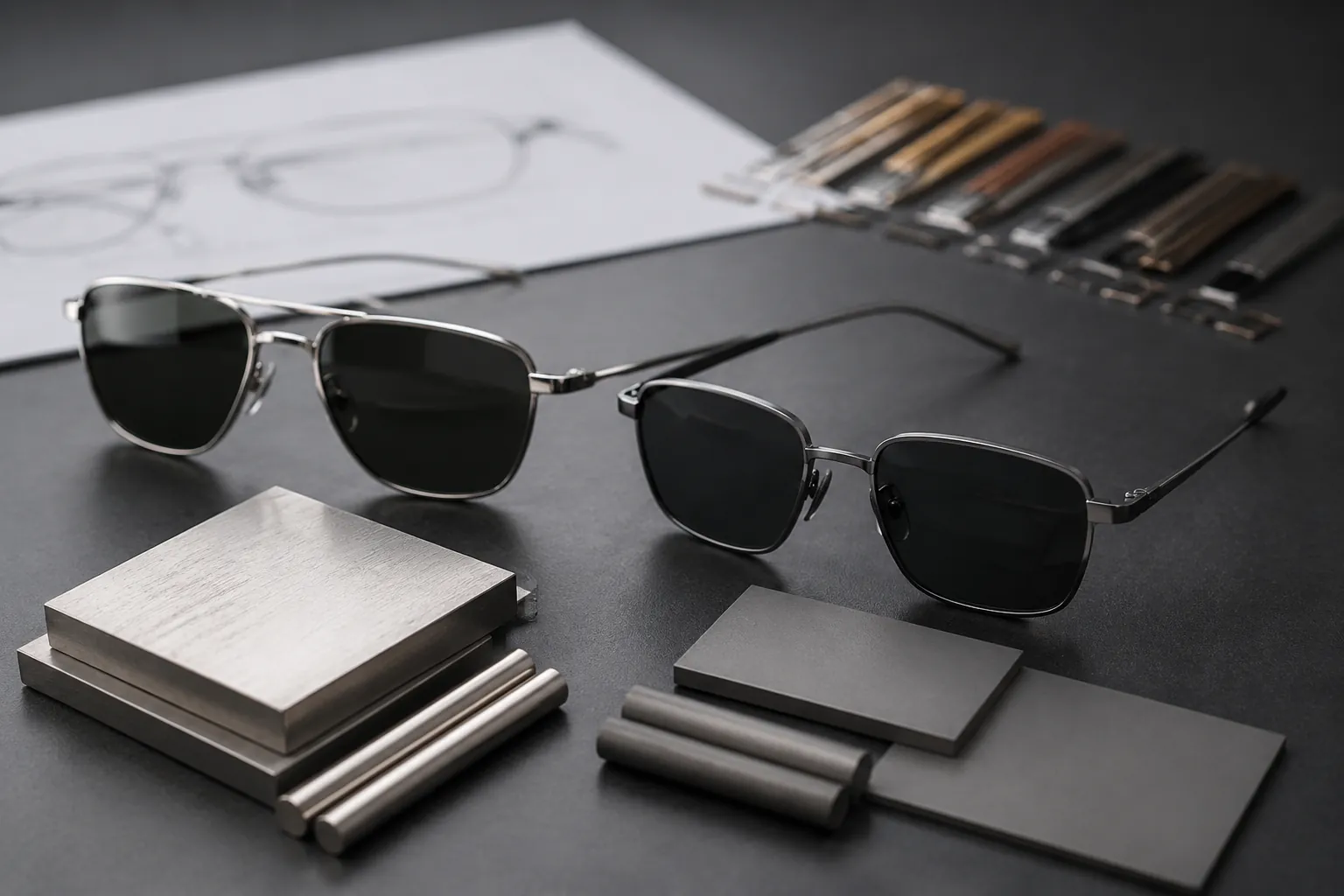
This guide is for brands, importers, distributors, and retailers sourcing sunglass frames that may be sold plano now and glazed with prescription lenses later. In these programs, the main risk is not logo placement or lens tint. It is whether the frame can take edged prescription lenses without stress, gaps, distortion, or repeated bench rework. That is the job. Approve a frame that looks commercial, can be glazed by a competent lab, and still fits predictably after prescription lenses change weight and balance. The sections below give buyers a practical framework for setting usable specs, judging materials, and tying sample approval to bulk reality.
Define the optical use case before design is locked
A prescription-ready sunglass frame is not just a sun frame with dark lenses. It must tolerate lens edging, insertion, heating, adjustment, repeated opening and closing, and daily wear after prescription lenses change the frame's balance. So buyers need to define the optical use case before approving eye shape, base curve, material, or decoration.
Most programs fall into three groups:
- Local glazing program: stores or labs receive plano or demo-lens frames and edge prescription lenses later. Here, groove consistency, lens-seat geometry, eyewire support, and hinge alignment matter most.
- Hybrid retail program: the same style is sold both as plano sun and as prescription sun through optical or e-commerce channels. Here, repeatable fit across colorways, moderate wrap, and stable balance are the main concerns.
- Distributor optical program: distributors buy finished frames and arrange glazing in-market. Here, clear drawings, measurable tolerances, and compatibility with common lab practice matter more than cosmetic complexity.
Lock the core technical points early: target prescription range, acceptable base curve, A and B size, DBL, front wrap angle, and minimum material support around the lens seat. For many mainstream optical-sun programs, a moderate-wrap front with a controlled eye size is easier to glaze than an oversized, highly wrapped fashion shape. More wrap usually means a narrower practical prescription range. Thin eyewires do the same.
At sample stage, ask direct questions. Has this construction been used for prescription glazing before? What lens types is it meant to accept? How is groove path checked in production? What process controls limit variation by material and colorway? If the factory cannot answer clearly, you are still reviewing a fashion sample, not an optical-ready platform.
Four construction details that decide Rx success or failure
Most prescription-sun failures come back to the same issues. Control them early and you cut remakes, cracked rims, and fit complaints.
- Eyewire support. Plastic fronts need enough material around the lens seat to handle insertion and later adjustments. Fashion-thin rims may look clean in development, then whiten, distort, or crack during glazing.
- Groove geometry. Groove depth, angle, and position should stay consistent around the full lens opening. If the groove path drifts, lenses may seat unevenly. That leads to gaps, stress, or poor retention.
- Bridge and temple stability. The frame should stay aligned after glazing and fitting. Check that the front does not twist too easily and that temple closure remains even after adjustment. On larger sun shapes, weak endpieces or poor hinge anchoring show up fast once prescription lenses add load.
- Base curve discipline. Many plano sunglasses use 6-base or stronger curves, but prescription compatibility usually narrows as wrap increases. If broad glazing compatibility is the goal, moderate curves are safer unless the intended lab network has already confirmed higher-wrap capability.
A practical rule: if a design combines thin front sections, oversized eye size, and strong wrap, something usually gives. In most cases, one of those elements needs to be reduced.
Also keep appearance approval separate from glazing approval. A frame can pass cosmetic review and still fail at the bench.
Material choice: what works on the bench
Material affects more than weight and look. It affects groove accuracy, heat response, shape memory, adjustment range, and how forgiving the frame will be during lens insertion. Buyers often compare style and FOB first. Better to ask a harder question: how does the material behave during glazing and fitting?
| Material | Typical Rx readiness | Bench advantages | Common risks |
|---|---|---|---|
| Acetate | Often suitable for full-rim optical-style sun frames | Good material body, premium finish, and useful for precise milling and lamination details | Can be heavier in thick constructions; finish-intensive builds may add processing time |
| TR90 or similar injected light polymer | Can work when section design and process control are disciplined | Lightweight, impact-resistant, comfortable for sport/casual use | High flexibility can reduce fit memory; thin sections may distort during insertion |
| Injected PC fashion frame | Better suited to limited or carefully controlled Rx programs | Cost-efficient, scalable output, consistent molded surface detail | Less forgiving in adjustment; thin cosmetic rims are a common failure point |
| Full-rim metal front | Often suitable for moderate-wrap Rx conversions | Adjustable fit, controlled lens seat, easier nose-fit tuning with pads | Strong wrap is less suitable; finish durability under sweat and salt exposure should be verified |
For hybrid optical-sun retail, acetate is often the safest starting point. It usually gives enough material support for a dependable lens seat and repeated fitting. CNC milling can help control lens-opening shape and groove path on acetate. Injected polymers can also work, especially where low weight and scalable pricing matter, but they need tighter control of section design and molding consistency. Full-rim metal is another solid option, especially when adjustable nose pads are needed, but it generally works best in moderate sunglass geometries.
Decoration also interacts with the substrate. Pad printing is economical and fast for temple branding, but buyers should ask for abrasion and chemical-resistance checks. Laser engraving is generally stable on many metals and some plastics. Hot foil can work well on acetate interiors if process control is clean. Metal logo plates add a premium look, but they also add assembly steps and need good pocketing, adhesive control, and alignment.
What the tech pack must cover
If a project is approved on appearance alone, the buyer is accepting hidden optical risk. Prescription-ready programs need a tech pack that defines what must be proven during development, not just what should look good in photos.
At minimum, the spec sheet should define these checkpoints:
- Groove consistency: specify the intended groove form and require cross-section confirmation during sampling.
- Eyewire symmetry: left and right openings should not only match nominal dimensions, but also edge consistently around the full shape.
- Lens insertion and removal test: sample lenses should be mounted and removed without whitening, cracking, visible stress marks, or rim collapse.
- Heat adjustment response: front and temples should tolerate normal fitting adjustments without gloss loss, burn marks, or permanent distortion.
- Hinge pull and alignment: after adjustment, temple closure should remain even, with no obvious endpiece distortion or unstable alignment.
For many buyers, it helps to request both a cosmetic sample and a bench sample. The cosmetic sample is for color, finish, logo position, and packaging review. The bench sample is for edging trials, insertion tests, heating response, and fit adjustment. They are not the same approval step.
Processing method matters too. On acetate, groove path may be controlled more predictably through CNC-assisted processing than through hand-finishing alone. On injection styles, mold condition, cavity balance, and cooling consistency become the main variables. Poor control here can produce acceptable first samples but inconsistent lens-seat behavior in bulk.
Fit stability after glazing
Plano approval can give false confidence. A frame that sits well with plano lenses may behave differently once prescription lenses are installed. Prescription lenses can add front weight, shift balance, and increase stress around the lens seat. So fit checks should be done after actual glazing whenever possible.
Pre-production review should focus on these areas:
- Bridge geometry: in low-bridge or universal-fit programs, added lens weight can increase sliding if contact points are too narrow or too smooth.
- Temple spread and bend memory: the temple should hold its adjustment after opening and closing cycles. Weak hinge anchoring may not show up until heavier lenses are mounted.
- Nose pad strategy: adjustable pads on metal or combination frames can widen the fitting range and reduce return risk across different face shapes.
- Front wrap and pantoscopic balance: moderate wrap is easier for broad prescription compatibility; high wrap may require specialized lens surfacing and can create cosmetic or visual compromises in stronger prescriptions.
Channel strategy matters. Optical retailers can make minor adjustments and explain prescription limits to customers. Fashion chains and general retail usually cannot. If the frame will be sold in non-optical channels, keep geometry simple, reduce wrap, and avoid styles that depend on expert bench work for acceptable fit.
Compliance and documentation: keep sunglass standards separate from Rx readiness
Buyers should keep two issues separate: market compliance and optical suitability. A frame may meet destination-market sunglass requirements and still be a poor platform for prescription glazing.
Relevant standards and compliance references for sunglass programs may include CE EN ISO 12312-1, ANSI Z80.3, AS/NZS 1067, REACH, FDA registration, ISO 9001, and BSCI. These relate to sunglass performance, chemical compliance, market access, quality systems, and social-audit expectations. They do not confirm groove accuracy, fit stability, or suitability for a given prescription range.
Request practical evidence instead:
- Test reports, declarations, or supporting documents clearly linked to the relevant style, lens family, or material family.
- Material compliance confirmation for higher-risk components such as coatings, paints, nose pads, temple tips, inks, and metal trims.
- A production QC plan covering alignment, opening-size consistency, lens fit, cosmetics, hinge function, and final assembly checks.
ISO 9001 and BSCI can be useful signs of management discipline and social compliance. They are not substitutes for a real edging and fitting trial. For prescription-ready sunglasses, a controlled bench test is still one of the most useful proofs.
MOQ, pricing, lead time, and rollout strategy
Prescription-ready construction can add cost. Thicker or more controlled material sections, more precise lens-seat finishing, and a longer development cycle all affect pricing. Not every Rx-capable frame is expensive, but it does require tighter process control than a basic fashion sun frame.
| Program item | Typical supplier terms | What it means for buyers |
|---|---|---|
| MOQ | Often set low for sampling or pilot runs, depending on factory capability | Use early quantities to validate geometry and glazing behavior before broad rollout |
| Price ladder | Unit cost usually improves at higher volume breaks | Scale only after the frame has been proven through glazing and fit feedback |
| Sample lead time | Varies by material, tooling status, and decoration complexity | Allow time for both cosmetic review and bench testing; do not treat one sample as final approval |
| Bulk production | Depends on material, decoration, and factory scheduling | Add buffer for acetate lamination, CNC work, metal trims, and any multi-step finishing |
For a first optical-ready sunglass style, use the initial order to validate geometry, not to chase margin. Prove the frame first. If local lab feedback and store fitting are positive, then increase volume and improve FOB through tooling, labor, and decoration efficiencies.
Decoration can affect lead time more than buyers expect. Pad print is fast but should be checked for abrasion resistance. Laser logo application is generally stable. Metal logo plates or inlaid ornaments add assembly handling and alignment checks. On acetate, lamination effects, deeper polishing, or CNC surfacing can extend production time beyond a standard fashion-sun schedule.
The practical rule is simple: do not chase the lowest FOB on the first prescription-capable sunglass frame. First prove the lens seat, fit stability, and glazing behavior. Then simplify decoration or scale volume to improve margin.
A sourcing workflow that reduces rework and returns
For prescription-ready sun frames, the safest sourcing process is disciplined. Not complicated.
- Freeze the optical intent. State whether the frame is for limited prescriptions, standard single-vision use, or a broader prescription range.
- Choose a realistic style family. For first runs, avoid highly wrapped, oversized, ultra-thin designs unless your lab network has already approved similar geometry.
- Write the tech pack around lensing. Include lens-seat requirements, rim support, hinge expectations, and bench tests, not only cosmetic specifications.
- Approve two sample types. Use one cosmetic sample and one bench sample for edging, insertion, heating, and fitting checks.
- Run a pilot order. Keep the first quantity focused on one or two low-risk shapes and collect actual glazing feedback.
- Scale after feedback. Increase volume only when labs, stores, or distributors confirm consistent glazing and acceptable fit.
The central principle is straightforward: treat prescription-ready sunglasses as an optical product with sun styling, not as a fashion sunglass with an optical claim added later.
Have a custom sunglasses project in mind?
Send us your styles, target market and quantities and we will return a detailed quote with MOQ, lead time and a sample plan.
Get a QuoteWhy source this from Wenzhou with LumiShades
Wenzhou in Zhejiang Province is widely regarded as China’s eyewear manufacturing capital, producing a large share of the world’s sunglasses. That concentration matters to buyers: a deep local supply chain for acetate sheet, hinges, lens blanks, plating and packaging means shorter component lead times, easier color and material matching, and a workforce with decades of eyewear-specific skill. LumiShades has manufactured in this ecosystem since 2009, and our vertical integration — in-house injection molding, acetate cutting, CNC milling, lens tinting, decoration and quality control — means no part of your order is quietly subcontracted to a workshop you cannot audit.
For international buyers, that vertical control translates into accountability. When a single factory owns every step, defects are traced and fixed at source rather than bounced between vendors, and your specifications survive intact from first sample to bulk. We back this with 15+ years of experience, shipments to 60+ countries, more than 5 million pairs produced per year and a 98.5% on-time delivery rate. Our certifications — CE EN ISO 12312-1, FDA registration, ANSI Z80.3, AS/NZS 1067, REACH, ISO 9001 and BSCI audit — mean the compliance documentation your market requires already exists. Explore our manufacturing capabilities and quality control process to see how this works in practice.
Frequently asked questions
Can any sunglass frame be sold as prescription-ready? No. Some sunglass frames are poor candidates for prescription glazing because of strong wrap, very thin eyewires, oversized openings, unstable hinge construction, or limited material support around the lens seat. Before approving bulk production, ask for a bench sample and have a qualified lab test actual lens edging, insertion, removal, and adjustment on the frame. If possible, test the prescription range you expect to sell rather than relying on a general statement that the frame is 'Rx-able'.
What frame material is the safest starting point for hybrid optical-sun retail? Acetate is often the safest starting point for many full-rim hybrid programs because it usually offers good material body, a stable lens seat, and practical adjustment behavior. Full-rim metal is also a strong option where adjustable nose pads are important. Lightweight injected materials can work, but buyers should confirm that the design has enough structural support and that the factory can hold consistent molding quality. Compare materials using the same lensing test, not appearance alone.
How should we sample a frame intended for both plano sun and Rx use? Use two sample paths. First, request a cosmetic sample for color, finish, branding, and packaging review. Second, request a bench sample for lens edging, insertion, removal, heating response, and fitting adjustments. Have the bench sample checked by the lab or optical partner that will actually glaze the frame in your target market. Record issues such as whitening, cracking, poor retention, alignment shift, or fit instability and feed those back before PP approval.
Do CE EN ISO 12312-1 or ANSI Z80.3 mean the frame is good for prescription glazing? No. CE EN ISO 12312-1 and ANSI Z80.3 address sunglass performance and safety requirements for relevant products, but they do not certify that a frame construction is suitable for prescription lens edging. To assess prescription readiness, buyers need separate evidence such as bench testing, lens insertion trials, fit checks after glazing, and confirmation from the intended lab network that the frame geometry is workable for the target prescription range.
What is a sensible first order plan for a new Rx-capable sunglass style? Start with a limited pilot order on one or two low-risk shapes with moderate wrap and simple decoration. Before scaling, have those units glazed by your actual lab or distributor partner and collect feedback on edging ease, lens retention, cosmetic appearance, and fit after adjustment. Move into larger volume brackets only after the frame has been proven in real use. This usually reduces returns, rework, and false savings from approving an unproven design too early.
Ready to start?
Explore our square sunglasses or request a quote — our sales team replies within 12 hours.
Request a Quote