
Injection-Molded Sunglasses: Buyer Guide for Volume Orders
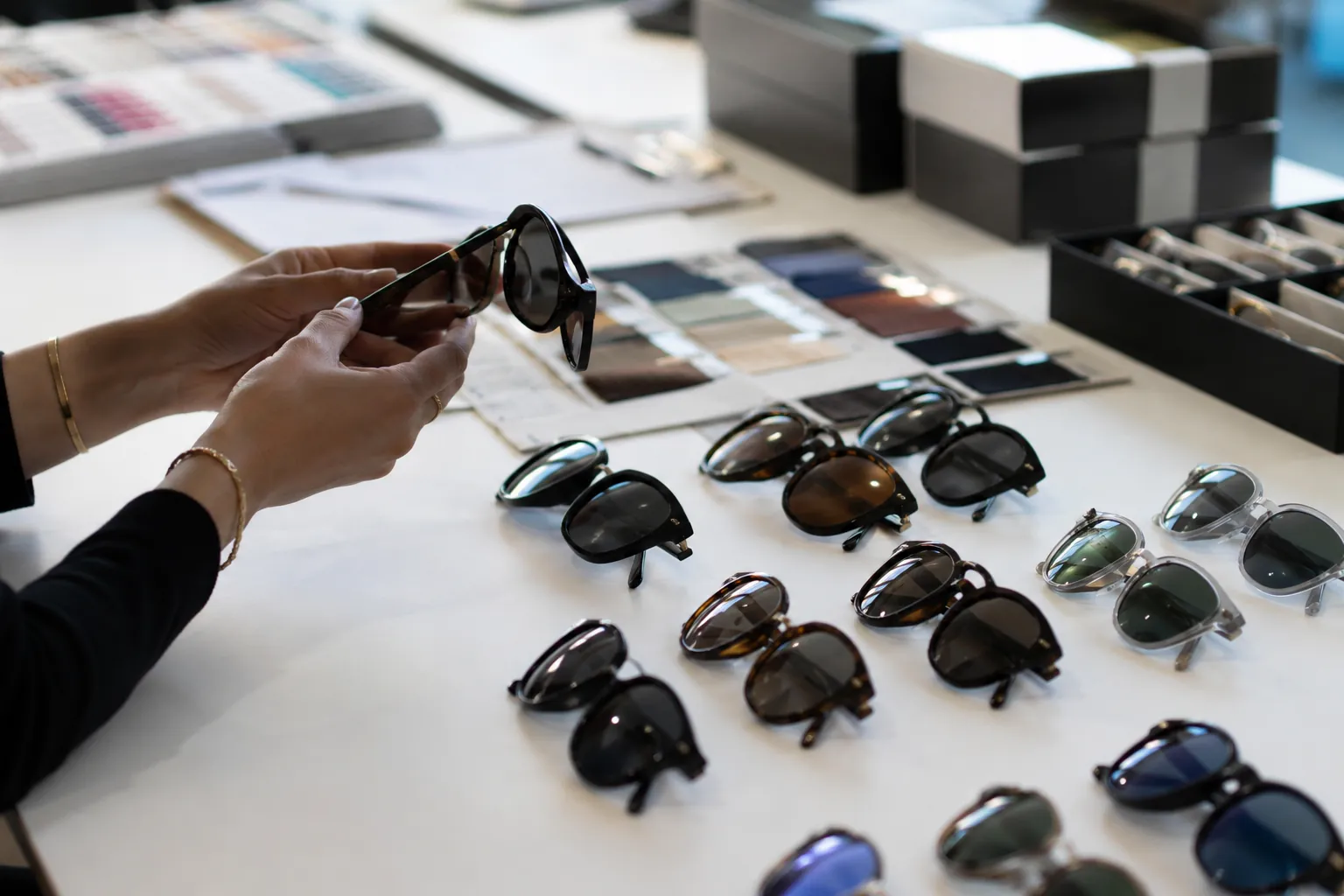
This guide is for buyers running volume sunglasses programs for retail, promotions, chain accounts, and distribution. Injection-frame programs rarely fail at the concept stage. They fail later: warped fronts, uneven fit, weak lens retention, slow approvals, or compliance gaps caused by the wrong lens setup. The goal here is simple: give buyers a practical way to assess injection-molded sunglasses on cost, repeatability, manufacturability, lead time, and product-specific compliance before placing a bulk order.
Start with the program type, not the frame shape
Injection-molded sunglasses are a common fit for programs that need repeatable output, controlled cost, and scalable volume. That usually includes promotional campaigns, chain-store replenishment, private-label basics, event programs, and price-sensitive fashion lines. But injection programs are not forgiving. If the brief is weak, production problems follow.
A frame can look fine in a rendering and still run badly in production. Geometry drives performance. If the design does not support stable lens fit, hinge installation, or consistent molding, the problems show up later on the line.
For buyers, the first screening questions are commercial, not cosmetic. How many pairs per design? How many colorways? Will the style repeat? What is the landed-cost ceiling? Those answers define the sourcing path. They help determine whether an existing mold works, whether a mold modification makes sense, or whether a new tool is justified.
At lower volumes, setup and approval costs weigh heavily on unit economics. Small runs can still serve a purpose: market testing, internal approvals, influencer seeding, or pilot programs. But do not assume a sample-scale run reflects the economics or process stability of full production. It usually does not. As volume rises, material planning, decoration scheduling, and packing efficiency often improve. The exact breakpoints depend on the factory, the frame design, and the finishing steps.
Material choice also has to match the program. Common injection-frame materials include TR90, polycarbonate (PC), and ABS-based blends. TR90 is widely used for flexibility and impact resistance. PC can offer low weight and good clarity, especially in transparent or semi-transparent styles, but poor processing control can leave visible stress. ABS and ABS blends are often used in fashion-driven programs where cost and surface finish matter, but section design and heat resistance still need review. Get the actual material named on the quotation and sample record. Generic labels are not enough.
Use this decision table before approving tooling
Many delays start the same way: the buyer approves the look before confirming the production path. That is a mistake. Use the table below to test whether an injection program is commercially and technically sound.
| Buyer choice | Best use | Cost effect | Lead-time effect | Main risk |
|---|---|---|---|---|
| Existing mold with color and logo changes | Faster launch, promotional runs, market test | Lowest upfront tooling spend; may require only sample and setup charges | Shortest development path because frame geometry already exists | Limited exclusivity; fit and proportions are restricted to the existing mold |
| Modified existing mold | Visual updates, branding detail, limited shape adjustments | Moderate tooling adjustment cost; may involve local steel work or surface rework | Longer than an existing-mold program because the modification must be sampled and verified | Changes can affect ejection, wall thickness, appearance, or lens fit |
| New injection mold | Retail line, repeat orders, brand-owned shape, multi-season program | Highest upfront cost, with the strongest control over geometry and exclusivity | Longest development path because tooling, trial shots, and dimensional approval are required | Weak drawings or unclear specifications can lead to expensive revisions |
| Simple pad print logo | Cost-sensitive branding, promotional campaigns, high-volume basics | Lower decoration cost than more complex branding methods | Usually easier to integrate into standard production flow | Durability depends on ink, curing, substrate compatibility, and handling |
| Metal logo plate or laser engraving | Higher perceived value, stronger retail presentation | Higher trim, labor, or setup cost depending on method | Adds process steps and inspection requirements | Poor placement control or weak attachment can quickly undermine appearance |
You do not need to design the mold. You do need to understand the cost and timing impact of each route. Existing-mold programs are usually faster. New tooling makes more sense when repeat volume, exclusivity, or brand ownership supports the spend.
Before approving tooling, ask for the control dimensions in writing: lens opening, bridge width, temple length, opening angle, hinge position, and any lens-groove dimensions the supplier treats as critical. Tolerances should also be defined in writing. Not vaguely. Not as "same as sample." The supplier should identify which dimensions are functional, which are cosmetic, and how each will be checked.
What makes an injection frame production-safe
Two sunglasses can look almost identical in a sales sample and behave very differently in production. Injection frames are sensitive to wall thickness, gate location, cooling balance, shrinkage behavior, and tool condition. If section changes are abrupt, sink, stress marks, or distortion are more likely. If the lens groove is inconsistent, lens insertion becomes slow or unstable. If the hinge seat is off, screws can sit crooked, strip, or loosen in use.
Ask for process-critical checkpoints, not just appearance photos. Useful examples include:
- Lens groove consistency: the groove should hold the lens securely without creating rim stress or cracking during insertion.
- Bridge and temple symmetry: left-right alignment should look balanced, and opening feel should be consistent on both sides.
- Hinge installation: screws should seat straight, hinge pockets should be clean, and opening and closing feel should be even.
- Surface finish: visible areas should be checked for flow marks, sink, weld lines, flash, or polishing inconsistency.
- Color repeatability: the supplier should explain how resin color or masterbatch is controlled across cavities and repeat orders.
In a stable process, inspection happens at more than one stage: first article, in-process, and final packing inspection. First article checks confirm dimensions, appearance, hinge function, and lens fit. In-process checks help catch cavity-specific or assembly-related issues before the full run is affected. Final inspection verifies cosmetic quality, labeling, and packing accuracy.
Also ask how the factory handles cavity variation. One weak cavity can create a lot of scrap or rework. The supplier should be able to explain how first-piece approval differs from the mass-production standard and how deviations are recorded if one cavity performs differently from the others.
It is also worth confirming which processes are done in-house and which are subcontracted. Molding, lens edging or fitting, tinting, printing, and packing under one management system can simplify problem tracing. Still, do not assume control. Ask who owns each stage and who is accountable when defects appear.
The unit price is not the full cost picture
Many buyers focus on headline pair price and miss the cost drivers that change across the program. Injection sunglasses may look simple on paper, but costs move quickly when revisions, mixed decorations, color complexity, or packaging changes appear late in development.
The cleanest pricing review separates fixed or semi-fixed costs from variable costs. Tooling, mold maintenance, artwork setup, and repeated sample rounds are usually fixed or semi-fixed. Resin, lens material, decoration application, assembly labor, and packaging materials are variable. A stepped quotation by volume is often far more useful than one all-in number.
- Pilot or qualification quantity: useful for market testing or program approval, but usually less efficient because setup and handling are spread across fewer units.
- Early production quantity: often the stage where color planning, decoration scheduling, and packaging procurement become more stable.
- Repeat production quantity: usually where unit economics improve further if design, decoration, and packing stay consistent.
- High-volume replenishment: generally the most efficient stage, provided the program avoids excessive color fragmentation or manual finishing steps.
Common cost escalators include mixed color assortments in small quantities, multi-position printing, metal trim, upgraded lens finishes, and custom packaging that adds manual packing time. Common cost stabilizers include standard frame geometry, standard lens colors, complete artwork files, and a packaging plan that matches the actual folded dimensions of the product.
Color complexity needs extra attention. Solid colors are usually easier to control than translucent, marble, or multi-effect finishes. Decorative surface effects may work in sampling and then become unstable at scale if the process window is narrow or the visual standard depends too much on operator judgment. Ask which parts of the quotation are tied to volume, which are tied to color count, and which are tied to decoration or packing complexity. Spell it out early.
Lead time is won or lost in sampling and approvals
For volume programs, lead time depends less on machine cycle time than on approval discipline. Sampling, artwork confirmation, packaging sign-off, and internal buyer review often cause more delay than molding itself. A quoted sample or production window only means something if the approval path is complete and controlled.
A typical development path includes:
- Confirm the frame reference: existing model, approved drawing, or physical benchmark.
- Lock the lens specification, tint, logo method, color standard, and packaging requirements.
- Review and comment on the pre-production sample in one consolidated file or approval sheet.
- Release bulk production only after confirming the mass-production standard, not just a marketing photo or hand-finished prototype.
Common delays are predictable. Late logo changes. Packaging dimensions that do not match the folded frame. Tint approvals made under inconsistent lighting. Decoration changes added after sample approval. None of this is unusual. All of it costs time.
Transit time and internal sign-off also need to be built into the calendar. A factory may finish a sample quickly, but the total approval cycle still expands if courier time, buyer review time, and revised comments are not planned.
For delivery-critical programs, work backward from the required ex-factory date. Include time for sample transit, approval, production, inspection, and any required compliance testing. If the product includes special coatings, custom tint, multiple decoration steps, or custom pouch and carton work, add buffer. Lead time control starts with specification control. That is the core point.
Tie compliance to the exact product, not a generic file
Sunglasses compliance must be checked against the exact frame-lens configuration being shipped and the destination market. Common references in this category include CE EN ISO 12312-1, ANSI Z80.3, AS/NZS 1067, REACH, FDA registration, ISO 9001, and BSCI. They are not interchangeable. They do not cover the same thing.
CE EN ISO 12312-1, ANSI Z80.3, and AS/NZS 1067 relate to sunglass performance and safety requirements in different markets. REACH addresses chemical compliance relevant to the EU supply chain. FDA registration may appear in U.S.-related documentation, but it is not a blanket replacement for market-specific product compliance. ISO 9001 covers quality-management systems. BSCI is a social compliance audit framework. Neither is a product-performance standard for sunglasses.
Ask the supplier to match compliance documents to the exact product being ordered, especially if the lens tint, coating, visible light transmission category, frame material, or trim changes. A dark sunglass lens, a lightly tinted fashion lens, and a clear or near-clear lens raise different compliance questions. Labeling and warnings may also vary by market.
On the chemical side, ask which components are included in the compliance scope: frame resin, lens material, coatings, pad-print inks, adhesives, and any metal logo parts or finishes. Chemical risk often sits in the secondary materials, not the main frame body. The safer approach is to request a product-specific compliance file tied to the SKU, bill of materials, and target market. A generic certificate pack is not enough.
Decoration, finish, and order controls that reduce surprises
Branding and finish choices affect how the product looks after shipping, retail handling, and consumer use. The right logo method depends on channel, price point, and expected wear. For short-cycle promotions, pad printing may be commercially appropriate. For longer-life retail or repeat seasonal programs, laser engraving or metal logo applications may hold up better, depending on the substrate and attachment method.
Each method has trade-offs:
- Pad printing: relatively simple and cost-effective for logos on temples; buyers should verify adhesion, abrasion resistance, and placement control.
- Laser engraving: more permanent on suitable surfaces, but visibility depends on material color, surface texture, and whether any fill treatment is used.
- Metal logo plates: can improve shelf presentation, but they add parts, attachment steps, and extra quality risk if bonding or riveting is inconsistent.
- Hot stamping or foil effects: can create a premium look, but scratch resistance and adhesion should be checked on the actual substrate before scale-up.
The surface finish matters just as much as the logo. High-gloss black can look strong in a sample but shows molding flow, scratches, and dust more readily than textured or matte finishes. Translucent colors can expose gate and flow behavior. Choose finishes that fit not only the design brief but also transport, store handling, and repeat production.
Before paying a deposit, make sure the factory and your internal team are aligned on the production standard. Use a simple order checklist:
- Frame reference: existing model code or approved drawing with full dimensions.
- Material and color: named frame material, agreed color standard, and any finish requirement.
- Lens spec: tint, category, coating, material, and market-specific requirements.
- Logo method: artwork file, size, position, color, and durability expectation.
- QC standard: define critical defects, cosmetic acceptance level, hinge function checks, and packing checks.
- Packaging: pouch, polybag, barcode label, carton marks, and inner-pack count.
- Timeline: sample approval date, bulk start date, inspection timing, and ex-factory date.
Ask for a pre-production sample that reflects the intended mass-production process, not a hand-finished presentation sample. Ask the supplier to state which specifications are locked, which are still conditional, and what changes would trigger new sampling, re-approval, or compliance review. Clear documents prevent avoidable disputes. That is the point.
Have a custom sunglasses project in mind?
Send us your styles, target market and quantities and we will return a detailed quote with MOQ, lead time and a sample plan.
Get a QuoteWhy source this from Wenzhou with LumiShades
Wenzhou in Zhejiang Province is widely regarded as China’s eyewear manufacturing capital, producing a large share of the world’s sunglasses. That concentration matters to buyers: a deep local supply chain for acetate sheet, hinges, lens blanks, plating and packaging means shorter component lead times, easier color and material matching, and a workforce with decades of eyewear-specific skill. LumiShades has manufactured in this ecosystem since 2009, and our vertical integration — in-house injection molding, acetate cutting, CNC milling, lens tinting, decoration and quality control — means no part of your order is quietly subcontracted to a workshop you cannot audit.
For international buyers, that vertical control translates into accountability. When a single factory owns every step, defects are traced and fixed at source rather than bounced between vendors, and your specifications survive intact from first sample to bulk. We back this with 15+ years of experience, shipments to 60+ countries, more than 5 million pairs produced per year and a 98.5% on-time delivery rate. Our certifications — CE EN ISO 12312-1, FDA registration, ANSI Z80.3, AS/NZS 1067, REACH, ISO 9001 and BSCI audit — mean the compliance documentation your market requires already exists. Explore our manufacturing capabilities and quality control process to see how this works in practice.
Frequently asked questions
At what order size does a new injection mold usually make sense? A new mold usually makes sense when the style is expected to repeat across multiple orders, when the brand needs exclusive geometry, or when forecasted volume can absorb the tooling cost over time. There is no universal quantity threshold. Ask the supplier for a side-by-side comparison of three routes: existing mold, modified mold, and new mold. Request the tooling charge, expected sample rounds, development lead time, and projected unit price at your planned volumes. Then compare total program cost across the expected life of the style, not just the first purchase order.
Can I mix several frame colors under one MOQ? Sometimes, but it depends on the factory's per-color minimum, material changeover practice, decoration method, and packaging plan. Confirm four points in writing before approving mixed colors: minimum quantity per colorway, whether each color needs separate sample approval, whether color mixing affects price, and whether mixed-color packing adds manual work. Also ask how the supplier defines the color standard for each variant, especially for translucent or effect finishes where repeatability is harder to control.
What should I approve on the sample besides appearance? Use a checklist, not a quick visual review. At minimum, approve frame dimensions, left-right symmetry, hinge alignment and feel, lens retention, logo position, color or tint consistency, finish quality, and folded size against the packaging specification. Confirm whether the sample was made with the intended production process or hand-finished for presentation. Ask the supplier to label the sample clearly as prototype, tooling trial, or pre-production approval sample so there is no confusion about what standard is being released for bulk.
How do I reduce the risk of late delivery on a bulk order? Lock the specification before bulk release and keep the approval path tight. Freeze the artwork, packaging dimensions, lens specification, color standard, and labeling requirements before production starts. Consolidate sample comments into one clear revision round instead of sending piecemeal feedback. Build the calendar backward from the required ex-factory date and include sample transit, internal approval time, production, inspection, and any compliance testing or document review. If the order includes multiple colors, custom packaging, coatings, or special decoration, ask the supplier which process step is most likely to become the bottleneck and add buffer there.
Do the listed certifications automatically cover every custom version I order? No. Certifications, registrations, and audit reports do not automatically cover every custom frame-lens combination. Ask for documentation tied to the exact product configuration and target market, including the lens category or transmission range, applicable standard, labeling or warning requirements, and any relevant chemical-compliance scope. If you change the lens tint, coating, material, metal trim, ink, or packaging components, confirm whether new testing, updated declarations, or revised technical files are required before shipment.
Ready to start?
Explore our sport wrap sunglasses or request a quote — our sales team replies within 12 hours.
Request a Quote