
Lightweight Sunglass Frame Materials: Buyer Guide
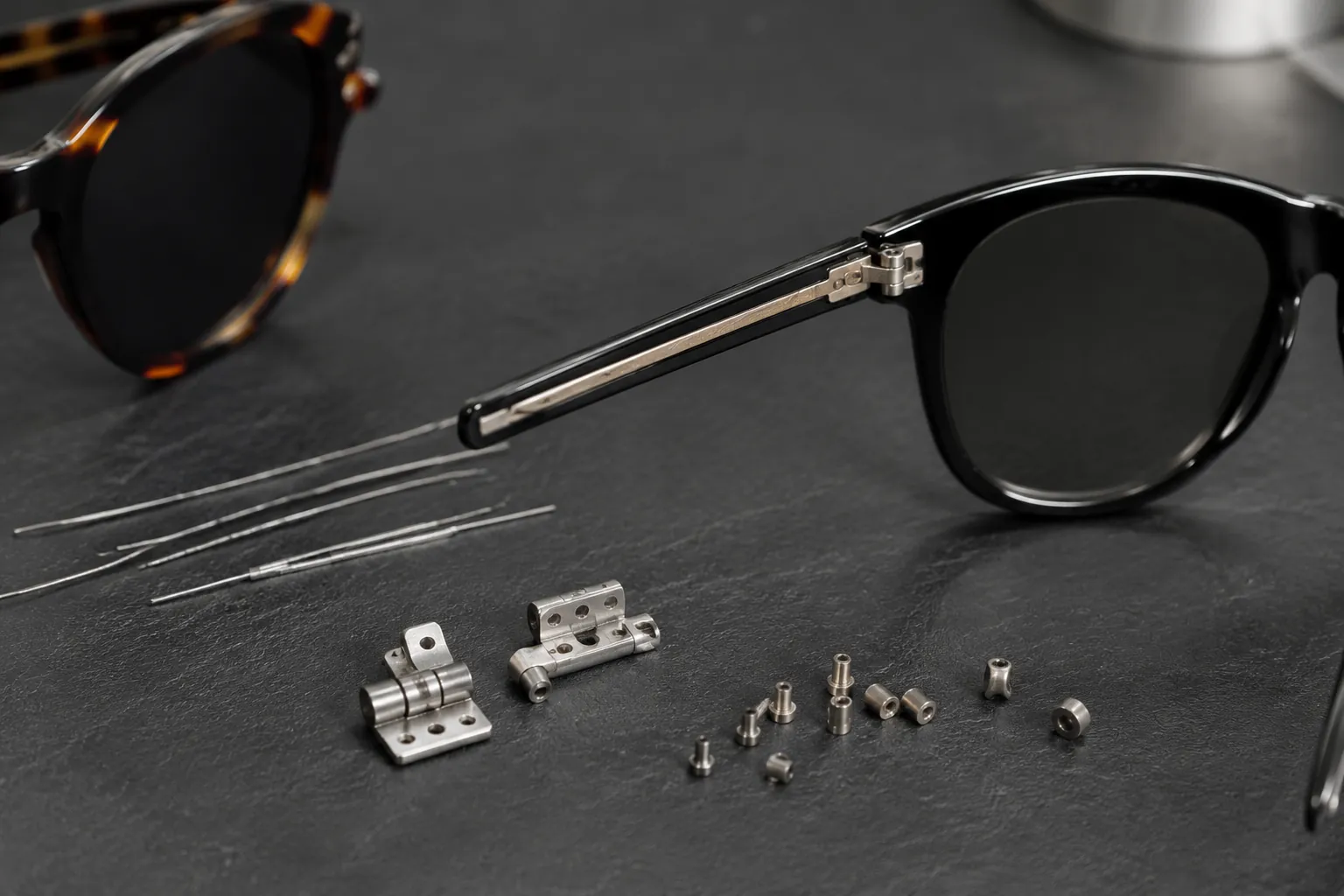
This guide is for buyers developing sunglasses where low weight matters. Comfort alone is not enough. Frame material also affects hinge retention, lens groove stability, finish durability, heat behavior, tooling or machining cost, and how much styling freedom is realistic at the target price. A frame that feels light in hand can still fail in transit, lose alignment on shelf, or deform under heat if the construction does not fit the use case. The real job is to match material, geometry, and process route to the brief before sampling starts. Do that early, and the first prototype is built on sound assumptions instead of patched after avoidable problems show up.
Start with the failure mode, not the color card
Many buying mistakes start with shape, finish, and branding. Material gets decided too late. That is backwards.
For lightweight sunglasses, the first question should be: what failure are you trying hardest to avoid? Heat deformation, hinge pull-out, lens pop-out, paint failure, temple spread loss, and front-heavy comfort complaints do not point to the same material or construction route.
For most commercial programs, a useful priority order is: target weight, hinge retention, lens retention, surface durability, then decoration. Lightweight designs leave less margin for error. If section thickness is reduced to cut grams but the hinge seat becomes too shallow or the lens groove loses holding power, the frame is not improved. It is under-built.
Before asking for quotes, define these inputs in writing:
- Target finished weight: give a realistic range for the size category and style type, not a single number.
- Use case: fashion retail, sports casual, promotional giveaway, optical-sun hybrid, or kids.
- Return-risk tolerance: first-cost optimized or defect-rate optimized after time in market.
- Heat exposure expectation: normal daily wear, beach use, car-interior exposure risk, or hot-climate distribution.
This matters because the same look can often be made through more than one process route. Compare nylon-based injection, polycarbonate injection, acetate machining, and metal on the same silhouette. The trade-offs get clearer fast. Better then than after tooling, CNC work, or repeated sample revisions add cost and time.
Four main routes: weight, feel, limits, and fit
For lightweight sunglasses, most private-label programs narrow to four frame routes: TR90-style nylon-based injection, polycarbonate injection, acetate sheet cut and CNC milled, and metal. All four can produce saleable sunglasses. They do not behave the same.
| Material route | Typical finished weight* | Key process details | Main strengths | Main risks | Best fit |
|---|---|---|---|---|---|
| TR90-style injected frame | Low to medium, depending on size and lens spec | Injection molded; nylon-based family; often used for thinner-wall comfort-focused builds | Low weight potential, flex tolerance, comfort, good impact resistance in many commercial designs | May feel less premium than acetate; paint and logo adhesion require process control | Sports casual, youth, comfort-first retail |
| Polycarbonate injected frame | Low to medium, depending on size and lens spec | Injection molded; widely used for scalable molded fronts and standard temples | Cost-efficient, scalable output, clean molded shapes | Can be less forgiving than nylon-based options at sharp corners or thin stressed areas | Promotional, entry-price retail, chain programs |
| Acetate sheet cut and CNC milled | Medium to high, depending on thickness and hardware | Sheet cutting, CNC milling, tumbling, polishing, bending, hinge setting; more hand finishing | Premium feel, color depth, layered patterns, strong branding perception | Usually heavier, more labor-intensive, more appearance variation if polishing control is weak | Fashion collections, premium private label |
| Metal frame | Low to medium, depending on gauge, lens size, and construction | Stamped, formed, welded or assembled wire/flat stock; plated or painted after shaping | Thin profile, crisp styling, premium look for aviators and minimal frames | Fit sensitivity at the nose, deformation risk, coating wear and corrosion control requirements | Minimal designs, fashion aviators, slim-profile concepts |
*Weight outcomes vary widely with lens thickness, frame size, hardware count, and decoration. Approve by measured sample weight, not category averages.
If the brief is lightweight first, low returns second, premium feel third, TR90-style material usually deserves early review. If the brief is premium appearance first, weight still matters but does not need to be ultra-low, acetate is often the better answer. This is where many sample rounds go wrong. Buyers expect acetate looks and sports-frame weight in the same build. Often, that is not realistic.
What makes a frame feel light on face
Wear comfort is not just total grams. It is also balance.
A frame can measure light on a scale and still wear badly if too much mass sits in the front. Front-heavy sunglasses slide more easily, create pressure at the nose, and trigger fit complaints even when the headline weight looks fine.
Material density matters, but geometry matters just as much. Oversized fronts, thick temples, metal core inserts, rivets, logo plates, and polarized lenses can all add noticeable mass. Lens specification is a major variable because lens size, thickness, base curve, and polarization structure all affect total weight.
During development, ask the factory for measurable checkpoints, not a vague claim that the sample is "light":
- Component weight breakdown: front, left temple, right temple, lenses, screws, logos, and nose pads if any.
- Wall thickness map: bridge, end piece, hinge seat, lens groove, temple root, and temple tip.
- Balance check on wearer: not only digital scale weight, but slide behavior and contact pressure in actual fitting.
- Heat exposure review: especially if the product may be stored in high-temperature environments such as a car interior.
A practical rule: do not chase the absolute lowest gram count too early. Slim one section too aggressively and another area often needs reinforcement through thicker walls, stronger hardware, or a different lens retention feature. Approve weight after the full assembly is confirmed. Not before.
Durability trade-offs to quantify early
Low weight usually means thinner sections. That is where failure risk starts.
Common weak points across factories are bridge stress, end-piece cracking, hinge screw pull-out, lens groove deformation, and loss of temple spread after repeated opening cycles.
TR90-style frames generally offer better flex tolerance than many more rigid molded plastics. That is one reason they are often chosen for active wear, youth styles, and travel retail. Polycarbonate can still perform well in price-sensitive molded programs, but the design usually needs more caution around sharp internal corners, thin bosses, and stressed hinge areas.
Acetate behaves differently. It is usually heavier, but if enough material is kept around the hinge block and lens groove, it can provide a stable feel and a stronger premium impression. It also supports polishing, bevel detail, and layered color effects better than most injected materials. The trade-off is simple: a large acetate front with a thick profile is rarely the best route for an ultra-light target.
Metal can achieve low weight through narrow sections, but it brings a different risk set: lens-size-to-gauge mismatch, shape distortion during handling, and coating wear at high-contact points. So metal is often a style-led choice, not the safest default for a comfort-first mass program.
On pilot samples, buyers should request at minimum:
- Hinge cycle testing with consistent opening resistance on both sides.
- Screw torque review so hinge feel is neither loose nor over-tight.
- Lens retention check before and after heat exposure.
- Simple drop and handling review to expose brittle corners or weak groove engagement.
If the supplier cannot identify the structurally thinnest area of the frame, or explain how hinge retention is protected there, the program is not engineered deeply enough.
Decoration and finish limits by material
Decoration is where many lightweight programs get expensive or unstable. Buyers often treat logos and color as late decisions. That is a mistake.
Branding method affects adhesion, appearance yield, and sometimes structural reliability if extra hardware or coating layers are added.
On injected frames, common methods include pad printing, screen printing, laser engraving, hot stamping, and insert logos. Pad printing is efficient, but adhesion depends on surface preparation, ink system, and cure control. Laser is more durable, though usually more subtle. Insert logos can improve perceived value but add parts and assembly steps.
Acetate supports a broader range of premium finish options: polished bevels, laminated patterns, embedded logos, visible metal cores, and richer translucency. The trade-off is more labor, more piece-to-piece appearance variation, and more rework if polishing or logo insertion is inconsistent. Metal frames support plating, painting, and etched or stamped branding, but coating durability and color consistency become critical control points.
For low-MOQ lightweight programs, simplify decoration on purpose:
- Use one main logo position instead of multiple print areas.
- Prefer standard lens colors over highly customized combinations unless the volume justifies the setup.
- Avoid stacking processes such as base paint, rubber coating, print, and topcoat unless the retail price can absorb lower yield and more QC.
- Confirm logo method by material: a branding approach that looks good on acetate may perform differently on flexible nylon-based parts.
Review decoration during engineering, not just at artwork approval. Added logo hardware, thick lacquer systems, or complex finishing can change both cost and performance.
MOQ, cost logic, and where each route pays off
Material choice is never only technical. It changes tooling logic, labor content, waste, and how pricing improves with scale.
For smaller programs, the real question is not "what is the cheapest material?" It is "which route gives acceptable performance without pushing too much setup cost into a low-volume order?"
As a broad commercial pattern, injection programs often become more economical as volume rises because, once tooling, color, and assembly conditions are stable, labor per pair is usually lower than acetate. Acetate typically carries more machining, polishing, and hand-finishing cost, but may still be the right choice when premium appearance is central to the line.
A typical planning approach looks like this:
- Low-volume launch: use proven constructions, standard lens colors, minimal hardware variation, and limited logo positions.
- Mid-volume program: add more room for custom temple branding, upgraded packaging, polarized lens options, and color development.
- High-volume program: consider custom molds, deeper cost optimization, and stronger leverage on accessories and packaging.
If the order is small, over-customization is usually a bad trade. It adds setup, approval steps, and QC points without guaranteeing better sell-through. And when comparing quotes, keep the lens specification, hinge type, decoration count, packaging level, and test requirements the same. Otherwise, the material comparison is not real.
Lead time, compliance, and the QC checks that matter
Lead time should be reviewed by process route, not as one generic promise. Injected frames, acetate frames, and metal frames do not move through the same path. The bottleneck is often different too.
Injected frames usually pass through design confirmation, mold review or modification, color matching, trial shots, fitting correction, lens assembly, decoration, final QC, and packing. Delay risk often sits in mold correction, color approval, and hinge fit. Acetate frames move through sheet selection, cutting, CNC milling, tumbling or polishing, bending, hinge installation, lens fitting, branding, and inspection. Here, polishing consistency, temple alignment, and logo insertion are common pressure points. Metal frames add forming, welding or assembly precision, plating or painting yield, and shape-control risk after assembly.
Align compliance early. Relevant references may include CE EN ISO 12312-1, ANSI Z80.3, AS/NZS 1067, REACH, FDA registration, plus factory-system standards such as ISO 9001 and social-audit frameworks like BSCI. The key point is blunt: frame material cannot be separated from lens performance and final assembled-product compliance.
QC for lightweight sunglasses should include:
- Weight confirmation against the approved sample tolerance.
- Hinge pull and cycle review because light temples can loosen or drift faster if assembly control is weak.
- Lens retention check before and after heat exposure.
- Symmetry and temple spread check because thin parts show misalignment more easily.
- Decoration adhesion and position check for print, engraving, or insert logos.
Do not approve by appearance alone. Most return problems show up after assembly stress, heat exposure, and repeated handling. Not in a sample photo.
A simple buyer decision framework
If your team needs a fast screening tool, use this sequence.
- If target retail is price-sensitive and volume is high, start with polycarbonate and TR90-style injected options. Compare breakage risk, finish, and decoration limits on the same silhouette.
- If comfort and repeat wear matter most, move TR90-style material to the top of the list and keep hardware simple.
- If premium appearance is essential, test acetate early, but define a realistic weight window from the start.
- If styling depends on thin wire or a minimal profile, review metal and stress-test shape retention.
- If MOQ is low, reduce custom complexity and stay with proven constructions.
- If returns are already a problem, stop chasing the lowest gram number and reinforce weak points first.
That last point matters most. A small saving in material or a lower weight on paper can be wiped out fast by replacements, complaints, and markdowns if the frame will not hold alignment or lens fit. The best lightweight frame is not the lightest one possible. It is the one that stays comfortable, keeps its structure, and performs consistently in the sales channel where it will actually be sold.
Have a custom sunglasses project in mind?
Send us your styles, target market and quantities and we will return a detailed quote with MOQ, lead time and a sample plan.
Get a QuoteWhy source this from Wenzhou with LumiShades
Wenzhou in Zhejiang Province is widely regarded as China’s eyewear manufacturing capital, producing a large share of the world’s sunglasses. That concentration matters to buyers: a deep local supply chain for acetate sheet, hinges, lens blanks, plating and packaging means shorter component lead times, easier color and material matching, and a workforce with decades of eyewear-specific skill. LumiShades has manufactured in this ecosystem since 2009, and our vertical integration — in-house injection molding, acetate cutting, CNC milling, lens tinting, decoration and quality control — means no part of your order is quietly subcontracted to a workshop you cannot audit.
For international buyers, that vertical control translates into accountability. When a single factory owns every step, defects are traced and fixed at source rather than bounced between vendors, and your specifications survive intact from first sample to bulk. We back this with 15+ years of experience, shipments to 60+ countries, more than 5 million pairs produced per year and a 98.5% on-time delivery rate. Our certifications — CE EN ISO 12312-1, FDA registration, ANSI Z80.3, AS/NZS 1067, REACH, ISO 9001 and BSCI audit — mean the compliance documentation your market requires already exists. Explore our manufacturing capabilities and quality control process to see how this works in practice.
Frequently asked questions
Which frame material is usually best for lightweight sunglasses with low return risk? For many comfort-first programs, TR90-style injected material is a strong starting point because it is widely used for lightweight frames with good flex tolerance. But the material name alone is not enough. Ask the supplier for the wall-thickness drawing, hinge construction, lens-retention method, and results of basic hinge-cycle and heat-exposure checks on the actual sample.
Is acetate a bad choice if I want lightweight sunglasses? No. Acetate can still be a good choice when premium appearance matters and the target is moderate rather than ultra-low weight. It becomes a poor fit when the brief combines a large front, thick visual profile, heavy hardware, and an aggressive lightweight target. To judge feasibility, ask for a sample with the final lens spec and request the finished weight of the complete pair, not the frame front alone.
How should I compare quotes across materials fairly? Keep the comparison controlled. Use the same lens specification, hinge type, decoration count, packaging level, and testing requirements across all quotes. Then ask each supplier to break out what is included: frame material route, tooling or mold cost, lens type, logo method, finishing steps, and any compliance-related cost. If one quote uses a different lens or branding method, it is not a like-for-like material comparison.
What order quantity starts to improve pricing meaningfully? There is no universal breakpoint because pricing depends on mold cost, labor content, lens type, finish complexity, and packaging. In general, injection-molded programs tend to improve faster with scale than acetate because labor per pair is usually lower once the process is stable. Ask suppliers for pricing at several volume tiers using the same specification, and request a separate note showing which costs are one-time setup costs and which are recurring unit costs.
How long should sampling and bulk production take? Timing depends on the material route and how customized the program is. Samples can move quickly when using proven constructions and standard finishes, but custom molds, color approval, polishing rework, custom logos, and test-related revisions often extend the schedule. The most practical approach is to ask for a milestone plan: design confirmation, sample build, revision window, pre-production approval, bulk production, final QC, and shipment readiness.
Which compliance points should I confirm before production? Start with the destination market, then confirm which standards and documents apply to the finished product. Common references include CE EN ISO 12312-1, ANSI Z80.3, AS/NZS 1067, REACH, and FDA registration where relevant. Also verify the factory's quality-system and audit documentation if required, such as ISO 9001 or BSCI. Most importantly, confirm that the tested sample matches the final production specification, including frame material, lens type, coatings, and decoration.
Ready to start?
Explore our cat-eye sunglasses or request a quote — our sales team replies within 12 hours.
Request a Quote