
Prescription-Ready Private Label Sunglasses: Specs to Fix Early
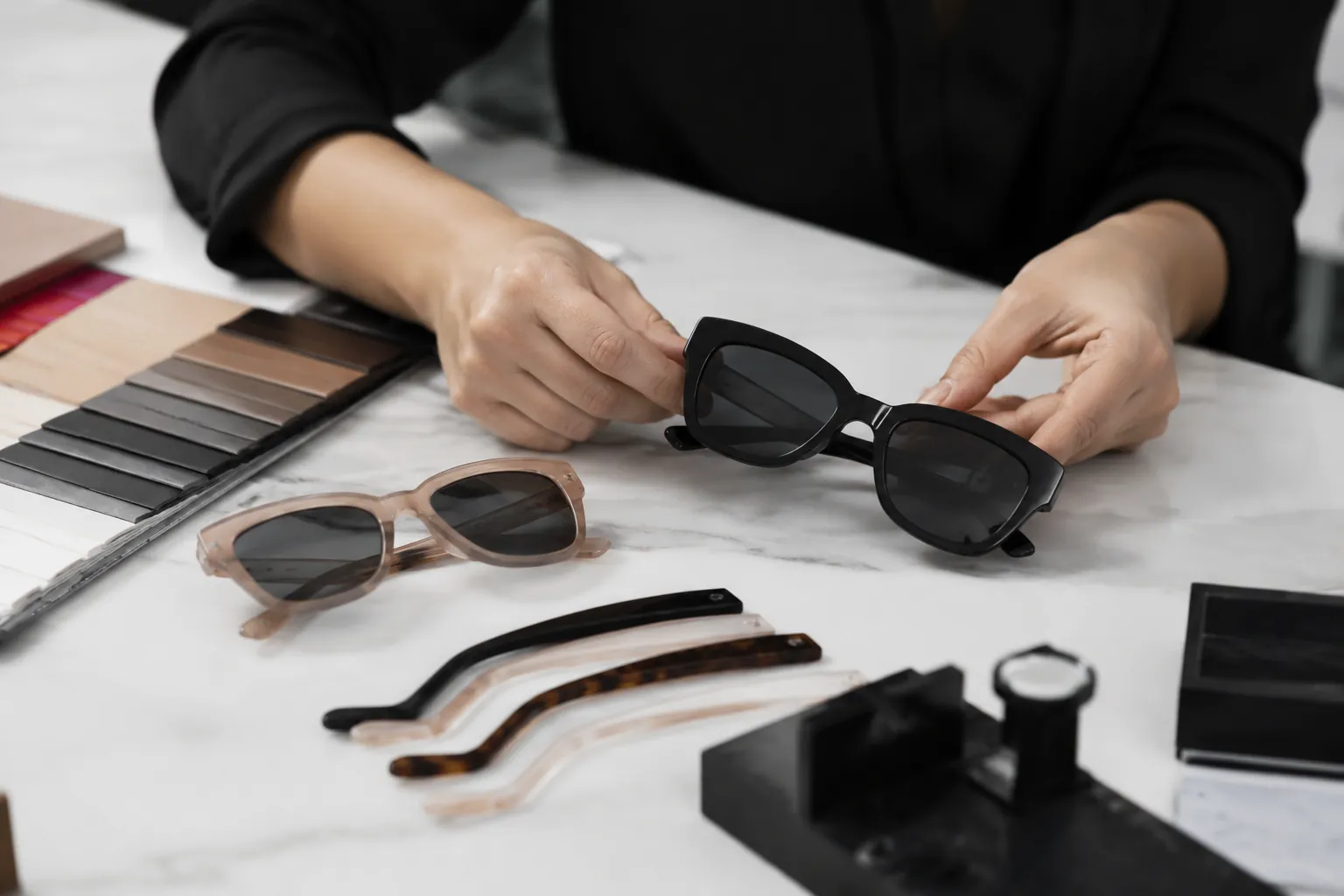
This guide is for brand owners, importers, distributors, and retailers buying plano sunglasses that may later be fitted with prescription lenses in the destination market. The risk is straightforward. A frame can pass sample approval for style, color, logo placement, and basic comfort, then fail at the optical bench. Common problems include excessive wrap, shallow lens grooves, thin rim sections, front distortion after lens removal, and hinge stress during repeated re-glazing. For volume buyers, those failures mean remakes, warranty claims, launch delays, and unhappy wholesale accounts. The fix is also straightforward: define prescription-readiness as a technical requirement before sampling, then verify it during sample review and pre-shipment QC. Do that early. If frame geometry, material choice, groove profile, and re-glazing performance are written into the brief, the supplier works to a functional standard, not just a visual one.
Define prescription-readiness before sampling
Many buyers assume any sunglass frame can later take prescription lenses. That is not a safe assumption. A plano sunglass can pass cosmetic inspection and normal handling yet still fail in prescription glazing because the base curve is too steep, the lens opening is too shallow for the intended lens design, the rim section is too thin to handle insertion stress, or the front deforms after the stock lenses are removed.
For private label programs, prescription-readiness should be part of the sourcing brief before the first counter-sample is approved. Not later. That means specifying more than color, logo placement, and finish. It also means defining how the frame should perform after re-glazing. At minimum, ask the supplier to confirm lens shape depth, effective diameter, front curve, groove depth and position, rim thickness, and intended prescription use range. If the frame is suitable only for low powers or single vision, state that plainly. If no use range is defined, the supplier will usually optimize for sunglass appearance and production efficiency, not downstream optical use.
This matters even more when you use an existing mold to save tooling cost or speed development. Reusing a standard sunglass front can make commercial sense, but it does not remove the need for geometry review. Small changes made before bulk production, such as adding rim thickness, reducing curve, or refining groove placement, are usually far easier than fixing the problem after launch. Use the sample stage to test prescription-readiness physically. Appearance alone is not enough.
Frame geometry decides whether Rx glazing works
Prescription compatibility is mainly a geometry issue. Material and workmanship matter, but geometry usually decides whether a frame is realistic for prescription use at all. Buyers should ask for a dimension sheet that includes eye size, bridge, temple length, B measurement, effective diameter, base curve, pantoscopic angle where relevant, and lens groove detail. Without those numbers, an importer or optical lab is guessing.
- Base curve: Moderate curves are usually easier to glaze than aggressive wrap designs. In many cases, a 4-base or 6-base front is more practical for prescription glazing than an 8-base sport shape.
- B measurement and lens depth: If the lens opening is too shallow, there may be too little vertical area for progressive layouts or for clean edging of thicker prescriptions.
- Effective diameter: A larger effective diameter can increase lens blank size requirements and edging waste, especially on oversized fashion shapes.
- Bridge geometry: Fit can change when thicker lenses are inserted, particularly if lens edge thickness alters front tension.
- Hinge position and temple balance: Heavier finished lenses can change weight distribution and wearing comfort.
As a practical rule, classify each style into one of three groups: optical-friendly sunglasses, limited-range prescription sunglasses, and plano-only fashion sunglasses. Be strict. Not every style should be sold as prescription-ready. Frames with deep wrap, sharp corners, very thin eyewires, or highly irregular shield-like shapes often need special lens processing or should be excluded from prescription claims altogether. That classification protects both sales accuracy and after-sales margin.
Material choice affects glazing, retention, and adjustment
Material choice affects more than cost and appearance. It changes how the rim holds a prescription lens, how the frame responds to heat during fitting, how much adjustment an optician can safely make, and how well the front handles repeated lens removal. Two frames that look similar can behave very differently at the bench.
| Material or build | Typical Rx advantage | Main technical risk | Practical sourcing note |
|---|---|---|---|
| Injected plastic front | Good dimensional repeatability, efficient for volume production, stable color matching | Thin rim sections can whiten or crack during lens insertion if the material or mold design is too brittle | Confirm minimum front thickness and require a re-glazing stress check during sampling |
| Acetate front | Better hand adjustment, premium finish, often more forgiving during glazing | Sheet variation, lamination quality, and polishing loss can affect final groove consistency | Ask about sheet source, front thickness before polishing, and hinge reinforcement details |
| Metal-combination frame | Can support cleaner optical geometry and slimmer profiles in some classic shapes | More assembly points, tighter tolerance requirements, and possible rim-lock issues after repeated lens changes | Check screw security, eyewire closure design, and how the assembly performs after re-glazing |
| High-wrap sport frame | Strong coverage and performance styling | Often limited prescription range, more complex lens processing, and higher distortion risk | Do not describe as prescription-ready unless the curve limits and acceptable prescription range are defined in writing |
For acetate, ask whether the front is cut and CNC-milled from full sheet and how much material remains after beveling and polishing. For injected plastic, ask whether the design has been reviewed for stress concentration around the bridge and outer corners. Decoration matters too. Embedded logos, foil details, laser engraving, pad printing, and hot stamping should not create weak points or interfere with heating and handling during re-glazing.
Put mounting specs in the tech pack
Most purchase orders include frame size, color reference, lens tint, and branding details. Too few include the dimensions that determine whether a lens can later be mounted reliably. If prescription-readiness matters, the tech pack must include mounting-related requirements, not just appearance specs.
- Define the base curve target and tolerance. If the front curve shifts between sample and bulk, replacement lenses may not seat consistently.
- Specify groove depth and groove placement. A shallow groove raises pop-out risk, while poor groove positioning can make seating inconsistent around the perimeter.
- Set a minimum rim thickness. Very thin fashion rims may reduce weight, but they also create stress points during insertion and removal.
- Approve the lens shape file. The final edging file should match the assembled lens opening, not only the original drawing.
- State the intended prescription use range. Single vision only and progressive-friendly are different claims. Treat them separately.
- Require a physical re-glazing check. The frame should be tested by removing the stock lens and fitting a test lens during sample approval or pre-shipment QC.
Be direct with the supplier. Ask whether the sample has been physically re-glazed or only reviewed visually. The test itself is simple: remove the plano lens, fit a test lens, inspect groove engagement around the full perimeter, reopen and close both temples, and recheck front symmetry. If the bridge spreads, the eyewire twists, or whitening appears around the rim, the design is not robust enough for a prescription-ready claim.
Separate sunglass compliance from Rx suitability
Buyers should keep two issues separate: compliance of the sunglass as supplied, and suitability of the frame for later prescription glazing. They are not the same. A supplier can test and document the plano sunglass it ships. It cannot certify every prescription lens that might later be fitted in another market using different lens materials, powers, edging settings, and mounting methods.
For the supplied sunglass, relevant standards, registrations, and management documents may include CE EN ISO 12312-1, ANSI Z80.3, AS/NZS 1067, REACH, FDA registration where commercially requested, ISO 9001, and BSCI. None of these automatically proves the frame is suitable for prescription use. CE EN ISO 12312-1, ANSI Z80.3, and AS/NZS 1067 relate to the sunglass product and its performance requirements as sold. REACH covers chemical restrictions. ISO 9001 and BSCI relate to management systems and social compliance, not lens mounting behavior.
So what should a buyer ask for? Request documents that match the exact frame and lens construction being purchased, confirm lens category and required markings for the destination market, and keep prescription-related claims narrow and factual. Phrases such as suitable for prescription glazing after validation or designed for local prescription fitting are more accurate than implying the shipped product is already a prescription device. That distinction helps control compliance messaging and customer expectations.
MOQ, cost, and lead time can raise technical risk
Commercial decisions often shape technical outcomes. On a low-volume launch, buyers may choose an existing mold with only color and logo changes to cut development cost and shorten lead time. That can work, but only if the base style already has geometry that is practical for prescription use. If not, a small upfront saving can turn into a bigger after-sales cost.
Order volume also affects how much specification control a buyer can negotiate. Smaller orders often limit the supplier's willingness to make structural changes, while larger programs usually create more room to request geometry revisions, stronger hinge reinforcement, or tighter QC checkpoints. Still, the rule is simple: raise geometry issues during sampling, not after bulk starts.
Cost reduction needs the same discipline. Savings that come from thinning the front, reducing acetate thickness, weakening hinge reinforcement, or loosening groove consistency can increase glazing risk on prescription-capable styles. Lead time matters too. Sample timing may be enough for appearance review, but it also has to allow for a physical re-glazing check if prescription-readiness is part of the brief. Do not release bulk production until appearance approval, re-glazing validation, and document review are complete.
Use QC checks that reflect real re-glazing risk
Prescription-ready sourcing needs a different QC checklist from ordinary sunglasses. Cosmetic inspection is not enough. The frame also has to behave predictably when lenses are changed in the destination market.
- Front symmetry after assembly: Check left and right lens openings after the stock lenses are mounted, not only before assembly.
- Groove consistency: Inspect depth and position around the full perimeter, especially at sharp corners and the bridge area.
- Bridge stability: Confirm that the front does not spread excessively during lens removal and reinsertion.
- Hinge alignment: Open and close both temples after re-glazing to detect twist or stress transfer into the front.
- Surface stress marks: Look for whitening, cracking, or finish damage around the rim after a test lens is fitted.
- Decoration clearance: Verify that logos, foil, pad printing, or metal inserts are not positioned where edging stress or heating may affect them.
A practical pre-shipment method is to select finished units, remove the supplied lenses, mount a test lens, and inspect again. Simple check. High value. It simulates the downstream process that actually matters to the buyer. It is especially useful on new molds, oversized acetate fronts, thin injected fashion rims, and any style that will be sold to wholesale customers as prescription-ready.
A practical buyer brief for the next PO
If you want fewer surprises, attach a short prescription-ready brief to every tech pack. Keep it operational. State the intended sales channel, whether the style is plano-only or prescription-capable, the target prescription range if known, frame material, base curve target, rim construction, approved lens shape file, decoration zones, and the required re-glazing QC check. Also define whether the style is suitable only for standard single vision or for broader optical use subject to local optician confirmation.
For multi-SKU programs, build a simple approval matrix. Each style should be classified as one of three statuses: plano-only, prescription-ready for standard single vision, or prescription-ready with broader compatibility after validation. This prevents over-claiming by the sales team and gives customer service a clear answer when wholesale buyers ask whether a frame can be glazed locally.
The core point is simple. A sunglass frame does not become prescription-ready because a catalog says so. It becomes prescription-ready when its geometry, material, groove design, and assembly stability were controlled for that purpose from the start, then verified through actual re-glazing checks. Specify it early. Test it during sampling. Confirm it again before shipment.
Have a custom sunglasses project in mind?
Send us your styles, target market and quantities and we will return a detailed quote with MOQ, lead time and a sample plan.
Get a QuoteWhy source this from Wenzhou with LumiShades
Wenzhou in Zhejiang Province is widely regarded as China’s eyewear manufacturing capital, producing a large share of the world’s sunglasses. That concentration matters to buyers: a deep local supply chain for acetate sheet, hinges, lens blanks, plating and packaging means shorter component lead times, easier color and material matching, and a workforce with decades of eyewear-specific skill. LumiShades has manufactured in this ecosystem since 2009, and our vertical integration — in-house injection molding, acetate cutting, CNC milling, lens tinting, decoration and quality control — means no part of your order is quietly subcontracted to a workshop you cannot audit.
For international buyers, that vertical control translates into accountability. When a single factory owns every step, defects are traced and fixed at source rather than bounced between vendors, and your specifications survive intact from first sample to bulk. For procurement review, buyers can request process records, approved samples, quality checkpoints and project-specific compliance files before placing a bulk order. Required testing and documentation are confirmed against the destination market and product specification rather than assumed from a generic certificate list. Explore our manufacturing capabilities and quality control process to see how this works in practice.
Frequently asked questions
What base curve is safest if I want a private label sunglass to accept prescription lenses later? There is no single base curve that guarantees success, but moderate curves are generally easier to glaze than aggressive wrap curves. In many commercial programs, 4-base or 6-base fronts are more practical than 8-base sport shapes. Ask the supplier to state the base curve on the drawing, define the intended prescription use range in writing, and send a physical sample for re-glazing with a test lens before approving bulk production.
Can any acetate sunglass be sold as prescription-ready? No. Acetate can be a good material for prescription-capable styles because it often allows cleaner finishing and practical adjustment, but material alone is not enough. Confirm the lens shape, front thickness, groove quality, hinge reinforcement, and front stability after lens removal. The practical step is to require a sample to be physically re-glazed and then inspect for whitening, distortion, poor groove engagement, and temple misalignment.
Do CE EN ISO 12312-1 or ANSI Z80.3 prove that a frame will work with prescription lenses? No. CE EN ISO 12312-1 and ANSI Z80.3 apply to the plano sunglass product as supplied, not to every prescription lens that might be fitted later. They do not confirm prescription compatibility. Buyers should request the relevant sunglass compliance documents for the shipped product and separately validate prescription suitability through geometry review, a defined use range, and a practical re-glazing test on finished samples.
At what order size should I ask for tooling or geometry changes instead of using an existing mold? Do not wait for a large order if the existing mold has obvious prescription-related problems such as excessive wrap, shallow lens depth, weak rim sections, or poor groove design. Raise those issues during sampling regardless of volume. If the supplier will not modify the geometry on a smaller run, either reclassify the style as plano-only or move to a frame platform that is more suitable for local prescription fitting.
What is the most useful QC check for prescription-ready sunglasses before shipment? Ask the factory or third-party inspector to remove the supplied plano lens from selected finished units, mount a test lens, and then inspect groove engagement, front symmetry, bridge stability, hinge alignment, and stress marks around the rim. This check is practical because it targets the failure points that often appear only during re-glazing. Put the step in the QC checklist before bulk starts so the supplier knows it is a release requirement, not an optional inspection.
Ready to start?
Explore our square sunglasses or request a quote — our sales team replies within 12 hours.
Request a Quote