
Polarized vs Non-Polarized Sunglasses: B2B Buying Guide
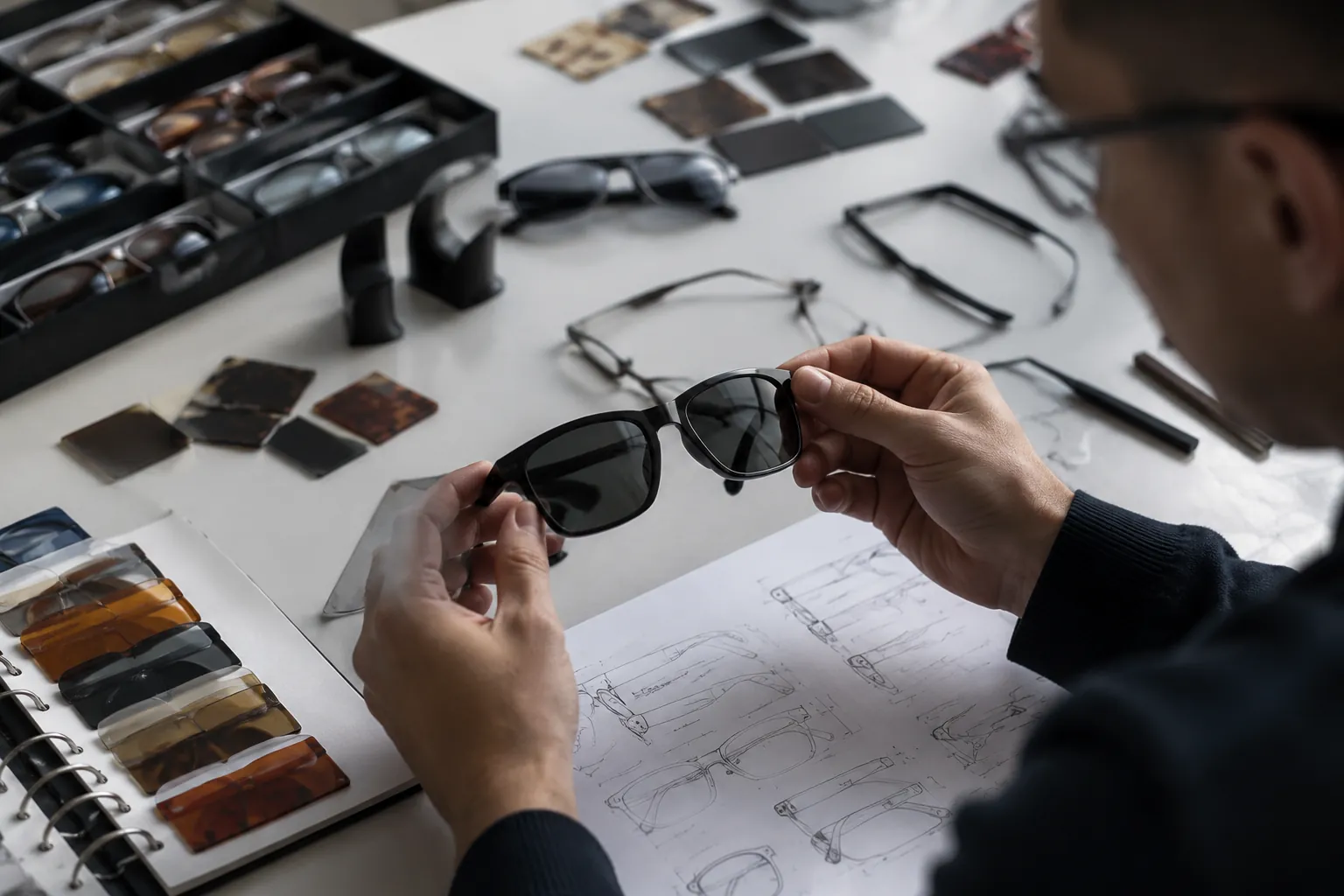
This guide is for brand owners, importers, distributors, and retailers buying sunglasses in volume. The real question is not whether polarized lenses are better on paper. It is whether they help sell-through, cut avoidable complaints, and protect margin in your channel. Use the framework below to compare channel fit, cost, MOQ, lead time, compliance, production risk, decoration, and where polarization earns its premium. The goal is simple: write a tighter RFQ, compare suppliers on the same basis, and stop paying for features your market will not reward.
Start with the commercial question, not lens theory
Polarization reduces reflected glare from flat or reflective surfaces such as roads, water, car hoods, and wet pavement. End users may notice better comfort in the right conditions. Buyers still need to start somewhere else. Start with the commercial case.
Ask three questions. Will the customer notice the benefit quickly? Will they understand it without a long explanation? Will they pay more for it? In fishing, boating, driving, outdoor sport, and many optical or performance-led channels, the answer is often yes. In promotional, festival, souvenir, kids, discount, and low-ticket fashion channels, the answer is often no.
That difference matters. In lower-price channels, frame shape, lens color, logo placement, and opening price often drive conversion more than glare reduction. Adding polarization in those programs can compress margin without moving units fast enough to justify the cost. In a function-led product, the same upgrade may be easy to explain and easy to monetize.
Buyer rule: Add polarization when the benefit is obvious in real use and the channel can recover the added cost. Skip it when the purchase is driven mainly by fashion, giveaway pricing, or fast-turn replenishment.
One more warning. Do not treat a polarized sticker as proof of premium value. It is not. The lens claim has to match the full product build: optical quality, frame finish, packaging, and correct compliance documents. If those pieces are weak, polarization adds cost and complexity, not value.
A simple channel-by-channel decision framework
Lens choice should match how the product is sold. Not just what the lens can do. A polarized lens may be a strong commercial fit in one channel and dead weight in another.
| Channel | Typical buyer priority | Polarized fit | Commercial note |
|---|---|---|---|
| Sport and outdoor retail | Glare reduction, comfort, performance claims | Strong fit | Often worth considering when the product is sold on function and packaging explains the benefit clearly |
| Driving and travel assortments | Road glare reduction, eye comfort, everyday usability | Strong fit | Can be a good upsell, but buyers should also assess screen visibility at different angles |
| Optical stores | Lens performance, compliance, repeat purchase | Strong fit | Performance features are generally easier to justify in this channel if documentation is complete |
| Fashion chains and boutiques | Style, color, trend, price ladder | Mixed | Often best reserved for selected mid-tier or premium styles rather than the full line |
| Promotional and event programs | Low cost, logo area, fast turnaround | Weak fit | Non-polarized is usually the more practical choice; budget may be better used on decoration or packaging |
| Beach kiosk, souvenir, discount retail | Low ticket, visual appeal, easy replenishment | Weak to mixed | Polarization can raise landed cost without a clear retail return unless the location strongly supports the use case |
A common range strategy is straightforward: keep core fashion styles non-polarized, then add a smaller set of polarized SKUs in proven shapes and safe lens colors such as grey or brown. That creates an upsell tier without pushing the whole line into a higher-cost build.
Also check real use. Polarized lenses can affect the visibility of some LCD or similar screens at certain angles. This does not automatically rule them out for driving or daily wear. It does mean you should test samples properly before you commit.
What polarization changes in cost, MOQ, and margin
Polarization usually adds cost. It changes lens construction and adds more QC points. The exact upcharge depends on lens material, tint, coatings, frame type, order volume, and whether the supplier is quoting stock parts or a full custom build.
Do not stop at the ex-factory lens upcharge. The real issue is landed margin at your target retail. A small increase per pair may be manageable in a branded or performance channel. In low-ticket programs, the same increase can break the model.
Ask suppliers to quote the same frame in polarized and non-polarized versions across the same quantity breaks. That exposes the cost curve. It also shows whether polarization only works at scale or can survive in smaller test runs.
- Low-volume tests: Useful for checking channel response, but unit economics are usually weakest.
- Mid-volume runs: Better for comparing polarized and non-polarized versions of the same frame on a like-for-like basis.
- Higher-volume orders: Usually give a clearer picture of true production efficiency and more stable sourcing economics.
Material choice matters too. TAC polarized lenses are widely used because they are lightweight and commercially practical. Other constructions may fit different specs or price points. Ask about more than optics. Ask about heat resistance, coating durability, scratch performance, and how the lens holds up in hot displays, parked vehicles, or beach environments.
Sometimes the better use of budget is obvious. In low-retail channels, money may go further if spent on hinge consistency, frame finish, logo durability, or better packaging instead of adding polarization across the full assortment.
Production reality: where polarized lenses add risk
Non-polarized lenses are generally simpler to source and assemble across broad color programs. Polarized lenses add more control points. More control points mean more ways for things to go wrong.
The main production risks are usually:
- Layer integrity: The polarized construction must be uniform. Defects may show up as haze, bubbles, or inconsistent visual clarity.
- Axis alignment: Left and right lenses must be oriented correctly so the polarization effect stays consistent in wear.
- Cut and edge quality: Lens edging must match the frame accurately to avoid assembly stress, poor seating, or cosmetic defects.
- Tint consistency: Lot-to-lot color control matters, especially on repeat orders of the same SKU.
- Final QC: Cosmetic inspection is not enough. The product should also be checked for functional lens performance, fit, hinge operation, and branding quality.
Frame material affects the process. Injection-molded plastic frames are often chosen for repeatability in volume. Acetate can give a more premium look, but it needs careful finishing and assembly. Metal and mixed-material frames tend to expose edge and fit issues more quickly if tolerances slip.
A capable supplier should be able to explain its process in plain terms: how lens orientation is checked, how incoming lenses are inspected, how color matching is controlled, and what rejection standards apply to haze, scratches, edge defects, and assembly issues. If the answer is vague, take it seriously. The program may not be ready for a demanding polarized build.
Compliance is not optional, and polarization does not replace it
Some buyers fixate on polarization and under-spec compliance. That is backwards. Polarized or not, the finished sunglass still has to meet the rules of the destination market and intended use.
Depending on market and program, buyers may need to review documentation related to CE EN ISO 12312-1, ANSI Z80.3, AS/NZS 1067, and REACH. FDA registration may appear in supplier credentials for the US market, but it is not the same as product performance testing and should not be used as a substitute for test evidence on the sunglass itself. Factory-management credentials such as ISO 9001 and social compliance programs such as BSCI may matter in supplier review, but they do not replace product-level compliance documents.
What should a buyer request?
- Test reports tied to the actual finished sunglass construction wherever possible, not just a generic factory declaration.
- Lens category, visible light transmission information, and any warnings or use limits required for the target market.
- Material or chemical compliance documents where required, including REACH-related information when applicable.
- Confirmation that decoration, coatings, inserts, and logo plates do not create added compliance risk.
For private-label programs, check whether the documents match the same lens type, frame material, and relevant construction details as the SKU you are buying. A report for a similar style is only background. It is not proof for your exact build.
The working rule is simple: request the document that applies to your product and your market, then make sure the sample, spec sheet, and test file all describe the same construction.
Where non-polarized wins on purpose
Non-polarized is not just the cheaper option. Often it is the right option.
It usually works better where the line depends on broad color freedom, tight opening-price control, shorter development cycles, and simpler replenishment. Fashion assortments often need mirrored looks, gradients, light tints, or seasonal colors where the visual story matters more than glare reduction. Non-polarized products can also reduce the chance of user complaints about screen visibility in daily use.
Use non-polarized when:
- Your retail target is tight and added lens cost would materially pressure margin.
- You need frequent color changes or trend-led updates across multiple styles.
- You are selling style-driven product rather than function-led outdoor product.
- You want to validate a new frame shape before investing in a more complex lens package.
A practical launch plan is to test demand for the shape first with a non-polarized version, then add polarized variants only to proven sellers or to channels where the performance claim is easier to explain. That lowers inventory risk and gives cleaner commercial feedback.
It can also free up budget for decorative features, packaging upgrades, or a wider color range. In fashion or promotional channels, those upgrades may create more value than polarization.
A buyer scenario: write the right brief for each price tier
If you are building a three-tier export assortment, do not use one generic lens request across the whole range. The spec should follow the economics and use case of each tier.
| Tier | Target retail position | Recommended lens choice | Why |
|---|---|---|---|
| Opening price | Impulse or discount-friendly | Non-polarized | Helps protect margin, preserve color flexibility, and avoid paying for a feature the shelf may not explain well |
| Mid-tier | Everyday branded fashion | Mixed line | Keeps core best sellers commercially efficient while creating a selective upsell path |
| Premium functional | Outdoor, driving, marine, optical | Polarized | The performance claim is more relevant and easier to support with product communication |
Your RFQ should reflect that logic. Include the following:
- Frame structure: injected plastic, acetate, metal, or mixed material.
- Lens spec by SKU: polarized or non-polarized, lens color, mirror or no mirror, and target visible light transmission where applicable.
- Decoration method: for example laser marking, pad printing, heat transfer, or metal logo plate, depending on the frame material and brand positioning.
- MOQ and price ladder: request comparable quantity breaks so you can see where cost efficiency improves.
- Lead time: sample timing and bulk timing in writing, with assumptions stated clearly.
- Packing: pouch, case, cleaning cloth, labels, and carton requirements if the channel needs shelf-ready presentation.
Decoration needs a specific review. Pad printing must adhere reliably to the chosen surface. Metal logo plates add assembly steps and should be checked for attachment security and any effect on compliance. If the product claim is premium, the branding method needs to support that claim. Not undermine it.
This is where many sourcing errors start. Buyers treat lens type as a late-stage choice even though it affects cost, production planning, QC, and channel fit from the start.
The short checklist before you approve samples
Do not approve a sample on looks alone. Check it against use case, target customer, and the compliance file.
- Wear test: If the style is polarized, test it in the glare conditions that matter to the channel, such as road, water, or reflective outdoor surfaces.
- Screen interaction: For driving or everyday-use products, check visibility with phones, dashboards, and other common screens at different angles.
- Optical consistency: Compare left and right lenses in daylight and indoor light for haze, color mismatch, or visible distortion.
- Fit and stress: Confirm the lenses seat cleanly and the frame opens and closes without visible stress or noise that suggests poor assembly.
- Branding durability: Check print adhesion, mark clarity, and any metal logo attachment security.
- Documents: Match the sample build to the correct test report or compliance file for the target market.
- Packing logic: Make sure packaging supports the product claim and states polarized features accurately if used.
For custom or higher-risk programs, ask for a pre-production sample before mass production starts. That checkpoint is cheaper than discovering a lens, decoration, or document mismatch after goods are packed.
If channel fit is still uncertain, split the test on the same frame between polarized and non-polarized versions. Then compare sell-through, customer feedback, and margin by channel. Test beats assumption.
Have a custom sunglasses project in mind?
Send us your styles, target market and quantities and we will return a detailed quote with MOQ, lead time and a sample plan.
Get a QuoteWhy source this from Wenzhou with LumiShades
Wenzhou in Zhejiang Province is widely regarded as China’s eyewear manufacturing capital, producing a large share of the world’s sunglasses. That concentration matters to buyers: a deep local supply chain for acetate sheet, hinges, lens blanks, plating and packaging means shorter component lead times, easier color and material matching, and a workforce with decades of eyewear-specific skill. LumiShades has manufactured in this ecosystem since 2009, and our vertical integration — in-house injection molding, acetate cutting, CNC milling, lens tinting, decoration and quality control — means no part of your order is quietly subcontracted to a workshop you cannot audit.
For international buyers, that vertical control translates into accountability. When a single factory owns every step, defects are traced and fixed at source rather than bounced between vendors, and your specifications survive intact from first sample to bulk. We back this with 15+ years of experience, shipments to 60+ countries, more than 5 million pairs produced per year and a 98.5% on-time delivery rate. Our certifications — CE EN ISO 12312-1, FDA registration, ANSI Z80.3, AS/NZS 1067, REACH, ISO 9001 and BSCI audit — mean the compliance documentation your market requires already exists. Explore our manufacturing capabilities and quality control process to see how this works in practice.
Frequently asked questions
How much more should I expect to pay for polarized lenses? There is no standard price delta. The added cost depends on lens construction, tint, coatings, frame design, order volume, and whether the program uses stock or custom components. Ask each supplier to quote the same frame in both polarized and non-polarized versions at the same quantity breaks. For a usable comparison, request a side-by-side quote that includes unit price, packaging, test cost if applicable, and estimated lead time so you can judge total landed impact, not just lens cost.
Are polarized sunglasses always better for sell-through? No. Polarization is usually easier to sell in channels where glare reduction is relevant and easy to explain, such as outdoor, marine, fishing, driving, and many optical programs. In style-led, promotional, souvenir, or discount channels, buyers often get better results from sharper price points, broader color options, and simpler replenishment. To decide, test one frame in both versions and compare conversion, reorder speed, return comments, and gross margin by channel.
Can I mix polarized and non-polarized styles in one collection? Yes. For many buyers, that is the most practical strategy. Keep opening-price and trend-led styles non-polarized, then add polarized versions only to proven shapes or function-led SKUs. In your assortment plan, make the difference clear in packaging and sales materials so the premium has a reason. In your RFQ, specify exactly which SKUs are polarized rather than setting lens type only at collection level.
What compliance documents should I ask for? Ask for documents that match the finished product you are buying and the market where it will be sold. Depending on destination, that may include evidence related to CE EN ISO 12312-1, ANSI Z80.3, AS/NZS 1067, and REACH. If a supplier mentions FDA registration, treat that as separate from product performance testing. Also ask the supplier to confirm that the test file matches the relevant lens type, frame material, and product construction. Before approval, cross-check the sample, spec sheet, and report so all three describe the same item.
Does polarization affect lead time? It can. Polarized programs may need more sourcing coordination, tighter color control, and more QC than non-polarized equivalents, especially when custom tints, mirrored finishes, or multiple SKUs are involved. When requesting lead times, ask the supplier to break them into sample development, approval revision, production, and final inspection stages. Also ask what the timeline depends on, such as artwork approval, packaging confirmation, and component availability. That gives you a planning schedule you can actually use.
Ready to start?
Explore our cat-eye sunglasses or request a quote — our sales team replies within 12 hours.
Request a Quote