
Polarized vs Non-Polarized for B2B Sunglass Buying
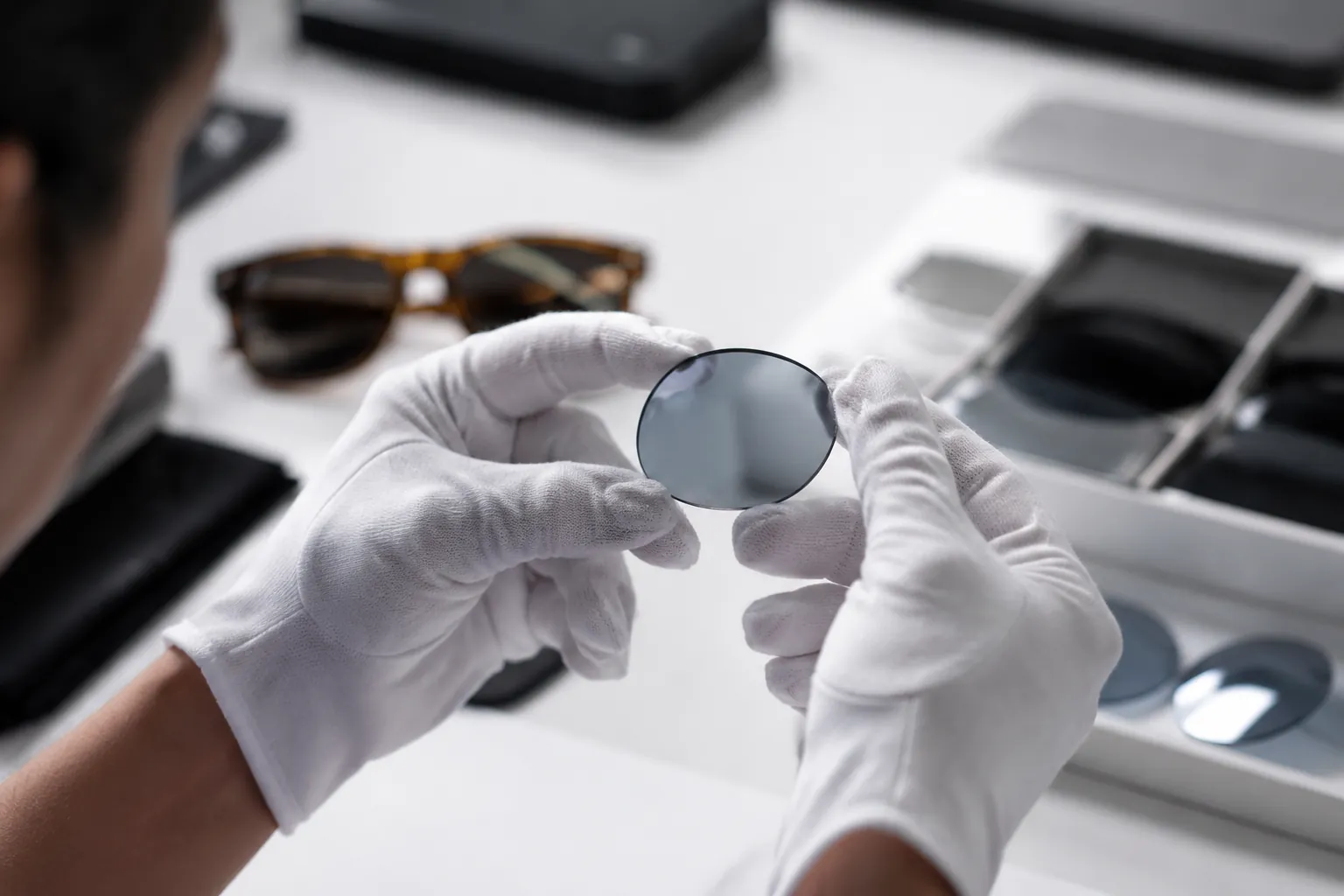
For B2B sunglass buyers, polarized versus non-polarized is not a minor feature choice. It changes assortment structure, landed cost, retail pricing, quality control, compliance review, and return risk. Get the mix right and you protect margin without bloating SKUs. Get it wrong and the line can drift out of its working price band or pile up in slow-moving stock. This guide looks at the decision from a sourcing angle: channel fit, cost, QC, lead time, and the documents buyers should check before placing an order.
Start with channel economics, not lens preference
A common buying mistake is treating polarized and non-polarized as simple variants of the same product. Commercially, they are not. They solve different customer problems, support different price points, and often need different retail messaging.
In utility-led channels such as driving, fishing, marine, travel, and outdoor specialty, polarized lenses often make the stronger business case. The benefit is easy to explain: less reflected glare from water, roads, and glass. In fashion-led channels, gift, souvenir, convenience, and many impulse settings, non-polarized styles often fit better. Lower opening price. Less explanation needed. More of the purchase decision sits with the frame.
The useful question is not "Which lens is better?" It is "What price band and value story does this channel already support?" If the retail slot is tight, adding polarized lenses can squeeze margin or force cuts elsewhere in the spec. If the channel already accepts a technical price step-up, polarized can work as a clean upsell.
- Fashion retail: usually led by non-polarized styles, with polarized used selectively where the customer accepts a higher ticket.
- Outdoor / sport: often polarized-heavy because glare reduction is a core use benefit, not a side feature.
- Gift / souvenir: commonly weighted to non-polarized to protect entry price and simplify the offer.
- Distributor catalogs: often carry both, but the assortment should be separated clearly so sales teams can explain the difference without confusion.
Good buying discipline starts with the channel, then sets the lens mix, then finalizes frames, decoration, and packaging. Reverse that order and assortments often look tidy on paper but sell unevenly in market.
What polarized changes in production, cost, and QC
Polarized lenses usually cost more. The reason is simple: they require added material and tighter process control. A polarized sunglass lens includes a polarizing element that must be built in correctly so the lens delivers the intended glare-reduction effect. That added construction raises both cost and QC sensitivity versus a standard non-polarized tinted lens.
For buyers, unit cost is only part of the issue. Inspection discipline matters too. Polarized programs typically need closer review of lens clarity, left-right consistency, cosmetic defects under light, and stress after lens mounting. If the frame shape has heavy wrap or the assembly fit is too tight, optical complaints become more likely. Especially on styles where lens tension is poorly controlled.
Non-polarized lenses are usually easier to run across broad color programs and opening-price collections. They also make it easier to test fashion-led lens looks, such as gradients or mirror finishes, without adding as much cost pressure to the final SKU.
For B2B buyers, the commercial difference looks like this:
| Factor | Non-polarized | Polarized | Buyer implication |
|---|---|---|---|
| Material structure | Standard tinted lens construction | Includes a polarizing element and added process control | Polarized usually carries higher COGS |
| QC sensitivity | Lower | Higher because visual performance and assembly stress matter more | More inspection attention may be needed |
| Retail story | Style and price first | Utility and comfort first | Staff training and product copy matter more for polarized |
| Best commercial role | Volume opener | Premium option or hero SKU | Use both only where the channel supports a clear price ladder |
When reviewing suppliers, ask which lens and assembly steps are controlled in-house and which are subcontracted. Mixed assortments often break down at handoff points: lens shade variation, inconsistent decoration, or uneven assembly fit. Process ownership matters.
Model margin before you place the order
Polarized is not automatically more profitable. It is only more profitable if the channel accepts the higher retail and the added cost still leaves enough margin after freight, duty, compliance work, markdown exposure, and returns.
A practical way to test the decision is to compare the same frame in two lens specs. Hold frame construction, branding, and packaging constant. Then lens type becomes the main variable. That gives buyers a cleaner view of whether the polarized premium is justified.
If polarized raises cost but the retail channel cannot support a meaningful ticket increase, gross margin tightens fast. If the end customer understands the benefit and the retailer has room for a premium tier, polarized can lift average unit retail without forcing a second frame family.
Use this pre-order checklist:
- Set the target retail range by channel first.
- Work back to a landed-cost ceiling, not only an ex-factory target.
- Test whether polarized still leaves acceptable margin after freight, duty, and likely markdown risk.
- Keep the same frame design across lens options where possible so the comparison stays clean.
- Use polarized selectively as a hero SKU or premium tier rather than duplicating every colorway on the first order.
For many private-label and importer programs, the cleanest structure is one frame family with two lens paths: a non-polarized opening-price version and a polarized premium version. Simple. Comparable. Easier to manage.
Build the offer around customer expectations
Customer understanding of lens technology changes by channel. In a fishing or outdoor store, polarized is usually familiar and easy to explain. In fashion retail, the shopper may care more about shape, color, and overall look than about glare reduction. In e-commerce, the product page has to do the work a sales associate would normally do.
This matters because many returns come from expectation gaps, not factory defects. If a customer buys polarized lenses without understanding the feature, they may notice changes when viewing digital screens or certain reflective surfaces and assume the product is faulty. If a customer buys non-polarized lenses expecting glare control, the return reason may be dissatisfaction rather than a quality problem.
To reduce avoidable returns:
- Product page: identify the lens type clearly near the top of the specification block.
- Carton and unit labeling: make sure lens type is stated consistently and accurately.
- Sales script: give staff a short, plain-language explanation of the difference and the price step-up.
- Visual merchandising: separate polarized and non-polarized styles if both are displayed together, so the shopper is not forced to decode the offer alone.
The operating rule is straightforward: lead with polarized where the customer is buying for use performance; lead with non-polarized where the customer is buying mainly for style and price. If a channel supports both, keep the frame story stable and let lens type create the tiering.
Channel-by-channel assortment and pricing logic
Most sourcing teams do not need theory. They need a planning framework. The table below is a practical starting point for first-order decisions. It is not a fixed formula, but it helps buyers line up lens mix with channel role, price architecture, and inventory risk.
| Channel | Recommended lens mix | Typical role | Price logic | Main watch-out |
|---|---|---|---|---|
| Fashion retail | Primarily non-polarized, with selected polarized options | Frame-led assortment | Protect opening price points and visual breadth | Too many technical SKUs can slow turns |
| Outdoor / sport | Often polarized-led, with non-polarized used for opening price or style coverage | Utility-led assortment | Customer is more likely to accept a feature premium | Claims, labeling, and product training must be accurate |
| Distributor / wholesale catalog | Offer both where buyer types differ, but separate the tiers clearly | Coverage across multiple account profiles | Needs a simple upsell path for the sales team | SKU count can expand faster than demand |
| Promo / entry private label | Mostly non-polarized | Volume and low landed cost | Best suited to aggressive opening prices | Added decoration or packaging can erase margin quickly |
If you are entering a new market or opening a new account type, do not duplicate the full line in both lens specs on the first order. Start smaller. A limited polarized test set is usually easier to read and carries less cash risk if sell-through is slower than expected.
MOQ, lead time, decoration, and compliance questions to ask
Operational detail matters. Lens choice affects flexibility. Before ordering, buyers should confirm the supplier's MOQ by style, color, and lens specification; sample lead time; bulk lead time; and whether mixed lens assortments affect scheduling. Do not assume that a quoted MOQ for a standard non-polarized style applies unchanged to a polarized version with a different lens color, packaging, or branding.
Lead time is not driven by volume alone. Spec complexity matters too. Polarized programs may require more careful lens verification, and late changes to lens tint, mirror finish, logo position, or decoration method can disrupt the production sequence more than buyers expect.
Decoration choices also affect timing and reject risk. Common options include:
- Pad printing: efficient for logos, but adhesion, registration, and consistency should be checked across the production lot.
- Laser engraving: generally durable on suitable materials, but placement accuracy and artwork approval still matter.
- Metal logo plates: create a more premium look, but add assembly steps and extra fit checks.
- Special-effect decoration: can support fashion positioning, but may increase cosmetic inspection requirements.
For compliance, verify only the standards relevant to the destination market and the product claim. Common documents or frameworks buyers may need to review include CE EN ISO 12312-1, ANSI Z80.3, AS/NZS 1067, REACH, FDA registration, ISO 9001, and BSCI. These do not serve the same purpose. Product performance standards, chemical compliance, quality-system certification, and social compliance audits are different categories. One document does not replace another.
A buyer workflow that cuts dead inventory
The safest assortment process is usually the least dramatic. Start with the channel. Standardize the frame family. Test lens type before scaling volume. That reduces the chance of building stock around assumptions instead of market evidence.
- Define the channel. Confirm whether the customer is buying mainly for style, utility, or a mix of both.
- Set an initial lens ratio. Build the first offer around channel need, not internal preference.
- Standardize the frame family. Keep shape, fit, and branding stable so lens performance and price acceptance can be compared cleanly.
- Approve samples. Review lens clarity, shade consistency, decoration placement, hinge feel, fit, and labeling accuracy.
- Place a controlled test run. Keep the first order narrow enough to learn from it without overcommitting working capital.
- Review sell-through and returns. Separate complaints about optical performance, cosmetic quality, and unmet expectation.
- Scale only proven winners. Expand the lens mix only after the channel shows that it can support the price architecture.
This matters even more for polarized programs because late-stage changes can create avoidable delay, rework, or claim risk. Freeze lens specification, frame color, decoration, and packaging copy before bulk production begins.
Decision rules buyers can use
If you need a working framework, use these rules.
- Choose non-polarized when the channel is price-led and the frame has to do most of the selling.
- Choose polarized when the shopper expects glare reduction and the retail band can support a clear premium.
- Use a mixed assortment when you serve different account types, regions, or retail formats with different price expectations.
- Keep the same frame design where possible and change the lens specification first.
- Limit polarized to hero SKUs in fashion-heavy channels instead of duplicating the full line immediately.
- Check destination compliance before finalizing cartons, labels, swing tags, and online claims.
For most brands, importers, and wholesalers, the right answer is not polarized or non-polarized across the whole line. It is a controlled mix, backed by clear product communication, disciplined SKU planning, and documented compliance review.
Have a custom sunglasses project in mind?
Send us your styles, target market and quantities and we will return a detailed quote with MOQ, lead time and a sample plan.
Get a QuoteWhy source this from Wenzhou with LumiShades
Wenzhou in Zhejiang Province is widely regarded as China’s eyewear manufacturing capital, producing a large share of the world’s sunglasses. That concentration matters to buyers: a deep local supply chain for acetate sheet, hinges, lens blanks, plating and packaging means shorter component lead times, easier color and material matching, and a workforce with decades of eyewear-specific skill. LumiShades has manufactured in this ecosystem since 2009, and our vertical integration — in-house injection molding, acetate cutting, CNC milling, lens tinting, decoration and quality control — means no part of your order is quietly subcontracted to a workshop you cannot audit.
For international buyers, that vertical control translates into accountability. When a single factory owns every step, defects are traced and fixed at source rather than bounced between vendors, and your specifications survive intact from first sample to bulk. We back this with 15+ years of experience, shipments to 60+ countries, more than 5 million pairs produced per year and a 98.5% on-time delivery rate. Our certifications — CE EN ISO 12312-1, FDA registration, ANSI Z80.3, AS/NZS 1067, REACH, ISO 9001 and BSCI audit — mean the compliance documentation your market requires already exists. Explore our manufacturing capabilities and quality control process to see how this works in practice.
Frequently asked questions
Is polarized always the better upsell in wholesale sunglasses? No. Polarized is a strong upsell only when the customer recognizes the benefit and the channel supports the higher ticket. It usually performs best in utility-led categories such as outdoor, marine, driving, and fishing. In fashion-led channels, test polarized selectively and compare sell-through, return rate, and gross margin against the same frame in a non-polarized version before expanding the offer.
Can I mix polarized and non-polarized in the same frame family? Yes, and that is often the most controlled way to build a tiered assortment. Using one frame family lets you hold shape, fit, tooling, and branding constant while testing lens specification as the main commercial variable. Ask your supplier to quote both versions side by side, including any differences in MOQ, lead time, labeling, and QC checks.
What is a realistic test order size? A realistic test order is the smallest quantity that still gives you usable feedback by channel, color, and lens type. The exact number depends on the supplier's MOQ, your customer count, and how many SKUs you are testing. Before placing the order, confirm whether MOQ applies per style, per color, per lens spec, or per total program, and make sure the test size is large enough to measure sell-through and return reasons meaningfully.
What production details matter most when sourcing polarized styles? Focus on the points that affect performance and consistency: lens clarity, left-right lens matching, cosmetic inspection standard, lens mounting stress, decoration consistency, and final labeling accuracy. Ask the supplier which steps are handled in-house, what the final inspection covers, and whether the same QC standard applies across all colorways. Also confirm how sample approval is documented so the bulk order is checked against an agreed reference.
Which certifications should I ask for? Ask only for documents relevant to your destination market and your product claim. Typical examples include CE EN ISO 12312-1, ANSI Z80.3, AS/NZS 1067, REACH, FDA registration, ISO 9001, and BSCI. Treat them as different categories: product standards, chemical compliance, registration, quality-system certification, and social compliance are not interchangeable. Before production starts, match each required document to the destination market, importer record, and labeling claim.
How fast can samples and bulk orders move? Timing varies by supplier and specification, so treat any lead time as a quote-specific commitment rather than a universal rule. Ask for three separate timelines: sampling, sample revision if changes are needed, and bulk production after final approval. Then confirm what can extend the schedule, especially lens changes, mirrored finishes, multi-step decoration, packaging revisions, or compliance-document review. For polarized programs, freeze specifications early because late changes are usually more disruptive.
Ready to start?
Explore our round sunglasses or request a quote — our sales team replies within 12 hours.
Request a Quote