
Polarized vs Non-Polarized Sunglasses Wholesale Guide
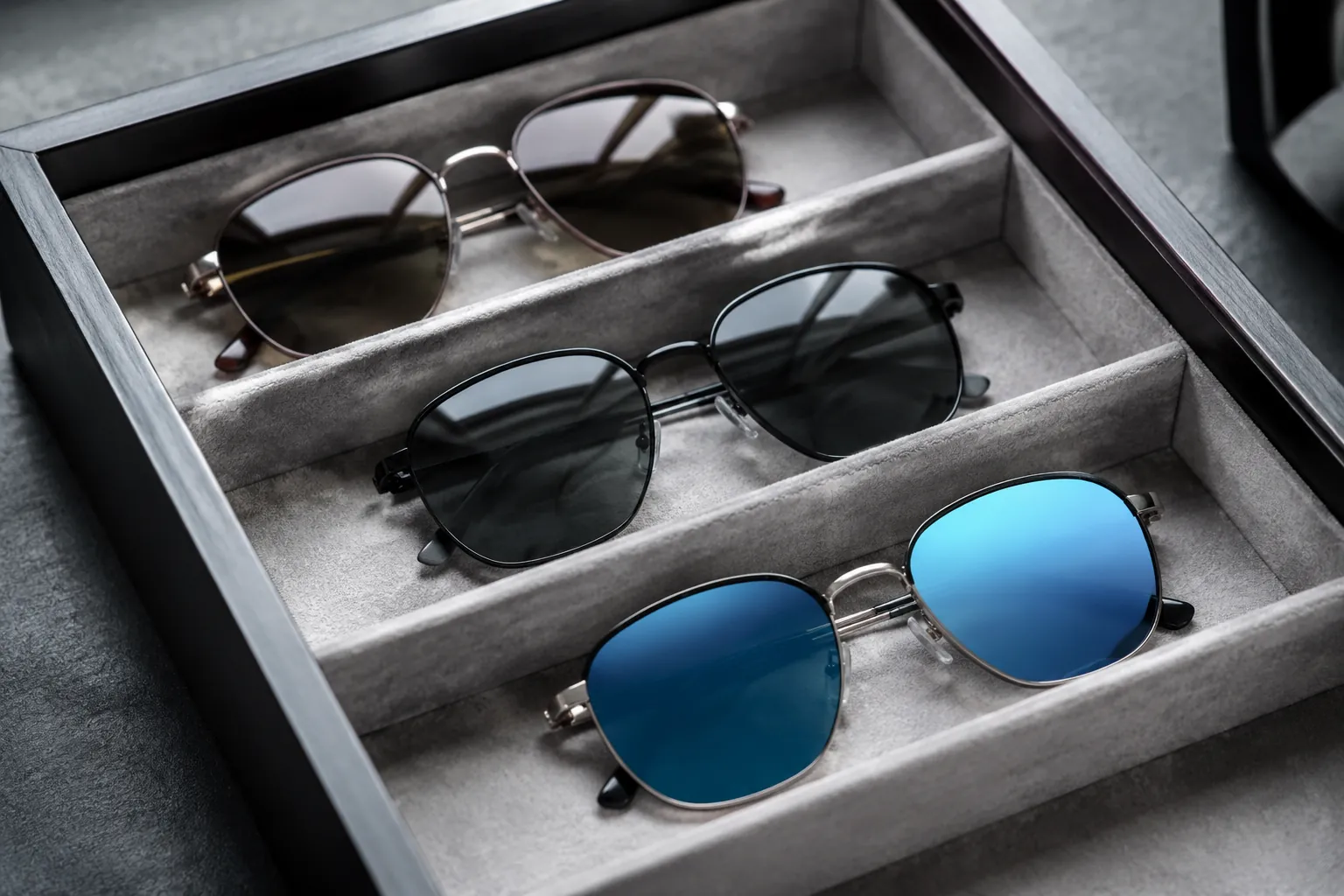
This guide is for brands, importers, distributors, and retailers deciding where polarized lenses fit in a wholesale sunglasses program. Polarized lenses are not better by default. They are better only when the customer values glare reduction and the program can support the added cost, labeling, and inspection work. The right choice depends on use case, target price, retail channel, compliance market, packaging claim, and QC plan. This article explains when polarization adds real buyer value, when non-polarized UV400 lenses are the cleaner choice, and what to confirm before issuing an RFQ or approving bulk production.
The Core Decision: Glare Control or Lower Cost
Polarized lenses reduce reflected glare from water, roads, snow, glass, sand, and wet pavement. They use a polarizing filter, usually built into the lens structure, to block light vibrating in certain directions. Non-polarized sunglasses can still provide UV protection and meet sunglass standards. They simply do not cut reflected glare in the same way.
For wholesale buyers, the question is practical: will the end user notice the benefit, and will the sales channel pay for it? A fishing, boating, beach, or driving customer is likely to understand glare reduction. A customer receiving free event sunglasses may care more about frame color, logo placement, comfort, and price. A fashion buyer may sell shape, finish, and trend color first, then reserve polarization for selected premium SKUs.
The frame production route may look similar for polarized and non-polarized versions of the same style. The lens route is not the same. Polarized programs need clear lens sourcing, polarization checks, left-right matching, correct labeling, SKU separation, and disciplined packing. Do not print or apply a "polarized" claim on a pouch, sticker, hangtag, barcode label, product page, or carton unless the approved bulk lens has been checked against the specification.
Simple rule: specify polarization where the use case, price point, or retail story justifies it. Use non-polarized UV-protective lenses where the program is mainly driven by low cost, fashion color, novelty appeal, or promotional distribution.
Use-Case Matrix for Wholesale Assortments
| Program Type | Recommended Lens | Typical Commercial Logic | Buyer Watchpoint |
|---|---|---|---|
| Low-cost promotional giveaway | Non-polarized UV400 | Protects budget when the main value is logo exposure, color, and comfort | Do not add a polarized claim unless the channel needs it and inspection is planned |
| Fashion seasonal retail | Mostly non-polarized, selected polarized SKUs | Shape, color, gradient tint, and frame finish often drive the sale | Use polarization on hero styles or core colors rather than every colorway |
| Driving sunglasses | Polarized grey, green, or brown where suitable | Glare reduction from roads and wet surfaces is easy to explain at retail | Check visibility of LCD dashboards, navigation screens, and phones during sampling |
| Fishing, boating, beach, outdoor | Polarized | Glare reduction around water and bright surfaces creates clear user value | Control polarization direction, lens curve, edge quality, coating quality, and tint consistency |
| Kids and novelty programs | Non-polarized unless positioned as premium | Price, safety, fit, color variety, and compliant labeling usually matter more than polarization | Confirm age grading, material requirements, and destination-market claims before production |
| Mid-price retail display | Mixed assortment | Creates good-better-best pricing without changing every frame style | Separate polarized and non-polarized SKUs with different item codes, barcodes, or hangtags |
Start with the activity. If customers will use the sunglasses in glare-heavy conditions, consider polarized lenses. If they are buying for fashion, giveaways, tourist retail, novelty use, or entry-price racks, start with non-polarized lenses. Add polarized versions only where the sales story is clear and the claim can be verified.
Cost, MOQ, and Lead-Time Logic
Polarized lenses usually cost more than comparable non-polarized lenses. The lens construction is more demanding, and so is the inspection. The buyer is not only buying a lens. The buyer is making a consumer-facing claim. That claim must be controlled.
Cost varies by lens material, tint, curve, coating, optical requirement, order quantity, packaging, and inspection level. LumiShades' MOQ starts at 50 pairs per design, which can support sampling, market tests, influencer drops, buyer presentations, and small retail trials. Small runs, however, will not match the unit economics of larger production orders. As quantity rises, setup, decoration, packaging preparation, and inspection time can be spread across more units. Ask for price breaks at the quantities you are actually considering. Do not assume one fixed polarized premium.
- 50 pairs per design: useful for samples, small launches, premium tests, or buyer presentations.
- 300 pairs: suitable for focused retail tests, resort programs, driving SKUs, and outdoor styles.
- 1000 pairs: compare the added lens cost with expected retail uplift, sell-through, defect allowance, and packaging cost.
- 5000+ pairs: review lens cost, carton efficiency, barcode separation, packaging labor, AQL inspection, and replenishment planning together.
Lead time is easier to control when the lens type is confirmed before sampling. Custom samples need clear frame references, lens color, logo position, packaging direction, and compliance market. Bulk timing should be confirmed after sample approval because material availability, order quantity, decoration load, packaging complexity, and inspection requirements can all affect delivery. Late changes from non-polarized to polarized cause avoidable delays. Lens checks, packaging artwork, barcode labels, product descriptions, and carton marks may all need revision.
Lens Materials and Production Behavior
Common sunglass lens materials include PC, TAC, acrylic, and nylon-family materials. PC is widely used because it is light and offers good impact resistance for many sunglass applications. TAC is common for polarized lenses because it supports thin, light lens structures and stable polarization when produced correctly. Acrylic is usually selected for lower-cost programs, but it may not suit orders that need stronger impact resistance or higher optical performance. Nylon-family materials are often used in higher-performance or higher-curve designs where flexibility, clarity, and dimensional control matter.
Choose the lens material with the frame design, not after it. A high-wrap sport frame puts different stress on a lens than a flatter fashion frame. If the lens curve does not match the frame groove, assembly can create stress marks, edge whitening, lens popping, or visible distortion. During sample review, check whether the lenses seat cleanly, whether both temples close evenly, whether the frame front sits flat, and whether the lenses remain stable under normal handling.
For polarized lenses, incoming inspection should confirm polarization effect, tint consistency, surface condition, coating quality, and left-right matching. Both lenses in a pair should look consistent under the same light source. They should also show a similar darkening effect when checked with a suitable polarization test method. Shade mismatch, bubbles, lamination marks, coating specks, scratches, or uneven polarization are quality risks. Treat them that way.
Cutting and edging also matter. Rimless and semi-rimless designs are less forgiving because the lens perimeter, drill holes, and notches remain visible. Inspectors should check edge chips, cracks near drill holes, coating damage, burrs, and lens fit before final assembly. A cheap lens can become expensive if it slows assembly, increases rework, or causes returns after shipment.
Decoration, Packaging, and SKU Control
The lens decision affects more than the lens. It affects labeling, packaging, warehouse control, product pages, sales sheets, and carton marking. A non-polarized black frame and a polarized black frame may look almost identical on a packing table. That is where mistakes happen. Use clear separation through item codes, stickers, inner bags, hangtags, barcode labels, or other documented controls.
Common decoration methods include pad printing, laser engraving, hot stamping, metal logo plates, temple inlays, and printed lens marks. Pad printing can be economical for temple logos, but adhesion depends on the material, ink system, surface preparation, and curing. Laser engraving can be durable on suitable surfaces, but it will not hide poor polishing or uneven material. Metal logo plates can create a premium look, but the recess and edge finish must be controlled so the plate does not catch on packaging or feel rough to the wearer.
Packaging claims must match the tested article. If a polarized SKU uses a special hangtag, sticker, pouch, card, or product insert, approve the artwork only after the lens type, tint, UV claim, visible light category where applicable, and destination-market language are confirmed. For mixed programs, use separate barcodes or item codes for polarized and non-polarized versions of the same frame. A small lens shade difference is not enough in a busy packing area.
For carton planning, confirm pairs per inner box, pairs per export carton, gross weight, carton dimensions, retail packaging status, barcode placement, and accessories packed with each unit. Bulk polybag packing is usually faster and simpler. Retail boxes, microfiber pouches, printed cards, instruction inserts, and hangtags add labor and inspection points. These details can affect landed cost and delivery reliability as much as the lens choice.
Compliance: UV Protection Is Not Polarization
Polarization and UV protection are separate properties. A non-polarized lens can provide UV400 protection. A polarized lens can still be non-compliant if its UV performance, visible light transmittance category, warning language, labeling, or destination-market documentation is wrong. State both the lens performance claim and the compliance route on the purchase order.
Requirements depend on the destination market. CE EN ISO 12312-1 is used for sunglasses sold in Europe. ANSI Z80.3 is commonly referenced for non-prescription sunglasses in the United States, and FDA registration may be relevant for suppliers dealing with the U.S. market. AS/NZS 1067 applies to Australia and New Zealand. REACH is relevant for chemical restrictions affecting materials, coatings, inks, and metal components entering the EU. ISO 9001 and BSCI relate to management systems and social compliance. They do not replace product testing for sunglasses.
A complete specification should define lens material, lens color, UV requirement, visible light category where applicable, polarization claim, frame material, hinge type, decoration method, packaging, carton quantity, labeling language, destination market, and inspection level. If the lens material, coating, color, category, or claim changes after testing or approval, treat it as a specification change. The frame may look the same. The product being sold has changed.
Blunt factory advice: never approve printed claims before final lens confirmation. Delaying a carton print is annoying. Shipping goods with the wrong claim can create compliance, customer-service, and recall risk.
QC Points Buyers Should Put in the Spec
A good specification reduces disputes because it tells the factory, buyer, and inspector what must be checked. For polarized sunglasses, QC should include incoming lens inspection, in-process assembly checks, and final packed-goods inspection. Buyers should keep approved sample photos and, for larger orders, one signed physical approval sample with frame color, lens tint, logo, hinge, packaging, and labeling confirmed.
Incoming lens QC should verify the polarization effect with a suitable tester or controlled check method, compare left and right lenses in each pair, and inspect optical clarity against a grid or line target. A basic LCD rotation check can help factory staff identify whether a lens has a polarization effect: when the lens is rotated relative to certain LCD screens, the image should darken noticeably. This is a useful factory-floor screen. It is not a substitute for formal product testing where standards or buyer requirements call for it.
Lens inspection should reject visible scratches, bubbles, lamination marks, coating specks, edge chips, cracks, tint mismatch, and uneven polarization effect. Frame inspection should check temple alignment, hinge tightness, screw depth, lens seating, bridge comfort, burrs, color consistency, logo position, and surface finish. Decoration tolerances should be agreed before production because acceptable variation depends on the decoration method, surface shape, artwork size, and inspection distance.
Final inspection should confirm that the packed goods match the approved sample and purchase order. For mixed assortments, inspectors should verify that polarized and non-polarized units are not mixed, that barcodes scan correctly, that hangtags match the lens type, and that carton marks match the packing list. If the product carries a polarized claim, the inspection plan must include checks for that claim. No check, no confidence.
A Practical Assortment Framework
Start with the channel, not the lens. A distributor selling to gas stations may need aggressive price points, simple UV400 non-polarized styles, and fast replenishment. A fishing retailer needs polarized lenses that perform consistently. A fashion brand may need both: non-polarized colors for trend depth and polarized core styles for higher perceived value.
For a first wholesale program, a mixed structure is often safer than making every SKU polarized. Use non-polarized lenses on bright fashion colors, festival shapes, kids' styles, novelty frames, and opening-price aviators. Use polarized lenses on black, tortoise, matte rubber, driving, outdoor, resort, fishing, boating, and water-related styles. Keep packaging and hangtags clear so the sales team can explain the difference accurately.
For a 12-SKU opening range, one practical starting point is eight non-polarized fashion or entry-price SKUs and four polarized hero SKUs. For an outdoor-heavy account, reverse the mix. For a price-sensitive promo account, keep all SKUs non-polarized unless the buyer specifically needs a premium giveaway tier. After launch, use sell-through, return feedback, reviews, and reorder behavior to decide whether to expand or reduce polarized styles.
For buyers sourcing from Wenzhou or any custom sunglasses supplier, a clean RFQ includes target FOB price, quantity by design, frame material, lens type, lens color, compliance market, packaging, logo method, inspection requirement, and desired delivery date. With LumiShades' MOQ starting at 50 pairs per design, buyers can test cautiously before scaling. At higher quantities, the polarized decision should be tied to channel margin, consumer use case, and claim-control discipline. Not personal preference.
Have a custom sunglasses project in mind?
Send us your styles, target market and quantities and we will return a detailed quote with MOQ, lead time and a sample plan.
Get a QuoteWhy source this from Wenzhou with LumiShades
Wenzhou in Zhejiang Province is widely regarded as China’s eyewear manufacturing capital, producing a large share of the world’s sunglasses. That concentration matters to buyers: a deep local supply chain for acetate sheet, hinges, lens blanks, plating and packaging means shorter component lead times, easier color and material matching, and a workforce with decades of eyewear-specific skill. LumiShades has manufactured in this ecosystem since 2009, and our vertical integration — in-house injection molding, acetate cutting, CNC milling, lens tinting, decoration and quality control — means no part of your order is quietly subcontracted to a workshop you cannot audit.
For international buyers, that vertical control translates into accountability. When a single factory owns every step, defects are traced and fixed at source rather than bounced between vendors, and your specifications survive intact from first sample to bulk. For procurement review, buyers can request process records, approved samples, quality checkpoints and project-specific compliance files before placing a bulk order. Required testing and documentation are confirmed against the destination market and product specification rather than assumed from a generic certificate list. Explore our manufacturing capabilities and quality control process to see how this works in practice.
Frequently asked questions
Can a non-polarized sunglass still be UV400? Yes. UV protection and polarization are separate properties. A non-polarized lens can be specified as UV400 if it meets the required UV protection performance. On the purchase order, state the UV requirement, visible light category where applicable, lens color, destination market, and test standard separately from any polarization claim.
Should every retail sunglasses SKU be polarized? No. Use polarized lenses where glare reduction is part of the selling reason, such as driving, fishing, boating, beach, resort, and outdoor styles. Keep non-polarized lenses for low-cost promotional programs, fashion colors, novelty frames, kids' assortments, and opening-price retail unless the higher retail price and inspection work are justified.
How do we verify that bulk goods are actually polarized? Build polarization checks into incoming lens QC and final inspection. Use a suitable polarization tester or controlled check method, compare the left and right lenses in each pair, and use an LCD rotation check as a practical factory-floor screen. For compliance-sensitive programs, confirm whether the buyer or destination market requires formal lab testing or documented test reports.
Will polarized lenses increase lead time? They do not have to add major time if confirmed before sampling and included in the approved specification. Delays usually happen when the lens type changes after artwork, barcodes, packaging, or testing plans are already approved. Confirm lens material, tint, polarization claim, UV requirement, packaging language, and inspection method before bulk purchasing starts.
Which compliance standards should we mention on the PO? Use the requirements for the destination market. Common references include CE EN ISO 12312-1 for Europe, ANSI Z80.3 and FDA registration considerations for the United States, AS/NZS 1067 for Australia and New Zealand, and REACH for EU chemical restrictions. ISO 9001 and BSCI may support supplier qualification, but they do not replace product-specific sunglass testing.
What MOQ makes polarized lenses commercially sensible? Commercial sense depends on the channel, not only the MOQ. LumiShades' MOQ starts at 50 pairs per design, which can work for samples and small tests. For larger runs, request price breaks at realistic quantities, then compare the added lens cost with expected retail uplift, sell-through, return risk, packaging cost, and the cost of verifying the polarized claim.
Ready to start?
Explore our round sunglasses or request a quote — our sales team replies within 12 hours.
Request a Quote