
Polarized vs Non-Polarized Sunglasses in Bulk
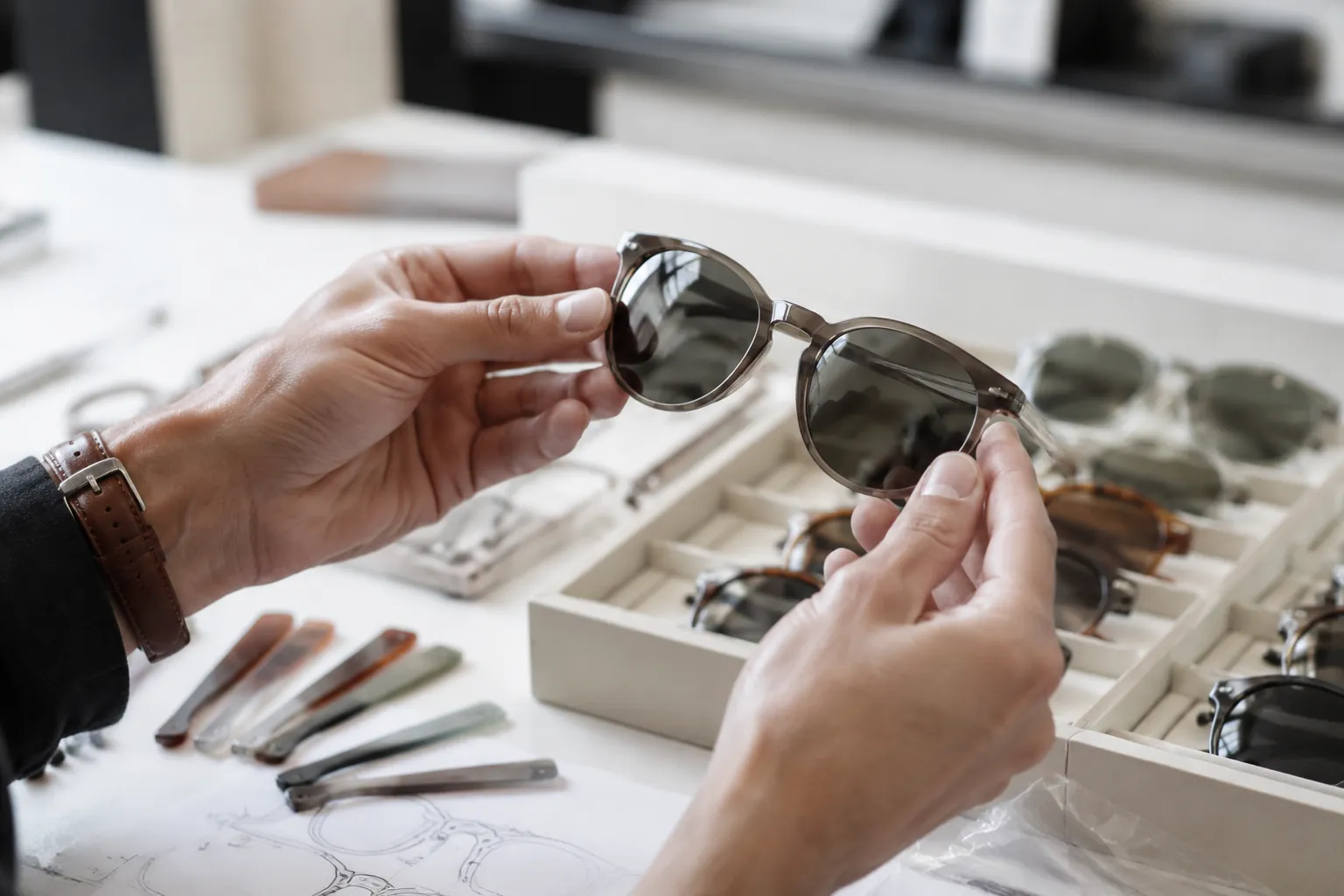
This guide is for brands, importers, distributors, and retailers choosing lenses for bulk sunglass orders. The right choice depends on channel, retail price, lens material, visible light transmission category, decoration method, QC tolerance, compliance claims, labeling, and return risk. Use it to brief suppliers clearly, protect margin, and avoid adding a feature customers will not notice or pay for.
The Buyer Decision in One Page
Polarized lenses reduce glare from flat reflective surfaces such as water, wet roads, snow, glass, and vehicle hoods. Non-polarized lenses reduce brightness, but they do not block horizontally reflected glare in the same way. That difference sounds small. In bulk production, it affects unit cost, inspection steps, product claims, packaging control, warehouse segregation, and returns.
Fishing, boating, driving, beach resort, and outdoor sports SKUs can justify polarized lenses when the retail price and use case support the upgrade. Fashion-first frames, festival giveaways, low-price promotions, and novelty styles often do not need polarization. Choosing non-polarized is not the mistake. The mistake is adding polarization across an assortment without checking whether each channel can sell, explain, and service the claim.
Both lens types can be used with common sunglass frame constructions, including injection-molded frames, TR90-style frames, acetate, metal, and combination frames. Decide the lens spec before sampling. Lens thickness, base curve, tint, coating stack, edging pressure, packaging copy, and compliance testing all need to match the final product claim.
| Order Scenario | Better Lens Choice | Typical Retail Logic | Buyer Risk If Wrong |
|---|---|---|---|
| Fishing, boating, marina retail | Polarized | Users can notice glare reduction near water | Complaints if glare remains strong |
| Fashion chain under tight retail price | Non-polarized | Shape, color, logo, and shelf price drive purchase | Margin loss if polarized cost is not recovered |
| Driving sunglasses above entry price | Often polarized | Road and dashboard glare reduction can support upsell | Complaints if digital screens or instruments are hard to read |
| Promotional giveaway or small test run | Usually non-polarized | Budget, logo area, and delivery speed dominate | Over-specification and weak landed-cost control |
| Outdoor private label line | Often polarized for hero SKUs | Performance claim helps justify a higher price point | Brand damage if polarization, UV, or labeling QC is inconsistent |
What Polarization Actually Adds
A polarized sunglass lens uses a polarizing film or layer aligned to reduce horizontally reflected light. It is not just a darker tint. Lens material, film orientation, lamination quality, curve forming, cutting, mounting pressure, and final inspection all affect the finished result.
For plano sunglasses, common lens materials include TAC, polycarbonate (PC), nylon, and CR39. TAC polarized lenses are common in cost-sensitive retail and private-label programs because they are light and economical. PC lenses offer impact resistance but need proper coating and process control. Nylon works well for selected sport and higher-curve designs when formed correctly. CR39 is known for optical clarity, but it is heavier than many thin sunglass lens options and is less common in low-cost bulk programs.
The polarizing axis should be consistent between the left and right lenses and should match the approved sample. In practical QC, suppliers often use a polarization test card, analyzer, or approved reference sample. If one lens is rotated incorrectly or stressed during mounting, the wearer may notice uneven glare reduction, visual discomfort, distortion, or simply that the glasses feel wrong. That can become a return even when the customer cannot explain the defect.
- Polarized value: visible glare reduction, clearer vision near water or reflective roads, and a stronger performance story.
- Polarized cost: higher lens cost, tighter axis control, added inspection steps, and stricter claim control.
- Non-polarized value: lower unit cost, broader color and effect flexibility, and simpler execution for fashion SKUs.
- Non-polarized risk: weaker glare-reduction claim and higher complaint risk in glare-heavy channels.
Cost Logic: MOQ, Price Tiers, and Margin
Polarized lenses usually cost more than basic non-polarized tinted lenses. The lens blank or sheet is more complex, and the production process has more failure points. Reject risk can rise if axis alignment, lamination, coating, surface quality, or frame mounting is poorly controlled.
The premium is easier to absorb at higher retail prices. It is harder to absorb in discount channels, where small cost changes hit landed margin fast. Ask the supplier to quote the same frame, logo method, packaging, and order quantities in both non-polarized and polarized versions. That makes the real cost difference visible.
The premium will vary by material, thickness, tint, mirror coating, base curve, testing requirement, packaging format, and production volume. Do not judge polarization only by factory unit price. Judge it against landed cost, wholesale margin, retail position, and return exposure. If the upgrade moves the SKU into a credible performance tier, polarization may support margin. If the channel cannot charge more or explain the benefit, it only adds cost and complexity.
| Volume Tier | Typical Buyer Use | Polarized Decision | Cost Control Note |
|---|---|---|---|
| Small test order | Market test, influencer drop, small retailer | Use only if the product story requires glare reduction | Limit lens colors and coatings to reduce sampling changes |
| Starter wholesale run | Initial private-label or retail program | Consider one hero polarized SKU | Compare landed cost against target wholesale and retail price |
| Reorder program | Ongoing private-label SKU | Often justified for outdoor, beach, and driving lines | Lock lens spec, claim language, barcode, and carton code before production |
| Large seasonal program | Distributor, chain retail, travel retail, seasonal display | Use polarized and non-polarized segmentation | Consolidate shared frame colors, hinges, packaging, and test reports where valid |
Lens Materials, Tint, and Coating Behavior
Write lens specifications in measurable terms. Do not stop at "gray polarized" or "brown non-polarized." A useful RFQ should include lens material, lens thickness, base curve, visible light transmission category, UV protection requirement, coating requirements, and whether the lens is solid tint, gradient, mirror, or flash mirror.
For general fashion sunglasses, thin TAC or PC lenses are common. Still, the correct thickness depends on frame design, lens size, groove structure, and target market. For premium or sport-oriented sunglasses, buyers may request thicker lenses, stronger curve stability, better scratch resistance, or a specific coating stack. Higher base curves can increase optical distortion if the material and forming process are not suitable. Watch this closely on wrap-style driving, beach, and sport frames.
Tint affects both compliance and sell-through. Gray keeps color perception relatively neutral and works across broad retail. Brown and amber can improve perceived contrast for driving and outdoor lifestyle use, but batch drift is more visible. Green-gray gives a classic outdoor look. Blue, pink, yellow, and gradient fashion lenses often sell on appearance first, so non-polarized options may give buyers more flexibility at lower cost.
- TAC polarized: economical, lightweight, and common in volume private-label programs.
- PC lens: impact-resistant and useful for active styles, with coating quality as a key control point.
- Nylon lens: suitable for selected sport curves and higher-end outdoor positioning when processed correctly.
- Mirror coating: increases shelf appeal but adds scratch, adhesion, and color-consistency inspection points.
- Gradient tint: useful for fashion and some driving styles, but it must still match the claimed filter category.
Channel Fit: Where Polarized Pays Back
Polarized lenses pay back when the end user notices the benefit quickly and the retailer can explain it in one line. Near water, the difference can be obvious. For drivers, reduced glare from road surfaces, vehicle hoods, or dashboards can support a higher ticket. Beach, marina, outdoor, and travel retail can often sell the benefit without a long explanation.
Fashion-led sunglasses are different. The purchase trigger is usually shape, color, logo, trend, and price. Polarization may not create enough perceived value. It can also narrow the development window when the buyer wants unusual gradients, bright mirrors, novelty colors, or very low opening prices. Polarized fashion lenses are possible. They just need tighter specification and approval control than basic tinted lenses.
A practical assortment often uses both lens types. A distributor may run an opening-price injection frame with non-polarized smoke lenses, a mid-price driving frame with polarized brown lenses, and a beach or outdoor frame with polarized gray-green lenses. A fashion retailer may reserve polarization for two core best-selling shapes and use non-polarized colored lenses for seasonal capsules.
- Use polarized: fishing, boating, driving, beach shops, golf lifestyle, outdoor retail, travel retail, and mid-price private label.
- Use non-polarized: festival merchandise, party frames, giveaways, fast fashion, photo props, novelty ranges, and price-led promo campaigns.
- Use both: run one frame as an opening-price non-polarized SKU and a higher-price polarized SKU, with distinct lens colors, SKU codes, labels, and cartons.
QC Failure Modes Buyers Should Specify
Most polarization problems are preventable when the purchase order, approved sample, and inspection checklist are specific. "Good polarized lens" is not a specification. The factory needs lens material, lens color, visible light transmission category, UV requirement, polarization requirement, lens curve, coating, packaging claim, and inspection standard.
A lens can pass inspection as a flat or semi-finished piece and still fail after edging, mounting, or stress from a tight frame groove. Inspect the finished sunglass, not only the lens. Hinges, temple alignment, nose fit, logo position, lens surface, lens retention, and packaging must be checked together before shipment.
A practical inspection plan includes UV verification, polarization card or analyzer checks for polarized SKUs, lens power and prism checks for plano eyewear where required by the buyer or standard, visual surface inspection under consistent light, hinge and temple function checks, frame symmetry, nose pad or bridge fit, logo placement, barcode scans, and carton label verification. For retail orders, define AQL level and defect classification before production. Critical defects often include wrong UV claim, wrong polarized claim, broken frame, sharp edge, unsafe component, or mixed SKU packing.
- Axis mismatch: left and right lenses are not aligned consistently, causing uneven glare reduction.
- Stress marks: tight assembly creates distortion, especially around lens edges or high-curve frames.
- Color drift: smoke, brown, green, or mirror colors differ from the approved master sample.
- Mirror scratches: poor handling before packing creates visible defects under retail lighting.
- Wrong claim: hangtags, stickers, or cartons say polarized when the packed goods are non-polarized or mixed.
Compliance, Labeling, and Decoration Control
Compliance is not decoration. It determines what can be claimed and how the product should be labeled. Common sunglass requirements include CE EN ISO 12312-1 for the EU, ANSI Z80.3 for the United States, AS/NZS 1067 for Australia and New Zealand, and REACH for chemical restrictions in the EU. FDA registration or listing considerations may apply in the U.S. depending on the product and the role of the manufacturer or importer. Factory-system audits such as ISO 9001 and BSCI can support supplier evaluation, but they do not replace product-specific testing.
Polarized and non-polarized lenses can both meet applicable sunglass standards when correctly specified and tested. Polarization itself is not UV protection. A polarized lens with weak UV protection is not acceptable for a UV claim. A non-polarized lens with correct UV protection and suitable visible light transmission can be fully appropriate for many retail and promotional channels.
Labeling must match the actual production lens, not an early development sample. If the buyer changes smoke to brown, adds mirror coating, changes lens material, changes the lens supplier, or switches from non-polarized to polarized, confirm whether existing test reports and declarations still apply. Reorders need the same discipline as first orders. A cost-saving material change can invalidate previous compliance documents.
Decoration also needs control. Common methods include temple pad printing for budget logos, laser engraving for cleaner long-term marking, metal logo plates for premium positioning, hot stamping on cases, and printed hangtags or UPC labels for retail. Confirm logo placement tolerances on the approved physical sample. A small shift can look obvious on a slim temple or narrow frame front.
Blunt rule: never print "polarized," "UV400," or a standards claim on a lens sticker, hangtag, online listing, or carton unless the production lens and compliance file support that exact claim.
Sampling, Lead Time, and SKU Strategy
Lock the lens choice during sampling. Polarized orders do not automatically require longer development, but they do require clearer control of lens material, axis, tint, coating, packaging copy, and test documents. Delays usually come from late color changes, revised packaging claims, failed logo approval, unavailable lens stock, or changed compliance requirements.
A clean development path is simple. First, define the market, sales channel, and target retail price. Second, choose polarized or non-polarized by SKU. Third, approve lens material, color, thickness, base curve, and visible light transmission category. Fourth, confirm the logo method: pad printing, laser engraving, metal logo plate, or packaging decoration. Fifth, approve packaging copy, barcode labels, compliance markings, and carton labels. Then move to production.
| Stage | Non-Polarized Order | Polarized Order | Buyer Action |
|---|---|---|---|
| Sample build | Confirm lens color, fit, UV claim, logo, and packaging | Confirm all non-polarized points plus polarization effect and axis consistency | Approve a physical sample, not only photos or renderings |
| Pre-production | Freeze tint, material, UV claim, logo, packaging, and SKU code | Freeze tint, material, UV claim, polarization claim, logo, packaging, and SKU code | Confirm whether test reports and labels match the final production spec |
| Bulk production | Monitor color, surface quality, assembly, and packing | Monitor all non-polarized points plus polarization and mounting stress | Avoid mid-run lens, coating, hangtag, or barcode changes |
| Final QC | Check UV, visible defects, assembly, logo, barcode, and cartons | Check all non-polarized points plus polarization verification | Review inspection photos, defect classification, and carton report before shipment |
For procurement, the safest RFQ asks for two price columns: non-polarized and polarized, using the same frame, logo, packaging, quantities, and inspection requirements. Quote the volumes you realistically expect to buy, not only the lowest theoretical cost. The best bulk order is not the one with the longest specification sheet. It is the one where lens choice matches the channel, margin works, claims are supportable, and finished goods can pass inspection.
Have a custom sunglasses project in mind?
Send us your styles, target market and quantities and we will return a detailed quote with MOQ, lead time and a sample plan.
Get a QuoteWhy source this from Wenzhou with LumiShades
Wenzhou in Zhejiang Province is widely regarded as China’s eyewear manufacturing capital, producing a large share of the world’s sunglasses. That concentration matters to buyers: a deep local supply chain for acetate sheet, hinges, lens blanks, plating and packaging means shorter component lead times, easier color and material matching, and a workforce with decades of eyewear-specific skill. LumiShades has manufactured in this ecosystem since 2009, and our vertical integration — in-house injection molding, acetate cutting, CNC milling, lens tinting, decoration and quality control — means no part of your order is quietly subcontracted to a workshop you cannot audit.
For international buyers, that vertical control translates into accountability. When a single factory owns every step, defects are traced and fixed at source rather than bounced between vendors, and your specifications survive intact from first sample to bulk. For procurement review, buyers can request process records, approved samples, quality checkpoints and project-specific compliance files before placing a bulk order. Required testing and documentation are confirmed against the destination market and product specification rather than assumed from a generic certificate list. Explore our manufacturing capabilities and quality control process to see how this works in practice.
Frequently asked questions
How much more should I expect to pay for polarized lenses? The premium depends on lens material, thickness, tint, mirror or anti-scratch coating, base curve, order volume, packaging, and inspection requirements. Ask the supplier to quote the same frame in non-polarized and polarized versions with identical logo, packaging, quantity, and QC requirements. Compare the premium against landed cost, target wholesale price, target retail price, and expected return risk before approving the upgrade.
Can polarized sunglasses meet CE, ANSI, or AS/NZS requirements? Yes. Polarized sunglasses can meet CE EN ISO 12312-1, ANSI Z80.3, or AS/NZS 1067 when the final lens and frame are correctly specified and tested. Polarization does not replace UV protection or visible light transmission testing. Before production, confirm which market standard applies, which lens color and material were tested, and whether the report covers the exact production SKU.
Should every SKU in an outdoor collection be polarized? No. Use polarized lenses for SKUs where glare reduction is central to the use case, such as fishing, boating, driving, beach, and outdoor travel. Keep non-polarized entry-price SKUs if the channel needs a lower opening price or fashion colors. Separate the two clearly with different SKU codes, hangtags, barcode labels, and carton marks.
Can I mix polarized and non-polarized versions of the same frame? Yes, but treat them as separate SKUs. Use distinct lens colors where possible, separate item numbers, separate barcode labels, separate hangtags, and clear carton markings. Add a packing-line check so non-polarized goods are not packed in polarized packaging and polarized claims are not applied to the wrong lens.
Will polarized lenses slow down production? Not necessarily. Polarized lenses are manageable when lens material, tint, coating, axis requirement, packaging copy, and compliance claims are approved before production. Delays are more likely when buyers change lens color, add mirror coating, revise hangtags, change the claim from non-polarized to polarized, or request new compliance documents after sampling.
What should I check on polarized samples before approval? Check the UV claim, visible light transmission category, polarization effect, left-right axis consistency, lens color, surface defects, optical distortion, frame fit, hinge feel, logo placement, packaging text, barcode, and carton labeling. Test the sample near reflective surfaces or with a polarization card, and keep the approved physical sample as the production master.
Ready to start?
Explore our rimless sunglasses or request a quote — our sales team replies within 12 hours.
Request a Quote