
Polarized Sunglasses QC for OEM Buyers
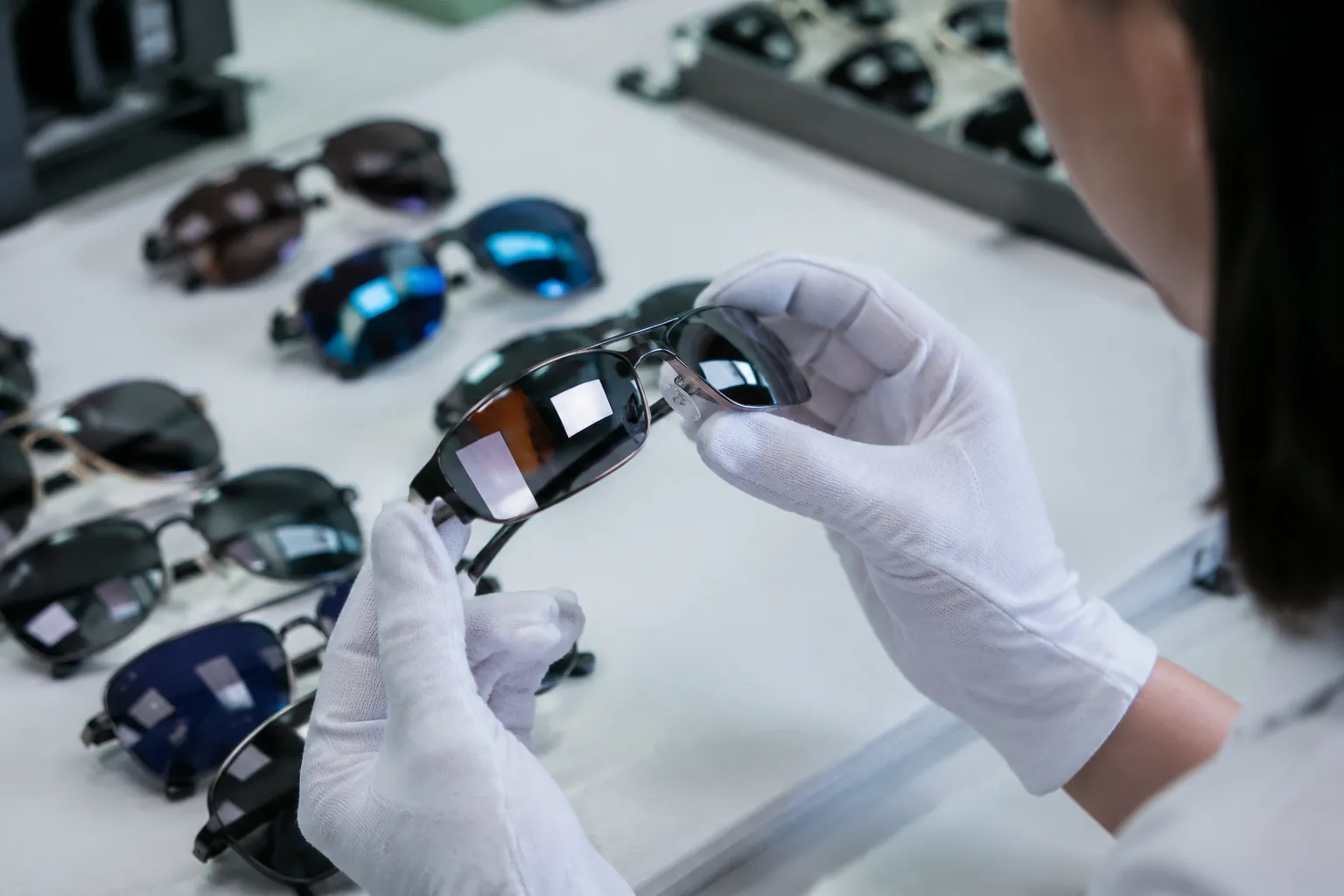
This guide is for brands, importers, distributors and retail buyers ordering polarized sunglasses from an OEM factory. It turns a loose claim such as "polarized UV400" into a testable QC plan: polarization efficiency, lens axis, visible light transmission, UV protection, haze, stress marks, coating defects, decoration durability and shipment sampling. Use it to approve samples with clear acceptance criteria, reduce lens-related disputes and give your factory a standard that can be checked before goods leave China.
The QC Risk Buyers Miss When They Only Check Appearance
A polarized sunglass can look fine in supplier photos and still fail in use. Wearers may report cloudy vision, uneven darkness, weak glare reduction, phone screens blacking out at the wrong angle or rainbow patterns in the field of view. These are not vague complaints. They often trace back to measurable lens and assembly issues: polarization efficiency, polarization axis, visible light transmission, haze, stress, coating uniformity and left-right matching.
A black TAC polarized lens, a gray nylon polarized lens and a blue-mirror polarized lens may all pass a quick desk check. Put them on a polarized tester. Rotate them. Check VLT. Inspect under side light. Compare the left and right lenses against the approved sample. The differences become obvious.
A buyer specification should not stop at "polarized UV400." It should define lens material, color code, base curve, coating, VLT range or filter category, polarization efficiency, axis tolerance, cosmetic defect limits and test method. If the purchase order does not state the method and tolerance, the factory will use its internal standard. That may be acceptable for a low-cost fashion program. It may not support claims for driving, fishing, sport retail, marketplace listings or regulated markets.
For LumiShades projects in Wenzhou, polarized QC should be agreed at sample approval and checked during production and before shipment. One point matters most: some defects appear only after cutting, heating, bending, drilling, lens mounting or final cleaning. Approve loose lenses and finished sunglasses. Do not approve frame appearance alone.
Material Choice Changes the QC Plan
Polarized lens QC starts with material. TAC, PC, nylon and CR-39 behave differently during cutting, coating and assembly. Buyers often compare price and tint first. The inspection plan should also reflect each material's risk points.
| Lens Material | Typical Use | QC Risk | Buyer Control Point |
|---|---|---|---|
| TAC polarized | High-volume fashion, promotions, entry retail | Edge clouding, adhesive haze, film delamination if storage or lamination is poor | Check storage condition, edge haze after cutting, and left-right tint match |
| PC polarized | Sport, kids, impact-focused styles | Internal stress, coating marks, rainbow patterns under polarized light | Inspect stress after assembly and recheck coating adhesion |
| Nylon polarized | Premium sport, wrap frames, lightweight performance styles | Higher material cost, axis control on curved lenses, coating uniformity | Confirm base curve, axis tolerance and VLT by lens color and lot |
| CR-39 polarized | Optical-style sunglasses, thicker premium lenses | Heavier lens, chipping during edging, slower processing | Check edge quality, lens seating and applicable impact requirements for the selling market |
TAC is common in private-label polarized sunglasses because it is cost-efficient. It still needs controlled lamination, storage and edge inspection. PC offers better impact resistance than many conventional lens materials, but it can show internal stress if molding, cutting or mounting is poorly controlled. Nylon is often chosen for wrap and sport frames because it works well in curved lens designs, but buyers still need to verify axis, VLT and coating consistency. CR-39 can provide good optical clarity, yet the buyer must confirm whether it fits the product claim and market standard.
For a new OEM project, approve one loose lens pair and one assembled sunglasses sample for each lens color and coating. If the same frame uses smoke, brown, green, gradient and mirror options, do not assume one report covers all. Mirror coatings, gradient tints and flash colors can change VLT, coating risk, appearance and perceived haze.
Polarization Efficiency, VLT and UV Need Numbers
Polarization efficiency measures how well the lens reduces polarized reflected glare. It is not lens darkness. It is not UV protection. It is not color.
For general retail polarized sunglasses, many buyers specify a minimum polarization efficiency such as 95%. For fishing, driving and premium outdoor programs, buyers often set tighter internal targets, such as 98% or 99%, if the supplier can test and record the result. The target should match the product claim, price tier and test capability.
Visible light transmission, or VLT, also needs a written range. The lens filter category and allowed VLT must match the selling market and intended use. Very dark sunglass lenses may be unsuitable for driving under some standards or market rules. Left and right lenses should also be controlled for visible tint and transmission difference. Write the tolerance on the PO or in the approved sample file.
Use two levels of verification. First, run a production screen: rotate the lens over a polarized test card or LCD screen and confirm strong darkening at the extinction angle. This catches obvious non-polarized or wrongly oriented lenses. It is not a measurement record. Second, use instruments for transmission and polarization testing. For serious OEM orders, request recorded readings by lens color, production lot and inspection date.
- Polarization efficiency: specify the minimum value, such as 95%, 98% or 99%, according to the sales claim and inspection capability.
- Axis tolerance: define the allowed deviation from the approved master lens, commonly ±3° for tighter programs or ±5° for standard commercial programs.
- UV protection: require UV400 or the applicable standard result, supported by test data instead of only a sticker.
- VLT: define the target range or filter category for each lens color and coating.
- Left-right match: set an acceptable tint and VLT difference before production starts.
Lock the lens standard during sample approval, not after production starts. For LumiShades orders, confirm current sample and bulk lead times at quotation because timing depends on quantity, material, decoration, packaging and required testing. Late changes to VLT, coating, axis tolerance or compliance documents can create mixed lots, rework and shipment delays.
Axis Alignment: Small Rotation Errors Become Complaints
A polarized lens has an axis. In sunglasses, the blocking axis must be correctly oriented after the lens is cut and installed. If one lens is rotated differently from the other, the wearer may see uneven glare reduction, uncomfortable vision or an obvious left-right difference when looking at LCD screens, water, wet roads or reflective surfaces.
Axis errors can happen during polarized sheet cutting, lens blank layout, edging, drilling, manual insertion, heat adjustment or final assembly. Rimless and semi-rimless frames are sensitive because lens position depends on drilling accuracy and screw tension. Wrap frames add another problem: the base curve and wearing angle can make the axis look acceptable on a flat inspection surface but less consistent in the real wearing position.
For many OEM sunglasses, buyers define axis tolerance as ±3° to ±5° from the approved master. Fishing, driving and technical outdoor sunglasses should use the tighter side if the supplier can control it. Fashion programs may accept a wider commercial tolerance. But the tolerance still needs to be written. Undefined axis tolerance is a common cause of shipment-release disputes.
- Mark the approved polarization axis on the master lens or retain a signed golden sample.
- Check raw polarized sheets or lens blanks before cutting, especially for TAC material.
- Check left and right lenses after edging and before assembly.
- Check assembled eyewear on a polarized inspection device in wearing orientation.
- Pull samples again after heat adjustment, temple alignment, cleaning and packing.
Do not rely only on final inspection. By then, a rotated lens may already be locked inside the frame. Rework can scratch the coating, loosen the rim, deform acetate, damage screws or create stress around the groove. Catch axis errors before assembly. It is cheaper and cleaner.
Haze, Cloudiness, Coating and Decoration Defects
Haze is not tint darkness. A lens can be dark and still look milky. Customers may describe the view as foggy, dirty, oily or cheap. In polarized sunglasses, haze can come from the polarizing film, adhesive layer, injection or casting process, coating, poor cleaning, overheating during adjustment or chemical contamination from decoration and packing materials.
Make visual inspection structured. Check lenses against a white background, then a black background, then under strong side light. Inspect the center, edge, nasal area and top rim. Rotate the lens because some film and coating defects appear only at an angle. For higher-spec orders, use instrument haze testing and agree on a maximum haze value and test method with the factory.
Decoration can also change perceived quality. Common OEM decoration methods include pad printing, laser engraving, metal logo plates, hot stamping, silk-screen printing on cases, foil logos on pouches and custom hangtags. Pad printing on temples should be checked for position, color, rub resistance and ink overflow. Laser engraving should not create sharp burrs or discolor thin acetate. Metal plaques should sit level, hold firmly and show no glue bleed. For mirrored lenses, control cleaning materials and wiping pressure because mirror coatings show scratches and wipe marks quickly.
- Acceptable: removable dust, tiny edge marks hidden in the groove, and tint variation within the signed sample range.
- Borderline: slight milkiness visible only under side light, small coating dots outside the main field of vision, or faint edge clouding.
- Reject: haze in the viewing area, bubbles, delamination, adhesive streaks, wipe marks under coating, obvious left-right mismatch or mirror coating pinholes in the main field of view.
Ask the factory to retain one approved lens pair from the sample stage and one pair from mass production. If a retail complaint arrives later, you need a physical reference. Memory is not a QC tool.
Rainbow Stress Marks and Frame Fit Need Assembly Checks
Rainbow stress marks are colored patterns seen through a polarized filter or between crossed polarizers. They show stress patterns in the lens or frame material. Some stress near edges or molded areas can be normal. Strong rainbow concentration in the main viewing zone is a problem.
Stress marks often appear around drilled holes, sharp lens corners, tight rim grooves, screw areas and high-wrap frames. They can also appear when a worker forces a lens into a frame that is slightly undersized. A buyer may approve good loose lenses and then receive assembled sunglasses with stress patches near the bridge, upper rim or screw area.
The fix is not only "better QC." It starts with product engineering. Lens groove depth, frame shrinkage, bridge width, base curve, lens edging size and screw tension all affect stress. For injection frames, molding temperature, cooling time and material shrinkage matter. For acetate frames, CNC accuracy, groove consistency and heat adjustment temperature matter. If frame and lens production are handled by different suppliers, assign responsibility for fit and stress correction before bulk production.
Use a polarized stress viewer or two crossed polarized sheets for a quick check. Place the assembled sunglasses between them and rotate. Focus on strong rainbow concentration in the central viewing area, not only the edge. Many buyers accept mild stress at the far perimeter if it does not enter the field of view. Strong patterns through the center should trigger rejection, lens resizing, frame adjustment or engineering review.
Buyer rule: approve assembled samples, not only loose lenses. A polarized lens that passes before mounting can still fail after the frame squeezes it.
Inspection Plan by MOQ, Price Tier and Lead Time
Inspection depth should match order size, product claim and market risk. LumiShades supports small trial programs and larger OEM production, but exact MOQ, unit price and lead time must be confirmed by quotation. They depend on frame material, lens type, coating, decoration, packaging and compliance requirements. A small pilot order does not need the same sampling structure as a large retail rollout. Both still need written lens checks.
For small orders, inspect a high percentage because one defect can represent a large share of the shipment. For larger orders, use AQL-style sampling plus targeted lens testing by color, production line and lot. Do not only count scratches. Test the risk points: polarization effect, VLT, UV, axis, haze, stress, coating condition and packaging accuracy.
| Order Type | QC Focus | Sampling Logic | Buyer Action |
|---|---|---|---|
| Trial order or low MOQ per design | Lens defects, axis, logo position, packing | Inspect a high percentage or full lot for new styles | Use as pilot before larger PO |
| Small to mid-size replenishment | Polarization effect, VLT consistency, assembly stress | Sample each color and each production batch | Request QC photos and basic readings |
| Large retail or distributor order | Instrument readings, AQL visual inspection, carton marks | Use formal sampling plus lot traceability | Hold shipment until report is accepted |
| Multi-color or multi-carton program | Incoming lens control, in-process QC, final inspection | Test by lens color, batch, line and carton range | Set inspection date early and reserve rework time |
Build inspection time into the production schedule. If extra lens testing is requested one day before loading, cartons may need to be opened, goods re-sorted and export timing delayed. Better: agree on inspection checkpoints at sample approval, mid-production and pre-shipment.
Compliance and the QC Checklist to Put on the PO
Polarization quality is not the same as regulatory compliance. A lens can be polarized and still fail a sunglass standard if optical quality, transmittance, labeling, restricted substances or physical performance are wrong. State the selling market at quotation stage. Not after production.
For polarized sunglasses, buyers often request CE EN ISO 12312-1 for Europe, ANSI Z80.3 for the United States, AS/NZS 1067 for Australia and New Zealand, and REACH for restricted substances in the EU. FDA registration may be relevant to the US regulatory framework for eyewear suppliers, but it does not replace lens performance testing. ISO 9001 and BSCI relate to management systems and social compliance. They are not proof that a specific lens shipment meets a sunglass performance standard.
Your PO checklist should be short enough for the inspection table and specific enough to prevent arguments. Include lens material, color, base curve, coating, VLT category or range, polarization efficiency target, axis tolerance, UV requirement, cosmetic limits, decoration method, packaging standard and required compliance documents. If the order includes pad printing, laser logos, metal plates, custom pouches, microfiber cloths, retail boxes or barcode labels, state how each item will be inspected.
A practical release file should include approved golden sample photos, test readings, defect summary, carton quantity, packing list, label artwork and compliance files. Replacing a lens before assembly is usually easier than reworking finished sunglasses after packing. Rejecting goods after they reach your warehouse is the most expensive option.
Have a custom sunglasses project in mind?
Send us your styles, target market and quantities and we will return a detailed quote with MOQ, lead time and a sample plan.
Get a QuoteWhy source this from Wenzhou with LumiShades
Wenzhou in Zhejiang Province is widely regarded as China’s eyewear manufacturing capital, producing a large share of the world’s sunglasses. That concentration matters to buyers: a deep local supply chain for acetate sheet, hinges, lens blanks, plating and packaging means shorter component lead times, easier color and material matching, and a workforce with decades of eyewear-specific skill. LumiShades has manufactured in this ecosystem since 2009, and our vertical integration — in-house injection molding, acetate cutting, CNC milling, lens tinting, decoration and quality control — means no part of your order is quietly subcontracted to a workshop you cannot audit.
For international buyers, that vertical control translates into accountability. When a single factory owns every step, defects are traced and fixed at source rather than bounced between vendors, and your specifications survive intact from first sample to bulk. For procurement review, buyers can request process records, approved samples, quality checkpoints and project-specific compliance files before placing a bulk order. Required testing and documentation are confirmed against the destination market and product specification rather than assumed from a generic certificate list. Explore our manufacturing capabilities and quality control process to see how this works in practice.
Frequently asked questions
What polarization efficiency should I require for OEM sunglasses? Write a numeric minimum on the PO. For general retail polarized sunglasses, many buyers use 95% as a commercial minimum. For fishing, driving or premium outdoor programs, consider 98% to 99% if the factory can measure and record it consistently. Ask for readings by lens color, coating and production lot, not one value for the whole order.
Can I check polarization without lab equipment? Yes, but only as a screen. Rotate the lens over an LCD screen or polarized test card and look for strong darkening at the extinction angle. This can catch non-polarized lenses, weak polarization or obvious axis problems. For shipment release, request instrument readings for polarization efficiency, VLT and UV because visual checks do not create a reliable measurement record.
What axis tolerance is reasonable for polarized sunglasses? A common commercial tolerance is ±3° to ±5° from the approved master lens. Use ±3° for higher-spec sport, driving and fishing styles, especially for wrap, rimless or semi-rimless frames. Put the tolerance, test method and approved master sample reference in the PO so the factory and inspector use the same standard.
Why do rainbow marks appear only after the lenses are mounted? The frame may be squeezing the lens, or drilled holes, tight grooves, sharp corners and screw tension may be creating stress. Check finished sunglasses with crossed polarizers or a stress viewer around the bridge, screws, upper rim, lens corners and main viewing zone. If strong stress appears in the central view, request lens resizing, groove adjustment, frame correction or replacement before shipment.
Should I approve loose lenses or finished sunglasses? Approve both. Loose lenses confirm material, tint, VLT, UV protection, polarization efficiency and coating appearance before assembly. Finished sunglasses confirm axis, lens seating, stress marks, frame alignment and the actual wearer view. Keep signed golden samples for each lens color and coating.
Which compliance standards should I mention for polarized sunglasses? State the selling market first. Common buyer requirements include CE EN ISO 12312-1 for Europe, ANSI Z80.3 for the United States, AS/NZS 1067 for Australia and New Zealand, and REACH for EU restricted substances. FDA registration may be relevant in the US supply chain, but it does not replace product performance testing. ISO 9001 and BSCI can support supplier qualification, but they are not lens test reports.
How early should I set polarized lens QC requirements? Set them during quotation and sample approval. Confirm lens material, color, coating, VLT range, polarization efficiency, axis tolerance, UV requirement, cosmetic limits, packaging and required documents before bulk production starts. Late changes can require new lenses, new testing, repacking or shipment delay.
What should I ask the factory to send before shipment? Request a pre-shipment file with golden sample reference photos, polarization and VLT readings by lens color, UV result or applicable compliance report, visual defect summary, packing photos, carton marks, packing list and any required CE EN ISO 12312-1, ANSI Z80.3, AS/NZS 1067, REACH, FDA registration, ISO 9001 or BSCI documents relevant to your order.
Ready to start?
Explore our wayfarer sunglasses or request a quote — our sales team replies within 12 hours.
Request a Quote