
How to Approve Polarized Sunglass Lenses
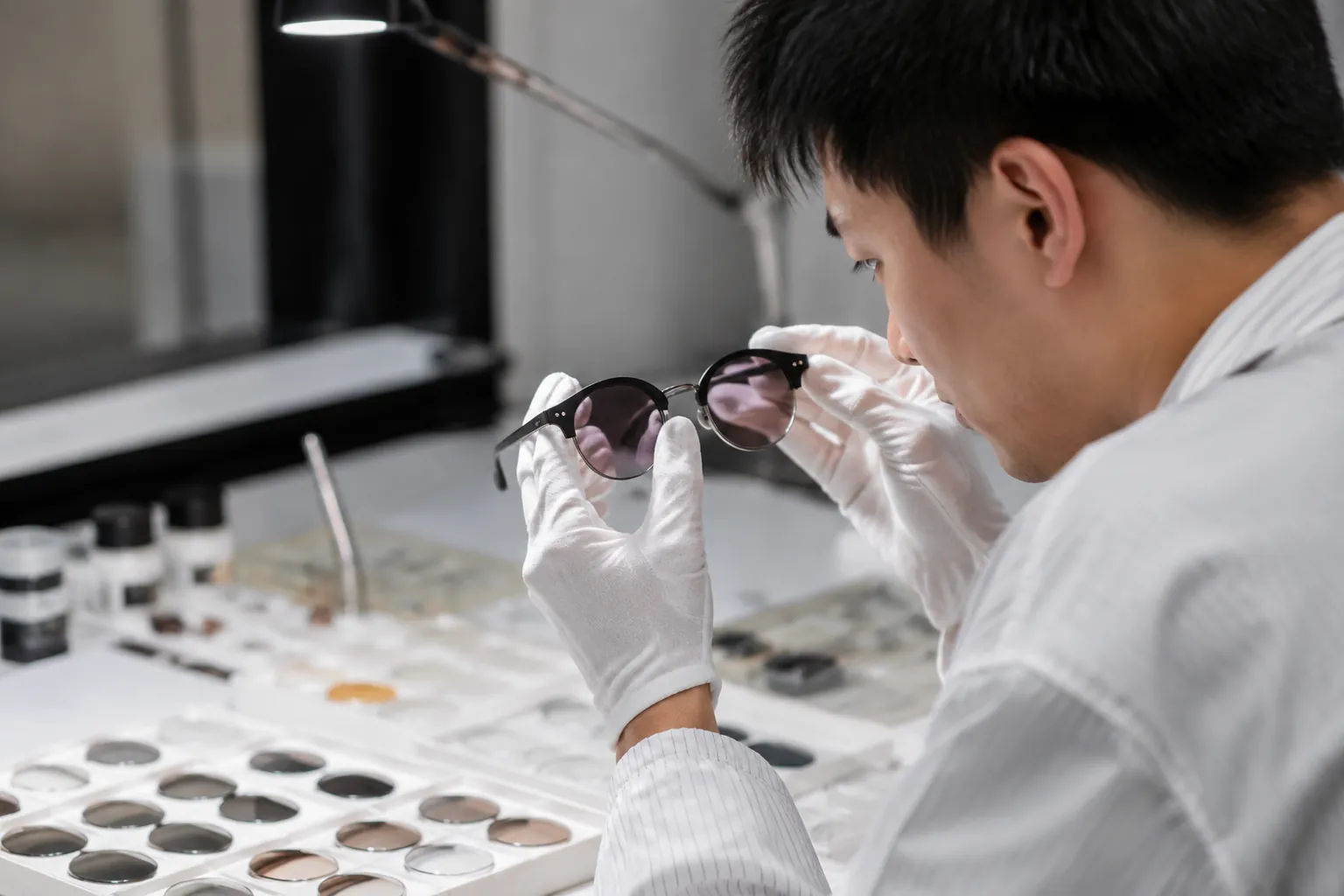
This guide is for brand owners, importers, distributors, and retail buyers sourcing polarized sunglasses in volume. It covers what to verify before approving samples for bulk production: polarization performance, TAC film stability, lamination quality, optical distortion, edge finishing, decoration, and batch consistency. Appearance is not enough. Many failures show up only after heat exposure, assembly stress, shipping, or daily wear. The goal is simple: define the lens construction, inspection method, and approval standard before bulk production starts.
Start with the real approval question
Many buyers say they want a polarized lens. That is too vague for production control. You are not approving color alone, or a sample that simply looks fine. You are approving a defined lens build with stated materials, thickness, curvature, tint, polarized film, decoration method, and inspection standard.
For many fashion and promotional sunglass programs, the common polarized option is TAC, a laminated lens structure built around a polarized film. TAC is widely used, but performance depends on the actual layer structure, bonding quality, and finishing control. A lens that looks acceptable in a small flat frame may behave very differently in a high-wrap or high-stress shape if lamination or edging is weak.
At sample stage, the written lens specification should state at minimum: lens type, nominal thickness or thickness range, base curve, tint reference, visible light transmission target where relevant, mirror or hard-coating requirement, logo method, and destination-market standard. Buyers should also define how left-right tint match, cosmetic acceptance, and optical quality will be judged against the approved sample.
If the order ships into the EU, US, or Australia/New Zealand, the approval route should align with the relevant requirements under EN ISO 12312-1, ANSI Z80.3, or AS/NZS 1067. Chemical compliance such as REACH applies to product materials in scope, not only the lens. Buyers should also make sure the supplier links the approved sample code to the exact construction used in bulk. Many disputes start when the sample and production lens are only "similar," not identical.
TAC lens structure: where failures begin
TAC lenses are laminated, which means multiple layers are bonded together with a polarized film inside the lens structure. The concept is simple. The failure modes are not. Two TAC lenses can look almost identical at first inspection and perform very differently after heat exposure, edging stress, or insertion into a tight frame groove.
In practical buying terms, four areas matter most: polarization function, optical clarity, lamination stability, and cosmetic consistency. If one is weak, the lens may pass a desk check and still fail in the market.
- Edge delamination: separation starts near the perimeter, drill point, or high-stress corner, often after heat, moisture, or mechanical stress.
- Adhesive haze: a milky or cloudy appearance develops inside the lens stack, usually easier to see against dark backgrounds or angled light.
- Warp or ripple: the lens causes visible "swim" when moved across straight lines, even if it looks acceptable in a static photo.
- Film inconsistency: left and right lenses do not behave the same way during a basic polarization check, or one lens shows weaker visual performance after handling or exposure.
Buyers do not need every factory process parameter. They do need to understand the weak points. The polarized film should sit flat and remain properly aligned. Bonding should be clean, with no visible bubbles, flow marks, or internal whitening. Lens cutting and edging should not add stress at the rim, especially on wrapped sport frames, oversized fashion styles, and shapes with sharp outer corners.
This is also where price pressure creates later claims. A lower quote may reflect a different lens build, a different film source, or looser process control. Lock the construction before you discuss savings.
A sample test sequence buyers can repeat
Do not approve polarized samples at a glance. Use the same short sequence every time and record the result. Discipline catches visible defects before lab testing or bulk production begins.
- Confirm left-right match. Compare tint, mirror effect, lens appearance, thickness appearance, and logo position. Check on both light and dark backgrounds.
- Verify polarization. View each lens against an LCD screen and rotate it. The change in darkness should be clear, and left-right performance should appear consistent under the same check.
- Check distortion. Hold the frame in front of a grid, tiles, blinds, or other straight lines. Move it slowly side to side and up and down. Watch for wave, bend, or swim.
- Inspect the edge. Look for lifting, whitening, cracks, exposed lamination lines, chips, or stress marks where the lens meets the groove.
- Review stability evidence. Ask for internal heat, humidity, or other environmental test results for the same construction, not a generic report for a different lens build.
- Confirm paperwork. Check which compliance and performance documents apply to your destination market and to your exact sample configuration.
For internal buyer QC, define simple pass-fail language. For example: no obvious left-right tint mismatch under neutral lighting; no visible edge lift under bright inspection light; no noticeable visual swim in a normal handheld straight-line test; no bubbles, haze, or internal marks during standard cosmetic inspection. If a sample fails one of these checks, stop. Ask what changed in the construction. Do not accept "normal for polarized" without evidence. Obvious wave, uneven appearance, or edge separation should trigger further review before approval.
What the factory should prove
Serious buyers need more than a verbal claim that the lens is polarized. Ask for records linked to the approved construction and SKU. At minimum, the supplier should be able to identify the lens material, nominal construction, tint code, film type where disclosed, decoration method, and the internal QC checkpoints used before and after assembly.
| Checkpoint | What to ask for | Typical control detail | Why it matters |
|---|---|---|---|
| Polarization confirmation | Sample check result or internal QC record | Left-right comparison using the supplier's standard polarized check method, tied to the sample or batch | Confirms both lenses function and match as a pair |
| Optical quality | Distortion inspection method and reject standard | Pre-assembly and post-assembly inspection against a straight-line or grid target | Poor optics create user complaints quickly |
| Lamination stability | Environmental test result for the approved build | Report tied to the same lens construction, tint, and frame application where possible | Helps identify haze, bubbles, or delamination risk before bulk |
| Decoration control | Logo method approval and placement reference | Laser, pad print, or metal logo position confirmed from artwork and sample | Decoration affects cosmetics, consistency, and reject risk |
| Compliance file | Applicable reports for target market | EN ISO 12312-1, ANSI Z80.3, or AS/NZS 1067 where required, plus REACH if applicable | Supports market access and due diligence |
If the product enters the US, some buyers also ask about FDA registration during supplier screening. That may help as background due diligence, but it does not replace lens performance testing. A registered facility or listing does not prove optical quality, polarization performance, or lamination stability. Buyers may also request broader supplier-management evidence such as ISO 9001 or BSCI, but those do not replace product-specific approval either.
Distortion risk: the defect buyers catch too late
Distortion is one of the least-checked defects in sunglass sample approval. Buyers often focus on color, mirror finish, and brand decoration. End users focus on what they see through the lens. If the optics feel wrong after a short wear test, complaints follow fast.
In TAC polarized lenses, distortion can come from uneven lamination, stress introduced during cutting or edging, poor curve control, overheating during shaping, or a mismatch between lens shape and frame groove. A sample may look acceptable in a still image and still feel wrong when the wearer turns their head or shifts focus.
That is why process control matters. If lens processing, edging, fitting, and final QC are handled by different parties, it becomes harder to trace where stress entered the lens. In a tighter process, the supplier can inspect the lens before assembly and again after fitting, because insertion stress alone can create distortion or whitening at the edge.
| Frame style | Typical lens stress level | Main distortion risk | Buyer approval focus |
|---|---|---|---|
| Small flat fashion frame | Low to moderate | Cosmetic mismatch more common than severe warp | Check tint match, logo placement, and basic optical clarity |
| Oversized fashion frame | Moderate | Surface ripple and edge stress near wide corners | Inspect the perimeter carefully and repeat the straight-line movement test |
| Wrapped sport shape | High | Assembly stress, curve mismatch, optical swim | Require stricter pre- and post-assembly distortion checks |
| Drilled or semi-rimless style | High | Localized cracking or delamination near stress points | Review edge integrity and fitting method in detail |
The rule is simple: if the sample shows noticeable swim during handheld inspection, do not assume bulk production will fix it. Production usually repeats the approved standard. It does not rescue a weak sample.
How price, lead time, and order terms change lens decisions
Polarized lens sourcing is not only technical. It is commercial too. Target price, lead time, decoration complexity, packaging requirements, and order size can all affect the final lens specification. Buyers need to see those tradeoffs clearly.
Shorter timelines leave less room for re-sampling, process adjustment, or added verification. Lower target prices increase pressure to substitute materials, simplify decoration, or relax cosmetic screening. Those changes are not always wrong. Silent changes are the problem.
The main risk is not a low price by itself. It is an undisclosed shift to a different lens build, a different film source, a lower coating standard, or less inspection time than the approved sample implied. Buyers should state clearly which points are fixed and not open to substitution:
- Polarization requirement: the approved lens must maintain the same left-right function as the sample.
- Optical standard: no visible distortion beyond the agreed inspection standard.
- Tint and finish: color, mirror, gradient, and visible light transmission target must remain aligned with the approved sample and market requirement.
- Lamination quality: no bubbles, haze, lift, or whitening at the edge within the agreed inspection standard.
- Decoration method: laser engraving, pad print, or metal logo must match the approved method, position, and appearance.
Negotiate price after those points are fixed and documented. Otherwise, you may think you are discussing margin while you are actually changing lens stability and claim risk.
Buyer checklist before bulk starts
Most approval mistakes happen because the buyer approves a visual impression instead of a documented standard. Use a sign-off sheet and tie it directly to the purchase order, sample code, and shipment file.
- Lens type confirmed: TAC polarized construction, nominal build, and base curve defined.
- Tint approved: color reference, gradient direction if any, mirror finish, and left-right match accepted.
- Polarization checked: both lenses verified together under the same inspection method.
- Distortion checked: no visible swim or ripple in the agreed viewing and movement test.
- Edge quality approved: no cracks, bubbles, lift, exposed layers, or whitening at the rim within the agreed inspection standard.
- Decoration approved: laser logo, pad print, or metal emblem location and size confirmed.
- Compliance route confirmed: destination-market standard and document scope matched.
- Golden sample retained: one signed sample held by buyer and one by factory.
Also confirm the production details that often cause disputes later: approved packaging method, frame-lens combination, retailer-specific inspection standard, and whether the bulk order will use the exact same lens construction as the signed sample. If your team works to AQL or customer-specific QC rules, send them before production starts, not after goods are packed.
If you are sourcing multiple SKUs, do not assume one approved lens covers all shapes. The same nominal lens construction can behave differently in a small flat frame, a large wrapped frame, or a drilled style. Approve by construction and application, not by assumption. That is the point of polarized lens approval: catch lamination weakness, optical defects, and specification drift before they turn into a claim after shipment.
Have a custom sunglasses project in mind?
Send us your styles, target market and quantities and we will return a detailed quote with MOQ, lead time and a sample plan.
Get a QuoteWhy source this from Wenzhou with LumiShades
Wenzhou in Zhejiang Province is widely regarded as China’s eyewear manufacturing capital, producing a large share of the world’s sunglasses. That concentration matters to buyers: a deep local supply chain for acetate sheet, hinges, lens blanks, plating and packaging means shorter component lead times, easier color and material matching, and a workforce with decades of eyewear-specific skill. LumiShades has manufactured in this ecosystem since 2009, and our vertical integration — in-house injection molding, acetate cutting, CNC milling, lens tinting, decoration and quality control — means no part of your order is quietly subcontracted to a workshop you cannot audit.
For international buyers, that vertical control translates into accountability. When a single factory owns every step, defects are traced and fixed at source rather than bounced between vendors, and your specifications survive intact from first sample to bulk. We back this with 15+ years of experience, shipments to 60+ countries, more than 5 million pairs produced per year and a 98.5% on-time delivery rate. Our certifications — CE EN ISO 12312-1, FDA registration, ANSI Z80.3, AS/NZS 1067, REACH, ISO 9001 and BSCI audit — mean the compliance documentation your market requires already exists. Explore our manufacturing capabilities and quality control process to see how this works in practice.
Frequently asked questions
Is TAC polarized lens construction good enough for retail programs? Yes. In many retail, fashion, and promotional sunglass programs, TAC polarized lenses are a practical option. But the decision should not rest on the term "TAC" alone. Ask the supplier to confirm the exact lens construction used in your sample, perform a left-right polarization check, inspect for distortion, and provide evidence of lamination stability for that same build. Approve only after those points are documented against the exact sample or SKU.
What is the fastest way to spot a bad polarized sample? Use three checks in the same order every time. First, compare the left and right lenses against an LCD screen and rotate them to see whether both darken consistently. Second, inspect the lenses against straight lines or a grid while moving the frame slowly to detect swim or ripple. Third, examine the lens edge under bright light for lift, whitening, bubbles, chips, or visible lamination lines. If any of those checks raise concern, pause approval and ask whether the lens build, edging method, or frame fit differs from the intended bulk version.
Should I ask for compliance documents before paying for bulk? Yes. Before releasing bulk production or final payment, confirm which documents are required for your market and whether they apply to the approved product configuration. For sunglasses, buyers commonly review <strong>EN ISO 12312-1</strong>, <strong>ANSI Z80.3</strong>, or <strong>AS/NZS 1067</strong> depending on destination. If chemical compliance is relevant, ask for <strong>REACH</strong> documentation in scope. Keep all records linked to the exact SKU, lens construction, and shipment file instead of accepting a generic report for a similar item.
Can low-MOQ orders still have reliable polarized lenses? Yes, but low quantity should not mean loose standards. Smaller orders can be more vulnerable to substitutions if the specification is vague. To reduce risk, issue a written lens specification, approve a signed golden sample, define the decoration method, and ask the supplier to confirm that bulk will use the same construction. If the supplier holds <strong>ISO 9001</strong> or participates in <strong>BSCI</strong>, that may support supplier assessment, but you still need product-specific sample approval and market-relevant compliance documents.
Why do some lenses pass sample review but fail after shipping? Because shipping exposes weaknesses that a quick visual check can miss. Heat, pressure, vibration, and frame stress may reveal poor bonding, edge stress, haze, or delamination that was not obvious during first review. To reduce that risk, ask for environmental test records tied to the same lens build, inspect the edge carefully, verify distortion before and after frame fitting where possible, and keep a signed golden sample as the reference if a post-shipment claim occurs.
Ready to start?
Explore our shield & oversized sunglasses or request a quote — our sales team replies within 12 hours.
Request a Quote