
Plano Demo vs Sun Lenses: What Buyers Must Specify
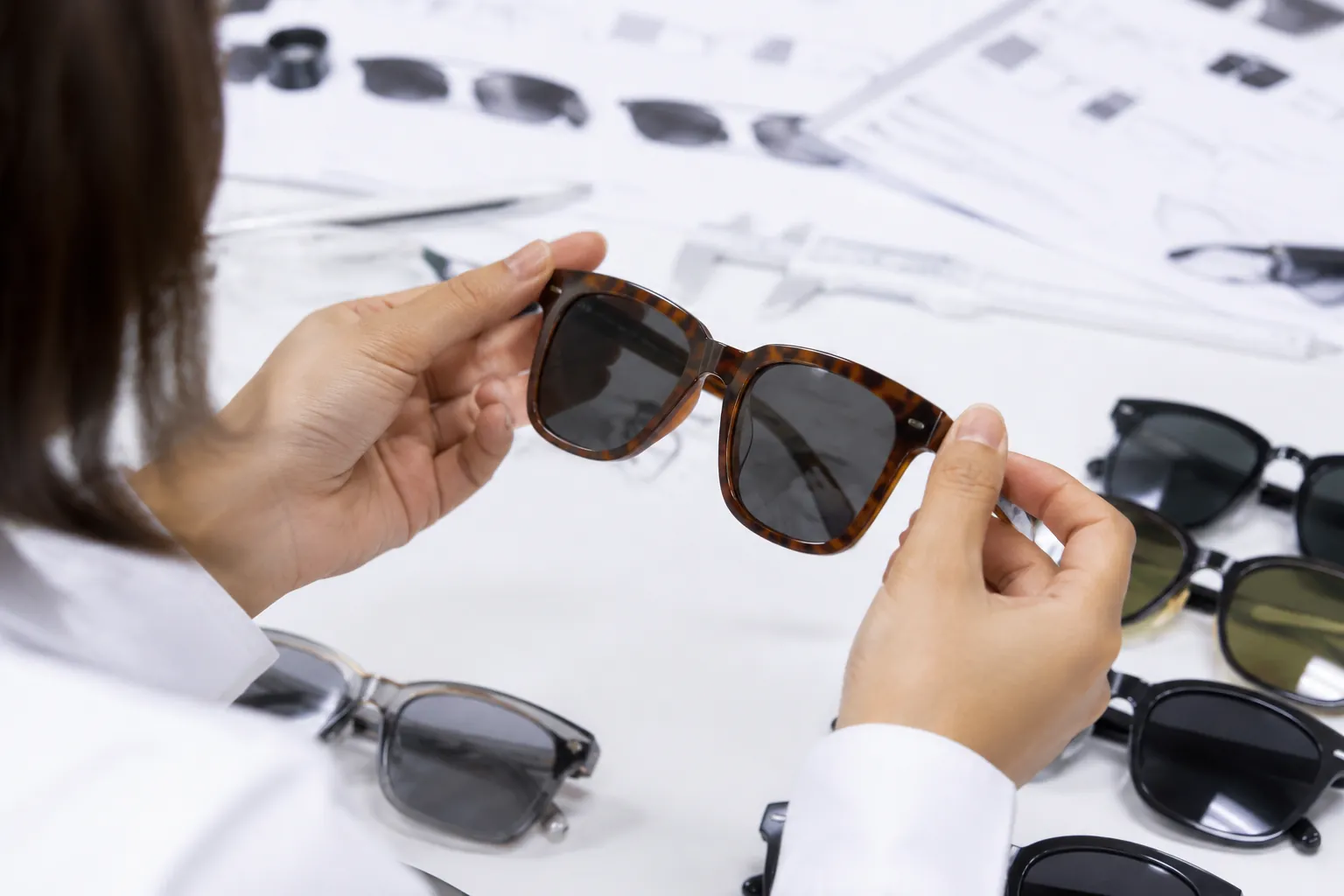
For buyers sourcing custom sunglasses at volume, lens type is not a minor sample detail. It affects frame fit, assembly method, decoration timing, QC checkpoints, and which compliance documents can support the final SKU. Many delays start the same way: a team approves a prototype with plano demo lenses, then switches to finished sun lenses after artwork, costing, or packaging is already approved. That is rarely a small change. It can trigger new fit checks, revised handling instructions, fresh visual approval, and a review of whether testing and paperwork still match the goods. If the product will be sold at retail as sunglasses, the factory needs to know at RFQ stage. Not later.
Start with the product decision, not the sample photo
Buyers often approve an attractive first sample with clear plano demo lenses because it is quick and cheap. Later, after colors and logos are confirmed, they ask the factory to change the product to polarized, mirrored, gradient, or solid-tint finished sun lenses for bulk. On paper, that sounds minor. On the factory floor, it is not.
A demo lens is mainly a fitting, display, or development part. It helps teams review eye shape, front curve, and styling. A finished sun lens is the real consumer component. It has a defined material, thickness, light transmission, surface treatment, and compliance role. Those differences affect lens seating, insertion force, scratch sensitivity, final inspection, and what technical file can support the finished SKU.
So ask the commercial question first: Will this SKU be sold as sunglasses, or is this sample only for frame development? If it is a retail sunglass, specify finished sun lenses from the start unless there is a clearly stated temporary reason to use demos for concept review only.
Best practice is to split the stages when both are needed:
- Stage 1: demo-lens prototype for shape, fit, and styling review only
- Stage 2: production-intent sample with final sun lens material, tint, and decoration for commercial approval and compliance alignment
If that distinction is missing from the tech pack or sample PO, the supplier has to guess. Guesses become rework.
What changes on the factory floor
Plano demo lenses and finished sun lenses may look interchangeable in a sample room. They are not always interchangeable in assembly.
- Groove fit and insertion force: Lens groove width, bevel profile, front curve match, and insertion method should be checked against the real production lens. A demo lens may drop in easily, while a thicker polycarbonate lens or a laminated TAC polarized lens may need different pressure or handling.
- Frame material response: Injection-molded plastics, TR90, acetate, and metal frames do not mount lenses the same way. Acetate fronts are often warmed during fitting, but heat and pressure must be controlled carefully when coated or mirrored lenses are involved.
- Assembly sequence: Demo lenses are usually more forgiving. Finished sun lenses, especially dark, mirrored, or coated lenses, may require gloves, protective interleaving, cleaner work surfaces, and revised wiping and packing steps.
- QC checkpoints: Demo-lens inspection usually focuses on fit, shape, and appearance. Finished sun lenses add checks for left-right tint consistency, coating condition, lens matching against the BOM, and confirmation that the physical product matches the approved sample and document set.
That is why lens type belongs in the RFQ and tech pack, not in a late email after sample approval. Early clarity gives the factory a better sample plan, SOP, and bulk route.
Head-to-head: plano demo lenses vs finished sun lenses
| Point | Plano demo lens | Finished sun lens |
|---|---|---|
| Main purpose | Frame fitting, showroom display, design review | Retail-ready sunglass component for final sale |
| Typical construction | Usually a simple placeholder lens for sample or display use | Specified lens material and finish, such as tinted, polarized, mirrored, or coated |
| Optical/compliance role | Usually not the final tested retail lens | Must match declared performance and target-market requirements |
| Assembly risk | Lower handling risk during development | Higher sensitivity to edge stress, coating abrasion, and handling marks |
| Appearance review value | Useful for shape review, but not a reliable predictor of final shelf appearance | Shows actual tint, color cast, reflectivity, and visual weight |
| Impact on decoration decisions | Can make logos and trims appear lighter or less prominent than they will in final production | Gives a more accurate basis for judging logo contrast, trim balance, and frame color |
| Bulk risk if changed late | High if a demo-approved sample becomes a sunglass in production | Lower because SOP and QC are built around the final product from the start |
Demo lenses are not the problem. Misusing them is. They are helpful in early development, but a demo-lens sample is not a final retail approval. A clear placeholder can change how buyers judge eye size, front weight, frame openness, and logo proportion.
Lock the lens spec before sampling
A good lens brief prevents most avoidable delays. It does not need to be long. It does need to be precise.
- Lens status: demo only, finished sun lens, or both with separate approval stages.
- Material: polycarbonate, TAC, nylon, CR-39, or another agreed substrate. Material affects fit, handling, cost, and performance.
- Base curve and thickness target: these directly affect frame fit and insertion behavior.
- Tint and coating: for example smoke, brown, green, gradient, mirrored, anti-scratch, hydrophobic, or polarized. Keep a retained master sample or approved color reference for repeat orders.
- Target market and compliance basis: define the intended market before requesting final documents. Depending on the market and product, buyers may need alignment with standards or documentation such as CE under EN ISO 12312-1, ANSI Z80.3, or AS/NZS 1067, plus material-control requirements such as REACH where applicable.
- Lens marking and packaging: retailer labeling, protective film, barcode rules, polybag instructions, pouch, or case requirements should be agreed early.
- Cosmetic tolerance: state the acceptance rules for scratches, pits, edge chips, coating defects, color difference, and left-right mismatch. If the supplier uses AQL, confirm the visual standard, lighting, and viewing method.
If the brief is vague, sampling may still move fast. Approval will not. If the first sample uses demo lenses and the second shifts to mirrored or polarized finished lenses, the project now has two approval paths instead of one.
Lens choice also changes decoration and appearance
Decoration issues often show up after the lens switch. A temple logo may seem unrelated to the lens, but the lens affects both handling risk and how the finished product reads at retail.
Pad printing, hot stamping, foil details, and fitted metal logo plates are usually applied to frame parts before final packing. The problem starts after finished lenses are mounted. Dark tints, flash mirrors, and high-gloss coatings show dust, wipe marks, and edge contact far more clearly than clear demo lenses. If handling is not adjusted, a sample that looked clean with demos may not look clean once the final sunglass lens is installed.
Typical risk points include:
- operator contact at the lens edge during insertion
- micro-abrasion during final wipe
- temple tips rubbing the lens in the folded packing position
- dust or fibers trapped inside polybags on mirrored surfaces
The visual balance can shift too. A gold logo plate on a black frame may feel balanced with a clear demo lens, then look heavy once paired with a dark category lens. White print that looked subtle on a clear or lightly tinted sample may become too strong against the final lens appearance. Approve decoration on a production-intent sample with the real lens look. Anything less is guesswork.
Compliance and testing: do not assume coverage
If the product is sold as sunglasses, the final lens configuration matters for both testing and document matching. Buyers sometimes ask for paperwork based only on the frame model. That is not enough. The frame is only one part of the finished retail product. Lens material, tint, transmission category, coatings, and the assembled product definition all matter.
A sample fitted with plano demo lenses is not evidence that the final sunglass version meets the relevant market requirements. If the declared product changes from a clear placeholder lens to a dark-tint retail lens, or from a non-polarized lens to a TAC polarized lens, the applicable test report or technical file may need review to confirm that it still matches the final SKU.
For sourcing control, make sure the same product description appears across the approval sample, BOM, packaging copy, e-commerce listing, and compliance file. Depending on the market, the final sunglass may need to align with standards or documentation such as EN ISO 12312-1 for CE-related market access, ANSI Z80.3 for the US market, or AS/NZS 1067 for Australia and New Zealand. Material and supply-chain requirements may also involve REACH, while supplier-system claims should be limited to real certifications such as ISO 9001 or social-audit programs such as BSCI when genuinely held. If a supplier mentions FDA registration, verify what is actually registered and whether it is relevant to the product category being purchased.
The safe workflow is simple:
- freeze the final lens spec before requesting final compliance paperwork
- confirm that the BOM, signed sample, and document set describe the same lens material and finish
- if the lens changes after testing or document issue, ask the supplier or testing partner whether the existing file still matches the goods
Do not assume that a passed frame sample automatically covers the final sunglass version. It does not.
Cost and lead time: the cheap sample can cost more later
Lens choice changes quoting logic more than many buyers expect. A demo-lens sample may look cheaper at first. That saving can disappear quickly if the project later needs a second approval cycle or if the factory must adjust assembly controls for a different lens spec.
| Order stage | Demo lens first, sun lens later | Finished sun lens specified upfront |
|---|---|---|
| 50-pair trial | Useful for early concept review, but a second production-intent sample may still be required | Better for realistic sell-in review and early alignment of QC expectations |
| 300 pairs | Late lens changes can affect labor, inspection, and packaging methods | Cleaner costing and easier planning of trims and packing |
| 1000 pairs | Higher risk of SOP revisions, fit issues, and timeline drift | More stable line setup and bulk scheduling |
| 5000+ pairs | Even small specification changes can create significant waste, re-approval work, and document mismatch risk | Best route for process control and predictable output |
The practical takeaway is simple: the cheapest sample route is not always the lowest-cost route. If the final product is a sunglass, quote it, approve it, and plan it as a sunglass.
PO and tech pack checklist
Use this checklist before releasing sampling or bulk production:
- State whether the sample is for frame concept review only or for final retail approval.
- List final lens material, tint, coating, base curve, and thickness target.
- Confirm whether the approved sample must match production exactly.
- Define target markets and the required document set for the final SKU.
- Approve decoration only on a sample fitted with the real final lens appearance.
- Set cosmetic rules for scratches, pits, chips, coating defects, and left-right tint variation.
- Ask the factory to record the assembly order if the lens has mirror, flash, or other delicate coatings.
- Before bulk starts, verify that the signed sample, BOM, packaging notes, and compliance file all describe the same lens.
This is not admin for its own sake. It is how buyers avoid the common mismatch where the approved sample, factory SOP, and final paperwork each describe a slightly different product. That is where delays, claims, and retailer disputes start.
Have a custom sunglasses project in mind?
Send us your styles, target market and quantities and we will return a detailed quote with MOQ, lead time and a sample plan.
Get a QuoteWhy source this from Wenzhou with LumiShades
Wenzhou in Zhejiang Province is widely regarded as China’s eyewear manufacturing capital, producing a large share of the world’s sunglasses. That concentration matters to buyers: a deep local supply chain for acetate sheet, hinges, lens blanks, plating and packaging means shorter component lead times, easier color and material matching, and a workforce with decades of eyewear-specific skill. LumiShades has manufactured in this ecosystem since 2009, and our vertical integration — in-house injection molding, acetate cutting, CNC milling, lens tinting, decoration and quality control — means no part of your order is quietly subcontracted to a workshop you cannot audit.
For international buyers, that vertical control translates into accountability. When a single factory owns every step, defects are traced and fixed at source rather than bounced between vendors, and your specifications survive intact from first sample to bulk. We back this with 15+ years of experience, shipments to 60+ countries, more than 5 million pairs produced per year and a 98.5% on-time delivery rate. Our certifications — CE EN ISO 12312-1, FDA registration, ANSI Z80.3, AS/NZS 1067, REACH, ISO 9001 and BSCI audit — mean the compliance documentation your market requires already exists. Explore our manufacturing capabilities and quality control process to see how this works in practice.
Frequently asked questions
Can I use plano demo lenses for the first sample to save time? Yes, if the first sample is only for frame shape, size, and styling review. Mark it clearly as a development sample with demo lenses, and do not treat it as final retail approval. Before bulk production, request at least one production-intent sample built with the actual finished sun lens, final decoration, and intended packaging notes so your signed approval matches what will ship.
Do finished sun lenses always increase sample lead time? No. Lead time depends more on material availability, tint matching, coating complexity, and how complete the brief is. Standard finished lenses can often be sampled without major delay if the supplier has stock and the spec is clear. To reduce risk, send the lens material, color reference, polarization requirement, coating requirement, and target market at RFQ stage instead of adding them later.
Why did my logo and frame color look different after switching from demo to dark lenses? The lens changes the visual weight of the whole front. Clear demo lenses make a frame look lighter and more open, while dark or mirrored lenses make the front look denser and can increase contrast with logos, trims, and frame color. The fix is simple: approve logos, metal trims, and color balance only on a production-intent sample fitted with the final lens appearance, not on a demo-lens prototype.
Is a passed frame sample with demo lenses enough for final sunglass compliance? No. A frame sample with demo lenses does not confirm that the final sunglass SKU matches the applicable standard or technical file. For the final retail product, the actual lens material, tint, transmission, coatings, and assembled configuration must match the documentation. Ask the supplier to provide the exact standard or report basis relevant to your market, such as EN ISO 12312-1, ANSI Z80.3, or AS/NZS 1067 where applicable, and check that the product description on the documents matches the approved production sample.
What should I put on the PO to prevent lens-related disputes? Include the lens status, material, tint, coating, base curve, thickness target, polarization requirement if any, approved sample reference, packaging requirements, target market, required compliance documents, and cosmetic tolerances. Also state whether bulk must match the signed sample exactly and whether any lens change requires written re-approval. That gives you a clear paper trail if the supplier later proposes a substitute lens or changes the assembly route.
Ready to start?
Explore our sport wrap sunglasses or request a quote — our sales team replies within 12 hours.
Request a Quote