
Nylon vs TAC vs PC Polarized Lenses: Buyer Guide
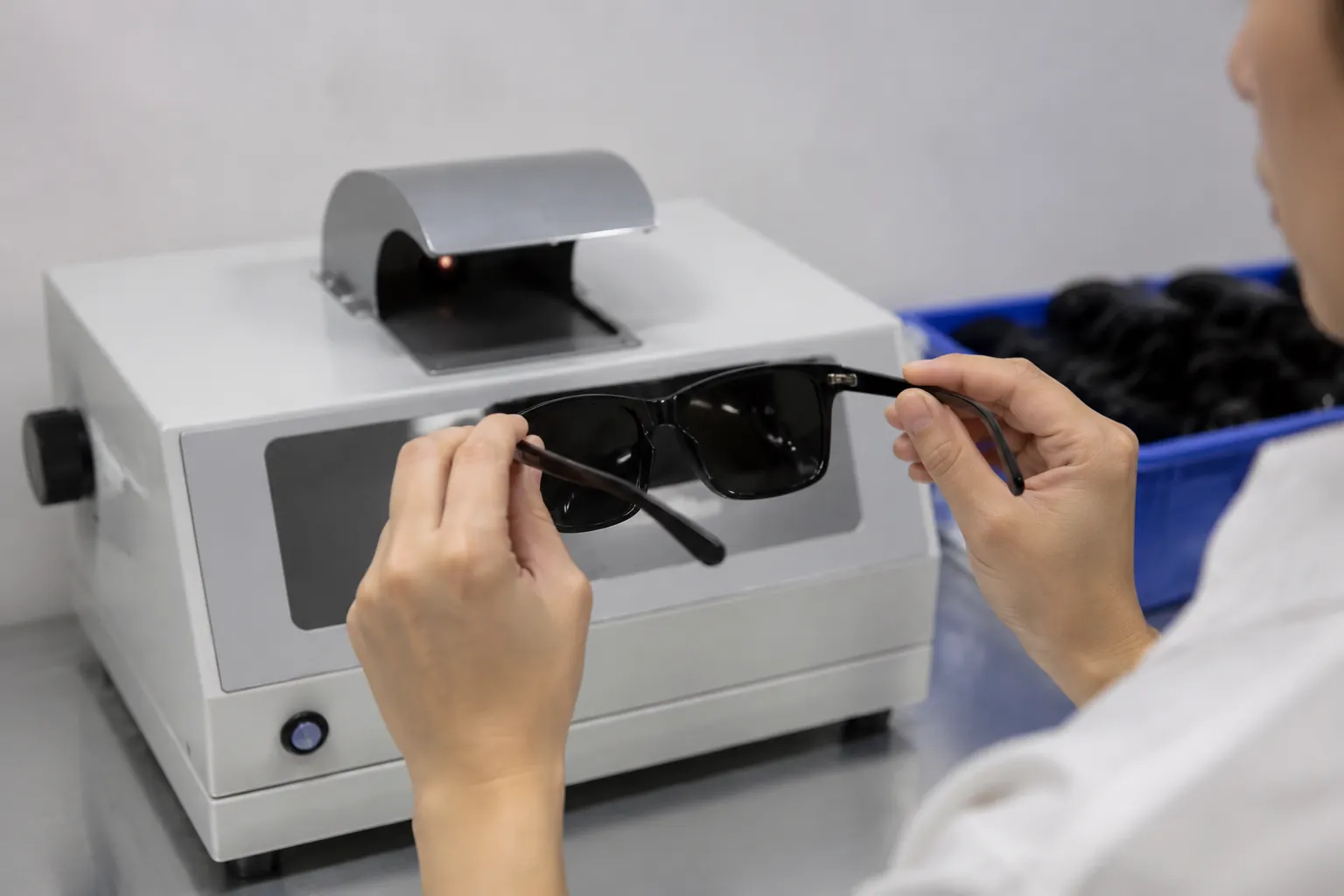
This guide is for brand owners, importers, distributors, and retail buyers sourcing polarized sunglasses at volume. The real question is not which lens sounds most premium. It is which lens build fits your target retail price, landed-cost ceiling, use conditions, compliance market, and reorder risk. When buyers compare nylon, TAC, and PC for a private-label sunglasses program, the right choice protects margin, cuts avoidable quality issues, and makes approvals clearer from sample stage to bulk production.
Start with the channel, not the material
Buyers often start by asking for the "best" polarized lens. That is too vague to be useful. Start with the sales channel instead: what retail price must the style hit, how will the product actually be used, and how much optical performance will the customer notice and pay for?
Nylon, TAC, and PC solve different sourcing problems. Nylon lenses are common in premium sport and outdoor programs because they suit wrapped frames and can deliver strong optics when the process is under control. TAC lenses are widely used in fashion, gift, resort, and promotional sunglasses because they are often the lowest-cost route to polarization on standard shapes. PC lenses are often chosen for kids, travel, and active-use programs because polycarbonate is known for high impact resistance.
This is why lens choice has to match the full build. A lightweight sport shield with nylon lenses can support a higher retail position because the optics, fit, and product story line up. A TAC fashion frame may be the right answer if the buyer needs a lower landed cost and expects casual wear, not technical performance. A PC lens may be the safer commercial choice for youth, rental, or rough-use channels where drops and handling damage are common.
In practice, the decision usually comes down to four checks: target ex-factory price, expected abuse level, acceptable visual distortion, and destination-market compliance. Keep it simple. Judge the material together with frame geometry, coating package, packaging, inspection standard, and the exact market claim the buyer plans to make.
Head-to-head: clarity, toughness, cost, and fit
| Lens type | Main construction | Optical clarity | Impact resistance | Typical channel fit | Relative cost |
|---|---|---|---|---|---|
| Nylon polarized | Injected nylon lens with polarized function and coating package | Generally high; often preferred for wrapped styles | Good | Sport, outdoor, premium retail, performance private label | Usually highest of the three |
| TAC polarized | Multi-layer laminated lens with TAC core and polarizing film | Good on standard sunglass curves | Moderate; laminated structure can be more sensitive at the edge | Fashion chains, gift, promo, entry to mid-price retail | Usually lowest |
| PC polarized | Polycarbonate lens with polarized construction and hard-coat package | Acceptable to good; depends heavily on tooling and coating control | High | Sports accessories, kids, travel, active outdoor | Often between TAC and nylon |
The table is the quick read. The real differences usually show up later in returns, remakes, and complaint handling. Nylon is often favored on stronger-wrap sport frames, where distortion control matters more. TAC is common on flatter or standard fashion curves, where the customer wants polarization without paying for a performance-lens build. PC is often selected when rough handling matters more than top-tier optics.
Each material also fails in different ways. TAC lenses can be more sensitive to edge stress because of their laminated structure, especially if groove design, edging, or heat exposure is poorly controlled. PC lenses resist impact well, but scratch resistance depends heavily on hard-coat quality. Nylon can support a more premium result, but buyers should expect tighter process control and a higher lens cost.
Read cost as total program cost, not just lens cost. A cheaper quoted lens can lose its advantage fast if it drives more defects, harder assembly, or more replacement claims. Serious buyers compare the quoted lens price with expected yield, frame compatibility, and the process control needed to hold the approved standard.
What changes on the factory floor
These three materials do not move through production the same way. That affects QC checkpoints, scrap risk, and approval discipline.
- Nylon lenses usually require close control over molding, tint consistency, and left-right curve matching. On wrapped sport programs, buyers should ask how the factory checks paired-lens symmetry, edge finish, and coating adhesion after assembly. On shield or high-base designs, even small left-right variation can be obvious.
- TAC lenses are laminated structures, so the control points go beyond scratch performance. Buyers should also review edge stress, bubble risk, and possible delamination if cutting, edging, storage, or transport are poorly managed. TAC rewards accurate groove design and strict heat control.
- PC lenses are mechanically tough, but they show process variation quickly if mold polishing, injection settings, or hard-coat application drift. A PC lens can survive drops and still disappoint the customer if surface durability is weak in daily wear.
On assembly, groove tolerance matters more than many buyers think. Too tight, and TAC edge stress can rise, bringing whitening, chipping, or later cracking. Too loose, and the lens may rattle or seat poorly. Factories should be checking insertion consistency, lens seating, and perimeter appearance during assembly and final inspection.
Decoration timing matters too. Pad printing, laser engraving, foil application, and metal logo fitting are safer after lens-frame matching is confirmed. If not, the factory may waste branded parts on units that later fail fit, appearance, or lens inspection. That cost adds up.
Factories that handle tinting, decoration, and final QC in-house may control these handoffs better because lens shade, polarization orientation, and logo alignment can be checked before final packing. That matters even more when an order includes multiple SKUs, mirrored finishes, or custom packaging that makes rework expensive after assembly.
How buyers should read the cost ladder
Most buyers do not need a generic price chart. Pricing shifts with frame material, hinge spec, lens coating package, packaging, order size, and inspection requirements. What matters is the structure of the cost ladder.
TAC polarized is often the entry point for the lowest ex-factory quote. PC polarized often sits above TAC because the lens and coating package are usually specified for tougher use. Nylon polarized usually sits highest because the material and process demands are higher. Even when the per-pair gap looks small on paper, the lens difference can still matter because duty, freight, and channel margin multiply it through the supply chain.
Volume changes the picture. On small trial orders, setup cost, shade confirmation, and decoration waste have a bigger effect on the per-pair result. On larger repeat orders, buyers can usually hold tighter standards more efficiently because component planning, tint batching, and inspection are more stable.
- Small trial order: useful for market testing or account sampling, but per-pair cost is usually highest because setup and approval cost are spread across fewer units.
- Commercial starter order: often a more practical point for custom packaging, repeatable lens shades, and better logo yield.
- Repeat production order: usually the stage where approved standards, carton systems, and QC routines are easier to maintain.
- Recurring volume program: gives the strongest leverage for stable component planning, documented specifications, and lower quote volatility.
Buyers should be careful with quotes that treat "polarized" as a full specification. It is not. Lens material, tint, mirror treatment, hard coat, frame curve, packaging, and inspection standard all affect cost and risk. Cheap lens specs are easy to quote. Consistent lens specs are harder to deliver and usually worth more over the life of a program.
Lead times, approvals, and where delays start
Lens material affects lead time less through raw material alone and more through approval discipline, coating stability, and rework risk. Sample timing and bulk timing vary by factory capacity, component readiness, and packaging complexity, so buyers should confirm the actual production calendar for the specific project instead of relying on a generic promise.
Schedules usually slip for ordinary reasons. Not dramatic ones. Most delays start with preventable approval gaps.
- Polarization film and tint approval: if gray, green, brown, smoke, mirror, or gradient shade is still moving after sampling, lens matching for bulk becomes harder to lock.
- Logo placement: temple print position, lens etching, or metal logo fitting require approved artwork and tolerance before mass assembly starts.
- Packaging edits: barcode labels, warning bags, hangtags, and carton marks often delay shipment even when the sunglasses are ready.
- Compliance requests: buyers who ask for reports only near shipment can create avoidable delay if the file does not match the final build.
The delay patterns differ by material. TAC programs can lose time if laminate appearance or edge damage forces lens replacement. PC programs can lose time if coating performance is inconsistent and lots need rechecking. Nylon programs can lose time when the buyer keeps changing tint depth, mirror color, or appearance standard after sample approval.
A disciplined buyer protects the timeline by approving a golden sample, packaging mockup, logo artwork, and carton spec before mass production starts. If the order matters commercially, define the inspection checklist in advance too, including cosmetic limits, left-right color tolerance, branding position, and carton labeling rules. That keeps the production schedule real.
Compliance is not one line on a quote
For export sunglasses, lens choice has to be checked against both the destination market and the product claim. Treat compliance as a finished-product issue, not as a casual statement that the lens is "UV400" or "polarized."
The standards and systems buyers often review include CE EN ISO 12312-1, ANSI Z80.3, AS/NZS 1067, REACH, FDA registration, ISO 9001, and BSCI. These are not interchangeable. They do not describe the same thing. Some relate to sunglass performance, some to chemical or market documentation expectations, and some to quality or social compliance systems.
| Item | What buyers use it for | Why lens changes matter |
|---|---|---|
| CE EN ISO 12312-1 | Sunglass performance review for applicable markets | Transmittance and UV performance must still match the shipped build |
| ANSI Z80.3 | Common US-market sunglass reference | Lens or frame substitution can change whether the tested build is still representative |
| AS/NZS 1067 | Australia and New Zealand market alignment | Category and performance expectations should reflect the final lens specification |
| REACH | Restricted-substance review for applicable components | New coatings, inks, or lens materials can affect material declarations |
The main rule is simple: if you change from TAC to PC or nylon during development or after approval, do not assume an earlier report still covers the new build. Lens construction, coating package, tint, and mirror treatment can all affect the compliance file that supports shipment. Buyers should manage this under document control and link the approved report to the exact SKU spec.
This matters even more for multi-country programs. A private-label brand may sell the same frame into the US, EU, Australia, and resort channels under one collection name, but the supporting file still has to match what is actually shipped into each market.
A practical selection framework for private-label orders
If a buyer needs a simple decision rule, start with the main business priority. Then test the tradeoffs.
| If your priority is | Choose first | Why | Watch out for |
|---|---|---|---|
| Lowest cost for casual retail | TAC | Often the most economical route to polarized fashion sunglasses | Heat exposure, edge stress, laminate quality, rough-handling claims |
| Sport performance and premium optics | Nylon | Often better suited to wrapped styles and higher-performance positioning | Higher cost, stricter shade approval, tighter QC expectations |
| Impact-heavy use or kids | PC | Polycarbonate is widely chosen for high impact resistance | Scratch resistance depends heavily on coating quality |
| Short test order with controlled investment | TAC or PC | Usually easier to keep first-order spend lower while testing sell-through | Do not over-spec coatings or packaging on a price-sensitive trial |
One blunt sourcing point: not every channel needs nylon. If the end customer is buying a fashion sunglass at entry or mid retail, TAC may be the most sensible commercial choice. But if the product story depends on sport performance, wrap coverage, and visual comfort, saving a small amount on lens cost can weaken the logic of the whole style.
PC is also undervalued in channels where breakage claims cost more than moderate optical compromise. Rental operators, youth programs, travel retail, and active outdoor shops may care more about reduced breakage than premium optics alone.
The right lens is the one that matches how the product will actually be sold, worn, dropped, returned, and reordered. Buyers who frame the decision this way usually specify more accurately and renegotiate less later.
What to ask before you approve the PO
Before issuing a purchase order, buyers should lock the lens build and acceptance standard in writing. "Polarized lens" is too vague for a commercial document.
- Confirm lens material: nylon, TAC, or PC, with hard coat, mirror, anti-scratch, or other surface treatment listed clearly.
- Approve the sample shade: gray, brown, green, smoke, mirrored, or gradient, and retain an approved sample for bulk comparison.
- Check frame-lens fit: especially on high-wrap, rimless, or shield constructions where fit tolerance affects both appearance and stress risk.
- Define cosmetic standards: acceptable dust, edge marks, print offset, logo position, and left-right color variation should be agreed before mass production.
- Align compliance files: make sure the report set matches the final build and destination market rather than an older or similar-looking sample.
- Lock the production calendar: confirm sample timing, bulk timing, and packaging approval milestones in the schedule rather than treating them as assumptions.
Buyers should also define inspection logic. If the order is large, specify the AQL level or the factory's standard final-inspection method, and confirm whether the factory checks polarization orientation, left-right shade matching, hinge function, print adhesion, and carton labeling before balance payment. Clear rules reduce later argument.
For private-label programs with multiple decorations, such as pad-printed temples, laser logos, and custom gift boxes, the PO should also list artwork version control. That helps prevent a common bulk mistake: correct frame, correct lens, wrong branding revision.
The takeaway is simple. Lens material is not a slogan. It is a sourcing decision with cost, quality, compliance, and channel consequences. The sharper the PO, the smoother the production run.
Have a custom sunglasses project in mind?
Send us your styles, target market and quantities and we will return a detailed quote with MOQ, lead time and a sample plan.
Get a QuoteWhy source this from Wenzhou with LumiShades
Wenzhou in Zhejiang Province is widely regarded as China’s eyewear manufacturing capital, producing a large share of the world’s sunglasses. That concentration matters to buyers: a deep local supply chain for acetate sheet, hinges, lens blanks, plating and packaging means shorter component lead times, easier color and material matching, and a workforce with decades of eyewear-specific skill. LumiShades has manufactured in this ecosystem since 2009, and our vertical integration — in-house injection molding, acetate cutting, CNC milling, lens tinting, decoration and quality control — means no part of your order is quietly subcontracted to a workshop you cannot audit.
For international buyers, that vertical control translates into accountability. When a single factory owns every step, defects are traced and fixed at source rather than bounced between vendors, and your specifications survive intact from first sample to bulk. We back this with 15+ years of experience, shipments to 60+ countries, more than 5 million pairs produced per year and a 98.5% on-time delivery rate. Our certifications — CE EN ISO 12312-1, FDA registration, ANSI Z80.3, AS/NZS 1067, REACH, ISO 9001 and BSCI audit — mean the compliance documentation your market requires already exists. Explore our manufacturing capabilities and quality control process to see how this works in practice.
Frequently asked questions
Which polarized lens is usually cheapest for a private-label sunglasses order? TAC is usually the lowest-cost polarized option for private-label sunglasses, especially on standard fashion styles and promotional programs. Before approving it, ask the supplier to confirm the laminated lens structure, edge-processing method, and any controls used to reduce delamination or edge-stress issues. Also check whether the frame curve and groove design suit TAC, because a low lens price can lose value quickly if assembly problems or claims rise later.
Is nylon always better than TAC and PC? No. Nylon is often selected for premium optics and wrapped sport styles, but it is not automatically the best commercial choice. Use nylon when the product depends on higher optical performance, stronger wrap, and a premium retail position. Use TAC when the main goal is economical polarization for casual retail. Use PC when impact resistance and rough-use durability matter most. Buyers should judge the lens against the actual channel, frame geometry, and product claim, not against a simple material hierarchy.
What MOQ should I expect for custom polarized sunglasses? MOQ depends on the factory, the frame design, packaging, and how custom the lens specification is. Some suppliers accept small trial quantities, while others set higher minimums for custom lens colors, logos, or packaging. A practical step is to ask for MOQ by component level: frame, lens color, logo process, and packaging. That shows where the real constraint sits and whether a mixed-SKU order is possible without creating avoidable cost or lead-time risk.
How long do samples and bulk production usually take? Lead time varies by factory capacity, lens specification, and packaging complexity. Buyers should ask for a dated production calendar that separates sample making, sample approval, packaging approval, material preparation, bulk assembly, final inspection, and shipment readiness. The most common delays come from late artwork, lens-shade changes after approval, packaging revisions, or compliance requests raised too late. Approve the golden sample, artwork, and packaging before bulk starts.
Can one compliance report cover TAC, PC, and nylon versions of the same frame? Do not assume that it can. If the lens construction changes, the supporting file may need to change as well because transmittance, UV performance, coatings, tint, or other build details may no longer match the tested version. Buyers should ask the supplier to identify which exact SKU, lens material, tint, and coating package each report covers, then confirm that the shipment matches that documented build for the destination market.
Ready to start?
Explore our round sunglasses or request a quote — our sales team replies within 12 hours.
Request a Quote